Large Indoor House Plants are easiest to choose when you start with light, space, and your watering style—not whatever looks trendy on Instagram. Here’s the simple rule: pick the brightest spot you can realistically give, measure your ceiling + floor footprint, then choose a plant that matches how often you’ll actually water.
Why this matters: indoor conditions are “different-different.” The EPA notes that levels of some pollutants can average 2–5× higher indoors than outdoors, and comfort factors like airflow and humidity can swing fast. (US EPA) Health Canada recommends keeping home humidity around 30–50% to avoid air that’s too dry (or too damp).
In this guide, you’ll use a quick checklist to match room light + plant size + care tolerance—so your big plant stays bold and alive.
Table of Contents
In This Article
What counts as “large” indoor house plants?

“Large” is less about a label at the nursery and more about scale inside real homes: ceiling height, how wide the plant gets, and how much space the pot + saucer + airflow actually need. In most US/Canada apartments and houses, a plant becomes “large” when it’s tall enough to read as furniture (a floor plant) or wide enough to take over a corner.
Also, big plants change your room environment. Indoor pollutant levels (like VOCs) can run 2–5× higher indoors than outdoors, so fresh air and basic ventilation still matter—especially when you’re watering, repotting, or running a humidifier. (US EPA) Health Canada’s Healthy Home guidance also recommends keeping indoor humidity between 30–50% to avoid air that’s too dry or conditions that encourage mold.
Snippet :
Large indoor house plants are “large” when they function like décor and furniture: 4–6 ft tall (floor plant), 6–10 ft (indoor tree look), or 3+ ft wide (big canopy). Choose by ceiling height + corner width + pot footprint—not by how good it looks online.
Height + footprint rules (so you don’t guess)
Think in three buckets (and measure first—seriously, it saves returns and regret):
- Tall (4–6 ft): floor plants that visually “anchor” a room
- Tree-like (6–10 ft): indoor trees/statement plants that dominate sightlines
- Wide (canopy 3+ ft): plants that spread out and need breathing room
Fit checklist (quick but real):
- Ceiling height: leave ~12–18 inches of headroom so leaves aren’t scraping the ceiling or light fixtures.
- Doorway clearance: measure tight turns (entryway → hallway → room). Large plants and large pots are chunky.
- Corner spacing: plan for the canopy width, not just the pot. Leaves need space so they don’t crease, rub walls, or block walkways.
- Pot footprint: include the saucer/caddy—your “floor plant” often takes more square footage than you expect.
Practical example:
If your ceiling is ~8 ft, a 7–8 ft plant can technically fit—but you’ll usually get a cleaner look (and easier maintenance) with a 5–6 ft plant on a stand, or a slower-growing “tree-like” plant you can shape over time.
Internal link idea: RadiantPlants → “Grow Lights for Indoor Plants: Stunning Results Made Easy” (helps you pair size + placement with light reality).
Big plant, big pot: what size pot is “normal”?
A “normal” pot size is the one that matches the plant’s root system right now—not the one that looks most impressive. University guidance is blunt: don’t over-pot (moving a smaller plant into a much larger container), because the extra soil can stay wet too long and raise the risk of poor growth or root rot. A common rule is to go one pot size up—about 1–2 inches wider in diameter than the current container. (Illinois Extension)
Why the risk is real (even with drainage holes): after watering, a larger volume of soil can stay saturated longer, and roots need air as well as water. In waterlogged soil, roots can rot—then the plant wilts like it’s thirsty, even though adding more water makes it worse.
Care steps (simple):
- Size up gradually (don’t jump from a 10″ pot to a 16″ pot).
- Prioritize drainage holes + empty the saucer after watering.
- If you want a huge decorative planter, stash the grow pot inside (cachepot style) and keep airflow/drainage under control. (lancaster.unl.edu)
Snippet:
A “normal” pot for a large indoor plant is usually only 1–2 inches wider than the current pot. Oversizing can keep soil wet too long, raising root-rot risk. Pick a pot with drainage, empty the saucer, and size up slowly—your plant will establish faster and stay healthier.
Table 1 — Size & space calculator
Your space measurement | Quick rule | What to buy/aim for |
|---|---|---|
Ceiling height 8 ft (96″) | Leave 12–18″ headroom | Plant ~5–6.5 ft tall (or shorter plant on a stand) |
Ceiling height 9 ft (108″) | Leave 12–18″ headroom | Plant ~6–7.5 ft tall |
Corner width 24–30.” | Keep walkways clear | Narrow/upright canopy, pot ~10–12.” |
Corner width 30–40″+ | You can go “statement.” | Canopy up to ~36″+, pot ~12–16″ |
Tight doorway/hall turns | Reduce total footprint | Choose slimmer pots + lighter materials; consider a plant caddy |
RadiantPlants → “How to Repot Plants: Easy Steps for Indoor Beauties” (pairs perfectly with the pot-size rules).
Start with your light (it’s the #1 “keep it alive” factor)
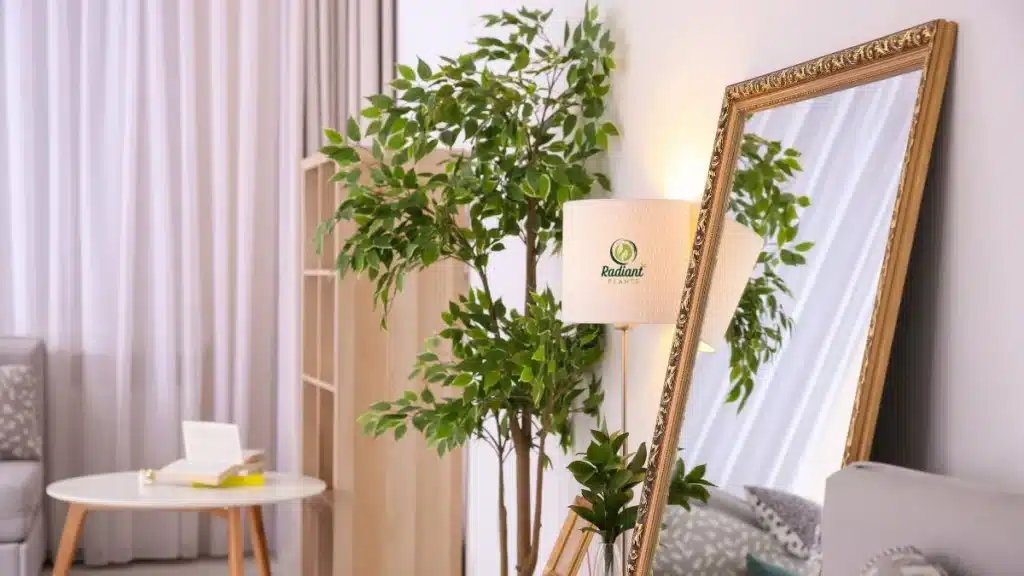
Light is the make-or-break variable for Large Indoor House Plants. If the light is wrong, everything else gets harder: watering becomes guessy, growth slows, pests show up, and your “statement plant” turns into a sad stick.
Extension guidance is super clear: indoor light is commonly framed in foot-candles (FC), with broad categories like low (50–500 FC), medium (500–1,000 FC), and high (1,000+ FC)—and below ~50 FC, most plants won’t last long.
Snippet:
The fastest way to choose Large Indoor House Plants is to match light first. In Extension terms, indoor light is often grouped as low (50–500 FC), medium (500–1,000 FC), and high (1,000+ FC). Identify your window direction and distance from glass, then pick a plant built for that zone.
Best Plants for Indoors With Little Light That Thrive Easily
How do I know if my room is low, medium, or bright light?
You don’t need a fancy meter to start. Use this quick 2-part test:
1) The window test (direction + time of day)
- North-facing: usually gentler, consistent light (often “low”)
- East-facing: soft morning light (often “medium”)
- South-facing: brightest for most of the day (often “high”)
- West-facing: strong afternoon light (can be “high,” plus heat)
This window-direction mapping is widely used in Extension resources for indoor plant lighting.
2) The distance-from-window rule
- 0–2 ft from window: brightest zone
- 2–6 ft: medium zone
- 6+ ft: low light for most plants (unless you add a grow light)
Practical example: If your only plant spot is 8 feet from a window, treat it as low light and choose tough foliage plants—or plan on supplemental light.
How to Choose the Best Low-Light Indoor Plants
Light levels explained (the non-confusing version)
Here’s the clean translation of what “low/medium/bright” usually means indoors:
- Low light: enough to read comfortably, but no strong sun patches. Extension categories often place “low” in the 50–500 FC range.
- Medium-bright light: brighter rooms near east/west windows; a lot of common “easy large plants” live here. UMD Extension lists 100–500 FC as a typical medium-bright range.
- Highlight: strongest indoor zones, often near south (or some west) windows; UMD Extension lists 500–1,000 FC for highlight.
What does that mean for growth?
- More light = faster growth + higher water use
- Lower light = slower growth + slower drying soil (overwatering risk goes up)
If you like being precise, many extensions remind people that “watts” isn’t light intensity; bulbs should report useful light metrics (lumens/PPF/FC).
When a grow light is worth it
Grow lights aren’t “extra”—they’re a straight-up solution when your home layout is working against you.
A university extension example: Iowa State notes indoor light is especially low in winter due to shorter days and the low sun angle, and many houseplants benefit from supplemental lighting in winter or year-round.
Grow light is worth it if:
- Your plant sits 6+ ft from any good window
- You have north-facing light only
- Your winters are long/cloudy (common in many US/Canada regions)
- Your plant is “high light” by nature (big statement trees, flowering types)
Simple setup (no overthinking):
- Choose a full-spectrum LED grow light (Amazon US/CA: look for “full spectrum,” “LED,” and a timer)
- Run it 10–12 hours/day (start there; adjust based on plant response)
- Place it close enough to matter, but not so close that it heats leaves (follow manufacturer distance guidance)
Snippet:
If your best plant spot is far from windows—or winter light drops hard—use a grow light. Extension guidance notes winter indoor light is often limited (short days, low sun angle), and many houseplants benefit from supplemental lighting. A basic full-spectrum LED + timer can turn “barely surviving” into steady growth.
Grow Lights for Indoor Plants: Stunning Results Made Easy
Table 2 — Light mapping guide
Window + distance | Typical light feel | “Best plant types” (category) |
|---|---|---|
North, 0–3 ft | Low to medium | tough foliage, shade-tolerant |
East, 0–3 ft | Medium | most “easy” floor plants |
South, 0–3 ft | High | statement trees, sun lovers |
West, 0–3 ft | High + heat | high-light plants (watch scorch) |
Any window, 3–6 ft | Medium-ish | medium-light foliage |
Any window, 6+ ft | Low | low-light plants or add a grow light |
Choose by your “care personality” (watering + time + skill)
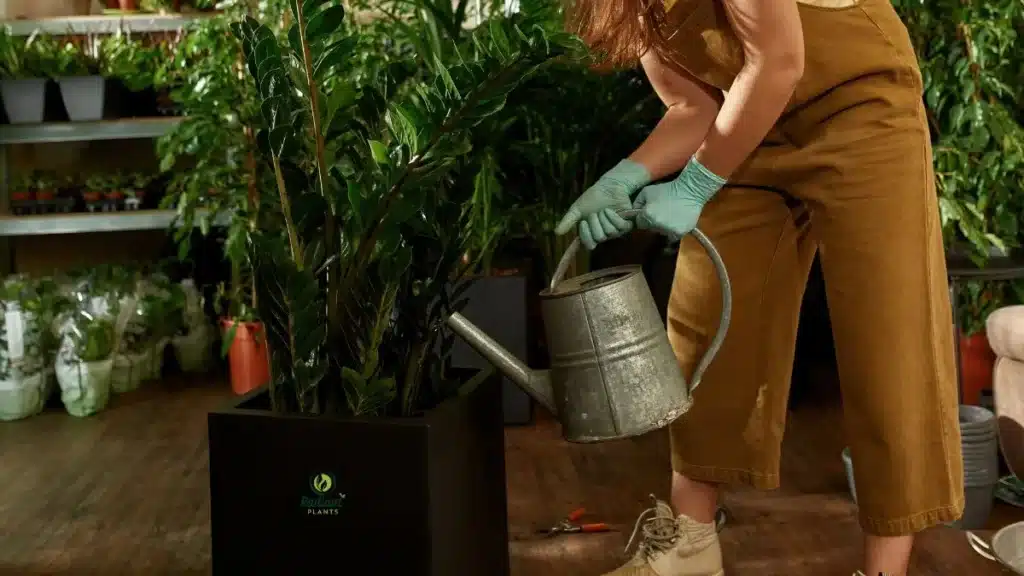
Big plants don’t die because you “forgot once.” They usually struggle because the care routine doesn’t match real life. The goal with Large Indoor House Plants is to pick a plant whose default settings fit you: how often you’re home, how much you like routines, and how comfortable you are with reading soil moisture.
Also, watering isn’t just a plant issue—it’s a home environment issue. Health Canada’s moisture guidance recommends keeping indoor humidity between 30–50% and fixing moisture problems quickly to reduce mold risk. That matters when you’re watering large pots, using saucers, or running humidifiers.
Snippet:
The easiest way to succeed with Large Indoor House Plants is to choose by your care style. If you’re busy, pick drought-tolerant plants and use a dry-down routine. Watering too often is the #1 issue with houseplants, and extra indoor moisture can also raise mold risk—keep humidity controlled.
RadiantPlants → /watering-basics (watering rules that prevent overwatering).
What are the easiest large indoor house plants for beginners?
Beginner-friendly large plants share the same “forgiving” traits:
- Thicker leaves or canes (they store water better)
- Slower growth (less drama if conditions aren’t perfect)
- Drought tolerance (they prefer drying a bit between waterings)
- Clear signals (leaves droop slightly when thirsty vs. silently rotting)
Extensions repeatedly point out that improper watering is the most common reason houseplants fail—so choosing forgiving plants is basically choosing peace.
Practical picks (by plant “type”):
- Upright, tough foliage plants (great for low schedules)
- Cane-style “tree” plants that tolerate drying down
- Thick-leaf tropical foliage that prefers a wet–dry cycle
Snippet:
The easiest large indoor plants are forgiving: thick leaves/canes, slower growth, and drought tolerance. Extensions emphasize that improper watering is the top cause of houseplant problems. Choose plants that want a wet–dry cycle and don’t punish you for skipping a day.
RadiantPlants → /Large-Indoor-Plants (your “A Vibrant Guide to Big Green Style”).
A realistic watering model for big plants
Use a dry-down model, not a calendar.
Iowa State Extension recommends a wet–dry cycle: let the potting soil dry out between waterings, then water thoroughly and let excess drain away. The University of Minnesota also emphasizes letting soil dry between waterings for many houseplants (too-wet soil increases rot risk).
Why big pots stay wet longer
- More soil = more water held
- Less airflow in the center of the root zone
- In winter, plants grow more slowly and use less water, so overwatering becomes easier
Care steps (works in most homes):
- Check soil depth (finger or moisture meter): don’t water if it’s still damp below the surface.
- Water until some water drains out the bottom, then empty the saucer.
- Re-check in a few days; adjust for season and light.
Soil + drainage basics (fast)
Drainage is non-negotiable for large plants.
- Use a pot with drainage holes (or keep the nursery pot inside a decorative cachepot and never let it sit in water).
- Choose a well-aerated potting mix (chunkier texture helps roots get oxygen).
- Top-dress vs. full repot:
- If roots aren’t packed, refresh the top 1–2 inches of mix (top-dress).
- Repot only when the plant is rootbound, or water runs straight through.
Illinois Extension summarizes common watering descriptions (constantly moist vs. moderately dry between waterings), which is why a mix that drains well makes care more consistent.
And remember the home-side: controlling dampness and addressing moisture quickly helps prevent mold—Health Canada stresses the importance of fixing leaks and keeping humidity levels controlled.
RadiantPlants → /Mold-on-Plant-Soil-Problems (Here Are 3 Easy Solutions).
Table 3 — Watering cheat sheet
Plant type (category) | Let the soil dry to… | Typical cadence (varies by light/season) |
|---|---|---|
Drought-tolerant foliage | Mostly dry through the pot | Every ~10–21 days |
Tropical foliage (moderate) | Top 1–2 inches dry | Every ~7–14 days |
Thirstier, fast-growing types | Slightly dry, not bone-dry | Every ~5–10 days |
Winter (most plants) | Drier than summer | Water less often; growth slows |
Pick by lifestyle constraints (pets, kids, allergies, rentals)
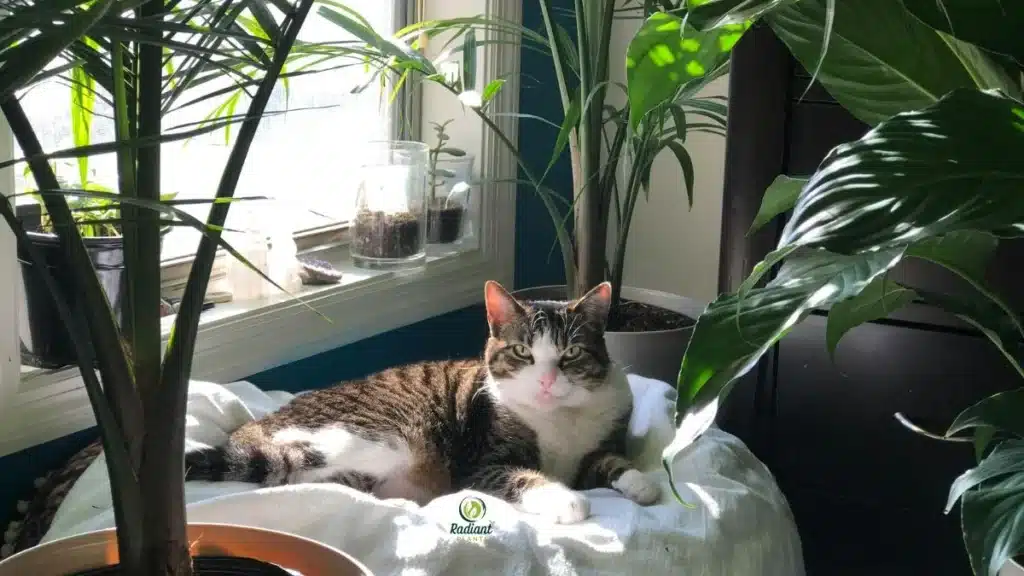
With Large Indoor House Plants, lifestyle constraints aren’t “nice to consider”—they’re selection criteria. A gorgeous indoor tree isn’t a win if it’s within licking distance, triggers sap irritation, or turns moving day into a nightmare. For pet households, the most reliable baseline is the ASPCA Toxic and Non-Toxic Plant database, because toxicity depends on the exact plant, not the vibe or the label at checkout. (ASPCA)
For allergies and indoor comfort, moisture matters too. Overwatered soil, wet saucers, and damp corners can contribute to indoor moisture problems—Health Canada’s guidance focuses on preventing and addressing moisture and mould indoors as a health and comfort issue. (Canada)
Snippet:
The “right” Large Indoor House Plants fit your life: pets, kids, allergies, and how often you move. Don’t guess on safety—use the ASPCA toxic/non-toxic plant database for your exact plant. Keep watering tidy, because indoor moisture problems can contribute to mould risk and comfort issues.
10 Stunning Cat Safe Indoor Plants You’ll Love
Are large indoor house plants safe for pets?
Some are, many aren’t—and safety is species-specific. Two plants that look similar can have totally different risk profiles. That’s why ASPCA’s database (by common or scientific name) is the best starting point when you’re unsure.
If you suspect a pet chewed a plant:
- Remove access (move the plant and any fallen leaves)
- Rinse the mouth gently with water if there’s visible residue (don’t force water)
- Call your veterinarian and/or ASPCA Poison Control for guidance; have the plant name (or a photo), your pet’s weight, and the estimated amount ingested
- Do not induce vomiting unless a professional tells you to
Snippet:
Pet safety isn’t guesswork. Whether a plant is “safe” depends on the exact species and what part was eaten. If ingestion is possible, remove access and contact your vet or ASPCA Poison Control with the plant name/photo, amount eaten, and your pet’s weight. Don’t induce vomiting unless advised.
Are Spider Plants Poisonous to Dogs? How to Protect Pets
Pet-safer picks vs common toxic favorites
“Pet-safer” doesn’t mean edible—it means lower-risk if a curious nibble happens. Always verify your exact plant in ASPCA’s listings.
Common popular plants that are often toxic (examples):
- Many aroids (like philodendron-types and pothos-types) can cause oral irritation and drooling due to calcium oxalate crystals—Clemson Extension lists these irritation symptoms for philodendrons.
- Other common houseplants frequently flagged as toxic appear across Extension resources (always cross-check by name).
Pet-safer large-plant directions (often used in pet-friendly homes):
- Palms (certain palms are commonly listed as non-toxic)
- Cast iron plant, some peperomia, and other sturdy foliage options (verify in ASPCA by name)
If you rent or move a lot
Large plants can be surprisingly expensive to move—not just because of size, but because of weight. A 6-foot floor plant in a heavy ceramic pot can be a two-person carry. If you relocate often, choose plants that are easier to transport:
- Go lighter on the container: use plastic/fiberglass pots and keep the plant in its nursery pot inside a decorative cachepot
- Use a plant caddy (locking wheels help on hard floors)
- Pick “upright, narrow footprint” plants over wide canopies (they handle doorways better)
For allergy-sensitive homes, be extra strict about moisture: don’t let water sit in saucers, and address damp corners quickly—Health Canada’s mould/moisture guidance is the clearest public reference for why prevention matters indoors.
Snippet:
If you rent or move often, treat plant weight like furniture. Choose lighter pots, use a rolling plant caddy, and prefer narrow, upright canopies for doorways. Keep watering clean—standing water and damp corners can contribute to indoor moisture issues, which Health Canada flags as a mould-prevention priority.
Table — Pet risk quick look (always confirm exact plant in ASPCA)
Popular plant (example) | Pet risk note | Safer alternative direction |
|---|---|---|
Philodendron-types | Oral irritation risk noted by Extension sources | Verify a pet-safer foliage option via the ASPCA list |
Pothos-types | Commonly flagged as toxic in Extension guidance | Pet-safer palms (verify exact species) |
Sago palm | High-risk toxic plant in the ASPCA database | Choose a non-toxic option from ASPCA |
Peace lily-types | Often listed as toxic in Extension resources | Non-toxic picks verified in ASPCA |
Dracaena-types | Frequently listed as toxic in the ASPCA cat list examples | Consider verified non-toxic foliage options |
The short list: best large indoor house plants by scenario
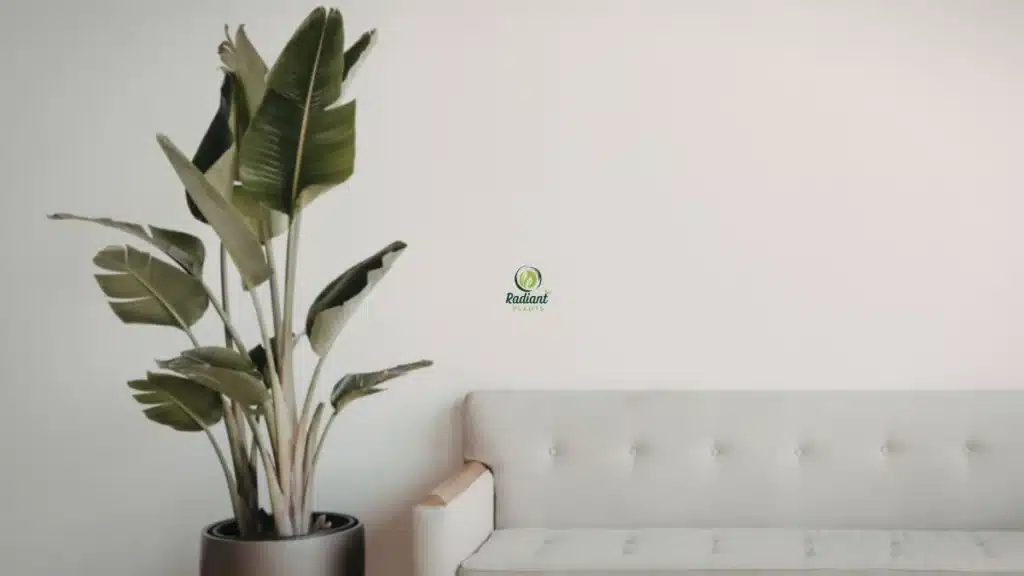
This is the “pick fast, keep it alive” section for Large Indoor House Plants. Start with your light reality: indoor areas are often described as low (50–500 foot-candles), medium (500–1,000), and high (1,000+), and spaces under ~50 FC usually won’t sustain plants for long. Then choose a scenario below and stick to the care range.
Snippet:
The best Large Indoor House Plants depend on your scenario: low light needs tolerant foliage, bright light supports true statement trees, and busy schedules need drought-tolerant picks. Use consistent care ranges (light + dry-down watering), confirm pet safety in the ASPCA database, then choose the size that fits your footprint.
Best for low light (tall + tolerant)
Low light doesn’t mean “no light.” It means you’re usually in that low range (50–500 FC), often farther from windows. These are the dependable picks:
- Snake plant (Sansevieria trifasciata / Dracaena trifasciata)
Why it works: Handles low light and neglect well (Extension examples often recommend it for low-light areas).
Care: Let soil dry fully; don’t “top off.”
Pet note: Listed as toxic to cats/dogs in ASPCA. - ZZ plant (Zamioculcas zamiifolia)
Why it works: Another low-light “survivor” commonly recommended in Extension indoor gardening notes.
Care: Slow watering; prefers drying down. - Corn plant / Dracaena (Dracaena fragrans)
Why it works: Tolerates lower light but looks best in bright-to-moderate filtered light; too-low light can narrow leaves.
Care: Moist during growth season, reduce in winter.
Pet note: Dracaena is listed by ASPCA (verify exact type). - Chinese evergreen (Aglaonema spp.)
Why it works: Commonly grouped with low-light-tolerant interiors in ASPCA’s oxalate-plant discussion (also a “calls we get a lot” plant group).
Care: Let the top portion dry between waterings.
Best for bright light (true statement plants)
Bright light is where big plants actually look “designer.” If you have a strong east/south/west window and can place the plant close enough, these shine:
- Fiddle-leaf fig (Ficus lyrata)
Why it works: Classic indoor tree look, but it’s picky—needs the right placement and consistency.
Care: Avoid extremes (too wet/too dry); protect from drafts.
Pet note: ASPCA lists “Fiddle-Leaf” with clinical signs. - Rubber plant (Ficus elastica)
Why it works: Big glossy leaves, generally more forgiving than fiddle-leaf. NCSU notes bright indirect light/partial shade indoors and avoiding afternoon sun.
Care: Water regularly but avoid overwatering; reduce watering in dormancy. - Swiss cheese plant / Monstera (Monstera deliciosa)
Why it works: Huge-leaf “fast impact” look with strong structure on a moss pole. Penn State Extension recommends watering thoroughly and letting the top 1–2 inches dry between waterings.
Pet note: ASPCA lists Monstera deliciosa as toxic. - Bird of Paradise (Strelitzia reginae)
Why it works: Big tropical vibe; for best flowering outdoors, UF/IFAS notes sun/partial shade. Indoors, treat it as a “needs lots of light” plant.
Pet note: ASPCA lists Bird of Paradise Flower as toxic.
Snippet:
For true statement plants, prioritize bright, consistent light and stable routines. Fiddle-leaf figs and rubber plants prefer bright indirect conditions and careful watering, while monstera thrives with a wet–dry cycle (top 1–2 inches dry between waterings). If you have pets, confirm toxicity in ASPCA before buying.
Best for “I forgot to water.”
If you’re inconsistent, pick plants that prefer drying down. Extension-style indoor care guidance commonly emphasizes checking dryness at the top layer before watering, and reducing watering in winter.
Best directions:
- Snake plant (Dracaena trifasciata) — water only after full dry-down.
- ZZ plant (Zamioculcas zamiifolia) — slow grower, drought-tolerant vibe; don’t keep it wet.
- Rubber plant (Ficus elastica) — tolerant if you let the soil dry slightly; avoid soggy soil.
Best for narrow corners / small footprints
When space is tight, you want upright growth and controlled canopy width:
- Snake plant (upright, minimal footprint)
- Dracaena fragrans (vertical cane form; choose a slimmer pot + rotate for even growth)
- Rubber plant (can be trained/pruned to keep it vertical)
Corner pro-tip: put the pot on a low-profile plant caddy so you can rotate weekly and roll it out for watering day.
Best “fast impact” plants
Fast impact usually means faster growth + larger leaves, but it comes with a trade: you’ll need space, pruning, and support.
- Monstera deliciosa — big leaves + climbs; Penn State notes a steady watering approach (top 1–2 inches dry).
- Rubber plant (Ficus elastica) — can size up quickly in good light; prune to shape.
- Bird of Paradise — huge leaves, but can get heavy; treat as a “bright light” plant and plan room.
Fast-impact warning: faster growers will demand more light and more frequent watering checks—especially in spring/summer.
RadiantPlants → /best-indoor-plants-to-grow
Table — Plant comparison mega-table
(Size and pricing vary by retailer and age; confirm pet safety by exact species in ASPCA.)
Plant (common + scientific) | Mature indoor height | Footprint | Light | Watering rule | Growth | Pet note | Typical price band (US/CA) |
|---|---|---|---|---|---|---|---|
Snake plant (Sansevieria/Dracaena trifasciata) | 3–6 ft | Narrow | Low–Med | Dry out fully | Slow–Med | Toxic | $–$$ |
ZZ plant (Zamioculcas zamiifolia) | 2–4+ ft | Medium | Low–Med | Dry down | Slow | Often listed in the ASPCA guidance list | $–$$ |
Corn plant (Dracaena fragrans) | 4–8 ft | Narrow–Med | Med (tolerates lower) | Dry slightly | Med | ASPCA-listed (verify type) | $–$$ |
Rubber plant (Ficus elastica) | 5–10 ft | Med | Bright indirect | Dry slightly | Med–Fast | Sap irritation + toxic risk (check ASPCA) | $$–$$$ |
Fiddle-leaf fig (Ficus lyrata) | 5–10 ft | Med | Bright indirect | Even moisture, avoid swings | Med | Toxic | $$–$$$ |
Monstera (Monstera deliciosa) | 4–8 ft+ (trained) | Med–Wide | Bright indirect | Top 1–2″ dry | Fast | Toxic | $$–$$$ |
Bird of Paradise (Strelitzia reginae) | 4–8+ ft | Wide | High/bright | Moderate; don’t stay soggy | Slow–Med | Toxic | $$–$$$ |
Styling + placement (make it look expensive, not crowded)
A large plant should read like intentional design—not “I shoved greenery here.” The difference is placement math: scale + negative space + a clean container setup. Start by choosing one visual “hero” spot (corner, fireplace flank, sofa edge), then give the canopy breathing room so leaves don’t brush walls or block traffic.
Grouping plants can also change the comfort level in the room. Health Canada recommends keeping indoor humidity around 30–50%—helpful context if you cluster plants tightly, use pebble trays, or run a humidifier near windows (where condensation can happen).
Snippet:
To style Large Indoor House Plants like a designer, use one focal placement, leave negative space around the canopy, and match pot scale to the plant’s width. Protect floors with drainage + mats, and keep indoor humidity in a healthy range (Health Canada suggests ~30–50%) to avoid condensation or mold-prone corners.
The “one big plant” rule (and when to go 2 medium instead)
Rule: In one zone, pick one true statement plant and let it dominate. This works best in:
- Empty corners beside a sofa
- Entryways with open sightlines
- Rooms with minimal wall art
Go with 2 medium plants instead when:
- Your ceiling is lower (or a single plant would feel top-heavy)
- The room is long and needs balance on both sides
- You want symmetry (two matching planters)
Placement checklist (fast):
- Keep 12–24 inches between the canopy and the nearest wall (prevents scuffing + keeps the silhouette clean).
- Leave a clear walkway (at least shoulder-width where people pass most).
- Rotate the plant weekly so it grows evenly toward the light.
Pot + planter sizing that looks right
A plant looks “expensive” when the container feels proportionate, not random.
Easy sizing rules:
- Pot diameter: aim for a pot that looks about 1/3 to 1/2 of the plant’s overall canopy width.
- Planter height: A taller planter visually elevates a plant without needing a taller plant (great for 8-foot ceilings).
- Finish: matte textures and simple shapes read cleaner than shiny, busy patterns.
Practical example:
If your plant canopy is ~36 inches wide, a planter in the 12–18 inch diameter range usually looks balanced. If the plant is tall but narrow, use height (a taller planter) rather than width.
Pro move: keep the plant in its nursery pot inside a decorative cachepot. It makes watering cleaner and reduces the chance of indoor mess.
Protect floors + manage weight
Large plants fail style-wise when the floor setup looks messy—or worse, when water damage happens.
Floor-safe setup (do this every time):
- Use a pot with drainage holes
- Add a deep saucer or hidden liner
- Place a waterproof mat under the saucer (especially on hardwood)
- Put heavy plants on a plant caddy so you can roll them to water or rotate them
Humidity and moisture matter here too: standing water and damp corners can contribute to indoor moisture issues. Keeping indoor humidity controlled (Health Canada’s ~30–50% guidance) helps reduce condensation risk near windows and in tight clusters.
Snippet:
The cleanest large-plant setup is: drainage pot + deep saucer + waterproof mat + plant caddy. It protects floors, makes watering easier, and lets you rotate the plant without dragging. Avoid leaving water sitting under pots—combined with higher humidity, it can create damp corners you don’t want.
Table — Room-by-room placement ideas
Room | Best placement | Styling tip | Care tip |
|---|---|---|---|
Living room | Corner near the sofa or the TV console | One big plant + one smaller accent | Rotate weekly for even growth |
Bedroom | Near the dresser or beside a window chair | Keep canopy airy (calm vibe) | Avoid vents/drafts at night |
Entryway | By a console table or an empty wall | Tall planter for instant height | Choose sturdy leaves (less damage) |
Office | Behind the desk corner or the bookshelf edge | Use negative space, keep cords clear | Add a small grow light if far from windows |
Seasonal care for US/Canada homes (winter is the boss level)
Winter stresses Large Indoor House Plants in predictable ways: less light, slower growth, drier heated air, and cold-window drafts. Extension guidance is consistent that winter care usually means watering less and holding fertilizer because plants are resting and not growing much. Health Canada also flags humidity control as a comfort + mould-prevention issue, with a general home target around 30–50%.
Snippet:
In US/Canada winters, most large indoor plants need a “survival mode” reset: more light, less water, fewer drafts, and controlled humidity. Extensions recommend watering less often and usually skipping fertilizer during winter slow-down. Aim for ~30–50% indoor humidity to stay comfortable and reduce mould risk.
How do I care for large indoor house plants in winter?
Think: light up, water down.
- Water less often: Iowa State Extension notes winter growth slows, so plants typically need less frequent watering. Check soil moisture first; a common rule is to water when the soil is dry about 1 inch down, then water thoroughly and discard excess.
- Boost light: move plants closer to the brightest window you have, rotate weekly, and wipe dust off leaves so they can use what light exists.
- Protect from drafts: keep leaves off cold glass and away from exterior doors and heating vents (hot/cold swings stress foliage).
- Pause fertilizer: many houseplants aren’t actively growing in winter, so fertilizing is usually unnecessary until days lengthen.
Humidity without creating mold
You’re aiming for “comfortable,” not rainforest. Health Canada advises keeping indoor humidity between 30–50%, and also provides seasonal guidance in some materials (e.g., lower in winter, below 50% in summer) to reduce condensation and mould risk.
Do this (simple + safe):
- Use a hygrometer so you’re not guessing.
- If humidity is low, use a clean humidifier—and clean it on schedule (dirty humidifiers can cause their own problems).
- Keep plants off windowsills that collect condensation, and don’t let saucers stay wet.
- Skip constant leaf misting as your main plan—UNL Extension notes “hand misting” only bumps humidity briefly before it drops again.
“Summer outdoors” option (if you do this)
A summer patio break can make indoor plants look amazing—if you transition slowly. University of Minnesota Extension recommends acclimating houseplants and starting in a spot protected from wind and direct sun, since sudden sun exposure can burn leaves. University of Maryland Extension suggests waiting until night temperatures stay above ~60°F before moving plants out.
Transition rules:
- Week 1: bright shade (no direct sun), sheltered from wind.
- Week 2–3: gradually increase morning sun, keep harsh afternoon sun limited.
- Watch watering: outdoor airflow can dry pots faster.
Why climate zones matter (quick): If you’re thinking “can this stay outside longer?” check your region’s hardiness context using the USDA Plant Hardiness Zone Map or Canada’s Plant Hardiness resources. They’re based on cold limits (extreme minimum temps), which helps you understand how quickly nights can turn unsafe for tender tropical houseplants.
Table — Seasonal care calendar
Season | Light | Water | Feeding + maintenance |
|---|---|---|---|
Spring | Increase as days lengthen | Gradually increase | Resume fertilizer when growth starts |
Summer | Brightest placement | Check more often | Optional “outdoors” with acclimation |
Fall | Begin stepping down | Start reducing | Stop/slow fertilizing; prep for indoor move |
Winter | Add a grow light if needed | Water less; avoid soggy soil | Skip fertilizer; protect from drafts |
Snippet:
Winter success is mostly prevention: don’t overwater, don’t fertilize a resting plant, and don’t park leaves in cold drafts. Keep humidity controlled (about 30–50%) and add a grow light if your plant is far from windows. That combo keeps big plants stable until spring.
Troubleshooting big-plant problems (fast diagnosis)
Big plants feel dramatic because symptoms show up on big leaves—but most issues come down to light, water, and airflow. Don’t treat blindly. Diagnose fast, change one variable, and re-check in a week.
Snippet:
For Large Indoor House Plants, most “problems” are environmental: wrong light, watering too often, cold drafts, or dry air. Diagnose by checking (1) soil moisture, (2) recent temperature/draft exposure, and (3) pests on leaf undersides. Fix the cause first—then cosmetic cleanup (pruning) second.
RadiantPlants → /plant-troubleshooting
Leaves yellowing: overwater vs underwater in 60 seconds
Use this quick check before you change anything:
1) Touch-test the soil (most important).
- Still wet + yellowing lower/inner leaves: classic overwatering pattern. University of Maryland notes that yellowing/wilting of lower and inner leaves can be a primary symptom of overwatering.
- Dry down a few inches + droopy plant: more likely underwatering or a plant that dried too far.
2) Look for “extra clues.”
- Leaf drop after a cold blast: Iowa State notes environmental stress (cold/warm air from doors, windows, ducts) can lead to yellowing and leaf drop.
- Yellowing + soggy smell or fungus gnats: think “too wet.”
Fix (simple):
- If wet: stop watering, improve drainage/airflow, and let it dry. UC IPM notes that yellowing/dropping can come from overwatering/poor drainage. (ipm.ucanr.edu)
- If dry: water thoroughly once, then return to a dry-down routine.
(RadiantPlants): Yellow leaves on plants: 7 warning signs to watch for
Brown tips: salts vs low humidity vs inconsistent watering
Brown tips usually mean “stress,” not disease. The common trio:
- Water quality/salts: Iowa State Extension notes chlorine/fluoride and other water chemicals can contribute to brown tips on sensitive plants (including dracaena and spider plant). (Yard and Garden)
- Low humidity (winter heating): UMaine Extension notes winter indoor air can be much lower in humidity and may cause browning of leaf tips/margins, and warns not to raise humidity excessively because it can create other problems.
- Inconsistent watering: repeated “too dry → too wet” cycles can burn tips.
Fix (in order):
- Trim only the dead, brown edge (cosmetic).
- Check your water: try filtered/standing water for sensitive plants.
- Stabilize humidity carefully and avoid over-humidifying (mold risk). Health Canada emphasizes addressing moisture issues and maintaining healthy humidity levels.
(RadiantPlants): Shocking Causes of Brown Spots on Plant Leaves & Quick Fixes!
Leaning plant: light direction + staking
Leaning is usually normal phototropism: the plant is reaching toward its strongest light source.
Fast diagnosis:
- If one side is brighter, the plant will lean that way.
- If it’s also getting leggy (long gaps between leaves), it likely needs more total light.
Fix steps:
- Rotate the pot regularly (weekly is a good rhythm).
- Move it closer to the window or add overhead supplemental light.
- Stake only if it’s top-heavy or the stem can’t support itself.
Oregon State Extension specifically recommends matching plants to light, and also warns to avoid cold drafts (cold glass, heating vents) that stress plants.
Bugs: first-response plan (no panic)
Most indoor pests are manageable if you act early.
First-response plan:
- Isolate the plant (pests spread).
- Rinse leaves (especially undersides) with a firm spray. Penn State recommends rinsing leaf surfaces as a control approach for indoor plant pests.
- Sticky traps to monitor flying adults (especially fungus gnats). Minnesota Extension notes that yellow sticky traps can capture some adults, but aren’t the only method.
- Repeat checks every 3–5 days for 2–3 weeks.
If it’s fungus gnats: Penn State notes letting the top 1–2 inches of soil dry between waterings helps reduce fungus gnat problems.
If it’s spider mites: Mississippi State Extension notes forceful water sprays can be practical, especially if repeated.
(RadiantPlants): /pet-friendly-plants
Table — Symptom → cause → fix
(Moisture control helps both plants and homes—Health Canada stresses fixing moisture issues and keeping humidity managed.)
Symptom | Likely cause | Fast fix |
|---|---|---|
Yellow lower leaves + wet soil | Overwatering | Pause water, improve drainage |
Droop + very dry soil | Underwatering | Deep water once, then dry down |
Brown tips | Salts / low humidity | Better water + steady humidity |
Tiny flies in the soil | Fungus gnats | Dry top soil + sticky traps |
Fine webbing/speckling | Spider mites | Rinse undersides, repeat cycles |
Quick reality check: Do large indoor house plants “clean the air”?
Houseplants (including Large Indoor House Plants) are amazing for mood, texture, and making a room feel alive—but they’re not a substitute for ventilation or filtration. The most-cited science: a peer-reviewed review found that while plants can remove VOCs in small sealed chamber studies, the effect doesn’t translate well to real homes with normal air exchange (fresh air coming in, air leaking out, HVAC running).
That’s why the practical “clean air” playbook is still the same:
- Source control (reduce what’s creating pollutants)
- Ventilation (dilute/remove indoor pollutants)
- Filtration/air cleaning (capture particles)
The win: you can enjoy big plants and keep indoor air healthier—just don’t expect your monstera to replace fresh air.
Snippet (40–60 words):
Large indoor house plants can remove VOCs in lab chambers, but research reviews show that doesn’t scale cleanly to real homes. For indoor air quality, prioritize EPA’s basics: source control, ventilation, and filtration/air cleaning. Keep plants for beauty and comfort—use airflow and filters for air performance.
(RadiantPlants): Large Indoor Plants: A Vibrant Guide to Big Green Style
Do houseplants improve indoor air quality?
Short answer: a little in controlled lab setups, not much in real rooms—so treat plants as a bonus, not the solution.
The key nuance from the review: many “plants clean the air” claims come from sealed-chamber tests measured over many hours or days, using metrics that don’t match normal indoor conditions. In actual homes, air changes, open doors, HVAC cycling, and source spikes (cooking, cleaning products, candles) overwhelm what a few potted plants can remove.
What to do instead (still plant-friendly):
- If you’re painting/cleaning: reduce fumes at the source and ventilate.
- If you’re sensitive to dust/pet dander: use filtration/air cleaning.
- Keep plant care clean: avoid stagnant saucer water, and don’t let soil stay swampy (better for plants and your space).
Snippet:
Houseplants can improve indoor air quality a bit in lab chambers, but evidence reviews say real-home benefits are limited. For noticeable impact, use EPA’s approach: control sources, ventilate, and filter/clean the air. Keep plants because they’re calming and beautiful—just pair them with airflow for results.
FAQ 1: What’s the best large indoor house plant for a low-light corner?
For a low-light corner, choose tough floor plants that tolerate 50–500 foot-candles (typical “low light”). Snake plant and ZZ plant are common go-tos in real-world threads and interiors. Just remember: “low light” isn’t “no light,” so placement still matters.
FAQs About Large Indoor House Plants
What’s the best large indoor house plant for a low-light corner?
For a low-light corner, choose tough floor plants that tolerate 50–500 foot-candles (typical “low light”). Snake plant and ZZ plant are common go-tos in real-world threads and interiors. Just remember: “low light” isn’t “no light,” so placement still matters.
Is there a large indoor plant that’s safe for cats and tolerates low light?
Sometimes, but it’s narrow. Start by checking the ASPCA toxic/non-toxic database for the exact species (common names can be misleading). Reddit-style reality: many people want “tall + low light + 100% cat-safe,” and compromises (size, growth speed, or adding light) are usually needed.
How often should I water large indoor house plants in big pots?
Skip the calendar—use a dry-down check. Big pots hold moisture longer, so overwatering is common. Water thoroughly until it drains, then wait until the soil has dried to the depth your plant prefers. Community questions about “spilling everywhere” are usually solved by slow watering + a deep saucer + draining after.
Why do my big houseplants get brown tips in winter?
Brown tips are usually stress: dry, heated air, inconsistent watering, or mineral/salt buildup from water. In winter, plants grow more slowly, and indoor air often gets drier, so tips show damage first. Aim for stable care, and keep home humidity in a healthy range (Canada guidance commonly cites ~30–50%).
Do large indoor house plants actually clean the air (VOCs)?
Plants can remove VOCs in sealed lab chambers, but a major review found the effect doesn’t scale well to real homes with normal air exchange. For indoor air quality, the EPA points to practical steps like ventilation and other IAQ actions. Keep plants for comfort and aesthetics—not as your air purifier.
What’s the fastest way to fix yellow leaves or drooping on a big indoor plant?
Check soil moisture first, then drafts, then pests. If the soil is still wet, pause watering and improve drainage/airflow. If it’s very dry, water deeply once and return to a consistent dry-down routine. Quick community troubleshooting often starts with exactly this “water vs light vs bugs” triage.
To choose the right Large Indoor House Plants, start with your light and placement, then match the plant to your real watering style and home constraints (pets, drafts, winter dryness). Measure ceiling height and footprint before you buy, use a simple dry-down routine, and adjust care seasonally—especially in winter when growth slows. When problems pop up, diagnose fast (soil moisture, light, pests) before changing everything.