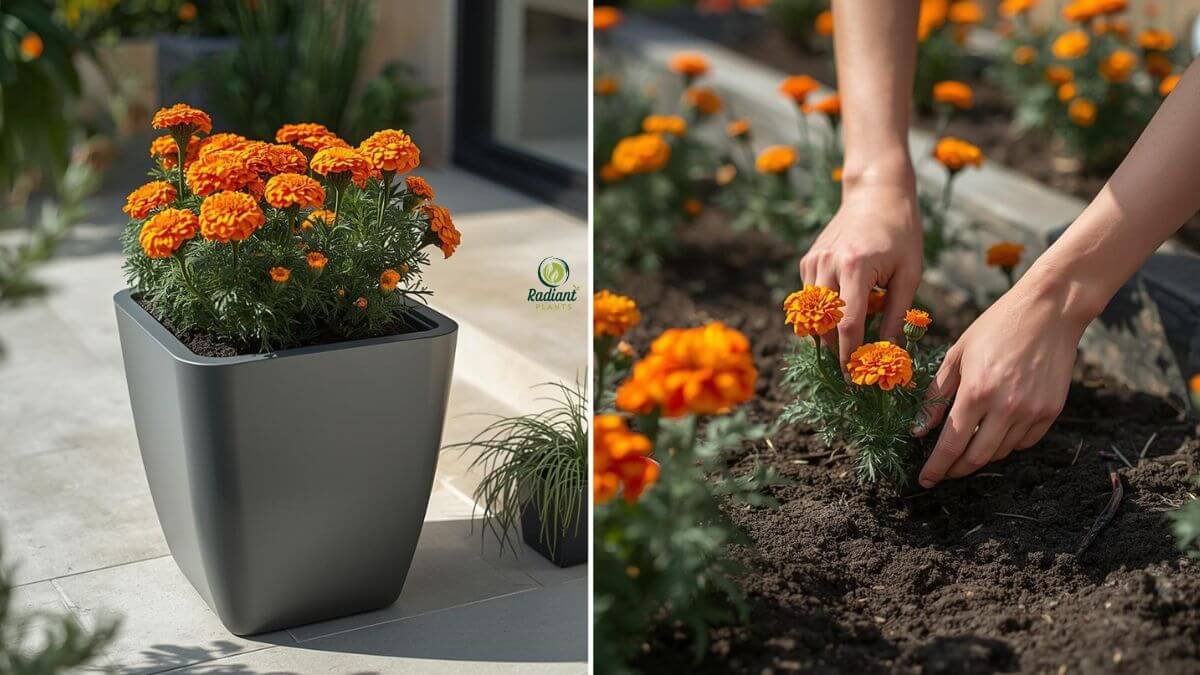
Planting marigolds looks simple—until timing goes wrong. The biggest question most gardeners face is when to plant marigold seeds indoors versus outdoors, especially with unpredictable spring weather across the United States. Plant too early and seeds struggle in cold soil; plant too late and blooms arrive much later than expected. This guide breaks the decision down clearly and practically. You’ll learn how frost dates, soil warmth, and marigold type affect timing, how indoor starts compare to direct sowing, and which method fits your climate, effort level, and bloom goals—so you get healthy plants and flowers right when you want them.
Table of Contents
In This Article
Quick Answer — When to Plant Marigold Seeds
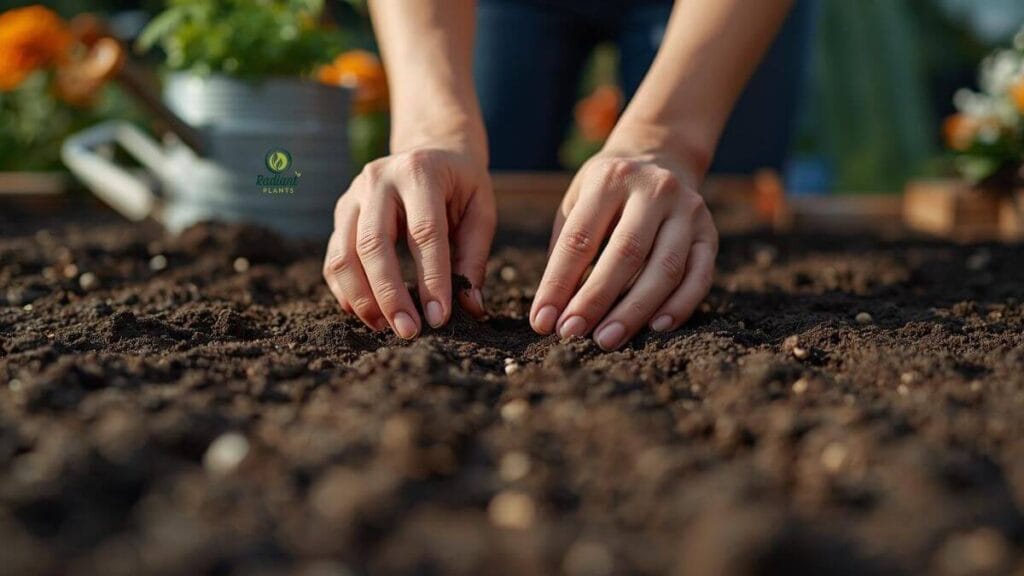
Start marigold seeds indoors 6–8 weeks before your last expected frost if you want earlier blooms, or direct sow outdoors after frost risk has passed and the soil is warm. The “best time” is when seeds can germinate fast without cold stress, giving you stronger plants and earlier flowers.
How to decide (fast rule)
- Choose indoors if your spring is short, unpredictable, or if you want blooms as early as possible.
- Choose outdoors if nights are consistently mild, frost risk is over, and soil has warmed enough for quick germination.
Timing windows (US-focused)
- Indoors: Start seeds 6–8 weeks before the last frost date in your area. This window balances seedling size with transplant success
- Outdoors (direct sow): Plant after the last frost and once the soil feels warm to the touch (marigolds are warm-season annuals and stall in cold soil).
What “best time” really means
- High germination success: Warm conditions speed sprouting and reduce rot/damping-off.
- Earlier flowering: Indoor starts gain weeks of growth before outdoor conditions are ideal, so blooms appear sooner after transplanting.
Simple example
- If your last frost is in mid-April, start planting indoors in late February or early March.
- If you’re sowing outdoors, wait until late April–May, when frost risk is gone, and the soil has warmed.
Indoor vs Outdoor at-a-Glance
Here’s a quick indoor vs outdoor look at when to Plant Marigold Seeds
Method | When to Plant | Effort | Success Rate |
|---|---|---|---|
Indoors | 6–8 weeks before last frost | Medium | High |
Outdoors | After the last frost + warm soil | Low | Moderate–High (weather dependent) |
*Success rate varies by temperature, moisture, and light conditions [Royal Horticultural Society (RHS)].
Grow Lights for Indoor Plants: Stunning Results Made Easy
Know Your Marigold Type (It Changes Timing)
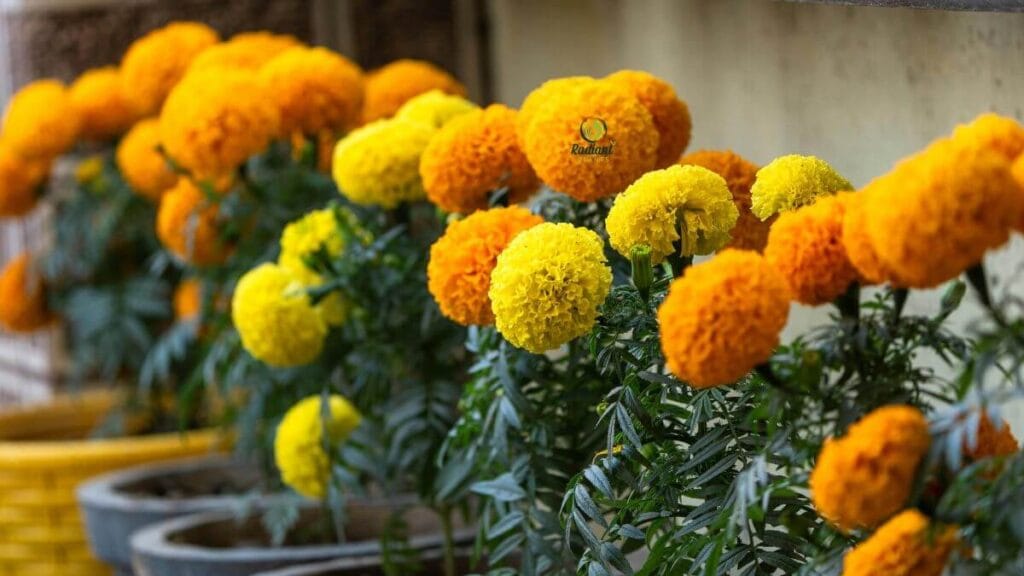
Yes—the type of marigold you plant changes when to plant marigold seeds. French marigolds bloom faster, African marigolds need a longer warm season, and signet marigolds fall in between, which affects whether indoor starting is worth it.
The three common marigold types (and why timing differs)
- French marigolds (Tagetes patula)
- Smaller plants, faster to mature
- Shorter time from seed to bloom, so timing is more flexible
- Often succeeds with either indoor starting or direct sowing
- African marigolds (Tagetes erecta)
- Larger plants with big blooms
- Take longer to reach flowering, so they benefit most from indoor starts
- More sensitive to cold soil early in the season
- Signet marigolds (Tagetes tenuifolia)
- Fine foliage, smaller flowers, steady growth
- Moderate time to bloom
- Handle direct sowing better once the soil is warm
Typical germination and bloom timelines (high-level)
- Germination: usually 5–10 days in warm soil and adequate moisture
- Time to bloom: roughly 50–80 days from seed, depending on type and conditions
- Faster bloomers = more forgiving planting windows
- Slower bloomers = greater payoff from early indoor starting
Direct sow vs indoor start by type
- Best for direct sowing: French and signet marigolds once frost risk is over and the soil has warmed
- Best for indoor starting: African marigolds, especially in cooler or shorter US growing seasons
Examples
- If you’re planting French marigolds, expect blooms in about 2 months, so outdoor sowing after frost usually works fine.
- If you’re planting African marigolds, expect closer to 2½ months or more, making an indoor start the smarter choice.
- If you’re planting signet marigolds, direct sowing in warm soil can still give timely blooms.
The Two Rules That Matter Most: Frost Date + Soil Temp
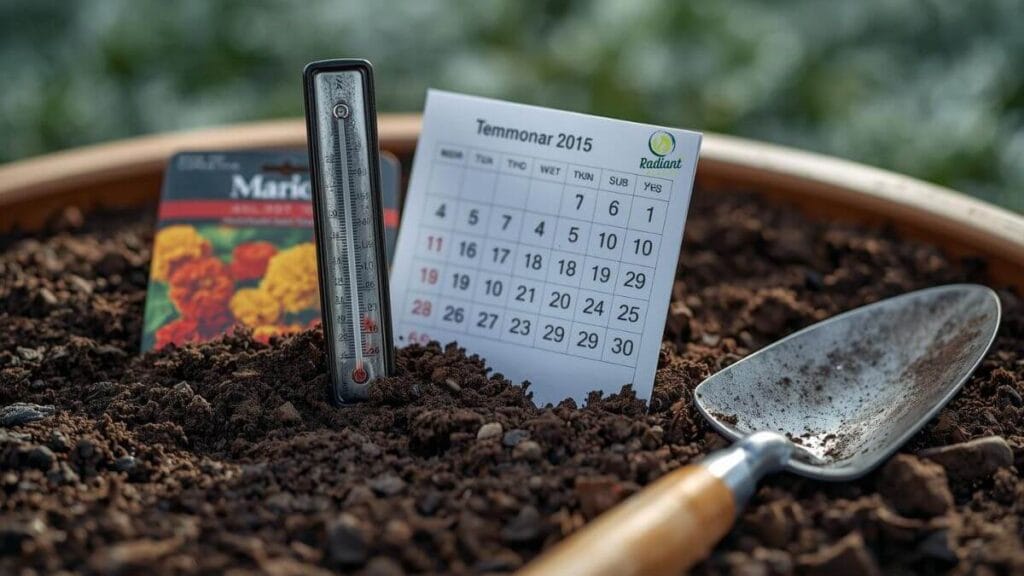
When deciding when to plant marigold seeds, two factors beat the calendar every time: your local last frost date and actual soil temperature. Planting too early—even in a “spring” month—leads to slow germination or seed loss if the soil is cold or frost returns.
Rule 1: Last frost date = your timing anchor
- The last frost date marks when overnight freezes are unlikely in your area.
- Marigolds are warm-season annuals and can be damaged or killed by frost at any stage.
- Using your local frost date (not a national average) prevents early losses and transplant shock.
Rule 2: Soil temperature matters more than the calendar
- Seeds respond to soil warmth, not the month on the calendar.
- Cold soil slows germination, increases rot risk, and weakens seedlings even if air temperatures feel mild.
- This is why “plant in April” advice often fails across different US regions.
How to estimate soil warmth (no tools needed)
- Touch test: Soil should feel slightly warm, not cool, when you press your fingers 1–2 inches deep.
- Night check: Nighttime temperatures should stay consistently mild, not dipping toward frost.
- Weather scan: Look for a stable 7–10 day forecast with no frost warnings and warming daytime highs.
Ready-to-Plant Conditions Checklist
- ✔ Local last frost date has passed
- ✔ Soil feels warm to the touch, not cold or soggy
- ✔ Night temperatures are stable and above frost risk
- ✔ No extended cold snap in the 7–10 day forecast
Example
- If your last frost is in mid-April but the soil still feels cold in early April, wait—or start seeds indoors.
- If frost risk is gone and the soil feels warm, direct sowing outdoors becomes reliable.
When to Start Marigold Seeds Indoors (Beginner Timeline)
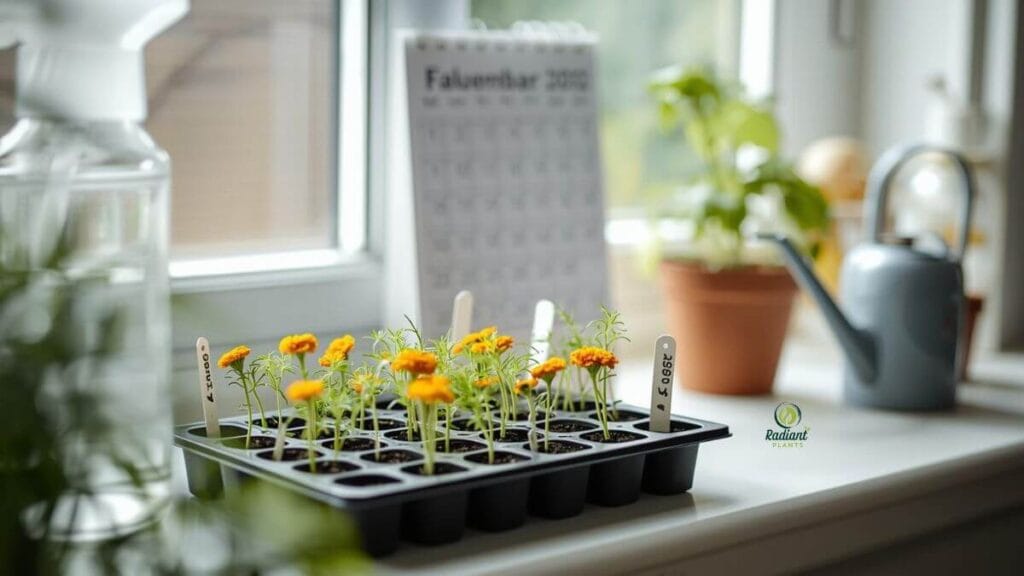
Start marigold seeds indoors 6–8 weeks before your local last frost date. This window gives seedlings enough time to grow sturdy without becoming root-bound or stressed before transplanting.
Step-by-step indoor timing plan
- Find your last frost date for your ZIP code (this is your anchor).
- Count back 6–8 weeks and sow marigold seeds indoors in trays or small pots.
- Maintain warm, bright conditions, so seedlings grow steadily rather than slowly stretching.
- Plan to harden off seedlings shortly before your frost-free planting window opens.
How to stagger sowing for continuous blooms
- Sow the first batch 8 weeks before the last frost for the earliest flowers.
- Sow a second batch 2–3 weeks later to extend bloom time.
- This staggered approach keeps flowers coming without overcrowding beds or containers.
When marigold seedlings are transplant-ready
- Seedlings should have several true leaves and a compact, upright shape.
- Roots should hold the soil together but not circle the pot.
- Outdoor nights should be frost-free, and the soil should feel warm.
Examples (US scenarios)
- Short spring (cool regions):
- Last frost: early May
- Start indoors: early–mid March
- Transplant: mid–late May
- Long spring (mild regions):
- Last frost: early April
- Start indoors: early February
- Transplant: early–mid April
How to Repot Plants: Easy Steps for Indoor Beauties
Indoor Setup That Actually Works (So You Don’t Get Leggy Seedlings)
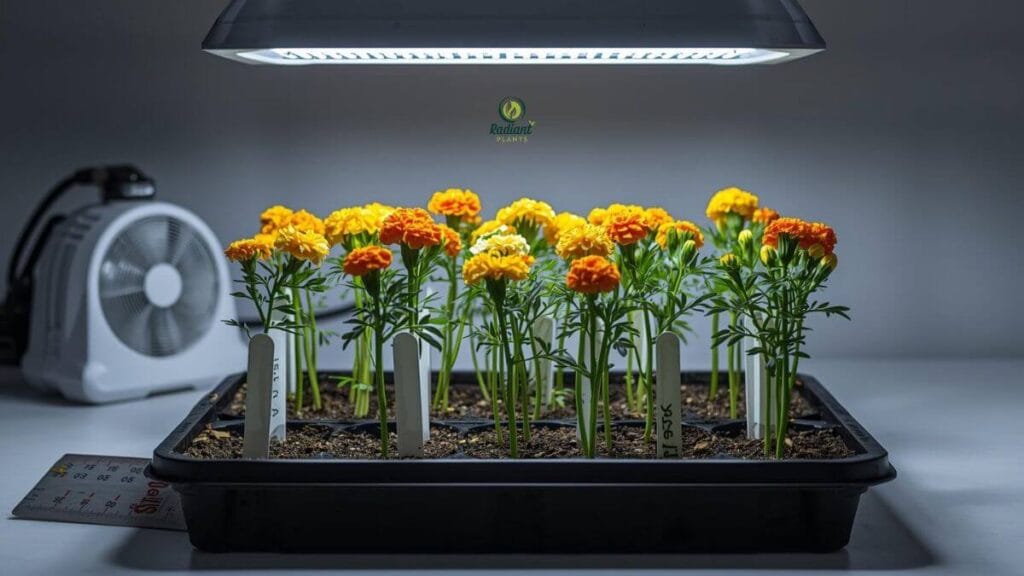
To successfully start marigolds indoors, you need good drainage, the right soil mix, strong light, and controlled watering. Most leggy or weak seedlings fail because of low light and excess moisture, not bad seed.
Containers and drainage basics
- Use seed trays, cell packs, or small pots with drainage holes.
- Good drainage prevents water from pooling at the roots, which can trigger fungal issues in seedlings.
- Avoid oversized containers early; small cells help control moisture.
Seed starting mix vs potting soil
- Use a seed starting mix, not standard garden soil.
- Seed starting mixes are lighter, drain better, and reduce disease risk for young roots.
- Regular potting soil is often too dense for early seedling stages.
Light requirements: window vs grow light
- Bright light is essential from the moment seedlings emerge.
- A sunny window often isn’t enough in early spring; seedlings stretch toward light and become leggy.
- Grow lights placed close to seedlings provide consistent light and compact growth.
Watering to prevent damping-off
- Keep soil evenly moist, never soggy.
- Water from the bottom when possible to keep stems dry.
- Good airflow plus careful watering helps prevent damping-off, a common seedling disease.
Indoor Success Checklist
- ✔ Containers have drainage holes
- ✔ Seed starting mix (light and well-draining)
- ✔ Strong light source close to seedlings
- ✔ Warm indoor temperatures with gentle airflow
- ✔ Careful watering—moist, not wet
Example
- If seedlings are tall, thin, and leaning, increase light intensity or move lights closer.
- If the soil stays wet for days, improve drainage and reduce watering frequency.
UV Light for Plants: The Complete Indoor Care Guide
When to Plant Marigold Seeds Outdoors (Direct Sow)
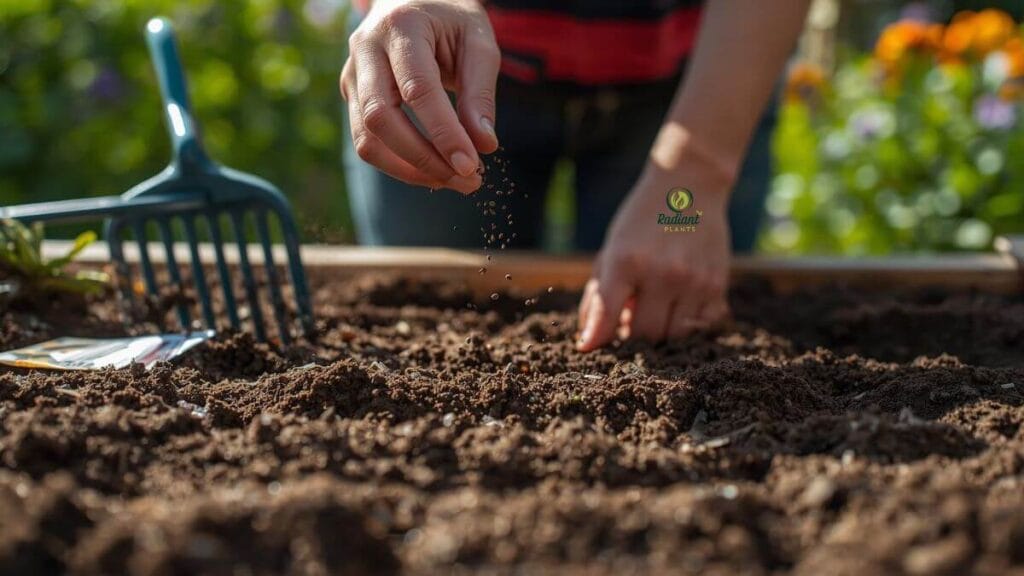
Direct sow marigold seeds only after frost risk has passed, soil is warm, and nighttime temperatures are stable. If any of those conditions aren’t met, waiting—or starting indoors—gives better results and fewer losses.
Direct sow vs transplant outdoors
- Choose direct sowing if your spring warms up quickly and stays mild.
- Choose transplants if weather swings are common or nights stay cool into late spring.
- Direct sowing is simpler, but transplants are more forgiving when conditions are borderline.
Timing rule that works across the US
- Frost risk must be over; marigolds are damaged by cold at any stage.
- Soil should feel warm to the touch, not cold or wet.
- Night temperatures should be consistently mild, not bouncing back and forth.
Planting basics (depth, spacing, thinning)
- Plant seeds shallowly, lightly covered with soil.
- Space seeds to avoid overcrowding and thin seedlings once true leaves appear.
- Proper spacing improves airflow and reduces disease pressure.
Protecting young sprouts from cold snaps
- Watch the 7–10 day forecast closely after sowing.
- Use light coverings (row cover, cloche, or overturned container) if an unexpected cold night threatens.
- Remove covers during warm days to prevent overheating.
Examples
- If nighttime temperatures are still dipping into the 40s°F, wait before direct sowing.
- If frost risk is gone and nights stay mild, direct sowing becomes reliable and low-effort.
Hardening Off & Transplant Timing (Where Most Beginners Mess Up)
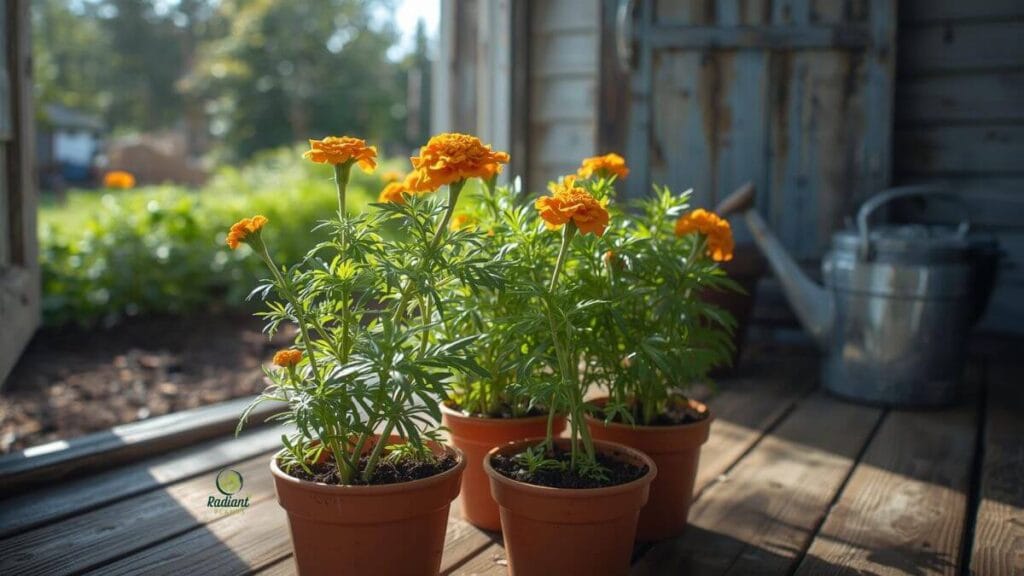
Hardening off is the process of gradually acclimating indoor-grown marigold seedlings to outdoor conditions, and skipping it is one of the most common beginner mistakes. Without hardening off, seedlings can suffer shock, stall in growth, or die after transplanting.
What hardening off is—and why it matters
- Indoor seedlings grow in stable light, temperature, and humidity.
- Outdoor conditions introduce direct sun, wind, cooler nights, and temperature swings.
- Hardening off helps seedlings adapt, reducing stress and transplant failure.
Simple 7–10 day hardening plan
- Days 1–2: Place seedlings outdoors in bright shade for 1–2 hours; bring back inside.
- Days 3–4: Increase outdoor time and introduce gentle morning sun.
- Days 5–7: Extend sun exposure and allow light wind.
- Days 8–10: Leave plants out most of the day, bringing them in only if nights are cold.
Best time of day to transplant
- Transplant in the early morning or late afternoon.
- Avoid midday sun, which increases water stress and shock.
How to reduce transplant shock
- Water seedlings before transplanting and again after planting.
- Provide temporary shade for the first few days if the sun is intense.
- Keep soil evenly moist while roots establish.
Hardening-Off Checklist + Mini Plan
- ✔ Frost risk has passed
- ✔ Seedlings exposed gradually to sun and wind
- ✔ No sudden jump from indoors to full sun
- ✔ Transplant during cool parts of the day
- ✔ Water well before and after planting
Example
- Seedlings moved straight from a bright indoor setup to full outdoor sun often wilt or stall.
- Seedlings hardened off over a week usually resume growth quickly after transplanting.
Indoors vs Outdoors — Which Should You Choose?
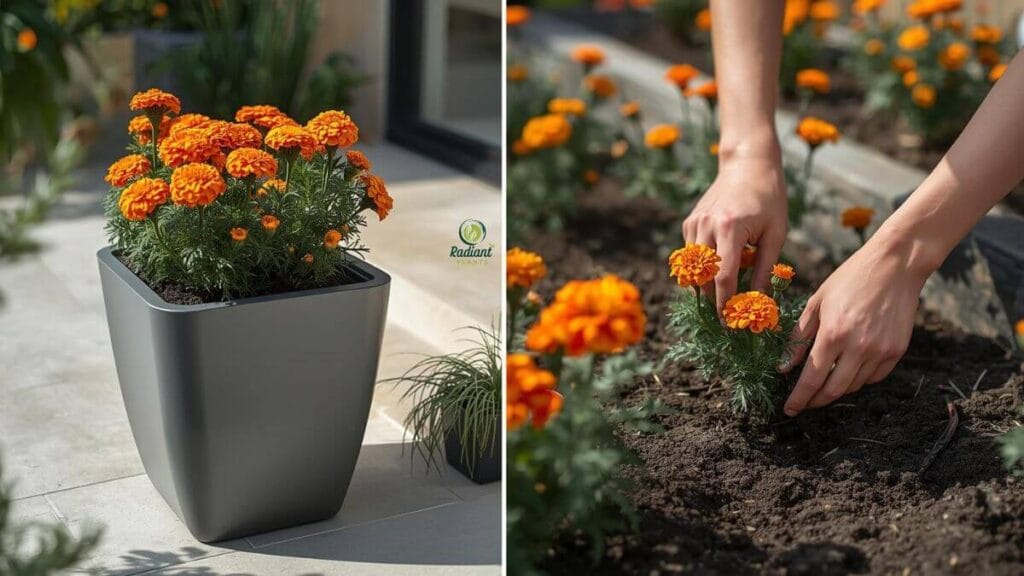
The right choice depends on your climate, how soon you want blooms, and how much effort you want to invest. Indoor starting favors earlier flowers and higher reliability in cooler regions, while outdoor sowing works best in warm areas with stable spring weather.
Decision framework (how to choose)
- Climate/region: Cooler or unpredictable springs benefit from indoor starts; warm, stable springs favor direct sowing.
- Time to bloom: Indoor starts bloom earlier because growth begins before outdoor conditions are ready.
- Effort level: Indoor starting requires setup and care; outdoor sowing is simpler but weather-dependent.
- Success rate: Indoor starts are more consistent when spring temperatures fluctuate.
Who should choose indoor starting
- Gardeners in short growing seasons or cooler US regions
- Anyone wanting earlier, more predictable blooms
- Those growing slower types, like African marigolds
Who should choose outdoor sowing
- Gardeners in warm regions with quick, stable springs
- Those prioritizing low effort and simplicity
- Anyone planting faster-maturing marigold types
Indoor vs Outdoor Comparison
Method | Pros | Cons | Best For |
|---|---|---|---|
Indoors | Earlier blooms, higher control, and reliable | More setup and care | Cool climates, early color |
Outdoors | Simple, less work, no transplanting | Weather risk, later blooms | Warm climates, low effort |
Example
- In a cool-spring region, indoor-started marigolds often flower weeks earlier than direct-sown plants.
- In warm regions with mild nights, outdoor sowing usually performs just as well with far less effort.
Planting by Region (US Focus)
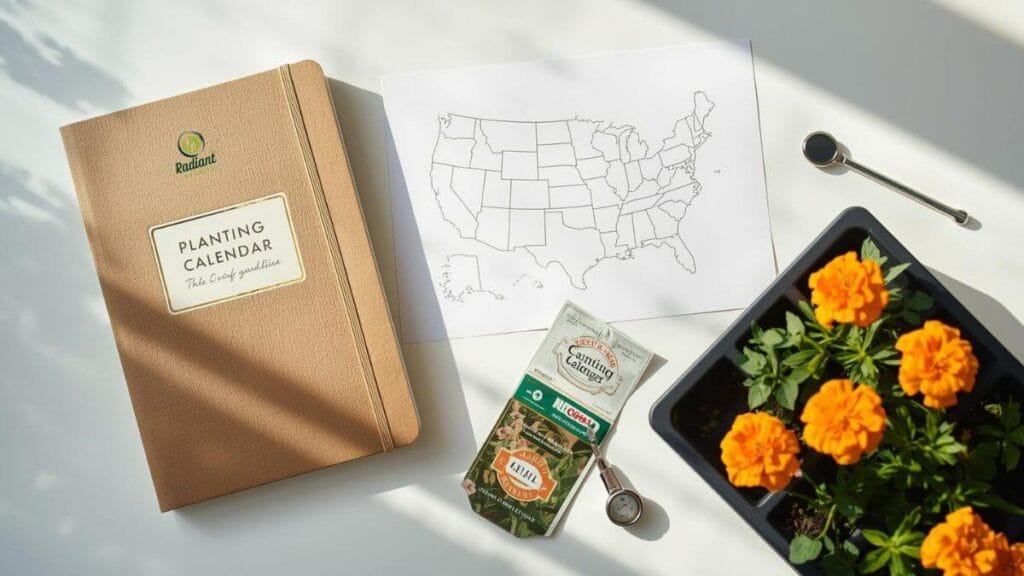
In the US, when to plant marigold seeds depends heavily on regional climate, not the calendar month. A cool spring in the Upper Midwest behaves very differently from an early, warm spring in the Deep South, even within the same USDA zone.
Why do US climates vary so much
- The US spans multiple climate patterns, from long, cold springs to early, warm ones.
- Temperature swings, soil warm-up speed, and frost patterns vary widely by region, affecting germination and early growth.
How to use the USDA zone + local frost date together
- USDA hardiness zones indicate average winter lows, not spring planting safety.
- Local last frost dates show when the freezing risk usually ends.
- For marigolds, use both: wait until frost risk is over and the soil has warmed before planting outdoors.
Regional planting patterns (high-level)
- Cool spring regions: Slower soil warming, greater frost risk, indoor starting is often safer.
- Warm spring regions: Faster soil warming, shorter frost window, outdoor sowing becomes reliable sooner.
- Variable regions: Sudden cold snaps make indoor starts a useful backup option.
Examples
- Upper Midwest logic: Cold soils linger after frost risk fades, so indoor starts help ensure strong early growth.
- Deep South logic: Soil warms quickly, making direct sowing practical once nights stabilize.
Common Timing Mistakes That Ruin Germination
Most marigold seed failures come from timing errors, not bad seeds. Starting too early, planting into cold soil, or rushing seedlings outdoors can slow germination, weaken plants, or wipe them out entirely.
Starting indoors too early
- Seedlings grow faster as conditions improve outdoors.
- When roots outgrow containers, plants become stressed and transplant poorly.
- Overgrown seedlings often stall after planting outside.
Planting outdoors into cold soil
- Marigold seeds need warmth to germinate properly.
- Cold soil delays sprouting and increases the risk of rot or failure.
- Calendar-based planting without checking soil warmth is a common mistake.
Skipping hardening off
- Indoor seedlings aren’t adapted to sun, wind, or temperature swings.
- Moving them straight outdoors can cause shock and stunted growth.
- Gradual exposure builds resilience before transplanting.
Too much water indoors
- Constantly wet soil encourages fungal diseases like damping-off.
- Seedlings may collapse suddenly even after germinating well.
- Good drainage and controlled watering are critical.
Avoid These Mistakes Checklist
- ✔ Don’t start seeds too far ahead of the last frost
- ✔ Don’t plant outdoors into cold, wet soil
- ✔ Don’t skip hardening off
- ✔ Don’t keep seedlings constantly soggy
- ✔ Match timing to local conditions, not the calendar
Example
- Seedlings started too early often look healthy indoors, but fail once transplanted.
- Seeds planted a bit later into warm soil usually germinate faster and grow stronger.
After Planting — What to Expect (Sprouts to Blooms)
Once planted at the right time, marigold seeds usually sprout quickly and move to flowering within weeks. How fast this happens depends on warmth, light, and whether you started seeds indoors or outdoors.
Germination: what to expect
- In warm, moist conditions, marigold seeds typically germinate within about a week.
- Cooler soil or uneven moisture slows emergence and can reduce success.
- Consistent warmth is the biggest driver of fast, even sprouting.
Thinning seedlings outdoors
- If seeds were direct sown, thin the seedlings once they develop true leaves.
- Removing crowded seedlings improves airflow, reduces disease risk, and allows stronger plants to develop.
Early care basics
- Sun: Marigolds need full sun for compact growth and heavy flowering.
- Watering: Keep soil evenly moist early on, then water more deeply but less often as plants establish.
- Pinching/deadheading: Pinching young plants encourages branching; removing spent blooms keeps flowers coming.
When blooms usually begin
- Indoor-started plants: Bloom sooner because growth begins weeks before outdoor conditions are ready.
- Direct-sown plants: Bloom later since all growth happens outdoors, but still flower reliably in warm conditions.
Examples
- Indoor-started marigolds often flower earlier than direct-sown plants because they’re already established when moved outside.
- Direct-sown marigolds may take longer to bloom, but they often catch up once summer heat arrives.
FAQ: When to Plant Marigold Seeds Indoors vs Outdoors
When should I plant marigold seeds indoors?
Start marigold seeds indoors 6–8 weeks before your local last frost date. This timing gives seedlings enough time to grow strong without becoming overgrown before transplanting. Indoor starting is especially helpful in cooler regions or if you want earlier blooms. [USDA Extension, RHS]
Can I plant marigold seeds directly in the ground?
Yes, but only after frost risk has passed and the soil is warm. Marigolds are warm-season annuals, and cold soil can delay or prevent germination. Direct sowing works best in warm regions with stable spring temperatures. [Missouri Botanical Garden, University Extension]
What temperature do marigold seeds need to germinate?
Marigold seeds germinate best in warm soil, not cold or soggy conditions. While exact temperatures vary, warmth and consistent moisture are key for fast, even sprouting. Cold soil is a common reason seeds fail to emerge.
How long do marigold seeds take to germinate?
Under good conditions, marigold seeds usually sprout within about a week. Cooler soil, uneven moisture, or low light can slow germination. Faster germination generally leads to stronger, more uniform seedlings.
Is it better to start marigolds indoors or outdoors?
It depends on your climate and goals. Indoor starting gives earlier, more predictable blooms, especially in short growing seasons. Outdoor sowing is simpler and works well in warm regions where spring conditions stabilize quickly.
When is it too late to plant marigold seeds?
It’s usually too late when there isn’t enough warm-season time left for plants to grow and bloom before fall. In most areas, marigolds planted later can still grow, but flowering may be limited.
Do marigolds need full sun to grow well?
Yes. Marigolds perform best in full sun, which promotes compact growth and heavy flowering. Too little sun often leads to weak plants and fewer blooms, even if planting timing is correct.
How do I know when seedlings are ready to transplant outside?
Seedlings are ready when they have several true leaves, sturdy stems, and outdoor nights are frost-free. The soil should feel warm, and seedlings should be hardened off gradually before transplanting.
Can marigolds handle a light frost?
No. Marigolds are not frost-tolerant, and even a light frost can damage or kill young plants. This is why frost dates matter so much when deciding when to plant marigold seeds outdoors.
Planting marigolds successfully comes down to timing, not guesswork. When you match frost dates, soil warmth, and your local climate, both indoor starts and outdoor sowing can work well. Starting indoors gives you a head start on blooms, while direct sowing keeps things simple in warm, stable springs. Once you understand when to plant marigold seeds, the rest is just good care and patience. Use your local conditions as your guide, and you’ll be rewarded with strong plants and bright, reliable flowers all season long.
![Lighting needs for [Indoor Tree Plants] from bright windows to low-light corners](https://www.radiantplants.com/wp-content/uploads/2025/07/How-to-Choose-the-Right-Indoor-Tree-Plant-for-Your-Space-768x512.webp)