Best plants in hanging baskets are trailing, fast-blooming plants that thrive in containers and keep producing flowers with minimal care—think petunias, calibrachoa, verbena, begonias, and fuchsias. When you choose the right plant for your sun exposure and watering routine, a single basket can stay full and colorful for months.
Hanging baskets are popular across the US and Canada because they maximize vertical space and deliver high visual impact, but they also dry out faster than garden beds. According to university extension data, container plants can lose moisture up to twice as fast in summer heat, which is why plant choice matters as much as care. Experienced gardeners know that the best results come from varieties bred for long bloom cycles, heat tolerance, and self-cleaning flowers.
In this guide, you’ll find the best plants in hanging baskets for full sun and shade, plus proven tips to keep them blooming strong from spring through fall—without constant fuss.
Table of Contents
In This Article
How to Choose the Best Plants in Hanging Baskets
Choosing the best plants in hanging baskets isn’t about what looks prettiest at the garden center—it’s about matching plants to sun exposure, watering habits, and growth style. Hanging baskets dry out faster than in-ground beds, get more wind, and rely entirely on you for nutrients. When the match is right, though, they deliver months of color with surprisingly little effort.
At a high level, successful hanging basket plants share three traits:
- Trailing or cascading growth so they spill naturally over the edges
- Long or repeat bloom cycles (or attractive foliage)
- Tolerance for container conditions, especially fluctuating moisture
Before picking specific plants, start with the most important decision: sun vs. shade.
Full Sun vs. Shade: What Actually Works
The best hanging basket plants for sun include petunias, calibrachoa, and verbena, which bloom heavily with 6+ hours of light. For shade, fuchsias, begonias, and impatiens perform best, producing color in bright indirect light without heat stress.
Sun exposure is often misunderstood. In US and Canadian gardening guides, full sun means at least 6 hours of direct sunlight, while shade usually means less than 4 hours, often with protection from afternoon heat. According to the USDA Plant Hardiness Zone framework, light exposure affects not just blooming, but water use and stress tolerance as well.
Full Sun Hanging Baskets
If your baskets hang on a south- or west-facing porch, fence, or balcony, go with sun lovers:
- Petunia – Classic, vigorous, and ideal for big, overflowing baskets
- Calibrachoa (Million Bells) – Smaller flowers, nonstop blooms, less deadheading
- Verbena – Excellent heat tolerance and strong trailing habit
These plants thrive in the sun but need consistent watering, especially during summer heat waves common across much of the US and southern Canada.
Shade & Partial Shade Hanging Baskets
For north-facing areas, covered porches, or spots with filtered light:
- Fuchsia – Elegant, long-blooming, and perfect for cool shade
- Begonia – Reliable color with lower water stress
- Impatiens – One of the best shade bloomers, especially in humid regions
Canadian and US extension services consistently recommend these for low-light container success, especially where afternoon sun is limited.
Quick Comparison Table (Decision Helper)
Plant | Sun Needs | Water Needs | Bloom Length | Maintenance |
|---|---|---|---|---|
Petunia | Full sun | High | Spring–Fall | Medium |
Calibrachoa | Full sun | Medium | Spring–Fall | Low |
Verbena | Full sun | Medium | Summer–Fall | Low–Medium |
Fuchsia | Shade | Medium | Spring–Fall | Medium |
Begonia | Shade/Partial | Low–Medium | Long season | Low |
Impatiens | Shade | Medium | Spring–Fall | Low |
Practical Care Tips (What Actually Helps)
- Match water needs: Mixing drought-tolerant and thirsty plants in one basket leads to stress.
- Check baskets daily in summer: University extension studies show containers can dry out up to twice as fast as garden soil.
- Use quality potting mix with moisture retention—never garden soil.
- Fertilize lightly but regularly (every 1–2 weeks) to support continuous blooms.
For a deeper dive on soil and fertilizer choices, see our internal guide on Best Fertilizer for Sick Plants at RadiantPlants.
Choosing the right plant from the start is the single biggest factor in hanging basket success—and it’s what separates baskets that struggle from ones that stay full and stunning all season.
Best Plants in Hanging Baskets for Full Sun
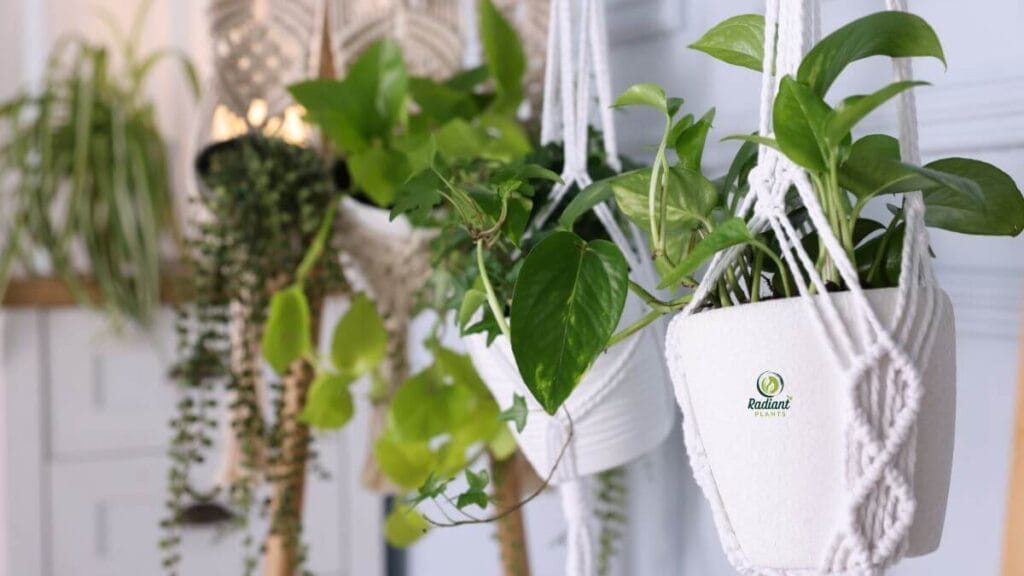
If your baskets get 6–8+ hours of direct sunlight, you need plants that don’t just survive heat—they thrive in it. The best plants in hanging baskets for full sun are heavy bloomers with strong roots, flexible stems, and high tolerance for drying conditions. These plants are commonly recommended by US university extension programs because they keep flowering even during long, hot summers.
Across the US and southern Canada, full-sun hanging baskets face three challenges: heat stress, fast moisture loss, and nutrient depletion. The plants below consistently outperform others because they’re bred or proven to handle these exact conditions.
Petunia – The All-Season Classic
Petunias are one of the best plants in hanging baskets for full sun because they bloom continuously, tolerate heat, and create a full cascading look. With regular watering and light feeding, they flower from spring until the first frost.
Petunias remain a top choice for a reason. Modern varieties—especially trailing and wave types—are bred for long bloom cycles and sun tolerance. According to multiple US extension trials, petunias perform best when they receive consistent moisture and weekly feeding, making them ideal for gardeners who water often.
Why petunias work in full sun:
- Thrive in 6–8+ hours of sun
- Fast growth fills baskets quickly
- Huge color range for design flexibility
Care tips:
- Water daily during heat waves
- Feed every 7–10 days with a balanced liquid fertilizer
- Light trimming mid-season keeps plants compact
👉 See our RadiantPlants guide to Best Fertilizer for Indoor Plants.
Calibrachoa (Million Bells) – Nonstop Blooms
Calibrachoa, also called million bells, are full-sun hanging basket favorites known for nonstop blooms and low maintenance. They tolerate heat better than petunias and don’t require deadheading.
Calibrachoa are often recommended by Proven Winners and university cultivar trials as a low-effort alternative to petunias. Their smaller flowers regenerate naturally, which makes them perfect for busy gardeners or hot climates.
Why calibrachoa stand out:
- Excellent heat and sun tolerance
- Self-cleaning flowers (no deadheading)
- Strong trailing habit without legginess
Care tips:
- Keep soil evenly moist (not soggy)
- Use a slightly acidic potting mix if possible
- Feed regularly—these are heavy feeders
They’re a smart pick for mixed baskets or “spiller-only” designs where you want clean, constant color.
Verbena – Heat & Wind Resistant
Verbena is one of the most heat-tolerant hanging basket plants, thriving in full sun with minimal water stress. It blooms heavily through summer and holds up well in windy, exposed locations.
Verbena is frequently highlighted in extension research for its exceptional durability. Unlike more delicate flowers, it keeps blooming during heat spikes and resists wilting in breezy conditions—ideal for balconies and open patios.
Why Verbena excels:
- Strong performance in hot, dry summers
- Excellent for windy areas
- Attracts pollinators like butterflies
Care tips:
- Allow soil to dry slightly between waterings
- Avoid overfertilizing (can reduce blooms)
- Trim lightly if growth becomes leggy
Full Sun Hanging Basket Design Tip
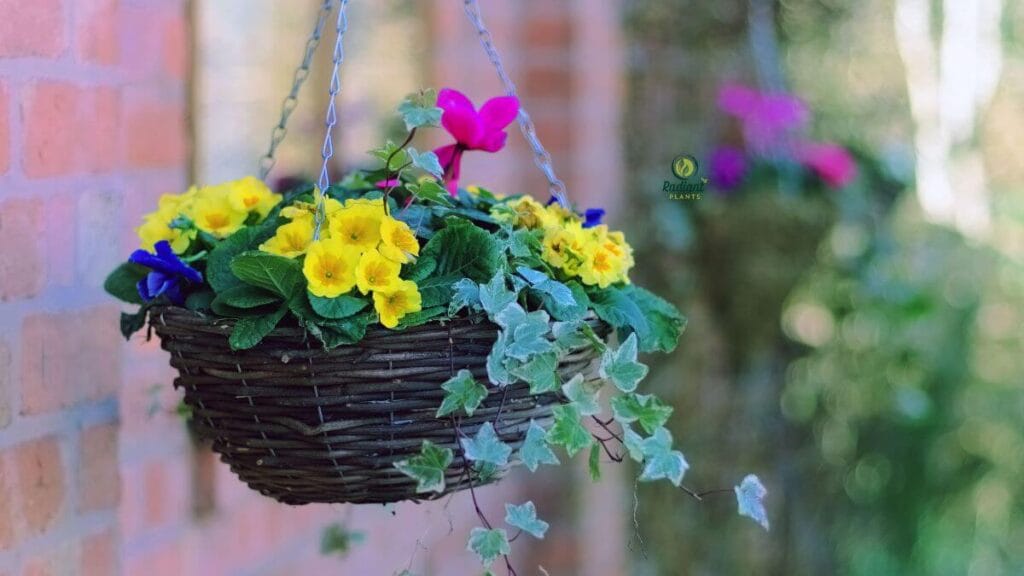
- Spiller-only: Calibrachoa or trailing petunias for bold impact
- Mixed: Upright petunia + trailing verbena for structure + flow
When planted correctly and cared for consistently, these full-sun performers are the backbone of the best plants in hanging baskets, delivering reliable, eye-catching blooms all summer long—even in tough heat.
Best Plants in Hanging Baskets for Shade & Partial Shade
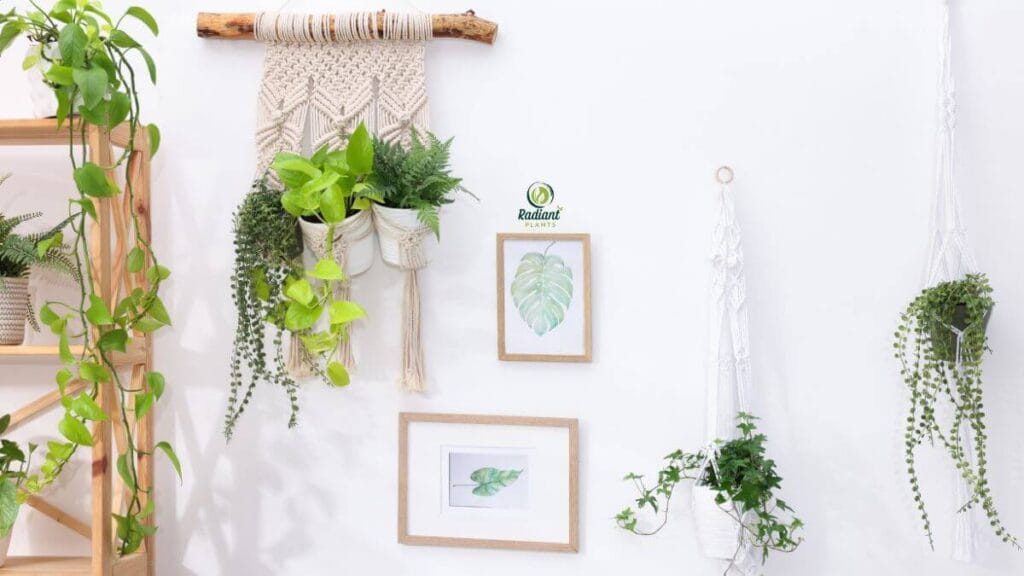
Not all hanging baskets need full sun to look amazing. In fact, some of the best plants in hanging baskets actually prefer shade or bright indirect light, making them perfect for north-facing porches, covered patios, balconies, and tree-shaded yards. The key is choosing plants that bloom well without heat stress and handle slower evaporation.
Shade baskets succeed when plants share three traits:
- Tolerance for low or filtered light
- Steady bloom or attractive foliage
- Moderate water needs (not drought lovers, not water hogs)
University extension services in both the US and Canada consistently note that shade baskets fail most often when sun-loving plants are forced into low light. Pick shade specialists, and the results are night-and-day.
Fuchsia – Best for Cool Shade
Fuchsias are among the best hanging basket plants for shade, producing elegant, dangling flowers in cool, bright indirect light. They thrive in sheltered areas and bloom continuously when kept evenly moist.
Fuchsias are a classic choice for cool, shaded locations, especially in northern US states and much of Canada. Their pendulum-shaped blooms make them natural spillers, and they perform best where temperatures stay moderate and direct afternoon sun is limited.
Why fuchsias work:
- Excellent performance in full shade to partial shade
- Long bloom season from spring to early fall
- Strong visual impact in hanging baskets
Care tips:
- Keep soil consistently moist (never let it dry out fully)
- Protect from the hot afternoon sun
- Feed lightly every 2 weeks
👉 For watering tips specific to containers, see our RadiantPlants Overwatering Symptoms guide.
Begonia – Shade + Long Bloom
Begonias are reliable shade hanging basket plants that offer long-lasting color with minimal maintenance. Many varieties bloom for months in partial shade and tolerate fluctuating moisture better than most flowers.
Begonias are widely recommended by US university extensions because they’re forgiving and adaptable. Both fibrous and tuberous types work well in baskets, especially where light is bright but indirect.
Why begonias stand out:
- Perform well in shade or morning sun
- Lower water stress than many flowering plants
- Strong disease resistance in modern varieties
Care tips:
- Water when the top inch of soil feels dry
- Avoid waterlogged soil
- Remove spent blooms occasionally for a tidy look
Begonias are a smart choice for gardeners who want color without constant attention.
Impatiens – Reliable Color
Impatiens are one of the most dependable hanging basket plants for shade, producing dense, colorful blooms in low light. Disease-resistant varieties now make them a safe choice for humid regions.
Impatiens have long been a go-to for shade, but modern downy mildew–resistant varieties have renewed their popularity across the US and Canada. Canadian gardening authorities often recommend these improved cultivars for consistent performance in shaded containers.
Why impatiens remain popular:
- Excellent bloom density in low light
- Soft, lush growth fills baskets fast
- Ideal for shaded porches and entryways
Care tips:
- Keep soil evenly moist
- Avoid intense afternoon sun
- Choose labeled disease-resistant varieties
Shade Depth Quick Guide
Light Level | Description | Best Plant Types |
|---|---|---|
Full Shade | No direct sun | Fuchsia, Impatiens |
Partial Shade | 2–4 hrs morning sun | Begonia, Impatiens |
Bright Indirect | Filtered or reflected light | Begonia, Fuchsia |
When chosen correctly, shade plants can be just as impressive as sun lovers. These options prove that the best plants in hanging baskets don’t need full sun—just the right light and simple care.
Low-Maintenance Hanging Basket Plants (Won’t Dry Out Fast)
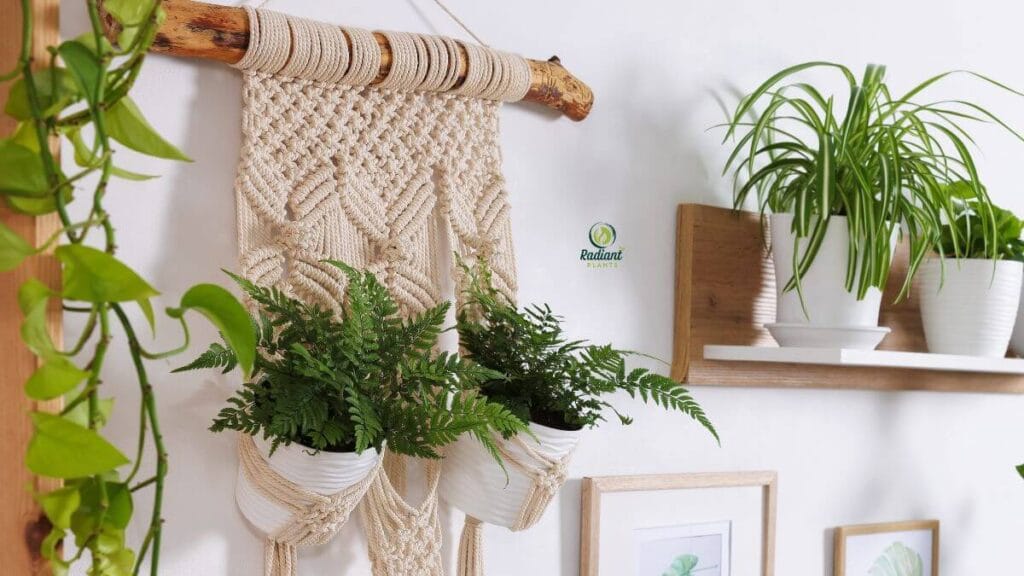
If you want great-looking baskets without daily babysitting, start with low-maintenance hanging basket plants that handle uneven watering. The best plants in hanging baskets for easy care are those with flexible stems, efficient root systems, and growth habits that bounce back after short dry spells.
US and Canadian university extension research consistently shows that hanging baskets lose moisture faster than in-ground containers, especially in heat and wind. Choosing drought-tolerant or forgiving plants reduces stress, cuts watering frequency, and keeps baskets attractive even when life gets busy.
Low-maintenance doesn’t mean no care—it means plants that recover quickly and keep blooming or looking good with basic attention.
Bacopa – Self-Cleaning Blooms
Bacopa is a low-maintenance hanging basket plant known for self-cleaning flowers and steady trailing growth. It tolerates brief dry periods better than many bloomers and keeps producing small flowers with minimal pruning.
Bacopa is often recommended by US extension programs for gardeners who want continuous blooms without deadheading. Its fine-textured stems spill naturally over basket edges, making it ideal as a spiller in both sun and partial shade.
Why bacopa works:
- Self-cleaning blooms (no deadheading)
- Tolerates short dry spells
- Soft trailing habit fills baskets evenly
Care tips:
- Water when the top inch of soil dries
- Avoid waterlogged soil
- Feed lightly every 2 weeks
👉 Learn more in our RadiantPlants guide to low-maintenance container flowers.
Geranium – Tough & Forgiving
Geraniums are among the most forgiving hanging basket plants, tolerating heat, wind, and occasional missed watering. Their thick stems and leaves help conserve moisture, making them ideal for low-maintenance baskets.
Geraniums (Pelargoniums) have long been favorites in US and Canadian container gardening because of their durability. Extension studies show they outperform many annuals in hot, exposed conditions where baskets dry out quickly.
Why geraniums excel:
- Excellent drought tolerance once established
- Strong upright-to-trailing growth
- Long bloom season with minimal feeding
Care tips:
- Allow soil to dry slightly between waterings
- Feed monthly rather than weekly
- Remove spent blooms to encourage reblooming
They’re a solid option for sunny, windy porches.
Sweet Potato Vine (Foliage Option)
Sweet potato vine is a low-maintenance foliage plant that thrives in hanging baskets, even during heat and drought. While it doesn’t flower, its bold trailing leaves provide consistent color with minimal care.
Sweet potato vine is frequently recommended by extension services as a stress-tolerant filler or spiller. It grows vigorously, recovers quickly from dryness, and pairs well with flowering plants that need visual support.
Why it’s easy-care:
- Excellent drought recovery
- Fast trailing growth
- No deadheading or bloom care
Care tips:
- Water deeply but less frequently
- Trim aggressively if it overtakes the basket
- Combine with flowering plants for balance
Why Hanging Baskets Dry Out (and How to Stop It)
Key takeaways:
- Wind increases evaporation
- Shallow containers heat up faster
- Poor potting mix drains too quickly
Simple fixes:
- Use a moisture-retentive potting mix
- Add coco coir or compost
- Water slowly until runoff stops
According to university container irrigation studies, slow, deep watering improves moisture retention and root health—especially in baskets.
By choosing forgiving plants and improving moisture retention, you’ll get the benefits of the best plants in hanging baskets—full, healthy growth—without constant upkeep.
How to Keep Hanging Baskets Blooming All Season
Even the best plants in hanging baskets will stop blooming if watering and feeding aren’t dialed in. Hanging baskets dry out faster, lose nutrients quicker, and show stress sooner than in-ground plants. The good news? With a simple system, you can keep baskets full, colorful, and healthy from spring through fall.
University extension programs in the US and Canada consistently point to three levers that matter most: watering timing, steady nutrition, and mid-season maintenance. Get these right, and your baskets do the rest.
Watering Schedule by Temperature
In summer, hanging baskets often need daily watering, especially above 85°F (29°C). In extreme heat, watering twice a day may be necessary. Cooler weather allows watering every 2–3 days, as long as the soil stays evenly moist.
How often you water depends less on the plant and more on temperature, wind, and basket size. According to the University of Florida and Cornell extension guidance, containers can lose moisture up to twice as fast as garden soil during hot weather.
Best practice watering rules:
- Water early morning whenever possible
- Water slowly until you see runoff
- Never rely on light surface watering
📊 Temp vs Watering Frequency Table
Daytime Temp | Watering Frequency |
|---|---|
Below 70°F (21°C) | Every 2–3 days |
70–85°F (21–29°C) | Daily |
85–95°F (29–35°C) | Daily, check twice |
95°F+ (35°C+) | Morning + evening |
👉 For tools that help retain moisture, see our RadiantPlants guide to self-watering baskets.
Fertilizer & Feeding Cheat Sheet
Hanging baskets need regular feeding because nutrients wash out quickly. Most flowering baskets bloom best when fed every 7–14 days with a balanced liquid fertilizer.
Plants in baskets rely entirely on you for nutrients. Extension research shows that even premium potting mixes run low on nitrogen and potassium within weeks.
Simple feeding plan:
- Use a balanced liquid fertilizer (10-10-10 or similar)
- Feed every 1–2 weeks during peak growth
- Reduce feeding slightly during extreme heat
Pro tip:
Too much fertilizer = leafy growth, fewer blooms. More isn’t better—consistent is.
How to Revive a Dried-Out Hanging Basket
If water runs straight through a hanging basket, the soil has become hydrophobic. Fully submerge the basket in water for 10–15 minutes to rehydrate the soil, then resume deep, slow watering.
This is one of the most common mid-season problems. When potting mix dries out completely, it can repel water—a well-documented issue in container irrigation studies.
Step-by-step revive method:
- Place the basket in a bucket or tub
- Submerge halfway to fully for 10–15 minutes
- Let excess water drain
- Resume normal watering schedule
Prevent it next time:
- Don’t let baskets fully dry out
- Use moisture-retentive mixes
- Water deeply, not quickly
Mid-Season “Haircut” Rules (Bloom Booster)
- Trim back leggy growth by ⅓ max
- Remove spent blooms or seed heads
- Refresh with fertilizer after pruning
Extension services consistently note that light pruning triggers new growth and more blooms, especially in petunias, verbena, and calibrachoa.
When watering, feeding, and maintenance work together, even beginners can keep the best plants in hanging baskets blooming hard all season—no guesswork, no burnout.
Indoor Hanging Basket Plants (Bonus Section)
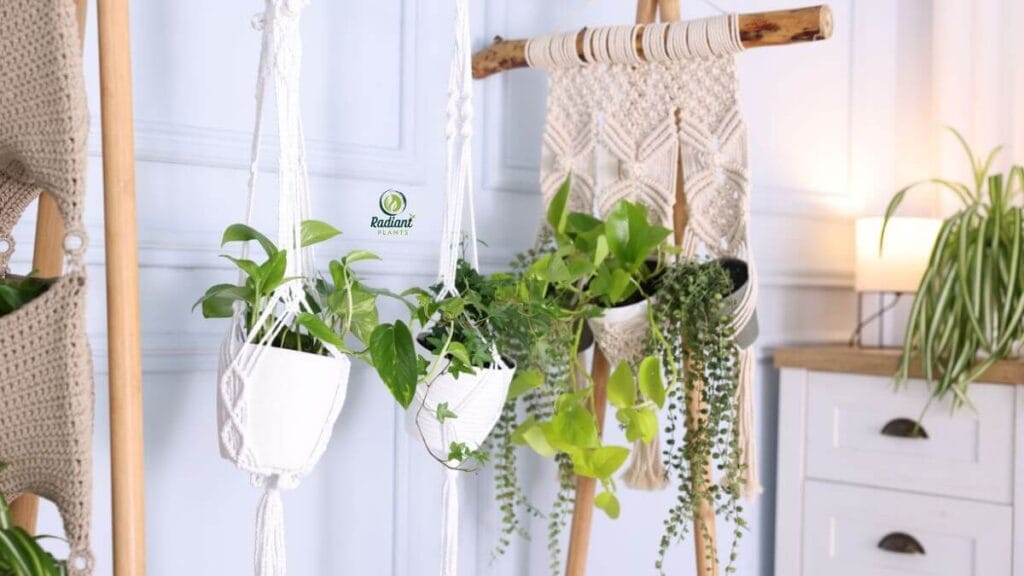
Yes—hanging baskets can absolutely be grown indoors, and they’re one of the easiest ways to add greenery without using floor space. The best plants in hanging baskets for indoors are trailing houseplants that tolerate lower light, adapt to stable indoor temperatures, and don’t need constant watering. Think foliage-first, bloom-second.
Indoor environments are different from outdoors: light is weaker, airflow is lower, and soil dries more slowly. University and EPA indoor plant studies show that consistent indirect light and proper drainage matter more than sun intensity. Choose plants that evolved to trail under forest canopies, and you’ll get long-term success.
Pothos
Pothos is one of the best indoor hanging basket plants thanks to its tolerance for low light, irregular watering, and fast trailing growth. It thrives in bright indirect light but adapts well to average indoor conditions.
Pothos is a top recommendation in indoor plant studies because it’s extremely forgiving. It grows steadily year-round and looks good even when conditions aren’t perfect—ideal for beginners or busy homes.
Why pothos works indoors:
- Thrives in low to medium indirect light
- Handles missed waterings better than most plants
- Long, trailing vines create instant impact
Care tips:
- Water when the top 1–2 inches of soil are dry
- Use a well-draining indoor potting mix
- Trim vines to control length and encourage fullness
⚠️ Pet note: Pothos is toxic to cats and dogs if ingested (ASPCA). Hang out of reach or choose pet-safe alternatives.
👉 See our RadiantPlants guide to low-light indoor plants for placement tips.
Philodendron
Philodendrons are excellent indoor hanging basket plants with heart-shaped leaves and strong trailing habits. They prefer bright indirect light but tolerate lower light better than many houseplants.
Trailing philodendrons (like heartleaf types) are commonly recommended by university extension programs for indoor containers because they’re adaptable and resilient. They grow slower than pothos but offer a cleaner, more refined look.
Why philodendrons are reliable:
- Adapt well to indirect or filtered light
- Moderate water needs
- Consistent growth without frequent pruning
Care tips:
- Let the soil dry slightly between waterings
- Avoid direct sun (can scorch leaves)
- Feed lightly every 4–6 weeks during growth season
⚠️ Pet note: Philodendrons are also toxic to pets per ASPCA guidelines.
Spider Plant
Spider plants are classic indoor hanging basket favorites, producing arching leaves and baby plantlets that cascade beautifully. They’re easy to care for and one of the safest choices for homes with pets.
Spider plants are frequently highlighted in indoor air quality studies and extension resources for their tolerance and safety. They perform well in a wide range of indoor conditions and recover quickly from stress.
Why spider plants shine:
- Tolerate low to bright indirect light
- Fast recovery from missed waterings
- Non-toxic to pets (ASPCA-approved)
Care tips:
- Water when the soil is mostly dry
- Bright indirect light encourages baby plantlets
- Trim runners or replant babies as needed
Indoor Hanging Basket Setup Tips
Quick best practices:
- Use baskets with drainage holes (always)
- Place near windows with filtered light
- Rotate baskets monthly for even growth
According to indoor plant research, light quality matters more than hours indoors—bright indirect light beats long, dim exposure.
When chosen wisely, indoor plants can be just as rewarding as outdoor baskets. These options prove that the best plants in hanging baskets aren’t limited to patios—they thrive beautifully indoors, too.
Regional Tips for US & Canada Gardens
The best plants in hanging baskets perform very differently depending on where you live. Temperature swings, frost dates, and growing season length all affect when to plant—and how long baskets will look their best. That’s why US and Canadian extension services strongly recommend using regional climate data, not calendar dates, when planning hanging baskets.
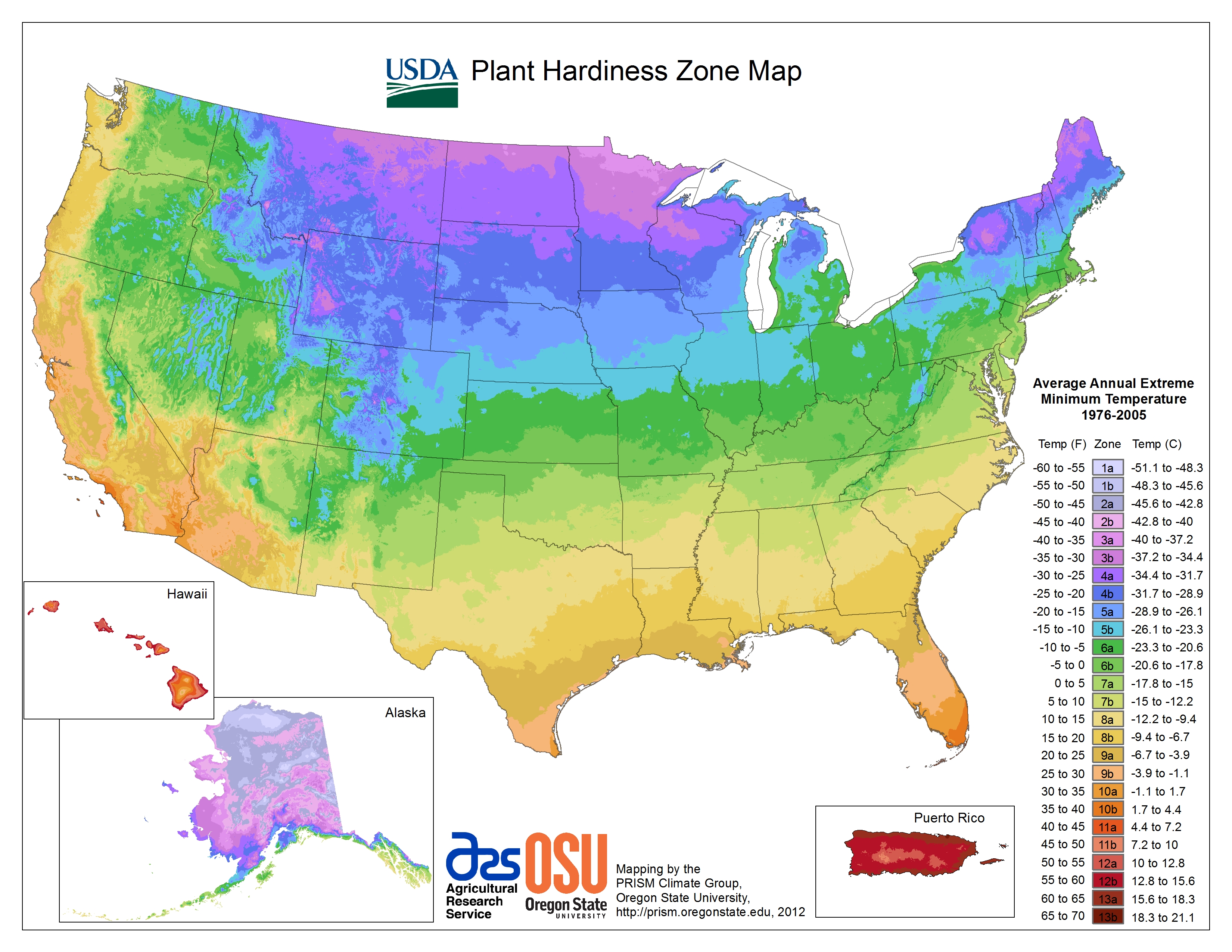
The two most reliable tools are the USDA Plant Hardiness Zone Map (US) and Canadian climate planting guides. These help you time planting correctly and avoid the #1 mistake: putting baskets out too early.
Best Time to Plant by Region
The best time to plant hanging baskets is after the last frost date in your region. In warm US zones, this can be early spring, while colder US states and most of Canada should wait until late spring to avoid cold damage.
Hanging baskets are more vulnerable than in-ground plants because roots are exposed to air temperatures. Even a light frost can set plants back weeks.
General regional guidelines:
Region | Typical Safe Planting Window |
|---|---|
Southern US (Zones 8–10) | March–early April |
Mid-US (Zones 6–7) | Late April–May |
Northern US (Zones 3–5) | Mid–late May |
Southern Canada | Late May–early June |
Northern Canada | Early–mid June |
Practical tips:
- Watch nighttime lows, not just daytime temps
- Keep baskets mobile early in the season
- Delay planting if nights drop below 45°F (7°C)
Overwintering Tips (Cold Zones)
In cold US and Canadian zones, most hanging basket plants are treated as annuals. However, some can be overwintered indoors if brought inside before frost and given bright indirect light.
Most flowering basket plants (petunias, calibrachoa, impatiens) will not survive frost outdoors. But that doesn’t mean the basket is done for the year.
Overwintering options:
- Bring indoors: Move baskets inside before the first frost
- Take cuttings: Save favorite varieties for next season
- Dormant storage: Possible for certain tuberous begonias
Indoor overwintering tips:
- Cut plants back by about one-third
- Place in bright indirect light
- Reduce watering significantly
Canadian government gardening guides note that overwintered plants often look rough at first but rebound strongly in spring with proper care.
Climate Awareness = Better Blooms
2023 USDA Plant Hardiness Zone Map
Canada’s Plant Hardiness Zones

Why this matters:
- Zones predict cold tolerance, not heat tolerance
- Hanging baskets feel cold faster than the ground soil
- Microclimates (balconies, walls, overhangs) can shift timing
Pro insight:
A sheltered porch in Zone 6 can behave like Zone 7, while a windy balcony in Zone 7 may feel colder. Always adjust for exposure.
When you match planting time to your climate—not the calendar—you set the best plants in hanging baskets up for longer seasons, stronger growth, and far better blooms.
FAQs
What are the best plants in hanging baskets for beginners?
The best plants in hanging baskets for beginners are petunias, calibrachoa, bacopa, and spider plants. These options are forgiving, bloom for long periods, and recover well from missed watering, making them ideal for low-stress container gardening at home.
How often should hanging baskets be watered in summer?
Most hanging baskets need watering once a day in summer. During heat waves above 90°F, baskets may need water twice daily. Because baskets dry out faster than garden soil, consistent deep watering is key to keeping plants healthy and blooming.
What hanging basket plants bloom the longest?
Petunias, calibrachoa (million bells), verbena, and begonias are among the longest-blooming hanging basket plants. With regular feeding and proper light, these plants can bloom continuously from spring until the first fall frost.
What are the best hanging basket plants for shade?
Fuchsias, begonias, and impatiens are some of the best hanging basket plants for shade. They perform well in bright indirect light or partial shade and provide steady color without needing full sun, especially on north-facing porches.
Can hanging baskets survive indoors year-round?
Yes, many hanging baskets can survive indoors year-round if planted with houseplants like pothos, philodendron, or spider plants. These indoor hanging plants tolerate lower light and stable temperatures, making them suitable for long-term indoor growth.
Why do hanging baskets dry out so fast?
Hanging baskets dry out quickly because they’re exposed to air on all sides, heat up faster, and have limited soil volume. Wind and sun increase evaporation, so using a moisture-retentive potting mix and deep watering helps slow moisture loss.
With the right plant choices and a simple care routine, hanging baskets can stay full, colorful, and healthy from spring through fall. Matching plants to sun or shade, watering based on temperature, and feeding consistently make all the difference—especially in containers that dry out fast. When you focus on proven performers and smart maintenance, the best plants in hanging baskets reward you with nonstop blooms and way less stress.
👉 For fresh ideas and visuals, follow our updates on Pinterest or sign up for our newsletter to get seasonal planting tips and shopping guides straight to your inbox.