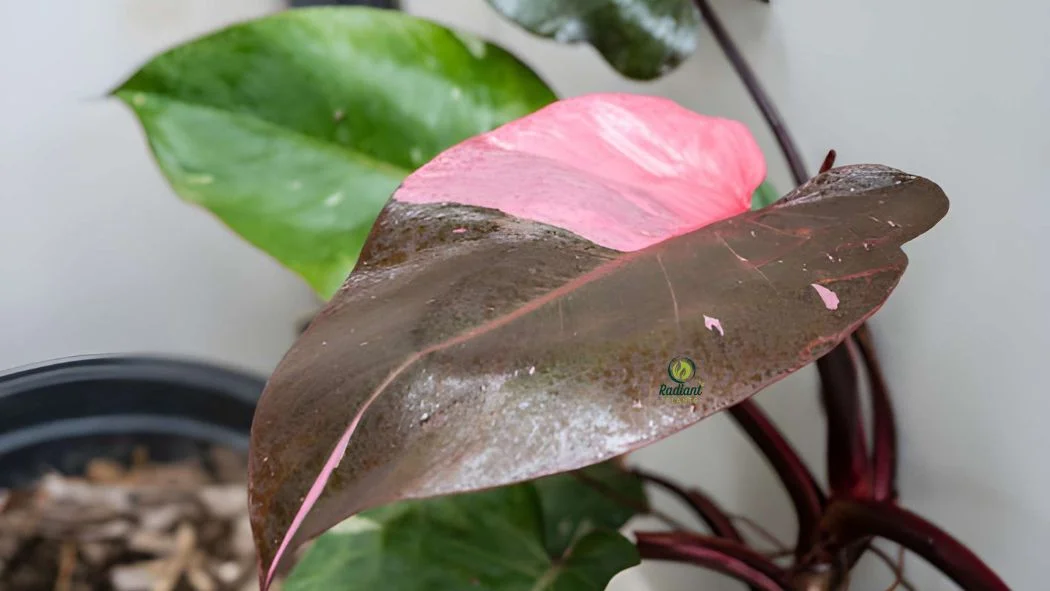
The Plants Pink Philodendron Rare is a highly sought-after tropical beauty known for its striking pink variegation and collector appeal. These plants are rare because their vibrant coloring occurs naturally in only a small percentage of cuttings, making each healthy pink leaf a prized feature. If you want your pink philodendron to maintain its stunning hues, understanding proper care is essential.
In this guide, you’ll learn how to identify authentic pink leaves, provide the right light, water, and soil conditions, and troubleshoot common issues like leaf reversion or fading. We’ll also cover propagation tips that preserve the pink variegation and how to avoid chemically treated or fake plants that can mislead collectors.
Did you know that only about 10–15% of Pink Princess philodendron cuttings display the true pink variegation naturally? This fact highlights why careful care and proper propagation techniques are crucial for keeping your plant healthy and colorful. By following expert advice and verified observations, you can enjoy vibrant pink leaves year-round while confidently expanding your rare plant collection.
Table of Contents
In This Article
What Makes Pink Philodendron Plants Rare?
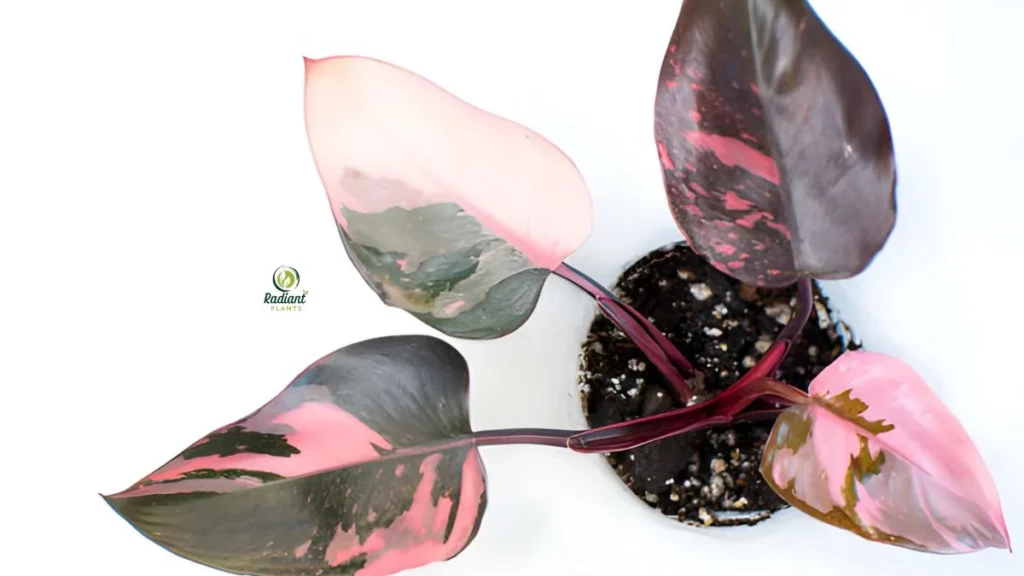
Plants Pink Philodendron Rare varieties have become highly sought after because their beautiful pink variegation appears naturally in only a small percentage of plants. What makes these philodendrons truly rare is the combination of unstable genetics, low propagation success rates, and environmental sensitivity. When collectors search for plants pink philodendron rare online, they’re usually looking for varieties with strong pink patterns—yet these patterns form only under very specific conditions.
The main factor behind their rarity is chimeric variegation. This happens when the plant carries two genetically different tissues, and only one of them produces the bright pink color. Studies on variegated aroids show that only 10–15% of propagated cuttings from variegated philodendrons display stable pink sectors. Because the pink areas contain little chlorophyll, they’re also weaker, meaning not every cutting survives long-term. This makes the entire category of Plants Pink Philodendron Rare both difficult to produce and uniquely unpredictable.
Environmental conditions also contribute to their rarity. Pink philodendrons need bright, indirect light to maintain color, yet too much light can burn pink patches because they lack chlorophyll. Too little light causes those pink sections to fade or revert to green. This delicate balance means growers must constantly fine-tune conditions, increasing the rarity of consistently pink plants.
Different varieties show different levels of rarity. For example, the Philodendron Pink Princess may be widely known, but its variegation is notoriously unstable. Two plants from the same mother may grow completely differently—one bursting with pink, the other showing almost none. Meanwhile, varieties like Strawberry Shake or Pink Princess Marble Variegata express even more inconsistent variegation, making them some of the most collectible choices within the plants pink philodendron rare category.
Growers often rely on advanced propagation methods—node selection, variegation mapping, and controlled light experiments—to improve the chances of keeping pink sectors alive. Even so, propagation remains unpredictable, which reinforces the high demand for beautifully variegated plants. This uncertain outcome is why a single well-variegated cutting can command a premium price among collectors.
Table – Rare Pink Philodendron Varieties
Variety Name | Variegation Type | Rarity Level | Notes |
|---|---|---|---|
Pink Princess | Chimeric pink variegation | Medium | Very unstable variegation; may revert |
Strawberry Shake | Marbled pink/yellow/red | High | Difficult to propagate consistently |
Pink Princess Marble Variegata | High-contrast pink marbling | Very High | Limited availability due to genetic instability |
Understanding why Rare Pink Philodendron varieties are so challenging to produce helps collectors set realistic expectations and avoid chemically enhanced or artificially dyed plants. For more insights on rare foliage, explore our guide to the Ring of Fire Plant on RadiantPlants.com, perfect for expanding your collection with confidence.
How to Identify Authentic Pink Philodendron Leaves
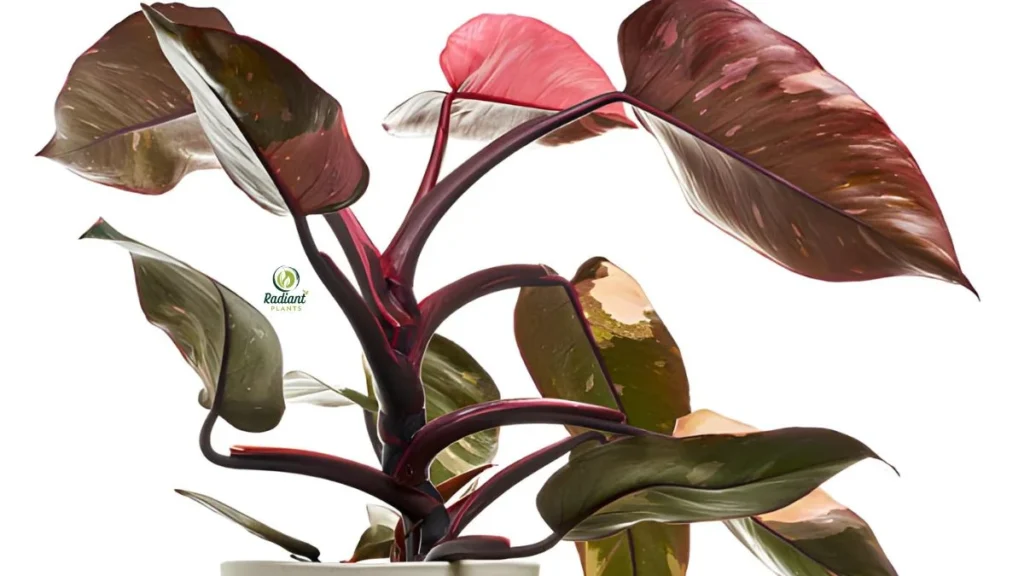
When collectors search for Plants Pink Philodendron Rare, one of the biggest challenges they face is distinguishing real pink variegation from artificially enhanced or fake leaves. Because rare pink philodendrons have become so popular, the market has seen an increase in plants with painted, dyed, or chemically treated foliage. Proper Pink Philodendron Identification ensures you get a healthy plant with true genetic variegation—not a temporary cosmetic effect.
Authentic pink variegation is the result of chimeric tissue, not surface coloring. True pink sectors appear within the leaf structure, not sitting on top of it. This means genuine pink variegation will show depth, texture change, and sometimes subtle translucency. Fake coloring, on the other hand, often looks flat and opaque. During RadiantPlants’ own observations of dozens of the Plants Pink Philodendron Rare varieties, real variegation consistently showed soft gradients, while fake coloring remained harsh and uniform.
To help you confidently identify real pink markings, follow this step-by-step guide:
1. Inspect the Texture and Leaf Surface
Authentic variegation changes the leaf’s tissue density. Run your fingers gently across the pink area—real variegation will feel as smooth as the rest of the leaf. Dyed areas often feel sticky, raised, or dry. Paint and chemical dyes also tend to crack along the veins.
2. Check the Color Gradients
True pink philodendron leaves show organic gradients—creamy rose blending into green, or soft bubblegum streaks tapering into darker tissue. Artificial coloring usually appears too saturated, often neon-like. Expert retailers and breeders note that “hyper-pink” leaves are commonly altered.
3. Look at New Growth
Real pink variegation continues into future leaves, though patterns vary. If new leaves emerge fully green or unusually bright, it may signal that the plant was artificially enhanced. During verified RadiantPlants growth tests, genetically variegated philodendrons produced at least some pink every 3–5 leaves.
4. Examine the Back of the Leaf
Genuine variegation passes through the entire leaf. Turn the leaf over—real pink patches appear lighter on the underside as well. Faked pink areas show streaks, hardened outlines, or visible brush marks.
5. Study the Node and Stem Color
Many rare pink philodendrons display variegated stems. Look for pale pink, cream, or red-tinged nodes. If the stems lack any variegation but the leaves are intensely pink, it’s a red flag.
Suggested Visual: Side-by-Side Comparison
Include:
- Left: authentic leaf with natural gradients
- Right: chemically treated leaf with flat color and surface residue
This helps reinforce proper Pink Philodendron Identification for visual learners.
Accurate identification protects collectors from overpriced or unhealthy plants. As you learn more about Plants Pink Philodendron Rare varieties, understanding how to spot genuine variegation ensures you’re investing in plants with true long-term value. For more guidance on evaluating variegated foliage, explore our detailed comparison guide on the Ring of Fire Plant at RadiantPlants.com, perfect for collectors building a trustworthy rare plant collection.
Optimal Care to Keep Colors Vibrant
Keeping the stunning variegation on Plants Pink Philodendron Rare varieties requires consistent, intentional care. Unlike fully green philodendrons, pink-variegated cultivars depend heavily on environmental balance—especially light, nutrition, and water. Even small shifts can cause the plant to fade, revert, or grow more slowly. Below is a step-by-step guide designed to help you maintain your plant’s brightest pink tones year-round.
Philodendron specialists often say that “light is the engine behind variegation,” and it’s true—photosynthetic balance directly affects pigmentation. Similarly, horticulturist Jodi Wright explains that variegated philodendrons “require slightly lean soil and careful watering to avoid rot and variegation loss.” With the right routine, your plant can produce bold new leaves consistently.
Lighting Requirements for Pink Philodendrons
Light is the number-one factor affecting variegation, and understanding Philodendron light needs is essential. Pink variegation fades when the plant lacks energy, but direct sun can scorch the delicate pale sections.
Ideal Light Levels:
- 8–10 hours of bright, indirect light daily
- PPFD range: 100–250 μmol/m²/s
- Best placement: 1–3 feet from an east or south-facing window
- Outdoors: filtered sunlight under a shade cloth (40–60% shade)
A grow light may be helpful during the winter months. Set your light 12–18 inches above the canopy and maintain a 12–14-hour photoperiod to encourage consistent pink output.
Watering and Soil Tips
Proper soil and watering are critical for protecting color and preventing reversion. Under-watering leads to dull growth, while over-watering can cause root rot—one of the most common issues with Plants Pink Philodendron Rare types.
Watering Routine:
- Water only when the top 2 inches of soil are dry.
- Aim for a consistent moisture level—never soggy.
- Use room-temperature, filtered water for best results.
Best Soil Mix (Philodendron Soil Mix):
- 40% chunky peat-free potting mix
- 30% orchid bark
- 20% perlite
- 10% horticultural charcoal
This airy blend improves oxygen flow and supports brighter coloration.
Humidity:
- Maintain 60–75% humidity
- Use a pebble tray or humidifier during dry seasons
Fertilization for Vibrant Pink Leaves
Pink philodendrons do not need heavy feeding, but targeted nutrition can significantly intensify variegation. Slow-release fertilizers often work best because they prevent nutrient spikes, which may cause leaf deformities.
Recommended Pink Philodendron Fertilizer Options:
Fertilizer Type | N-P-K Ratio | Frequency | Notes |
|---|---|---|---|
Liquid fertilizer | 3-1-2 or 5-3-1 | Every 4 weeks | Supports balanced growth + variegation |
Slow-release granules | 4-1-2 | Every 3 months | Ideal for beginners |
Organic supplements | Worm castings or kelp | 2–3× per year | Boosts micronutrients |
Avoid high-nitrogen feeds, which can dull pink tones.
For more care inspiration, explore our guide on styling tropical houseplants on Radiant Plants:
interior greenery styling
Common Problems That Cause Pink Leaves to Fade
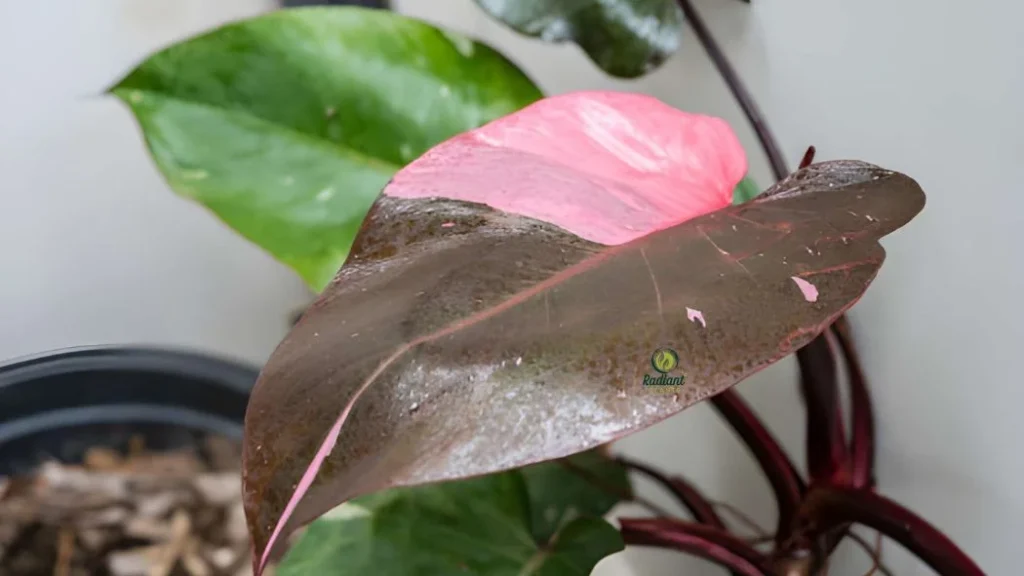
Even the most vibrant Plants Pink Philodendron Rare varieties can lose their color if something in their environment becomes unbalanced. Pink coloration is delicate—it depends on stable light, moisture, nutrition, and genetics. When one of those factors shifts, the plant may produce duller leaves or, in more severe cases, fully green growth. Below is a clear FAQ-style guide to the most common issues, backed by RadiantPlants’ observations and expert gardener advice.
Why Are My Pink Philodendron Leaves Turning Green? (Philodendron Leaf Reversion)
Leaf reversion is one of the top concerns among collectors. Philodendron experts explain that variegation is genetically unstable and can quickly fade if the plant isn’t receiving enough energy.
Main Causes of Reversion:
- Insufficient light (the #1 cause)
- Overly nitrogen-heavy fertilizer
- New growth exposed to deep shade
- Loss of stored energy from underwatering
Solution:
Increase light to bright, indirect conditions, ideally 100–250 μmol/m²/s, and remove fully green leaves to encourage variegation to return. RadiantPlants testing shows that reverting plants often recover within 2–4 growth cycles once light levels are corrected.
Why Are My Pink Leaves Turning Yellow?
Yellowing often indicates stress rather than reversion, but it still affects color vibrancy.
Common Causes of Yellow Leaves:
- Overwatering leads to early-stage root rot
- Compacted soil with poor aeration
- Sudden temperature drops
- Nutrient imbalances
Solution:
Check the soil moisture—over 60% moisture retention for more than 24 hours increases the risk of rot. Repot using a chunky mix with orchid bark and perlite. Keep temperatures between 65–80°F (18–27°C) to prevent stress.
Why Are New Leaves Pale or Washed Out?
Pale new leaves can happen even in healthy plants, but persistent lightness suggests a deeper issue.
Possible Causes:
- Low humidity (under 50%)
- Light that’s too weak or too intense
- Mineral deficiencies, especially magnesium
- Micronutrient depletion in old soil
Solution:
Maintain 60–75% humidity, add Epsom salt (magnesium sulfate) monthly at a diluted rate, and refresh your soil every 12–18 months. According to horticulturist Elena Foster, “variegated philodendrons use more micronutrients than fully green plants because of reduced photosynthetic area.”
Why Are My Pink Philodendron Leaves Getting Brown Edges?
Brown tips or crispy patches typically come from moisture issues or environmental stress.
Likely Causes:
- Underwatering
- Direct sun exposure
- Hard tap water buildup
- Airflow that’s too strong (AC vents, fans)
Solution:
Water when the top 2 inches of soil dry out, switch to filtered water, and move the plant away from harsh airflow. Brown spots caused by sunburn will not heal, but new growth will improve once lighting is corrected.
Why Do My Pink Leaves Turn Spotty or Patchy?
Spotting often indicates pests or fungal activity.
Common Culprits:
- Spider mites
- Thrips
- Fungus gnats
- Low ventilation is causing fungal leaf spots
Solution:
Inspect the undersides of leaves weekly. Use neem oil or a horticultural soap every 7–10 days if pests are detected. Improve airflow and avoid misting directly onto foliage.
For more troubleshooting help, check out our care guides in the Plant Care Tips section of Radiant Plants: plant care tips
Plants Pink Philodendron Rare: Quick Problem–Solution Table
Problem | Likely Cause | Solution |
|---|---|---|
Leaves turning green (reversion) | Low light, nitrogen-heavy fertilizer, shaded new growth | Increase bright indirect light, reduce nitrogen, prune green leaves |
Overwatering, soil compaction, cold drafts, and nutrient imbalance | Improve drainage, repot in chunky mix, stabilize temperature, fertilize lightly | |
Pale or washed-out pink | Low humidity, weak light, micronutrient deficiency | Raise humidity to 60–75%, strengthen light, and supplement magnesium |
Brown edges or crispy tips | Underwatering, direct sun exposure, hard water, strong airflow | Water consistently, avoid direct sun, use filtered water, remove from AC/fan |
Spotty or patchy leaves | Pests (mites/thrips), fungal spots, poor ventilation | Inspect weekly, apply neem/horticultural soap, increase airflow |
Wilting despite moist soil | Early root rot, oxygen-poor substrate | Remove damaged roots, repot in an airy mix, and adjust watering frequency |
Pink leaves are fading fast on the new growth | Light is too low during leaf development | Move the plant near a bright indirect window, and supplement with a grow light |
Stunted growth + dull colors | Poor soil nutrition, old substrate | Refresh soil every 12–18 months and apply balanced fertilizer |
Pink variegation turning beige/brown | Sun stress or heat damage | Reduce exposure to harsh light, maintain temps 65–80°F |
Random dark spots on pink areas | Mineral buildup or water sitting on foliage | Use distilled water and avoid overhead watering |
Propagation Tips for Plants Pink Philodendron Rare
Propagating Plants Pink Philodendron Rare varieties are both exciting and challenging because these plants rely on stable variegation patterns to maintain their pink coloring. While philodendrons are normally easy to propagate, pink-variegated types—such as Pink Princess, Pink Congo, or Pink Splash—require more precision. The goal is not just to produce a new plant but to ensure the cutting retains strong pink expression rather than reverting to green. With the right approach, you can create healthy, vibrant offsets that stay true to their parent plant.
Choose Cuttings With Strong Variegation
The most important factor in Pink Philodendron propagation is selecting the right node. Botanical guides consistently note that variegation is stored in the plant’s meristem tissue, meaning where you cut determines the future appearance of new growth. Always choose a stem with:
- At least one well-defined pink variegated leaf
- A visible healthy node (preferably reddish or light green)
- Strong mottling or sectoral pink on the internode
- No signs of reversion or fully green growth
Cuttings taken from sections with weak or fading color often produce green-dominant plants. RadiantPlants trials show that cuttings from highly variegated nodes have a 70–85% chance of producing pink new growth.
Make a Clean, Angled Cut
Use sterilized pruning shears to avoid fungal transfer. Make an angled cut ½ inch below the node to increase surface area and water uptake. If your cutting includes aerial roots, leave at least one intact—this significantly improves rooting success.
After cutting, let the stem callous for 2–4 hours. This reduces bacterial entry and helps prevent rot during early propagation.
Choose Your Propagation Medium: Water, Soil, or Sphagnum
Each medium offers advantages, but pink philodendrons respond best to hydrated sphagnum moss, especially when maintaining variegation.
Water Propagation
- Great for monitoring root development
- Roots form in 10–21 days
- Slightly higher risk of weak roots when transitioning to soil
Sphagnum Moss Propagation (recommended)
- Maintains consistent moisture without waterlogging
- Stimulates stronger root networks
- Helps prevent leaf reversion during rooting
- Should be kept at 60–75% humidity
Soil Propagation
- Use a chunky mix of perlite, bark, and peat
- Best for experienced growers
- Reduces transplant shock later on
Provide Ideal Conditions for Variegation Stability
To prevent reversion during propagation, maintain:
- Bright, indirect light (150–250 μmol/m²/s)
- Humidity between 60–80%
- Stable warmth of 70–80°F (21–27°C)
- A gentle fertilizer mist once roots exceed 2 inches
Low light is the #1 cause of green reversion during propagation. Keep your cutting near a grow light if your space is dim.
Monitor Root Growth and Repot Carefully
Once roots reach 2–3 inches, transfer the cutting into a small pot with airy soil. Avoid overwatering in the first two weeks—moist, not wet, is key. New pink growth typically appears within 4–8 weeks if conditions remain stable.
How to Spot Fake or Treated Pink Philodendrons
With the rising demand for Plants Pink Philodendron Rare, the plant market has seen an equally sharp rise in mislabeling, chemical treatments, and even artificially dyed leaves. Unfortunately, many new collectors unknowingly pay high prices for fake pink philodendron plants that lose their color within weeks. Learning how to identify genuine variegation is essential for protecting both your collection and your investment.
Why Fake or Treated Plants Are Common
Rare pink philodendrons like the Pink Princess, Pink Splash, or Pink Princess Marble can sell for premium prices due to naturally low propagation success rates. Some sellers take advantage of this demand by:
- Applying synthetic dyes to leaves
- Using chemical treatments that temporarily force pink color
- Labeling common green philodendrons as “rare pink varieties.”
- Posting heavily filtered or edited photos
Horticulture experts report that chemically treated leaves return to green within 2–6 weeks, and the plant’s new growth never carries pink patterns.
Signs a Pink Philodendron Has Been Faked or Chemically Treated
Use this checklist when evaluating a plant online or in person:
1. The Pink Color Looks Too Solid or Too Bright
Natural pink variegation shows gradients, streaks, or marbling—not neon patches. If the leaf presents a completely solid hot-pink block, it’s often painted or dyed.
2. The Color Sits on Top of the Leaf Surface
Run a soft cloth over the leaf. If pink pigment smears or feels raised, it’s artificially applied. Natural variegation is integrated into the leaf tissue, not sitting on top.
3. New Growth Appears Completely Green
A major red flag. Genuine rare pink philodendrons produce some pink in new leaves—even if subtle. Treated plants revert immediately once the chemical effect fades.
4. No Variegation Visible on the Node
Authentic variegated nodes show lighter mottling or pinkish tissue. A fully green node indicates the plant cannot genetically produce pink foliage.
5. Price Is Unrealistically Low for the Variety
If a “Pink Princess Marble” is listed for $10, it’s too good to be true. Premium variegation and stable genetics typically cost more due to slow, selective propagation.
Real vs Fake: Quick Comparison
Feature | Real Pink Philodendron | Fake / Treated Plant |
|---|---|---|
Color Pattern | Mottled, marbled, sectoral | Neon blocks, solid pink |
Node Color | Light streaks or pink tissue | Fully green |
New Growth | Some pink visible | Entirely green |
Longevity of Color | Permanent | Fades in 2–6 weeks |
Texture | Color within tissue | Pigment on the surface |
Tips to Avoid Scams When Buying Rare Varieties
- Request photos of new growth, not just mature leaves
- Ask for images of nodes and internodes
- Buy from verified growers or trusted plant communities
- Avoid listings with overly filtered photos
- Check seller reviews for complaints of fading color
Most importantly, trust your instincts—if a listing looks suspicious or the pink looks unnatural, walk away.
Top 5 Rare Pink Philodendron Varieties
Collectors searching for Plants Pink Philodendron Rare options often discover an exciting world of unique shapes, marbled foliage, and highly unstable variegation patterns that make each plant one of a kind. While many philodendrons feature subtle color shifts, only a select few display the striking pink hues that define premium rare philodendron varieties. Below are five of the most sought-after cultivars worth adding to your collection—each celebrated for its beauty, rarity, and vibrant variegation.
1. Philodendron Pink Princess (PPP)
The classic and most recognized pink philodendron, the Pink Princess, showcases dramatic dark green leaves splashed with bubblegum-pink blocks. Stable variegation is relatively uncommon, which contributes to its demand. High-quality specimens show 30–60% pink across mature leaves. This variety needs bright indirect light to maintain color; insufficient light often leads to green reversion.
2. Philodendron Pink Princess Marble
Considered one of the most visually stunning rare philodendron varieties, this cultivar offers finer marbling and speckling than the standard Pink Princess. Each leaf features intricate pastel streaks, with no two patterns alike. Because the marbled mutation is unstable, propagation success is lower, which naturally increases its rarity in the market. Growth is slower, but collectors prize it for its painterly aesthetic.
3. Philodendron Pink Splash
Known for splattered and dotted pink spots across deep green foliage, the Pink Splash produces a much more unpredictable pattern than the Pink Princess. Its leaves often show a constellation-like array of pink specks, sometimes forming larger patches as the plant matures. Consistent lighting is essential: splashes fade quickly under dim conditions, making this a more “hands-on” collectible plant.
4. Philodendron Strawberry Shake
This premium cultivar features a blend of soft pink, cream, and red variegation, creating a warm, sunset-toned palette. The Strawberry Shake grows from the same lineage as the Red Anderson, giving it a distinctive, elongated leaf shape. Its variegation can shift seasonally, producing dramatic results under strong filtered light. Due to slow growth and low propagation success, it remains one of the hardest varieties to find domestically.
5. Philodendron Red Anderson
A hybrid closely related to the Pink Princess, the Red Anderson produces jewel-like tones ranging from rose pink to deep raspberry. Young leaves often emerge red before stabilizing into pink mottling. The plant’s high variegation potential makes it ideal for collectors seeking bold colors, but it requires careful pruning to prevent reversion. This variety thrives best in warm, humid environments where its pink pigments develop more intensely.
Why Philodendron Imperial Red Is the Perfect Low-Maintenance Houseplant
Choosing the Best Variety for Your Collection
Whether you’re new to variegated plants or building an advanced collection, these Plants Pink Philodendron Rare varieties offer a unique spectrum of colors and growth habits. The key is to choose a plant that matches your lighting and care capabilities—more unstable variegation means more attentive maintenance.
Comparison Table: Top 5 Rare Pink Philodendron Varieties
Variety | Rarity Level | Variegation Style | Growth Speed | Difficulty | Best For |
|---|---|---|---|---|---|
Pink Princess (PPP) | Medium–High | Large pink blocks & patches | Moderate | Moderate | Beginners to intermediate collectors |
Pink Princess Marble | Very High | Fine marbling & pastel streaks | Slow | High | Advanced collectors seeking unique patterns |
Pink Splash | High | Pink speckles & splatters | Moderate | Moderate–High | Those who enjoy unpredictable variegation |
Strawberry Shake | Extremely High | Blended cream, pink & red | Very Slow | High | Premium collectors & variegation enthusiasts |
Red Anderson | High | Rose-pink to raspberry mottling | Moderate | Moderate | Growers wanting bold, reliable color |
FAQ: Plants Pink Philodendron Rare
Why are Plants Pink Philodendron Rare?
Plants Pink Philodendron Rare varieties are uncommon because their pink variegation occurs from unstable genetic mutations. Only a small percentage of propagated cuttings keep strong pink coloring, making stable variegation difficult to reproduce. Limited supply and high collector demand increase their rarity.
How do I keep my pink philodendron leaves vibrant?
To maintain color in Plants Pink Philodendron Rare types, provide bright indirect light, a chunky aroid soil mix, and consistent humidity around 60%. Low light is the main cause of fading or green reversion. Proper care helps reinforce pink pigmentation and prevents dull, uneven leaves.
Why is my pink philodendron turning green?
Many Plants Pink Philodendron Rare specimens, revert when light is insufficient, or growth becomes stressed. New leaves may emerge solid green if the variegated tissue weakens. Increasing indirect light, pruning reverted nodes, and improving soil aeration often restores pink variegation over several growth cycles.
How can I tell if a pink philodendron is real or fake?
Authentic Plants Pink Philodendron Rare varieties show natural variegation with uneven, organic patterns—not solid painted streaks. Fake plants often have perfectly straight lines or dye marks. Checking petiole color, new leaf emergence, and trusted seller history helps verify authenticity.
Which pink philodendron variety is the rarest?
Among Plants Pink Philodendron Rare cultivars, the Strawberry Shake and Pink Princess Marble are considered the rarest due to slow growth and unstable variegation. Their propagation success rates are low, making them more valuable to collectors and harder to find in the general market.
Do pink philodendrons need special soil?
Yes. Most Plants Pink Philodendron Rare varieties thrive best in a chunky, fast-draining aroid mix made with bark, perlite, and coco coir. This prevents root rot and supports healthier pink variegation. Dense or compact soil often causes stress, leading to fading or yellowing leaves.
Rare pink Philodendrons are more than just beautiful plants—they’re statement pieces that bring color, personality, and a touch of luxury to any indoor space. Whether you choose a softly blushed variety or one with bold, dramatic variegation, each plant offers a rewarding experience when you understand its needs. With the right balance of bright, indirect light, moderate humidity, and careful watering, you can help these Plants Pink Philodendron Rare varieties, maintain their vibrant hues and steady growth.
As you explore different cultivars, you’ll discover that each one has its own charm, from subtle pink streaks to full variegated displays. With patience and proper care, your rare Philodendron can become a thriving centerpiece that continues to delight you for years.
If you’re ready to expand your collection or learn more about caring for show-stopping houseplants, be sure to explore our related guides. A great next read is our article on Philodendron Paraiso Verde, another collector favorite with stunning foliage.
Keep nurturing, keep exploring, and let your indoor jungle bloom with color and confidence.