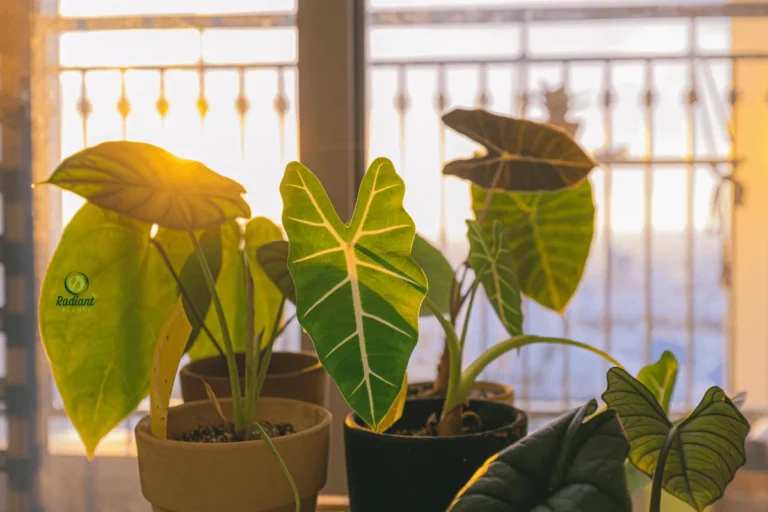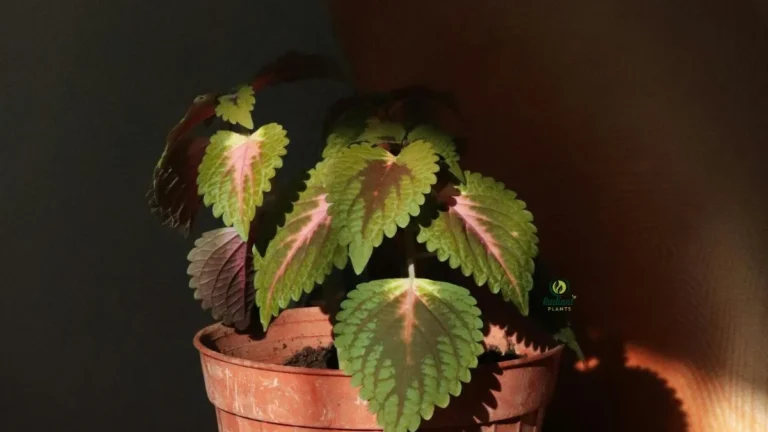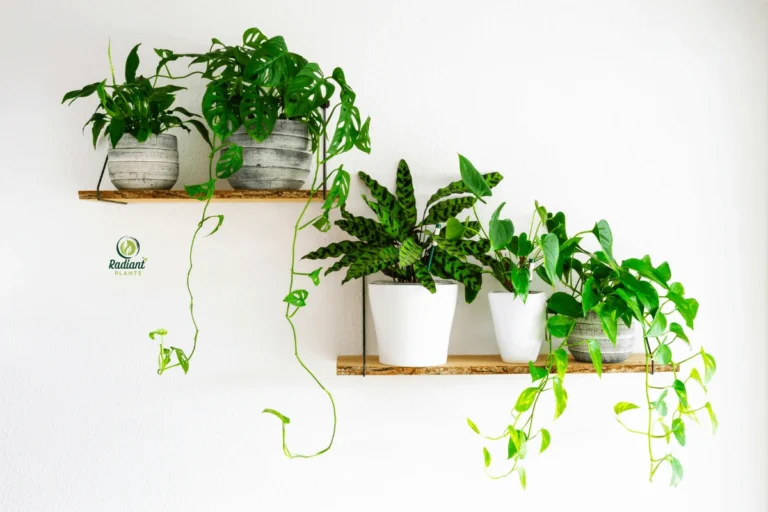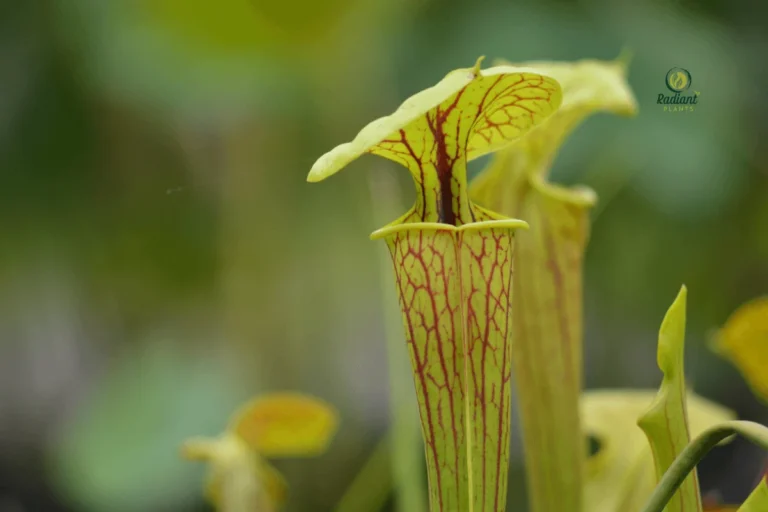
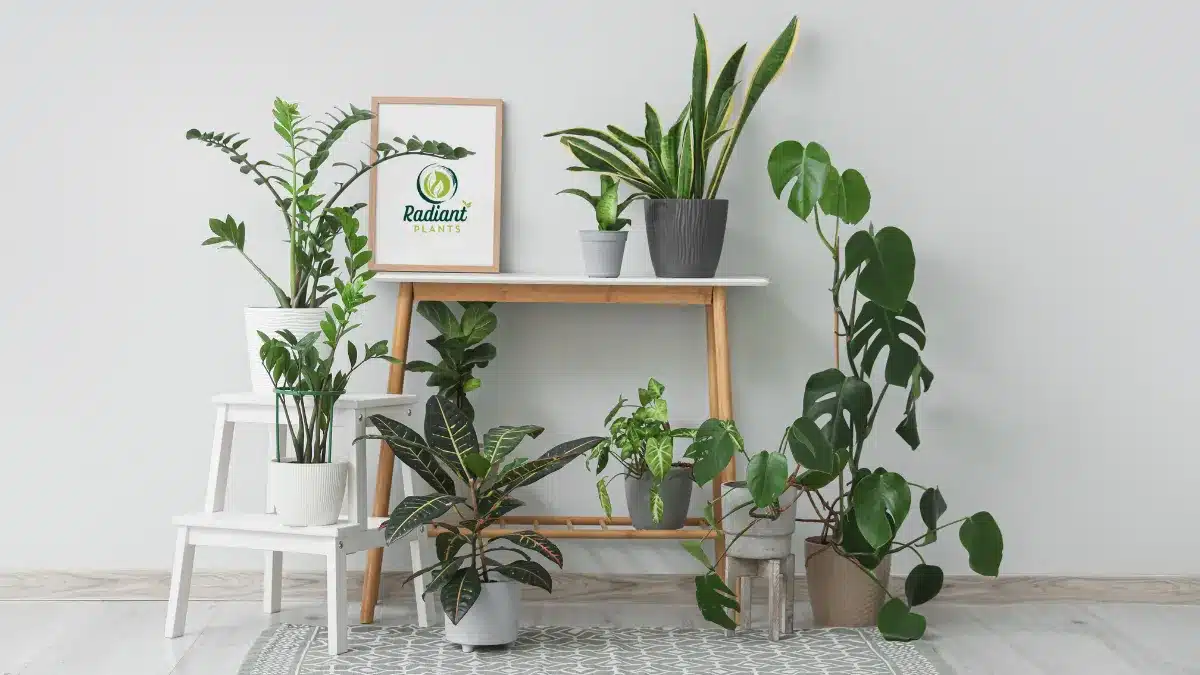
Main plant types for homes:
- Foliage plants (easy, beginner-friendly)
- Flowering plants (decorative, more care)
- Succulents and cacti (need bright light)
- Herbs (functional, kitchen use)
- Air plants (no soil, decorative)
💡Plant types are groups of plants categorized by growth style, care needs, and indoor use, helping you choose the right plant for your home.
Most people struggle with plant types not because there are too many options, but because it’s unclear which one actually fits their home. The wrong choice often leads to slow decline, even with good care. This guide cuts through that confusion by showing you how different plant types behave indoors—and how to match them to your light, lifestyle, and goals so you can choose confidently and avoid common beginner mistakes.
In This Article
What Are Plant Types?
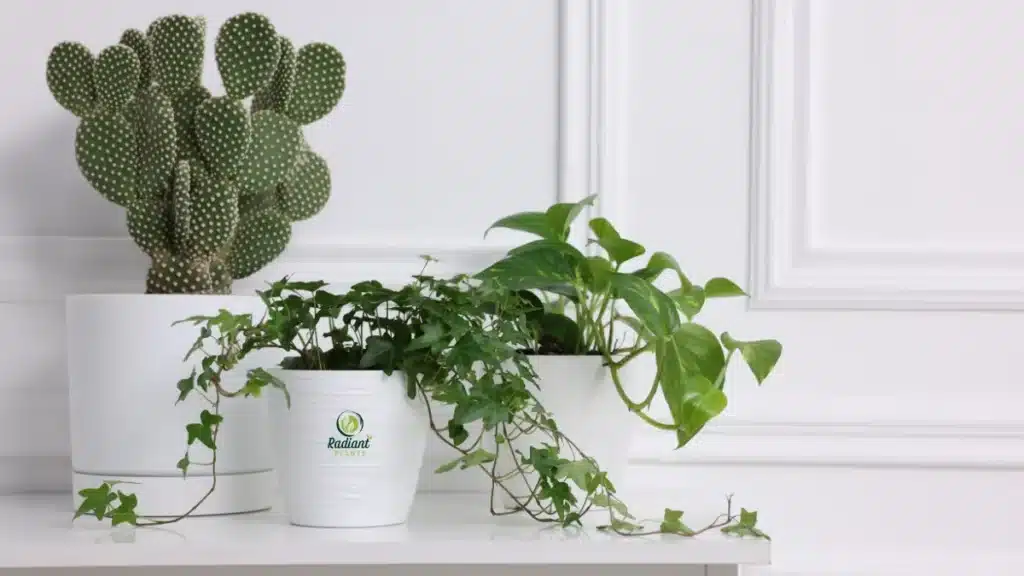
Plant types are categories that group plants based on how they grow, what they need, and how they’re used—especially indoors. For most homeowners, plant types simply mean choosing between groups like foliage plants, flowering plants, succulents, herbs, and air plants.
In practical terms, plant types are not about scientific classification—they’re about helping you quickly understand what will work in your home. Instead of learning botanical families, you’re learning which plants thrive in low light, which need more care, and which are easiest to keep alive.
Why plant types matter (for real homes)
Most beginners don’t fail because they picked a “bad plant”—they fail because they picked the wrong type for their environment.
For example:
- A succulent in a dark living room → struggles and stretches
- A flowering plant with inconsistent care → drops blooms quickly
- A foliage plant in moderate light → usually adapts and survives
At Radiant Plants, we’ve found that understanding plant types first is what prevents 80% of beginner mistakes.
How plant types are grouped (simple way)
For indoor and home use, plant types are best grouped by:
- Growth habit → leafy (foliage) vs blooming (flowering)
- Care style → low water (succulents) vs regular care plants
- Use case → decorative (monstera), functional (herbs), or compact (air plants)
This approach is far more useful than scientific categories because it directly answers:
👉 “Will this plant survive in my home?”
Common examples of plant types
Here’s how the main categories show up in real life:
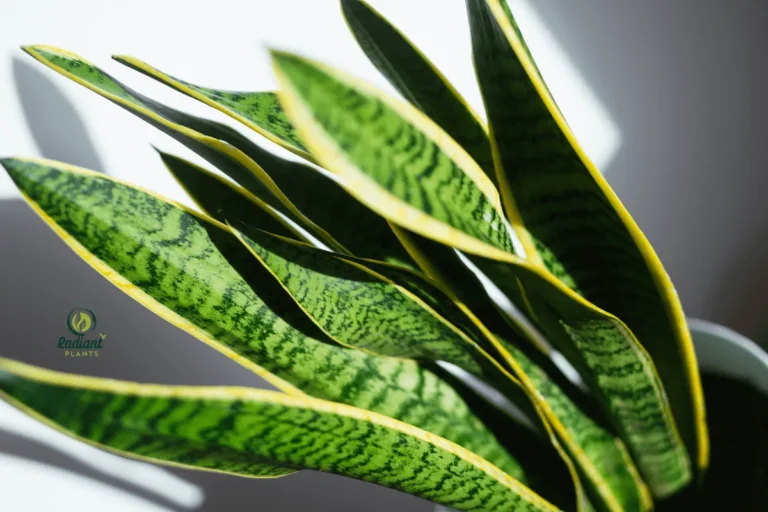
- Foliage plants: pothos, snake plant, ZZ plant → best for beginners
- Flowering plants: orchids, peace lilies → more decorative but sensitive
- Succulents & cacti: aloe, jade → need strong light and careful watering
- Herbs: basil, mint → useful but need sunlight
- Air plants: Tillandsia → unique but easy to neglect
Quick diagnosis box
Start here if you’re not sure what plant type fits your home:
- Low light room → choose foliage plants
- Bright sunny window → try succulents or herbs
- Busy schedule → stick with low-maintenance foliage plants
- Want flowers → choose flowering plants (expect more care)
What this guide focuses on
This guide is built to help you choose the right plant type, not memorize plant science.
As you go through the next sections, you’ll learn:
- Which plant types fit your light and lifestyle
- Which ones are easiest to start with
- and how to avoid choosing a plant that won’t survive your space
If you’re new, it’s also worth reviewing a basic indoor plant care guide before choosing, since watering, light, and soil affect every plant type.
The 5 Main Plant Types for Homes and Indoor Spaces
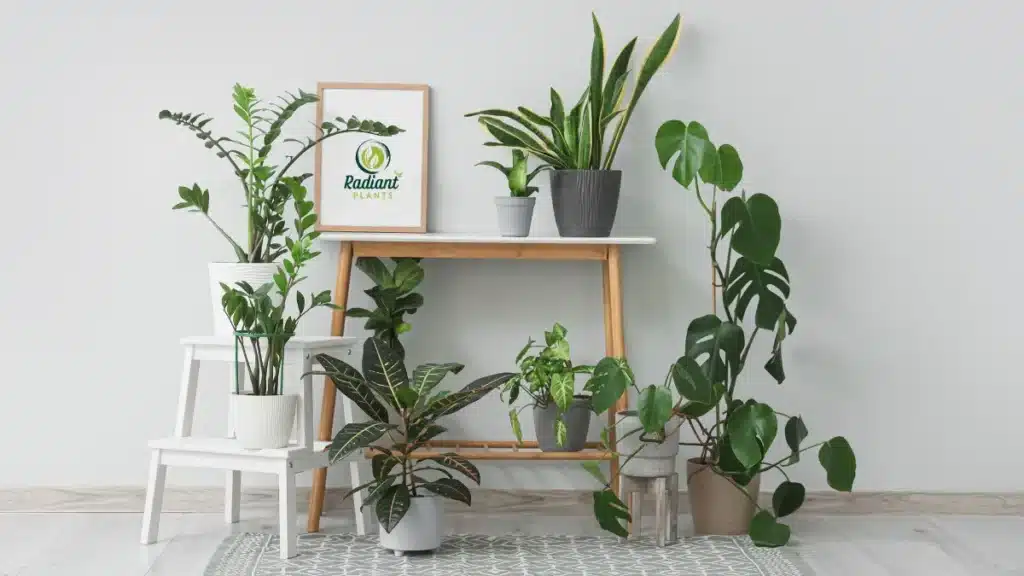
The main plant types for homes are foliage plants, flowering plants, succulents and cacti, herbs, and air plants. These five categories cover almost everything you’ll find in garden centers and online, and they’re the most useful way to choose plants based on real home conditions—not botany textbooks.
For homeowners, this classification works because it connects directly to light, care level, and purpose. Instead of guessing, you can quickly narrow down what will actually survive in your space.
Quick comparison: plant types at a glance
Plant Type | Best For | Light Level | Care Difficulty |
|---|---|---|---|
Foliage plants | Beginners, low maintenance | Low to medium | Easy |
Flowering plants | Decorative blooms | Medium to bright | Moderate |
Succulents & cacti | Sunny spaces, low watering | Bright direct light | Moderate |
Herbs | Cooking, kitchen use | Bright light | Moderate |
Air plants | Decorative, no soil setups | Bright indirect light | Moderate |
Foliage Plants
Foliage plants are grown for their leaves, not flowers, and they’re the most reliable choice for indoor spaces. If you’re unsure where to start, this is your safest category.
Best for:
- Beginners
- Low-light rooms
- Busy or inconsistent care routines
Common examples:
- Pothos
- Snake plant
- ZZ plant
- Monstera
At Radiant Plants, we’ve found that foliage plants succeed in most homes because they tolerate imperfect conditions better than other types.
👉 If you’re just starting, explore easy indoor plants for beginners—most of them fall into this category.
Flowering Plants
Flowering plants are grown for their blooms and are often chosen for visual impact. They can transform a room—but they usually need more consistency.
Best for:
- Decorative spaces
- Bright rooms with stable care
Common examples:
- Orchids
- Peace lilies
- African violets
What actually happens in homes:
Many people buy flowering plants expecting constant blooms, but flowers are temporary. Without proper light and care, plants often revert to just leaves or stop blooming entirely.
Succulents and Cacti
Succulents and cacti store water in their leaves or stems, which makes them drought-tolerant—but not automatically “easy.”
Best for:
- Sunny windows
- People who prefer less frequent watering
Common examples:
- Aloe vera
- Jade plant
- Echeveria
What beginners often get wrong:
- Putting them in low light → they stretch and weaken
- Watering too often → root rot
At Radiant Plants, we’ve seen that most succulent problems come from low light, not watering alone—a key detail many guides miss.
Herbs
Herbs are functional plants you can use in cooking, and they’re one of the most rewarding plant types when conditions are right.
Best for:
- Kitchens
- Sunny windows
- People who want practical use
Common examples:
- Basil
- Mint
- Rosemary
Real-life insight:
Herbs often fail indoors, not because they’re difficult, but because they don’t get enough sunlight. Most need several hours of strong light daily.
Air Plants
Air plants (Tillandsia) don’t grow in soil—they absorb moisture and nutrients through their leaves.
Best for:
- Decorative setups
- Small spaces
- Creative displays
Common examples:
- Tillandsia varieties
What actually works (and what fails):
They look simple, but many beginners forget regular soaking or humidity. As a result, they dry out faster than expected.
Expert insight (what competitors miss)
Most guides treat these plant types as equal, but in real homes, they are not.
- Foliage plants → highest success rate indoors
- Succulents → highest failure rate in low light
- Flowering plants → highest maintenance expectations
Choosing the right type isn’t about preference—it’s about matching the plant to your environment first.
That’s what the next section will help you do.
How to Choose the Right Plant Type for Your Home

The right plant type depends on four things: your light, your time, your goal, and your home setup. If you match these correctly, most plants will thrive; if you ignore them, even “easy” plants will struggle.
At Radiant Plants, we’ve found that plant success is 80% environment and only 20% plant choice. So instead of asking “What plant should I buy?”, the better question is:
👉 “What plant type fits my home?”
Quick diagnosis box: Best plant type based on your home setup
- Dark room or shaded space → Foliage plants
- Bright window with sun → Succulents, cacti, or herbs
- Busy or forgetful schedule → Low-maintenance foliage plants
- Want flowers → Flowering plants (with more care)
- Small space or decor setup → Air plants or compact foliage plants
Choose Based on Light
Light is the first filter—and the most common reason plants fail.
- Low light (north-facing rooms, far from windows):
→ Choose foliage plants like snake plant, ZZ plant, pothos
→ For more options, see the best low-light indoor plants - Bright indirect light (near windows, no harsh sun):
→ Most foliage plants + some flowering plants thrive here - Bright direct sunlight (south-facing windows):
→ Best for succulents, cacti, and herbs
What actually works:
Many beginners think “low light” means no light. In reality, plants still need some natural light to survive.
👉 In winter, light drops significantly indoors, so even bright rooms may behave like low-light spaces. This is where using grow lights indoors can make a huge difference.
Choose Based on Care Level
Different plant types require very different levels of attention.
- Lowest effort (best for beginners):
→ Snake plant, ZZ plant, pothos (all foliage types) - Medium effort:
→ Most common indoor foliage plants - Higher effort:
→ Orchids, calatheas, and flowering plants that need humidity and consistent care
What beginners often get wrong:
They choose plants that look impressive but require stable routines.
At Radiant Plants, we’ve seen that inconsistent care kills more plants than lack of knowledge.
👉 If you want low-effort success, start with easy indoor plants for beginners.
Choose Based on Goal
Your goal should shape the plant type—not the other way around.
- Want easy greenery:
→ Foliage plants - Want flowers and color:
→ Flowering plants - Want something useful (cooking, scent):
→ Herbs - Want a statement plant:
→ Large foliage plants like monstera
Insight most guides miss:
A plant can look perfect in photos, but fail your goal if it doesn’t match your environment. A thriving, simple plant looks better than a struggling “fancy” one.
Choose Based on Household Factors
Your living situation matters more than most people think.
- Pets:
→ Some plant types are toxic → check pet-safe houseplants - Kids:
→ Avoid fragile or toxic plants - Travel or busy schedule:
→ Choose drought-tolerant foliage plants - Small apartments or shelves:
→ Compact foliage plants or air plants
Real-life example:
If you travel often, a peace lily (flowering plant) will likely fail, while a ZZ plant can survive missed watering cycles.
Comparison table: If your situation is X, choose Y
Low-light room | Best Plant Type |
|---|---|
Low light room | Foliage plants |
Bright sunny window | Succulents, herbs |
Beginner / busy lifestyle | Low-maintenance foliage |
Want flowers | Flowering plants |
Small space | Air plants, compact foliage |
Non-toxic foliage plants |
Simple selection checklist
Before choosing any plant type, ask:
- How much natural light does my room get?
- How often will I realistically care for this plant?
- Do I want function, decoration, or simplicity?
- Do I have pets or space limitations?
If you can answer these clearly, you’ll avoid most beginner mistakes.
⚠️ Warning: Do not choose based on looks alone
This is the #1 reason plants fail.
- A beautiful succulent in low light → stretches and weakens
- A flowering plant without stable care → drops blooms
- A trendy plant in the wrong space → declines slowly
At Radiant Plants, we’ve found that matching plant type to environment always beats choosing the “prettiest” plant first.
Expert takeaway
Choosing the right plant type is not about memorizing names—it’s about matching conditions to categories.
If you get that right, even simple plants will thrive. If you get it wrong, even “easy” plants will struggle.
The next step is narrowing this down further—starting with the easiest plant types for beginners.
Best Plant Types for Beginners
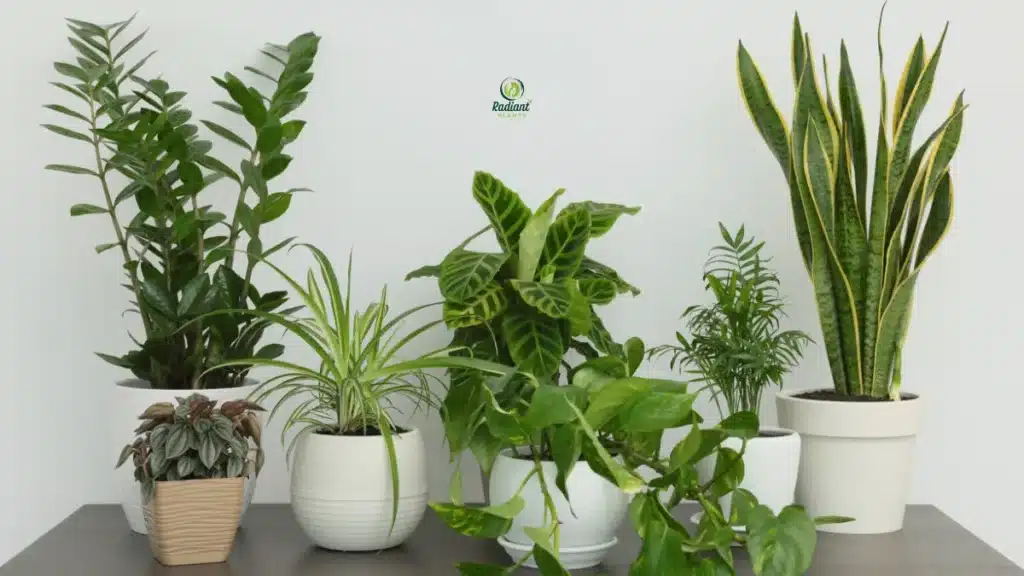
The best plant types for beginners are foliage plants because they tolerate low light, irregular watering, and typical indoor conditions. If you want the highest chance of success, start with forgiving, leaf-based plants before trying flowering or specialty types.
At Radiant Plants, we’ve found that most beginners succeed when they start simple—and fail when they start trendy. The goal isn’t to pick the most beautiful plant, but the one most likely to survive in your home.
Quick diagnosis box: Best plant type if you’re a beginner
- No experience + average home light → Foliage plants
- Sunny window + want something useful → Herbs
- Very bright light + minimal watering → Select succulents
- Want flowers right away → Flowering plants (expect more care)
Best Beginner-Friendly Plant Types
1. Foliage Plants (Best overall choice)
These are the easiest and most reliable indoor plants.
Why they work:
- Adapt to low and medium light
- Handle missed watering better than most types
- Grow steadily without needing perfect conditions
Top beginner examples:
- Snake plant → extremely forgiving
- Pothos → fast-growing and adaptable
- ZZ plant → survives neglect better than most
👉 If you’re unsure where to start, explore easy indoor plants for beginners, where these are explained in detail.
You can also go deeper with guides like snake plant care, pothos care, and ZZ plant care to build confidence early.
2. Herbs (Good for sunny spaces)
Herbs can be beginner-friendly only if you have enough light.
Best for:
- Kitchens with bright windows
- People who want practical use
Examples:
- Basil
- Mint
- Rosemary
What actually happens:
Herbs often fail indoors because they don’t get enough sunlight—not because they’re difficult.
3. Succulents (Only in the right conditions)
Succulents are often labeled “easy,” but they are only beginner-friendly in bright light.
Best for:
- South-facing windows
- People who prefer less frequent watering
Examples:
- Aloe vera
- Jade plant
Reality check:
In low light, succulents stretch, weaken, and eventually fail. This is one of the most common beginner frustrations.
Plant Types Beginners Often Misjudge
Succulents
- Marketed as low-maintenance
- Actually fail quickly in low-light homes
Flowering plants
- Look attractive in stores
- Require consistent care, light, and sometimes humidity
Decorative “trendy” plants
- Chosen for aesthetics
- Often mismatched to real home conditions
At Radiant Plants, we’ve seen that most beginners don’t fail because they lack skill—they fail because they start with the wrong plant type.
Simple checklist: Good first plant type if…
- You forget to water → choose ZZ plant or snake plant
- Your room is dim → choose pothos or snake plant
- You want fast results → choose pothos
- You want something nearly unkillable → choose ZZ plant
- You have a sunny kitchen → try herbs
⚠️ Warning: Trendy does not mean beginner-friendly
This is one of the biggest traps.
- Instagram plants ≠ easy plants
- Store displays are temporary conditions
- Many “popular” plants need more care than advertised
What actually works:
Start with a plant that survives your environment. Once you succeed with one, you can expand confidently.
Expert takeaway
If you’re new, don’t overthink plant types.
Start with one forgiving foliage plant, learn how it responds in your space, and build from there. That single success will teach you more than trying five difficult plants at once.
Plant Types by Light Conditions
Light is the most important factor when choosing plant types—more than watering or soil. If the light in your home doesn’t match the plant’s needs, it will struggle no matter how well you care for it.
At Radiant Plants, we’ve seen that most indoor plant failures are actually light problems, not watering mistakes. So before choosing a plant type, you need to correctly identify your lighting conditions.
Quick diagnosis box: Choose plant types based on your light
- Dark room or far from windows → Foliage plants (low-light tolerant)
- Bright room, no direct sun → Foliage + some flowering plants
- Sunny window (direct sun) → Succulents, cacti, herbs
Comparison table: Plant types by light needs
Light Condition | Best Plant Types | Common Examples |
|---|---|---|
Low light | Foliage plants | Snake plant, ZZ plant, pothos |
Bright indirect light | Foliage + flowering plants | Monstera, peace lily, philodendron |
Direct sunlight | Succulents, cacti, herbs | Aloe, jade plant, basil |
Best Plant Types for Low Light
Low-light spaces are common in homes—bedrooms, hallways, or rooms with small windows.
Best plant types:
- Foliage plants (most reliable)
- Some shade-tolerant species
Examples:
- Snake plant
- ZZ plant
- Pothos
👉 For more options, explore the best low-light indoor plants.
What actually works:
Low-light plants don’t grow fast, but they survive well. They adapt by slowing growth rather than thriving.
Common mistake:
People assume “low light” means no light.
In reality, all plants need some light to survive.
Best Plant Types for Bright Indirect Light
This is the ideal indoor condition and supports the widest range of plant types.
Best plant types:
- Most foliage plants
- Many flowering plants
Examples:
- Monstera
- Philodendron
- Peace lily
What works best:
Plants grow steadily and maintain healthy leaves without stress.
Real-life scenario:
A living room near a window with sheer curtains usually falls into this category—perfect for beginners who want flexibility.
Best Plant Types for Direct Sun
Direct sunlight is strongest near south- or west-facing windows.
Best plant types:
- Succulents
- Cacti
- Herbs
Examples:
- Aloe vera
- Jade plant
- Basil
What beginners often miss:
Sunlight through windows can be intense, especially in summer. Some plants can burn if suddenly exposed to strong direct light.
⚠️ Warning: Low light tolerance is not the same as no light
This is one of the most misunderstood concepts.
- Low-light plants survive in dim rooms
- But they still need indirect light to live
A plant in a windowless room will decline over time, even if it’s labeled “low light.”
Expert tips: How to get light right
- Observe where natural light falls during the day
- Move plants closer to windows rather than deeper into rooms
- Rotate plants to ensure even growth
- Watch for signs like stretching or pale leaves → see signs a plant needs more light
At Radiant Plants, we’ve found that simply moving a plant 2–3 feet closer to a window can dramatically improve its health.
Seasonal note: Why winter changes everything
In winter, daylight hours drop and sunlight intensity weakens indoors.
A bright room in summer can behave like a low-light space in winter.
👉 This is when many plants slow down or struggle. If needed, consider using grow lights indoors to maintain consistent conditions.
What competitors miss (important insight)
Most guides categorize plants by type—but light is the real decision filter.
If you match plant types to your light first:
- You reduce failure dramatically
- You simplify plant care
- You avoid choosing plants that will never thrive
Get light right, and everything else becomes easier.
Common Mistakes People Make When Choosing Plant Types
Most people choose the wrong plant types because they focus on appearance instead of conditions. The biggest failures come from ignoring light, overestimating care ability, and assuming all plants behave the same indoors.
At Radiant Plants, we’ve found that plant death usually starts at the moment of purchase—not weeks later. If the plant type doesn’t match your home, no amount of care will fix it.
⚠️ Warning: The wrong plant type will fail—even with “good care.”
You can water perfectly and still lose a plant if:
- It doesn’t get enough light
- It needs humidity, but your home doesn’t have it
- It requires more consistency than your schedule allows
Choosing for Looks Instead of Conditions
This is the #1 mistake.
People see:
- a beautiful fiddle leaf fig
- a perfect succulent arrangement
- a blooming orchid
But what they don’t see is:
- the bright light required
- the humidity levels
- the consistent care routine
Real-life example:
A succulent placed on a coffee table away from windows will slowly stretch, weaken, and eventually decline—even if watered correctly.
What actually works:
Always ask:
👉 “Will this plant type survive my space?”
before asking:
👉 “Do I like how it looks?”
Treating All Plant Types the Same
Different plant types have completely different needs.
- Foliage plants → tolerate lower light, flexible watering
- Succulents → need strong light and dry soil
- Flowering plants → require consistent care and often more humidity
What beginners often do:
- Water everything on the same schedule
- Use the same soil for all plants
- Place all plants in one area
This leads to:
- Overwatering → see common watering mistakes to avoid
- Yellow leaves → see why houseplants get yellow leaves
- Root damage → see root rot guide
Insight competitors miss:
There is no “universal plant care routine.”
Each plant type behaves differently.
Starting Too Advanced
Many beginners skip the learning curve and go straight to demanding plants.
Common examples:
- Orchids
- Calatheas
- Large decorative plants
These often require:
- consistent watering
- stable light
- humidity control
At Radiant Plants, we’ve seen that starting with one easy plant builds more success than trying five difficult ones at once.
Other hidden mistakes people underestimate
Ignoring the room light
Even “easy” plants fail in the wrong light. This is the most common hidden cause.
Underestimating lifestyle
- Travel → missed watering
- Busy schedule → inconsistent care
Forgetting pets or safety
Some plant types are toxic and not suitable for homes with pets.
Mixing incompatible plants
Putting succulents and foliage plants together often leads to one thriving and the other failing due to different watering needs.
Simple checklist: Before you buy any plant
- Does my space have enough natural light?
- How often will I realistically water it?
- Is this plant type beginner-friendly?
- Does it match my lifestyle (travel, schedule)?
- Is it safe for pets or kids?
If you can’t answer these clearly, it’s better to pause than buy the wrong plant.
Expert takeaway
Choosing the wrong plant type is not about lack of knowledge—it’s about mismatched expectations.
The most successful plant owners don’t pick the “best-looking” plant.
They pick the plant type that matches their home—and that’s what keeps it alive long-term.
Quick Recommendations by Goal
If you’re not sure which plant types to choose, start with your goal—not the plant. The best plant type depends on what you want (easy care, decor, function) and how your home actually works.
This section gives you fast, practical answers so you can choose confidently without overthinking.
Quick diagnosis box: Choose based on your goal
- Want the easiest option → Foliage plants
- Want visual impact → Flowering or large foliage plants
- Limited space → Compact foliage or air plants
- Have pets → Non-toxic foliage plants
- Want something useful → Herbs
- Travel or forget watering → Drought-tolerant foliage plants
Comparison table: Best plant types by goal
Goal | Best Plant Types | Examples |
|---|---|---|
Low maintenance | Foliage plants | Snake plant, ZZ plant, pothos |
Decorative impact | Flowering / large foliage | Monstera, orchids, peace lily |
Small spaces | Compact foliage / air plants | Pothos, air plants |
Pet-friendly homes | Non-toxic foliage plants | Calathea, parlor palm |
Cooking / functional use | Herbs | Basil, mint, rosemary |
Travel / forgetful care | Drought-tolerant foliage | ZZ plant, snake plant |
Best for Low Maintenance
If you want plants that survive with minimal effort, foliage plants are your best option.
What works:
- Snake plant → tolerates low light and missed watering
- ZZ plant → extremely drought-tolerant
- Pothos → adapts to most indoor conditions
Real-life insight:
At Radiant Plants, we’ve found that people with busy schedules succeed far more with these plants than with any “trendy” option.
Best for Decor
If your goal is aesthetics, you have two strong directions:
- Large foliage plants → bold, modern look
- Flowering plants → color and visual interest
Examples:
- Monstera → statement plant for living rooms
- Peace lily → adds both greenery and blooms
- Orchids → elegant but higher care
What actually happens:
Decorative plants often fail when they’re placed far from light sources. Always check lighting before prioritizing looks.
Best for Small Spaces
If you’re working with shelves, desks, or apartments, choose compact and flexible plant types.
Best options:
- Pothos (can trail or climb)
- Air plants (no soil needed)
- Small foliage plants
What works in real homes:
Plants that grow vertically or trail tend to fit better than wide, bushy plants.
Best for Pet Owners
If you have pets, plant safety becomes a priority.
Best plant types:
- Non-toxic foliage plants
- Avoid many common decorative plants unless verified safe
👉 Check a full list of pet-safe houseplants before choosing.
Important note:
Some popular plants are toxic to cats and dogs.
Best for Kitchens and Function
If you want plants you can actually use, herbs are the best choice.
Examples:
- Basil → fast-growing in bright light
- Mint → very forgiving
- Rosemary → needs strong light
What actually works:
Herbs thrive when placed right next to a sunny window—not in the middle of the kitchen.
What competitors miss (key insight)
Most guides give general recommendations—but they don’t connect them to real-life situations.
Here’s what actually works:
- Match your goal + environment + habits
- Not just your preference
If you do that, you’ll choose the right plant type the first time—and avoid the trial-and-error most beginners go through.
When to Move Beyond Basic Plant Types
You’re ready to move beyond basic plant types when you can keep one or two plants consistently healthy—not just alive. If your plants are growing, producing new leaves, and responding well to your care, you’ve built the foundation needed to try more advanced types.
At Radiant Plants, we’ve found that progression—not variety—is what builds real plant success. The goal isn’t to own more plants—it’s to understand how they behave in your specific home.
Signs You’re Ready for More Advanced Plants
You don’t need to be an expert—just consistent.
Clear signs you’re ready:
- Your plants show steady new growth
- You understand your home’s light patterns
- You can tell when the soil is dry without guessing
- You’ve avoided common issues like root rot or constant yellow leaves
Real-life example:
If your pothos has been thriving for months and growing new vines, you’re ready to try something slightly more demanding.
Better Upgrade Paths Than Buying Trendy Plants
Most people upgrade the wrong way:
👉 They jump from easy plants straight to high-maintenance “Instagram plants.”
A better path is gradual:
- From snake plant / ZZ plant → try monstera or philodendron
- From basic foliage plants → try flowering plants like peace lilies
- From low-light plants → try plants that need brighter conditions
👉 This builds skill step by step instead of overwhelming you.
If you’re ready for the next level:
- Explore monstera care for a popular upgrade
- Try orchid care if you want to move into flowering plants
What actually works:
Plants that are “one step harder” succeed far more than jumping straight to difficult species.
How to Learn From One Successful Plant First
The fastest way to improve is not by buying more plants—it’s by learning deeply from one.
Focus on one plant and observe:
- How fast does the soil dry
- How it reacts to light changes
- When it shows stress (drooping, yellowing, slow growth)
At Radiant Plants, we’ve seen that one well-understood plant teaches more than five neglected ones.
Common mistake: upgrading too fast
This is where most people lose progress.
- They succeed with one easy plant
- Buy several advanced plants at once
- Apply the same care to all of them
Result:
- inconsistent watering
- light mismatch
- Multiple plants are declining at the same time
Simple checklist: Are you ready to upgrade?
- I can keep at least one plant healthy for several months
- I understand my home’s light conditions
- I don’t overwater or underwater regularly
- I check the soil before watering
- I’m ready to adjust care, not just follow a fixed routine
If you can check most of these, you’re ready to explore beyond beginner plant types.
Expert takeaway
Moving beyond basic plant types isn’t about confidence—it’s about consistency.
If you’ve learned how one plant behaves in your space, you’ve already built the skill needed to grow more advanced plants successfully.
Plant Types FAQ: Common Questions Answered
What plant type is easiest for beginners?
Foliage plants are usually the easiest for beginners because they handle normal indoor conditions better than most other categories. Good starter options include snake plant, pothos, and ZZ plant. They tolerate missed watering, adapt to lower light, and do not require the tighter care routines that many flowering plants need.
Are succulents a good plant type for beginners?
Succulents can work for beginners, but only if the home gets strong light. They are often marketed as easy because they need less frequent watering, but they fail quickly in dim rooms. If your space is not very bright, a foliage plant is usually a better first choice than a succulent.
What plant types do best in low light?
Low-light homes do best with foliage plants, especially snake plant, pothos, and ZZ plant. These plants tolerate dimmer rooms better than flowering plants, herbs, or succulents. “Low light” still means some natural or indirect light, though, so they should still be placed near a window or another light source.
How do I choose the right plant type for my home?
Start with your light, then look at your schedule, space, and household needs. A bright window can support succulents or herbs, while lower light usually calls for foliage plants. If you travel often or want something low effort, choose a forgiving plant type instead of one that needs frequent attention.
What plant type is best for small spaces?
Compact foliage plants and air plants are usually the best fit for small spaces. Pothos works well because it can trail instead of taking up floor space, and small upright plants fit shelves and desks easily. Air plants are useful for decorative setups, but they still need regular moisture and bright indirect light.
Do different plant types need different watering routines?
Yes, and this is where many people run into trouble. Foliage plants, succulents, herbs, and flowering plants all dry out at different rates and respond differently to excess water. Treating every plant the same often leads to yellow leaves, weak growth, or root rot, so watering should always match the plant type.
Choosing the right plant types comes down to matching them with your light, lifestyle, and goals—not just picking what looks good. Start simple with forgiving options, pay attention to how they respond in your space, and adjust as you learn. Once you understand what works in your home, expanding becomes much easier. If you’re unsure, begin with one reliable plant and build from there—you’ll gain confidence quickly and avoid the most common mistakes.