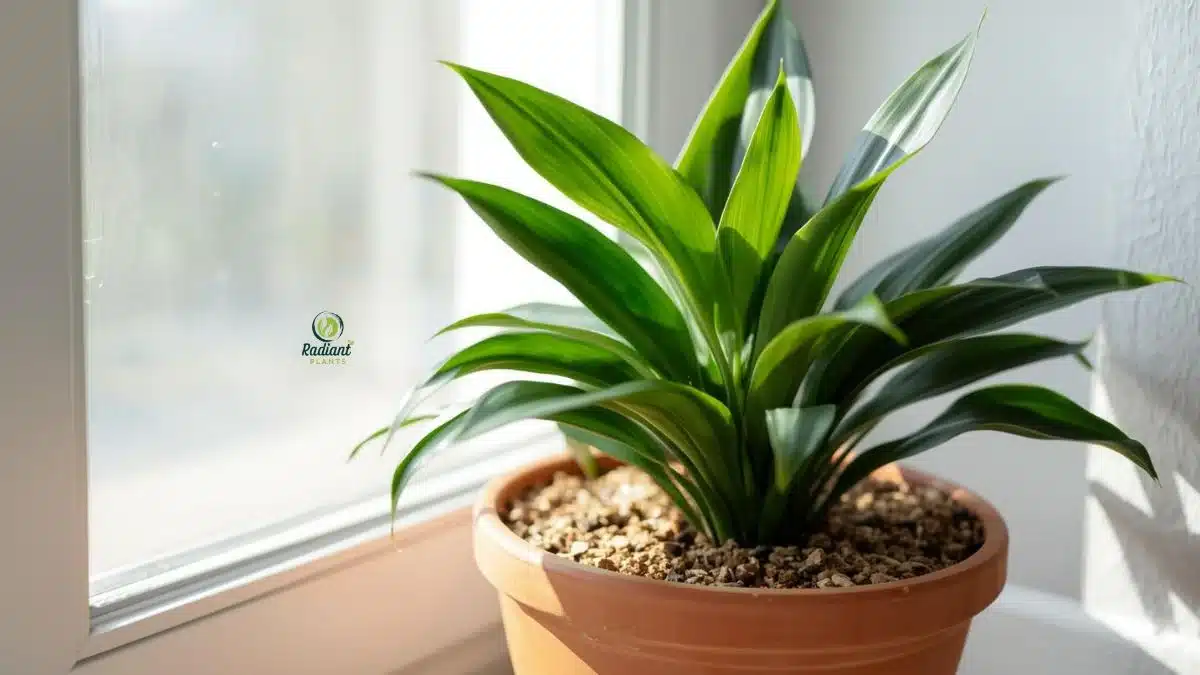
Best Soil for Dracaena Plants Indoors
Choosing the right soil can make or break your dracaena’s health. If your plant has yellowing leaves, slow growth, or soggy roots, the problem often starts below the surface. The best soil for dracaena must balance drainage, aeration, and moisture retention to keep roots healthy indoors. In this guide, you’ll learn exactly what type of mix works best, how to adjust store-bought soil, how pot choice affects performance, and how to spot soil problems early—so your dracaena can grow strong and upright. 🌿
Summary
- Dracaena needs well-draining, airy soil to prevent root rot.
- The ideal mix: 2 parts potting mix + 1 part perlite + 1 part orchid bark.
- Soil should be slightly acidic (pH 6.0–6.5).
- Avoid dense garden soil or heavy peat-only mixes.
- Always use a pot with drainage holes.
In This Article
Why Soil Matters More Than You Think for Dracaena
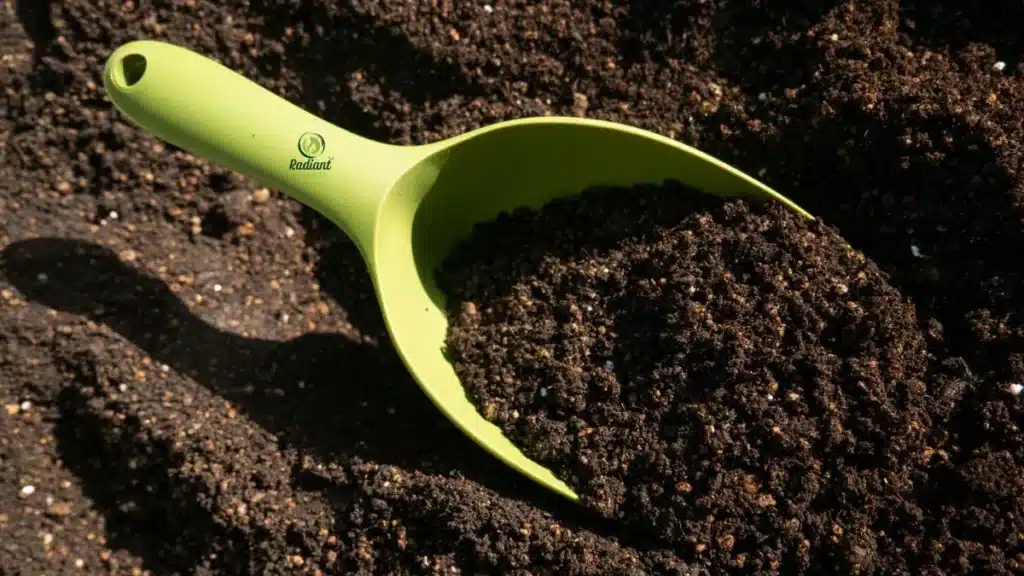
The best soil for dracaena isn’t just about nutrients — it’s about drainage and oxygen. Dracaena roots are sensitive to excess moisture, and the wrong soil can trap water, suffocate roots, and quickly lead to rot. If your plant struggles with yellow leaves or slow growth, soil is often the hidden cause.
Dracaena’s Root Structure Is Built for Air, Not Swampy Conditions
Dracaena plants (including marginata and fragrans varieties) develop relatively fine, shallow root systems that need consistent airflow in the soil. Unlike bog plants, they do not tolerate compacted or waterlogged conditions.
When soil becomes dense:
- Roots cannot access oxygen
- Water lingers too long
- Beneficial microbes decline
- Harmful fungi multiply
Healthy dracaena roots should look:
- Firm
- Light-colored (cream to pale orange)
- Slightly fibrous
If they appear brown, mushy, or smell sour, soil conditions are likely too wet.
Soil Directly Controls Watering Frequency
Many plant owners think they are “overwatering,” but in reality, they are using poorly draining soil.
Here’s how soil affects watering:
- Well-draining mix → dries in 7–10 days indoors
- Dense peat-heavy mix → stays wet 14+ days
- Compacted soil → traps moisture at the root level
If your dracaena soil stays damp longer than 10–12 days in typical indoor conditions, the mix is likely too moisture-retentive.
This is why the right soil reduces watering mistakes automatically.
Overwatering Is the #1 Killer of Houseplants
Overwatering is widely cited as the leading cause of houseplant decline and death.
Trusted sources to verify:
- University Cooperative Extension programs (University of Florida IFAS)
- USDA horticulture resources
- Royal Horticultural Society (RHS)
Dracaena is especially vulnerable because stagnant moisture encourages fungal pathogens that attack roots.
The Direct Link Between Soil and Root Rot
Root rot develops when:
- Soil retains water too long
- Roots suffocate from a lack of oxygen
- Fungal organisms (such as Pythium spp.) multiply
Once rot begins, leaves may:
- Turn yellow from the bottom up
- Develop brown tips
- Wilt despite wet soil
Many people respond by watering more, which accelerates damage.
Proper soil prevents this cycle before it starts.
(For full care guidance, including watering and light, see our complete dracaena care guide in Caring for a Dracaena Plant Indoors Made Easy.)
Soil Quality Directly Impacts Leaf Health
Healthy soil leads to:
- Stable moisture levels
- Balanced nutrient absorption
- Stronger root systems
- Vibrant green leaves
Poor soil can cause:
- Pale foliage
- Stunted growth
- Drooping leaves
- Salt buildup from fertilizers
Dracaena leaves are often the first visible sign that something is wrong below the surface.
Expert Insight on Drainage
“Indoor tropical plants like Dracaena decline far more often from excess moisture than drought. Proper drainage is the single most important factor in container plant health.”
This reinforces why choosing the best soil for dracaena plants indoors is a preventive step — not just a preference.
Quick Reality Check
If your dracaena:
- Takes more than 12 days to dry
- Smells musty near the soil
- Develops yellowing lower leaves
- Shows slow growth despite fertilizing
The soil is likely the issue.
Up next, we’ll break down exactly what type of soil Dracaena needs — and the ideal mix formula to get it right. 🌿
What Type of Soil Does Dracaena Need?
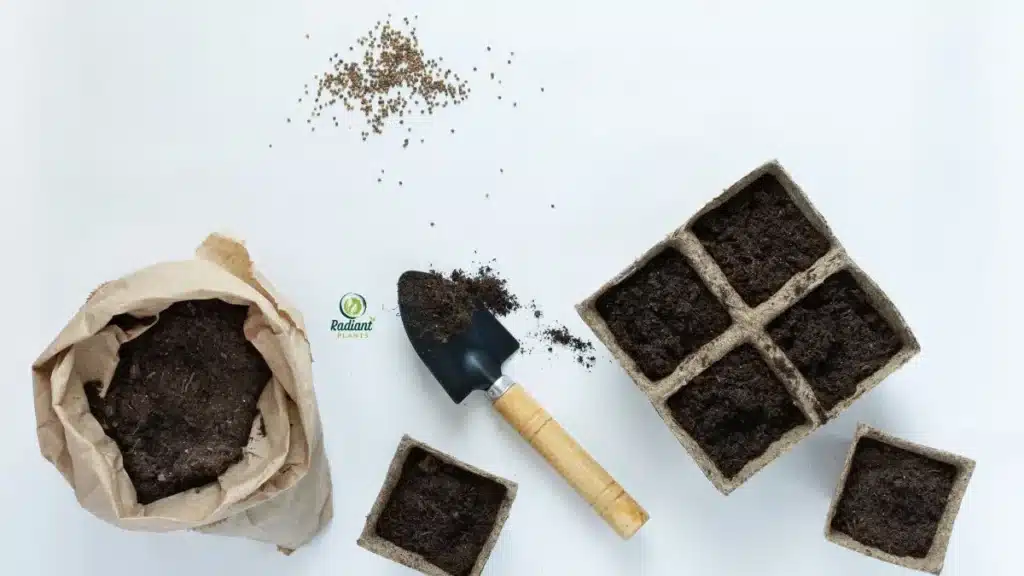
The best soil for dracaena is a well-draining, airy potting mix that holds some moisture but never stays soggy. It should feel light in your hands, drain freely after watering, and fall within a slightly acidic pH range of about 6.0–6.5. Anything dense or water-retentive for too long will stress the roots.
1️⃣ Well-Draining Is Non-Negotiable
Dracaena roots need oxygen just as much as water. If the soil traps moisture for too long, roots suffocate and become vulnerable to rot.
Well-draining soil should:
- Allow excess water to exit quickly through drainage holes
- Dry out moderately between waterings
- Never feel muddy or sticky
If water pools on the surface for more than a few seconds before absorbing, the mix may be too compact.
According to university extension horticulture guidance, proper drainage is critical to preventing root diseases in container plants.
2️⃣ Aeration Is Just as Important as Drainage
Drainage removes excess water.
Aeration allows oxygen to circulate through the roots.
This is why mixes for Dracaena often include:
- Perlite
- Orchid bark
- Coarse sand (in small amounts)
- Coco coir (for balanced moisture retention)
Without aeration materials, peat-heavy mixes can collapse over time and compress around roots.
If you’ve noticed soil shrinking away from the sides of the pot or becoming hard on top, compaction may already be happening.
3️⃣ Slightly Acidic Soil (pH 6.0–6.5)
Dracaena prefers slightly acidic to neutral soil, typically around 6.0–6.5 pH.
In this range:
- Nutrients remain available
- Root absorption functions efficiently
- Salt buildup is less damaging
Most high-quality indoor potting mixes naturally fall into this range, but overly alkaline soils can reduce nutrient uptake and lead to pale leaves.
4️⃣ Lightweight Texture Over Heavy Density
The texture of the soil should feel loose and crumbly — never heavy or clay-like.
A lightweight mix:
- Prevents root suffocation
- Makes watering easier to control
- Reduces fungus risk
- Promotes faster recovery after repotting
If the soil feels heavy even when dry, it’s likely too dense for dracaena.
Simple Soil Texture Test (Hand Squeeze Method)
Here’s a quick way to evaluate your current soil:
- Take a small handful of slightly moist soil.
- Squeeze it gently in your palm.
- Open your hand.
What should happen:
- The soil should loosely hold shape but crumble easily when poked.
- It should not form a sticky, compacted clump.
- It should not drip water.
If it stays tightly packed like clay, it lacks aeration.
Mini Checklist: Good Dracaena Soil Should…
- ✔ Drain fully within seconds after watering
- ✔ Dry within 7–10 days indoors (average home conditions)
- ✔ Feel loose and airy when fluffed
- ✔ Contain visible aeration materials (perlite or bark)
- ✔ Sit in a pot with drainage holes
If your soil doesn’t meet these criteria, it may be time to amend or repot.
For broader care factors like watering schedules and light exposure, refer to the complete indoor guide in Caring for a Dracaena Plant Indoors Made Easy, where soil, light, and watering are connected in one system.
Up next, we’ll break down the exact soil formula and mix ratio that works best. 🌿
The Best Soil Mix Formula (DIY Recipe)
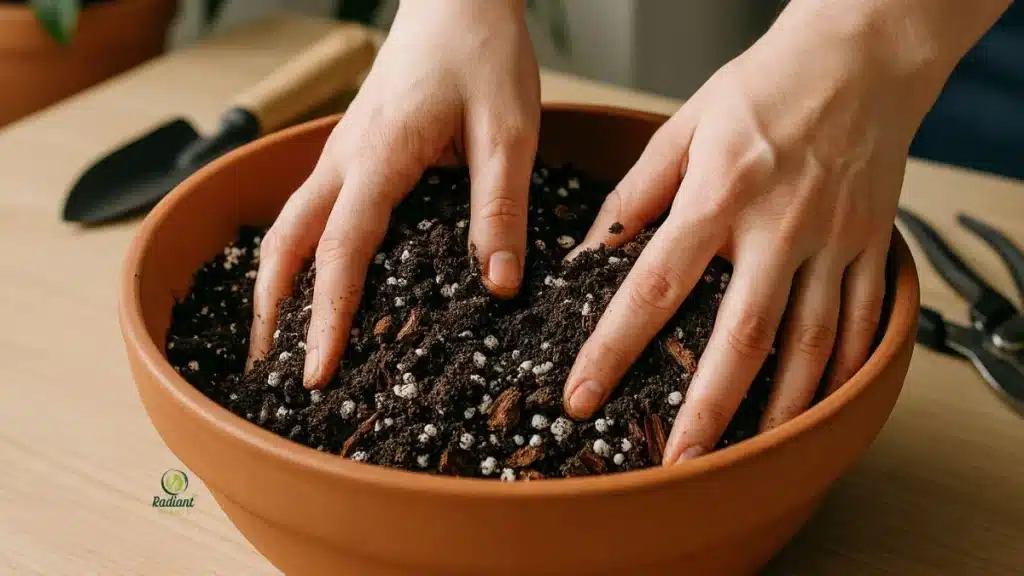
The best soil for dracaena is a fast-draining, airy mix that prevents root rot while holding just enough moisture to support steady growth indoors. If you want the best soil for dracaena plants indoors, you need a blend that balances drainage, aeration, and light nutrient retention. A simple DIY formula using potting mix, perlite, and orchid bark creates exactly that structure.
Choosing the best soil for dracaena isn’t about buying a “tropical” label — it’s about building the right texture.
Standard Indoor Mix Ratio (Best Soil for Dracaena Formula)
Use this proven blend:
- 2 parts indoor potting mix
- 1 part perlite
- 1 part orchid bark
This combination consistently produces the best soil for dracaena plants indoors because each ingredient solves a specific problem:
- Potting mix = moisture + nutrients
- Perlite = drainage + oxygen
- Orchid bark = airflow + structure
Together, they prevent compacted soil — the #1 hidden cause of dracaena decline.
If your plant struggles despite correct watering, the issue is often not watering frequency — it’s that you don’t yet have the best soil for dracaena supporting healthy roots.
Why This Formula Creates the Best Soil for Dracaena
Dracaena roots prefer a moist–dry cycle, not constant saturation. Container horticulture research shows that proper air-filled pore space is critical for root health.
The reason this DIY blend works so well as the best soil for dracaena plants indoors is its structure:
- Perlite prevents peat collapse.
- Bark keeps channels open for oxygen.
- The base mix retains just enough moisture without becoming dense.
Without that airflow, even careful watering leads to slow root suffocation.
Comparison Table: Ingredients That Make the Best Soil for Dracaena
Ingredient | Purpose | Why It Matters for Dracaena |
|---|---|---|
Indoor Potting Mix | Holds nutrients & moisture | Prevents soil from drying too fast |
Perlite | Improves drainage | Reduces root rot risk |
Orchid Bark | Adds structure & airflow | Keeps roots oxygenated |
Charcoal (optional) | Absorbs impurities | Helps prevent odor & buildup |
Coco Coir (optional) | Moisture balance | Stabilizes hydration in dry homes |
Each component plays a role in creating the best soil for dracaena plants indoors, not just a generic houseplant mix.
Optional Additions
These upgrades can improve your soil depending on your environment.
Horticultural Charcoal
- Enhances airflow
- Absorbs excess salts
- Useful in low-ventilation indoor spaces
Often recommended in tropical substrate blends.
Coco Coir Adjustments
- Retains moisture evenly
- Sustainable alternative to peat
- Helpful in dry or heated homes
Keep additions below 15% of total volume so you don’t compromise drainage — the core requirement of the best soil for dracaena.
Real Example: Repotting Scenario
Let’s say your Dracaena marginata has yellowing lower leaves and slow growth.
Before switching soil:
- Dense, heavy peat mix
- Soil stays wet 12–14 days
- Mild fungus smell
- Growth stalled
Even perfect watering can’t compensate for poor soil structure.
After repotting into the best soil for dracaena (2:1:1 mix):
- Soil dries evenly in 7–9 days
- Leaves firm up
- New upright growth appears within weeks
Nothing else changed — just the soil composition.
This is why selecting the best soil for dracaena plants indoors often solves more problems than adjusting watering schedules.
If you’re building your full care system, this soil formula works best alongside proper light and watering practices outlined in your Caring for a Dracaena Plant Indoors Made Easy.
✅ Expert Tip
Expert Tip: Always pre-moisten your DIY mix before repotting.
Dry peat-based ingredients initially repel water, leading to uneven hydration after planting. Pre-dampening ensures the roots immediately contact moisture — a best practice in container horticulture.
When optimized correctly, this DIY blend becomes the best soil for dracaena plants indoors because it addresses the three things dracaena roots demand: drainage, oxygen, and lightweight structure.
Can You Use Regular Potting Soil for Dracaena?
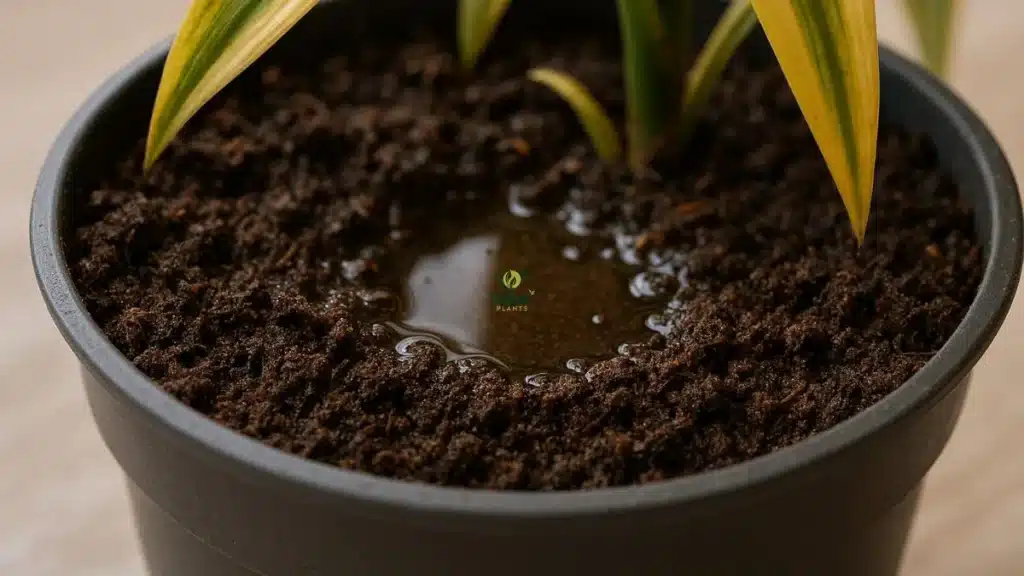
Yes — you can use regular potting soil for dracaena, but only if it drains well and doesn’t stay wet for too long. Standard indoor potting mix often works short-term, but it can become compacted and overly moisture-retentive over time. For long-term root health, the best soil for dracaena usually requires simple drainage amendments.
If your goal is preventing root rot and promoting steady indoor growth, understanding when regular soil works — and when it fails — is essential.
When Regular Potting Soil Works
Regular potting soil can be acceptable if:
- It’s labeled well-draining
- It contains perlite or bark already
- Your home has bright light and good airflow
- You allow the top 1–2 inches to dry between watering
In warm, bright indoor conditions, evaporation helps prevent water buildup. In this case, regular soil may function similarly to the best soil for dracaena plants indoors — at least temporarily.
However, most peat-heavy mixes gradually compress after repeated watering.
When Regular Soil Becomes Too Dense
Problems typically appear after several months:
- Soil feels heavy even when dry
- Water pools on the surface before draining
- Lower leaves yellow
- Growth slows
Dracaena roots require oxygen exchange. Once peat-based soil collapses and compacts, airflow decreases, increasing root rot risk.
This is why regular potting soil often stops performing like the best soil for dracaena over time.
Simple Drainage Adjustments (Make Regular Soil Work)
If you already have potting mix, you don’t need to discard it. You can modify it:
Step-by-step adjustment:
- Add 25–30% perlite.
- Mix in orchid bark (about 20%).
- Ensure your pot has drainage holes.
- Avoid oversized containers.
These small changes improve aeration and convert basic soil into something much closer to the best soil for dracaena plants indoors.
For a full soil formula, refer back to the DIY mix section in this guide or within your Caring for a Dracaena Plant Indoors Made Easy.
Comparison Table: Regular vs Amended vs Cactus Mix
Soil Type | Drainage Level | Aeration | Suitable for Dracaena? | Notes |
|---|---|---|---|---|
Regular Potting Soil | Moderate (initially) | Low–Moderate | Short-term | May compact over time |
Amended Potting Soil | High | High | ✅ Yes | Close to the best soil for Dracaena |
Cactus/Succulent Mix | Very High | High | Sometimes | May dry too fast indoors |
Key takeaway:
Cactus mix drains quickly but may lack enough organic matter for consistent moisture retention indoors. The best soil for dracaena sits between cactus soil and dense peat mix — airy but balanced.
Common Mistakes to Avoid
Even with decent soil, these mistakes can undo your efforts:
- ❌ Using garden soil (too dense for containers)
- ❌ Choosing moisture-control mixes (retain too much water)
- ❌ Skipping drainage holes
- ❌ Repotting into a pot 2–3 sizes larger
- ❌ Assuming yellow leaves mean “not enough water.”
Overwatering combined with dense soil is the primary cause of dracaena decline indoors.
Practical Example
If your Dracaena marginata is planted in regular potting soil and the surface stays damp for 10+ days, it’s time to amend the mix. By adding perlite and bark, you improve oxygen flow and move closer to the best soil for dracaena plants indoors, without fully replacing the substrate.
So yes, regular potting soil can work — but only when adjusted. If you want consistent, long-term results, building or buying the best soil for dracaena is the safer strategy for healthy roots and steady growth.
Is Cactus Soil Good for Dracaena?
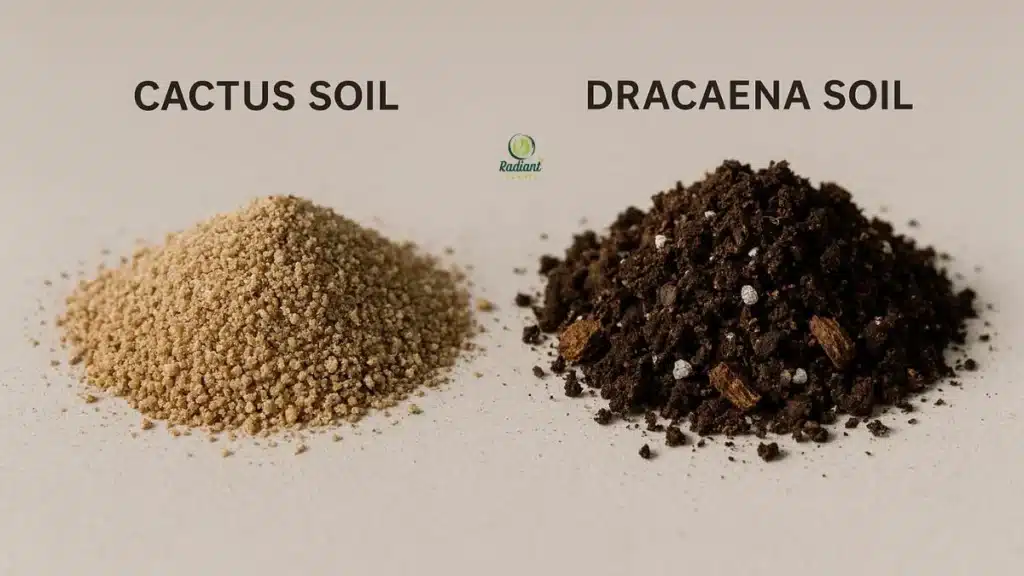
Cactus soil can work for Dracaena, but it is not automatically the best soil for Dracaena indoors. While both plants prefer fast drainage, cactus mixes often dry out too quickly and may lack enough organic matter for a consistent indoor moisture balance. In most homes, cactus soil needs modification to function as the best soil for dracaena plants indoors.
Understanding the similarities — and the key differences — helps you avoid under- or overwatering issues.
Similarities: Why Cactus Soil Seems Like a Good Fit
Dracaena and cacti share one important requirement: excellent drainage.
Both dislike sitting in soggy soil. Cactus mixes are designed to:
- Drain rapidly
- Prevent compaction
- Increase airflow around roots
These characteristics align with what makes the best soil for dracaena: oxygen availability and low root rot risk.
Research from university extension horticulture programs confirms that container plants require adequate air-filled pore space for root health.
So from a drainage standpoint, cactus soil checks an important box.
Differences: Where Cactus Soil Falls Short
The issue is moisture retention.
Cactus soil is engineered for desert-adapted plants that tolerate extended dry periods. Dracaena, however, is a tropical plant that prefers a moist–dry cycle, not prolonged dryness.
In many indoor environments, pure cactus mix:
- Dries out within 2–4 days
- Causes leaf tip browning
- Leads to inconsistent hydration
- Requires more frequent watering
That’s why straight cactus soil rarely qualifies as the best soil for dracaena plants indoors.
When to Mix Cactus Soil with Organic Matter
If cactus mix is what you have available, modify it instead of discarding it.
Adjustment strategy:
- Mix 50–60% cactus soil
- Add 40–50% indoor potting mix or coco coir
- Ensure the container has drainage holes
This hybrid blend improves moisture retention while keeping strong drainage — bringing it closer to the best soil for dracaena balance.
If you want a precise formula, refer back to the DIY soil recipe section in this guide or within your Caring for a Dracaena Plant Indoors Made Easy.
Pros and Cons Checklist
✅ Pros of Using Cactus Soil for Dracaena
- Excellent drainage
- Reduces root rot risk
- Lightweight and airy
- Good for overwatering-prone plant owners
❌ Cons of Using Cactus Soil Alone
- Dries too fast in most homes
- May lack organic nutrients
- Can cause underwatering stress
- Not ideal in dry climates
Because of these trade-offs, cactus soil alone is rarely the best soil for dracaena plants indoors, but it can be part of a balanced mix.
Example Scenario: Dry vs Humid Climate
🌵 Dry Climate (Low Humidity, Heated Home)
- Soil evaporates quickly
- Air is dry year-round
- Cactus mix may dry in 2–3 days
In this case, cactus soil alone is too fast-draining. Mixing it with potting soil or coco coir improves moisture retention and creates something closer to the best soil for dracaena.
🌿 Humid Climate (High Indoor Moisture)
- Soil dries more slowly
- The evaporation rate is lower
- Risk of soggy roots increases
Here, cactus soil (or a cactus-amended mix) can work well because it offsets excess moisture. In humid environments, it may perform similarly to the best soil for dracaena plants indoors when combined with proper watering habits.
Cactus soil is not wrong — it’s just incomplete on its own. The best soil for dracaena balances drainage and moderate moisture retention. In most indoor conditions, that means amending cactus soil rather than using it straight from the bag.
If you match your soil structure to your home’s humidity level, your dracaena will reward you with steady, upright growth and fewer watering problems. 🌿
Signs Your Dracaena Soil Is Wrong
If your plant is declining despite “proper” watering, the issue is often the soil. The best soil for dracaena should drain quickly, feel airy, and dry within about 7–10 days indoors. When soil stays soggy, compacts, or dries out too fast, your dracaena will show clear stress signals.
Recognizing these signs early helps you correct the soil before root damage becomes severe.
1. Yellow Leaves
Lower leaves turning yellow is one of the first indicators that the soil is holding too much moisture.
When soil remains wet, roots struggle to access oxygen, leading to stress and nutrient uptake problems.
If your mix doesn’t resemble the best soil for dracaena plants indoors (lightweight and fast-draining), excess moisture may be the root cause.
👉 For a full breakdown, see your internal guide on Root Rot Treatment and Overwatering Symptoms.
2. Brown Leaf Tips
Brown, crispy tips often signal inconsistent moisture levels.
This happens when:
- Soil dries too fast (common with straight cactus mix)
- Or stays wet too long, damaging root function
The best soil for dracaena maintains balanced hydration — not extreme swings between soggy and bone dry.
3. Mushy Stems
Soft, collapsing stems indicate advanced root rot.
This usually occurs when:
- Soil is dense and compacted
- Drainage holes are blocked
- A moisture-control potting mix retains too much water
Root rot develops in oxygen-poor conditions.
If stems feel mushy, the soil structure is no longer functioning like the best soil for dracaena plants indoors.
4. Mold on Soil Surface
White or gray fuzzy growth on topsoil is a warning sign.
It often appears when:
- Soil remains damp for extended periods
- Air circulation is low
- Organic matter breaks down too slowly
While surface mold alone may not kill the plant, it indicates excessive moisture — meaning your mix is not performing like the best soil for dracaena should.
5. Slow or Stunted Growth
If your dracaena hasn’t produced new leaves in months, compacted soil may be restricting root expansion.
Healthy roots need oxygen and space to grow.
A properly structured mix — like the DIY blend discussed earlier — supports consistent growth.
Diagnosis Table: Soil Problem Breakdown
Symptom | Likely Soil Problem | Fix |
|---|---|---|
Yellow leaves | Soil stays wet too long | Increase drainage (add perlite/bark) |
Brown tips | Soil drying too fast or inconsistently | Adjust mix for better moisture balance |
Mushy stems | Root rot from compacted soil | Repot into a fresh, airy mix |
Mold on the surface | Poor airflow + excess moisture | Improve drainage and airflow |
Slow growth | Compacted or depleted soil | Repot into the best soil for Dracaena |
This table helps you quickly assess whether your current mix supports healthy roots.
Case Study: Yellow Leaves After Repotting
Scenario:
You repot your dracaena into a larger container using regular potting soil. Within three weeks:
- Lower leaves turn yellow
- Soil remains damp after 12 days
- Growth slows
What happened?
The larger pot increased moisture retention, and the dense soil compacted further. Even careful watering couldn’t compensate.
Solution:
- Remove the plant and inspect the roots.
- Trim any soft or dark roots.
- Repot into a lighter mix (2 parts potting mix, 1 part perlite, 1 part bark).
- Downsize the pot if necessary.
After switching to the best soil for dracaena plants indoors, yellowing typically stabilizes once roots recover.
Final Takeaway
Most dracaena problems that look like watering mistakes are actually soil structure problems. The best soil for dracaena prevents compaction, drains efficiently, and maintains a consistent moisture balance.
If your plant shows two or more of these symptoms, correcting the soil should be your first step — before adjusting watering frequency.
How to Improve Drainage Without Full Repotting
If your soil is staying wet too long but you’re not ready to repot, you can temporarily improve drainage. While a full soil replacement is the most effective long-term solution, small adjustments can help your mix function closer to the best soil for dracaena. These fixes reduce moisture buildup and improve airflow around the root zone.
Keep in mind: these are stabilization strategies — not permanent replacements for the best soil for dracaena plants indoors.
1. Add Perlite to the Top Layer (Temporary Fix)
If the surface remains damp for more than 10 days, mix coarse perlite into the top 1–2 inches of soil.
Why this helps:
- Improves evaporation
- Reduces surface compaction
- Increases airflow near the upper roots
This will not fully correct dense lower soil layers, but it can reduce moisture retention at the top where fungal growth often starts.
University horticulture extensions emphasize the importance of aeration in container substrates for oxygen exchange.
2. Aerate Compacted Soil
If the soil feels hard or water pools before draining:
How to aerate safely:
- Use a wooden chopstick or skewer.
- Gently insert it vertically into the soil.
- Wiggle slightly to create air channels.
- Avoid damaging thick roots.
This increases oxygen flow and helps excess water escape faster. It mimics the structure of the best soil for dracaena, which naturally contains air pockets from bark and perlite.
Do not overdo this — excessive disturbance can damage roots.
3. Switch to a Terracotta Pot
If your dracaena is in plastic or glazed ceramic, switching containers alone can improve moisture regulation.
Terracotta is porous and allows water to evaporate through the pot walls. This helps compensate for soil that holds too much moisture.
Container material significantly impacts soil drying time.
While pot type cannot fully replace proper substrate structure, it can make heavy soil behave more like the best soil for dracaena plants indoors.✅ Mini Drainage Improvement Checklist
Use this quick checklist before committing to a full repot:
- ☐ Does the pot have drainage holes?
- ☐ Is the saucer emptied after watering?
- ☐ Can you insert a skewer to loosen compacted areas?
- ☐ Have you mixed perlite into the top layer?
- ☐ Is the plant in breathable terracotta instead of plastic?
If you answer “no” to two or more, address those first.
If problems persist, upgrading to the best soil for dracaena (see DIY soil mix section) is the more reliable fix.
🌿 Expert Tip
Expert Tip: Reduce watering frequency while testing drainage fixes.
If soil is already dense, watering less often prevents compounding oxygen stress. Allow at least the top 2 inches to dry fully before rewatering — a standard recommendation in container plant care.
Real Example
Scenario:
Your dracaena’s soil stays wet for 12–14 days, but it’s winter, and you want to avoid repotting.
You:
- Aerate soil using a skewer
- Mix perlite into the top layer
- Move the plant into a terracotta pot
Within two watering cycles:
- Soil dries in 8–9 days
- Surface mold disappears
- Leaf yellowing slows
These adjustments don’t fully transform dense soil into the best soil for dracaena plants indoors, but they buy time until spring repotting.
Bottom Line
Drainage fixes without repotting are short-term tools. If your plant continues showing symptoms (yellow leaves, slow growth, mushy stems), transitioning to the best soil for dracaena remains the most effective long-term solution.
Best Soil for Different Dracaena Varieties
The best soil for dracaena is always well-draining and airy, but slight adjustments can improve performance depending on the variety. While most indoor types share similar needs, some tolerate drier conditions better, and others prefer slightly more consistent moisture. Choosing the best soil for dracaena plants indoors means matching the mix to your specific variety.
Below is how soil preferences differ among common indoor dracaena types.
Dracaena marginata (Madagascar Dragon Tree)
Dracaena marginata is slightly more drought-tolerant than other varieties.
Soil Preference:
- Extra drainage
- Higher perlite or bark ratio
- Faster dry-down time
Because it stores some moisture in its stems, this variety handles brief dry periods better.
Adjustment Tip:
Use the standard 2:1:1 mix but increase perlite slightly (for example, 2 parts potting mix, 1.5 parts perlite, 1 part bark). This creates a faster-draining version of the best soil for dracaena.
If your marginata sits in bright light, improved drainage reduces root rot risk significantly.
Dracaena fragrans (Corn Plant)
Dracaena fragrans (commonly called Corn Plant) tolerates slightly more moisture than Dracaena marginata.
Soil Preference:
- Balanced drainage
- Moderate moisture retention
- Airy but not overly gritty
Because its leaves are broader and transpiration differs slightly, it benefits from a mix that doesn’t dry too rapidly.
Adjustment Tip:
Stick closely to the standard DIY formula. Avoid straight cactus mix unless amended. The best soil for dracaena plants indoors for fragrans should dry within 7–10 days, not 3–4 days.
Janet Craig
Dracaena fragrans ‘Janet Craig’ prefers evenly moist but airy soil.
Soil Preference:
- Consistent moisture balance
- Strong aeration
- No compaction
This cultivar is sensitive to both overwatering and extreme dryness. Dense peat-heavy soil often leads to yellowing leaves.
Adjustment Tip:
Do not increase perlite excessively. Maintain balance. The best soil for Dracaena in this case is the standard indoor mix without heavy modification.
Comparison Table: Soil Adjustments by Variety
Variety | Drainage Level | Moisture Retention | Recommended Adjustment |
|---|---|---|---|
Dracaena marginata | High | Moderate–Low | Increase perlite slightly |
Dracaena fragrans | Moderate–High | Moderate | Use a standard 2:1:1 mix |
Janet Craig | Moderate | Moderate | Keep balanced, avoid extreme dryness |
All three varieties thrive in airy, well-draining soil. The difference lies in how quickly you allow the soil to dry between waterings.
How This Fits Into Your Full Care Strategy
While variety-specific tweaks help, the foundation remains the same: the best soil for dracaena plants indoors is lightweight, slightly acidic (pH 6.0–6.5), and well-aerated.
For complete guidance on light, watering, and fertilizing across varieties, refer back to your pillar guide, Caring for a Dracaena Plant Indoors Made Easy. Soil works best when aligned with proper light exposure and watering rhythm.
When matched correctly, each variety rewards you with steady upright growth and healthier foliage — without constant troubleshooting. 🌿
How Often Should You Change Dracaena Soil?
You should replace dracaena soil every 2–3 years to maintain structure, drainage, and nutrient availability. Even the best soil for dracaena breaks down over time, becoming compacted and less aerated. Refreshing the soil prevents root stress and keeps your plant growing steadily indoors.
If you’re using the best soil for dracaena plants indoors, it will last longer — but it’s not permanent.
Why 2–3 Years Is the Ideal Timeline
Most indoor potting mixes are peat- or coir-based. Over time, organic particles decompose and compress, reducing airflow around the roots [A guide to compost mixes for houseplants].
As soil structure collapses:
- Drainage slows
- Oxygen availability decreases
- Water retention increases
This means even if you started with the best soil for dracaena, it may no longer function properly after a few years.
Signs Soil Is Breaking Down
Watch for these indicators:
- Water pools on the surface before draining
- Soil feels dense or muddy
- Mold appears frequently
- Drying time increases significantly
If soil takes much longer to dry than it did when fresh, structure degradation is likely.
Rootbound Symptoms
Sometimes the issue isn’t soil breakdown — it’s root congestion.
Check for:
- Roots circling the bottom of the pot
- Roots growing through drainage holes
- The soil is drying extremely fast
- Stunted growth despite fertilizing
When roots fill the container, even the best soil for dracaena plants indoors cannot perform effectively.
✅ Checklist: Time to Repot?
Use this quick evaluation:
- ☐ Has it been more than 2 years since repotting?
- ☐ Does water sit on the surface before absorbing?
- ☐ Is the plant drying out much slower (or faster) than before?
- ☐ Are roots visible at drainage holes?
- ☐ Has growth slowed despite proper care?
If you check two or more boxes, it’s likely time to refresh your soil.
For full instructions, refer to your internal Repotting Guide within Caring for a Dracaena Plant Indoors Made Easy.
Nutrient Depletion Over Time
Potting soil nutrients gradually decline as plants absorb them and watering leaches minerals from the container.
While fertilizer supplements nutrients, it does not restore soil structure. That’s why replacing the old mix is necessary — not just feeding more.
The best soil for Dracaena supports both nutrient availability and physical root health. Once the structure degrades, fertilizing alone won’t solve the problem.
Practical Example
If your dracaena was repotted three years ago and now:
- Takes 14 days to dry
- Shows minor yellowing
- Has slowed growth
Refreshing it with a new airy mix (2 parts potting soil, 1 part perlite, 1 part bark) restores drainage and oxygen flow — returning you to the best soil for dracaena plants indoors standard.
Bottom Line
Changing dracaena soil every 2–3 years prevents compaction, nutrient depletion, and root stress. Even high-quality mixes don’t last forever. Replacing old soil ensures your plant continues benefiting from the best soil for dracaena, not a degraded version of it. 🌿
Soil and Watering: The Hidden Connection
The best soil for Dracaena directly determines how often you should water. If the soil drains quickly and stays airy, watering becomes predictable; if it’s dense or compacted, even careful watering can cause root stress. In other words, watering problems are usually soil problems in disguise.
To maintain the best soil for dracaena plants indoors, you must adjust watering based on how the mix behaves — not on a fixed schedule.
How Soil Changes Watering Frequency
Two dracaena plants in the same room can need different watering schedules simply because of soil structure.
- Airy mix (with perlite + bark) → dries in 7–10 days
- Dense peat-heavy mix → may stay wet 12–14 days
- Cactus-heavy mix → may dry in 3–5 days
Container substrate research shows that pore size distribution directly affects water retention and oxygen availability.
This is why the best soil for dracaena creates a balanced, moist–dry cycle instead of extreme swings.
If your watering schedule feels inconsistent, revisit your soil composition first.
How to Test Moisture Properly
Avoid guessing. Use one of these reliable methods:
1. Finger Test (Simple & Effective)
- Insert your finger 2 inches into the soil.
- If it feels dry at that depth, it’s usually safe to water.
- If it feels cool and damp, wait.
This method works well when you’re using the best soil for dracaena plants indoors, since airy soil gives accurate tactile feedback.
2. Wooden Skewer Test
- Insert a wooden skewer deep into the pot.
- Leave it for 5–10 minutes.
- Remove and check for damp marks.
3. Moisture Meter (Helpful but Not Perfect)
- Insert the probe into the root zone.
- Avoid relying solely on surface readings.
Moisture meters can be useful, but improper placement often gives misleading results.
Real Example
Imagine two identical Dracaena marginata plants:
Plant A:
- Planted in dense, regular potting soil
- Watered every 10 days
- Soil is still damp at day 10
- Yellow leaves develop
Plant B:
- Planted in the best soil for dracaena (2:1:1 mix)
- Water when the top 2 inches are dry
- Soil dries evenly in 8 days
- Steady upright growth
Same light. Same room. Different soil performance.
The watering schedule didn’t cause the issue — soil structure did.
🌿 Expert Insight
“Overwatering isn’t about how often you water — it’s about how long roots stay wet.”
The best soil for Dracaena reduces the time roots remain saturated, which reduces oxygen stress and the risk of root rot.
Connecting Soil to Your Full Care System
If you’re adjusting watering frequency without evaluating soil texture, you’re treating symptoms — not the cause.
For a complete watering framework, revisit the watering section inside your pillar guide, Caring for a Dracaena Plant Indoors Made Easy. Proper watering only works when paired with the best soil for indoor dracaena plants.
Bottom Line
Watering and soil are inseparable. The best soil for dracaena creates predictable drying cycles, making watering simple and consistent. Fix the soil first, and watering becomes easy. 🌿
Common Soil Mistakes That Kill Dracaena
Most dracaena failures happen below the surface. The best soil for dracaena must be airy, well-draining, and paired with proper container setup — but common soil mistakes quickly destroy that balance. If your plant is declining, check for these issues before adjusting light or fertilizer.
Even high-quality plants decline fast when the best soil for dracaena plants indoors principles are ignored.
1. Using Garden Soil
Outdoor garden soil is too dense for containers.
It:
- Compacts easily
- Drains poorly in pots
- Limits oxygen around roots
Container horticulture guidelines strongly discourage using native soil in indoor pots due to drainage and pathogen risks.
Garden soil cannot function like the best soil for dracaena, no matter how carefully you water.
2. No Drainage Holes
A pot without drainage holes traps water at the bottom.
This leads to:
- Root suffocation
- Fungal growth
- Accelerated root rot
Even the best soil for dracaena plants indoors cannot compensate for standing water. Drainage holes are non-negotiable.
3. Reusing Contaminated Soil
Old soil may contain:
- Fungal spores
- Salt buildup from fertilizer
- Pest eggs
Reusing contaminated soil increases the risk of root disease and nutrient imbalance.
If your previous plant had root rot, do not reuse that soil, expecting it to perform like the best soil for dracaena.
4. Packing Soil Too Tightly
Pressing soil down firmly during repotting reduces air pockets.
Dracaena roots require oxygen exchange to stay healthy. Compacted soil increases moisture retention and decreases airflow — the opposite of the best soil for dracaena plants indoors.
When repotting:
- Gently fill the soil around the roots
- Tap the pot lightly to settle
- Do not compress aggressively
5. Ignoring Mold Growth
White or gray mold on the surface signals excess moisture and poor airflow.
While minor mold may not immediately kill the plant, it indicates the soil is staying too wet. Over time, this increases root rot risk.
Healthy soil should dry evenly between waterings — a key trait of the best soil for dracaena.
⚠ Warning: Small Soil Mistakes Escalate Quickly
Warning: Most root rot cases begin silently.
By the time leaves yellow or stems soften, roots may already be compromised. Correcting soil structure early prevents irreversible damage.
If you notice yellowing leaves, mushy stems, or persistent mold, revisit the sections on drainage fixes and root rot treatment in your main care guide.
Quick Soil Safety Checklist
- ☐ Never use garden soil indoors
- ☐ Always use pots with drainage holes
- ☐ Avoid reusing infected soil
- ☐ Do not compress soil tightly
- ☐ Remove surface mold and improve airflow
Following these basics ensures your mix performs like the best soil for dracaena plants indoors, not a compacted, moisture-trapping environment.
Dracaena plants rarely die from lack of water — they decline from poor soil structure and trapped moisture. Avoid these common mistakes, and your plant will benefit from the airflow and balance that define the best soil for dracaena. 🌿
Frequently Asked Questions
What is the best soil for dracaena plants indoors?
The best soil for dracaena is a well-draining, airy mix that dries within 7–10 days. A simple blend of 2 parts indoor potting mix, 1 part perlite, and 1 part orchid bark works well. This structure prevents root rot while holding enough moisture for steady growth.
Can I use regular potting soil for Dracaena?
Yes, but only if it drains well. Many standard potting mixes become compacted over time and hold too much moisture. To improve drainage, mix in 25–30% perlite or orchid bark. Avoid moisture-control formulas, which can keep roots too wet indoors.
Is cactus soil good for Dracaena?
Cactus soil drains quickly but may dry out too fast for Dracaena indoors. It can work if mixed with regular potting soil to improve moisture balance. Using cactus mix alone often requires more frequent watering and can lead to brown leaf tips.
How often should I change Dracaena soil?
Repot and refresh soil every 2–3 years. Over time, potting mix breaks down, compacts, and loses structure. If water drains slowly, soil feels dense, or growth slows, it’s time to replace the old mix with fresh, well-aerated soil.
Does Dracaena need drainage holes?
Yes, always. Drainage holes prevent water from pooling at the bottom of the pot. Without them, even well-draining soil can become saturated, increasing the risk of root rot. If using a decorative container, keep the plant in a nursery pot inside it.
How do I know if my dracaena soil is too wet?
Signs of overly wet soil include yellow lower leaves, mold on the surface, mushy stems, and soil that stays damp for more than 10–14 days. Let the top 2 inches dry before watering again, and improve drainage if needed.
Should Dracaena soil dry out completely between waterings?
No. Dracaena prefers a moist–dry cycle, not bone-dry soil. Allow the top 1–2 inches to dry, but don’t wait until the entire root ball is completely dry. Extremely dry soil can cause brown leaf tips and stress the plant.
The health of your plant starts below the surface. The best soil for dracaena is lightweight, well-draining, and breathable, allowing roots to dry slightly between waterings without staying soggy. Pairing the right mix with proper drainage holes and the right pot type prevents the most common problems like yellow leaves and root rot. Refresh soil every few years and adjust based on your home’s conditions. When your soil works with you—not against you—dracaena care becomes simple and predictable. 🌿