Finding pet-friendly plants isn’t just about picking something that looks good—it’s about avoiding plants that could harm your cat or dog while still choosing options that actually thrive in your home. Many popular houseplants are toxic, and store labels don’t always make that clear. In this guide, you’ll get a verified list of safe plants, plus practical advice on choosing, placing, and caring for them based on your space and your pet’s behavior. By the end, you’ll know exactly which plants you can bring home with confidence—and which ones to avoid.
⚡ TL;DR
- The safest pet-friendly plants include: Spider Plant, Calathea, Areca Palm, Boston Fern, and Peperomia
- All listed plants are non-toxic to cats and dogs, but chewing may still cause mild irritation
- Best beginner options: Spider Plant, Areca Palm, Peperomia
- Avoid common toxic plants like Monstera, Pothos, and Aloe
In This Article
Best Pet-Friendly Plants (Quick List)
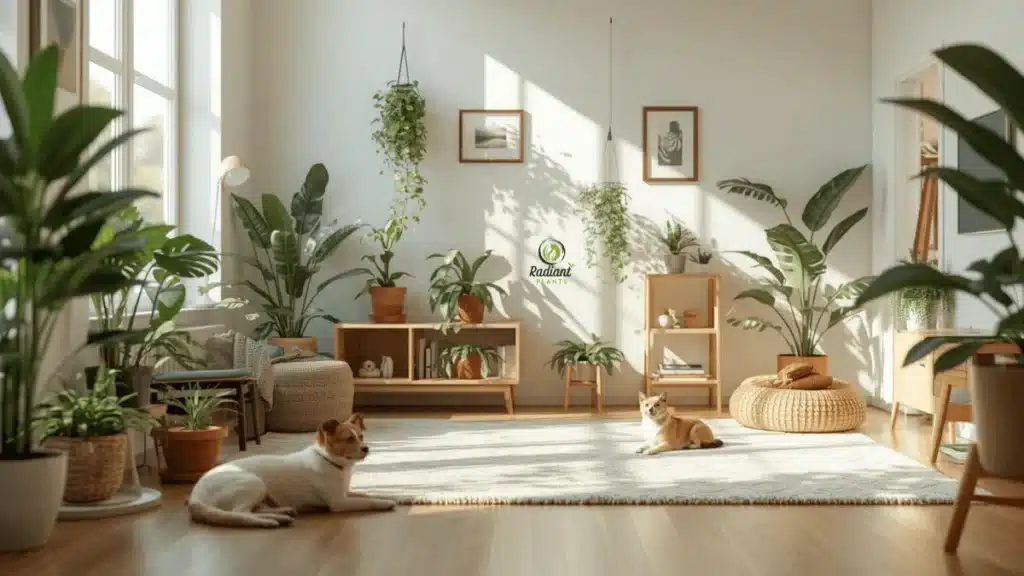
If you want a fast shortlist, the best pet-friendly plants for most homes are spider plant, calathea, peperomia, areca palm, parlor palm, Boston fern, prayer plant, ponytail palm, orchid, and cast iron plant. These are popular because they combine good looks with a strong reputation for being non-toxic to cats and dogs.
Quick answer box
- Spider Plant — Beginner, Hanging, Low light tolerant
- Calathea — Low light, Decorative
- Peperomia — Beginner, Decorative, Small spaces
- Areca Palm — Beginner, Decorative, Bright indirect light
- Parlor Palm — Low light, Beginner
- Boston Fern — Hanging, Decorative, Humidity-loving
- Prayer Plant — Low light, Decorative
- Ponytail Palm — Beginner, Decorative, Drought-tolerant
- Orchid — Decorative, Small spaces
- Cast Iron Plant — Low light, Beginner, Tough plant
A few practical notes matter here. “Pet-friendly” does not mean “good for pets to chew.” Even non-toxic plants can still cause mild stomach upset if a cat or dog eats enough of the leaves. That is why the best beginner strategy is not just choosing safe plants, but choosing safe plants that also match your light, your schedule, and your pet’s behavior.
For example, if you have a cat that jumps on shelves and chews anything trailing down, spider plant and Boston fern are better in hanging baskets than on low furniture. If your home gets weak natural light, parlor palm, cast iron plant, and some calathea varieties are usually more realistic than sun-hungry options. And if you are new to houseplants and tend to forget to water, peperomia and ponytail palm are often easier wins than fussier, humidity-loving plants.
At Radiant Plants, we’ve found that beginners often fail for one simple reason: they choose based on looks first and conditions second. A plant may be pet-safe, but if it needs bright indirect light and your apartment only gets dim afternoon light, it is still the wrong plant. That is why a quick list works best when you read the tags as decision clues, not decoration.
Here’s how to use the tags without overthinking it:
- Low light = good option for rooms that do not get strong direct sun, though “low light” rarely means no light at all.
- Beginner = usually more forgiving with watering or humidity mistakes.
- Decorative = stronger visual appeal, patterned leaves, flowers, or statement shape.
- Hanging = especially useful if your pet is curious, playful, or chews floor-level plants.
A few common mistakes are worth calling out early:
- Mistake 1: Assuming all palms are pet safe. Some palms are commonly treated as safer choices, but plant names are confusing in stores, and look-alikes can cause mistakes.
- Mistake 2: Treating “low light” like “dark corner.” Even though plants still need usable light to stay healthy.
- Mistake 3: Buying a fern without thinking about humidity. Boston fern is beautiful, but it usually does better in a bathroom, kitchen, or near a humidifier than in dry heated air during winter.
- Mistake 4: Choosing a “safe” plant and putting it right at nose level for a bored puppy. Safety matters, but placement still matters too.
If you want the safest path, start with one of these three, depending on your situation:
- Best first plant for most people: Spider Plant
- Best for lower-light homes: Parlor Palm or Cast Iron Plant
- Best for small spaces: Peperomia
This quick list gives an immediate answer, but the next step should be to match the plant to your home and pet habits. That is where readers usually get the best result, especially when comparing low-light pet-friendly plants, beginner houseplants, or safe hanging plants for cats and dogs.
What “Pet-Friendly” Actually Means (And What It Doesn’t)
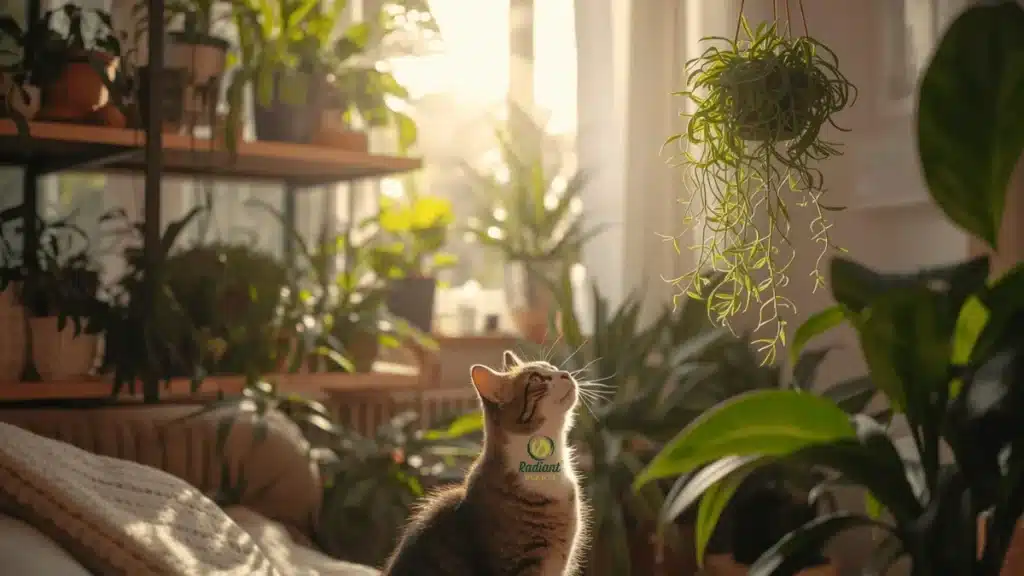
“Pet-friendly” usually means a plant is considered non-toxic to cats and dogs, not that it is meant to be eaten. So no, these plants are not “100% safe” in the sense of being harmless as a snack—your pet can still end up with mild vomiting, drooling, or stomach upset if they chew enough of the leaves.
That distinction matters because many readers hear “safe” and assume “no problem at all.” In practice, the better interpretation is: this plant is not known for causing poisoning, but it still is not pet food. That is the standard you want throughout a guide to pet-friendly plants.
Non-toxic vs. toxic: the difference that actually matters
A non-toxic plant is not known to contain compounds that commonly cause poisoning in cats or dogs when ingested in small amounts. A toxic plant contains substances that can trigger anything from mouth irritation and vomiting to more serious reactions, depending on the plant, the amount eaten, and the size of the pet.
That is why plant safety should be treated in two separate layers:
- Layer 1: Toxicity risk
Is the plant considered toxic or non-toxic? - Layer 2: Chewing risk
Even if it is non-toxic, will chewing it still irritate your pet’s mouth or stomach?
A lot of beginner confusion comes from mixing those two. A spider plant may be widely treated as non-toxic, but that does not automatically mean a cat can chew half the plant and feel perfectly normal.
The simplest way to think about “pet-friendly.”
For everyday decision-making, this is the most useful framework:
- Pet-friendly = generally non-toxic if a cat or dog nibbles it
- Not pet proof = still worth keeping out of reach if your pet is a heavy chewer
- Not edible = not something you should allow your pet to eat on purpose
At Radiant Plants, we’ve found that this is where people make the biggest mistake: they choose a non-toxic plant, relax completely, and then put it right at face level for a bored cat or a puppy that bites everything. The plant may be the safer choice, but the setup still invites problems.
Why mild reactions can still happen
Even non-toxic plants can cause symptoms that look scary at first, especially if your pet eats more than a small nibble. The most common issue is simple mechanical or digestive irritation—the leaves, fibers, or potting material irritate the mouth or stomach, even though the plant itself is not classified as poisonous.
That is also why it helps to separate the three different situations clearly:
1. Mild plant nibbling
This is the most common scenario. A cat takes a few bites, or a dog chews a leaf, then seems mostly normal.
Possible signs:
- brief drooling
- mild gagging
- one episode of vomiting
- loose stool
- temporary loss of interest in food
2. Repeated chewing or larger ingestion
This is more likely to cause digestive upset, even with non-toxic plants.
Possible signs:
- repeated vomiting
- more noticeable diarrhea
- obvious stomach discomfort
- continued drooling or lip smacking
3. Possible toxic exposure instead of simple irritation
This is where you should stop assuming the plant is “safe” and verify the exact plant identity.
Red flags:
- tremors
- severe lethargy
- trouble breathing
- persistent vomiting
- swelling of the mouth
- Any rapid worsening after ingestion
That diagnosis-first distinction matters. People often say, “My pet ate a safe plant, so it can’t be the plant,” when the real issue is either:
- The plant was misidentified,
- The pet ate a large amount,
- Or something else in the pot caused the reaction.
⚠️ Warning box: what “pet friendly” does NOT protect against
Even if a plant is considered pet-friendly, it does not mean protection from all of these:
- chewing large amounts of leaves
- swallowing potting mix or fertilizer
- digging into treated soil
- biting decorative moss, supports, or plant tags
- eating a mislabeled plant from a store display
The last one is more common than people realize. Common names are messy, and many houseplants are sold under broad labels that do not help the buyer confirm the exact species. If safety is the reason you are buying the plant, always verify the exact name before bringing it home.
The ASPCA-style classification concept, in plain English
Many pet owners look for plant safety lists based on an ASPCA-style classification system: plants are typically grouped as toxic or non-toxic for cats, dogs, or both. That style of classification is useful because it gives you a fast screening tool, but it still has limits.
It helps answer:
- Is this plant broadly considered poisonous to pets?
- Is it listed as safe for cats, dogs, or both?
It does not fully answer:
- What happens if my dog eats a lot of it?
- Will this plant irritate the stomach anyway?
- Is the fertilizer or potting medium the real issue?
- Did the store label the plant correctly?
So the smartest way to use these classifications is as a first filter, not your only filter.
What actually works in real homes
The best real-world approach is simple:
- Choose plants classified as non-toxic
- Place them based on your pet’s behavior
- Avoid loose fertilizer or chemical leaf shine products
- Monitor how your pet reacts in the first few weeks
If your cat is a light nibbler, a non-toxic plant on a shelf may be enough. If your dog tears up anything at floor level, “pet friendly” alone is not enough—you need safer placement too. This is why sections like best hanging pet-friendly plants or low-light pet-safe houseplants are so useful as internal follow-ups; they solve the real-life problem, not just the labeling problem.
Common beginner mistakes to avoid
Here are the mistakes that cause the most confusion:
- Assuming non-toxic means edible
It does not. - Ignoring the pot contents
Fertilizers, soil additives, and pesticide residues may create the issue, not the plant itself. - Trusting a store tag without checking the exact plant name
Always confirm the botanical identity if pet safety matters. - Watching symptoms but not timing
If symptoms start soon after chewing a plant, that clue matters. If symptoms continue or worsen, do not keep treating it like “just mild irritation.” - Using a one-size-fits-all rule
A calm adult dog and a teething puppy do not create the same risk.
A good pet-safe plant article should help readers choose better plants, but it should also teach them how to think about risk correctly. That is what makes the difference between a list that looks helpful and one that actually prevents bad outcomes.
Full List of Pet-Friendly Plants (With Care & Safety Details)
If you are trying to choose the right plant, start with one that is both non-toxic to cats and dogs and realistically suited to your light and care habits. The best pet-friendly plants are not just “safe on paper” — they are the ones you can actually keep healthy in your home without constant stress.
A quick note before the plant-by-plant list: “non-toxic” does not mean your pet should chew it freely. The ASPCA notes that consuming plant material can still cause vomiting or gastrointestinal upset even for plants listed as non-toxic, so placement still matters.
Spider Plant
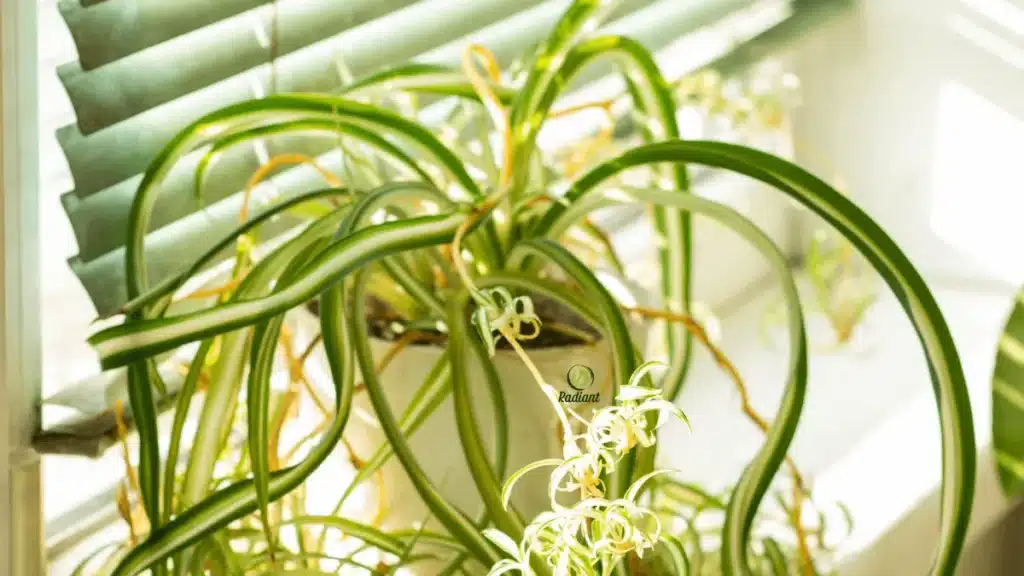
Pet safety: Safe for cats and dogs; ASPCA lists spider plant as non-toxic.
Light: Low to bright indirect light.
Difficulty: Easy
Why choose it:
This is one of the safest first picks for beginners. It tolerates a range of indoor conditions, looks good in hanging baskets, and works especially well if you want to keep foliage slightly out of reach of a curious cat.
What actually works:
Spider plants are a smart choice for apartments, offices, and small homes where you want something forgiving but still lively.
Expert tip:
If your cat is obsessed with dangling leaves, hang this plant rather than placing it on a low table. “Pet safe” helps, but prevention is still better than cleanup.
Calathea
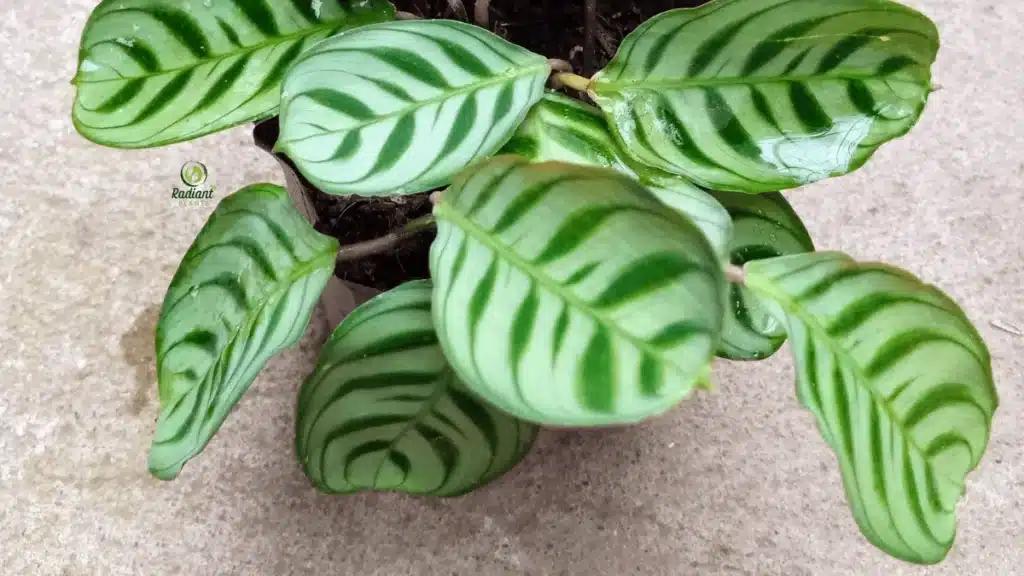
Pet safety: Safe for cats and dogs; ASPCA lists calathea as non-toxic.
Light: Medium to low indirect light.
Difficulty: Moderate
Why choose it:
Choose calathea if you care more about leaf pattern and visual impact than pure toughness. It is one of the best decorative options in a pet-safe plant lineup.
What actually works:
It is a better fit for people who notice their plants regularly and do not mind adjusting humidity or watering habits. It usually performs better in stable indoor conditions than in dry, drafty corners.
Common beginner mistake:
People often buy calathea for a dark room and then assume “low light” means very little light. In practice, it still needs usable indirect light to maintain good leaf color and structure.
Expert tip:
Calathea is a great internal link opportunity for a future article on low-light indoor plants or plants with patterned leaves.
Peperomia
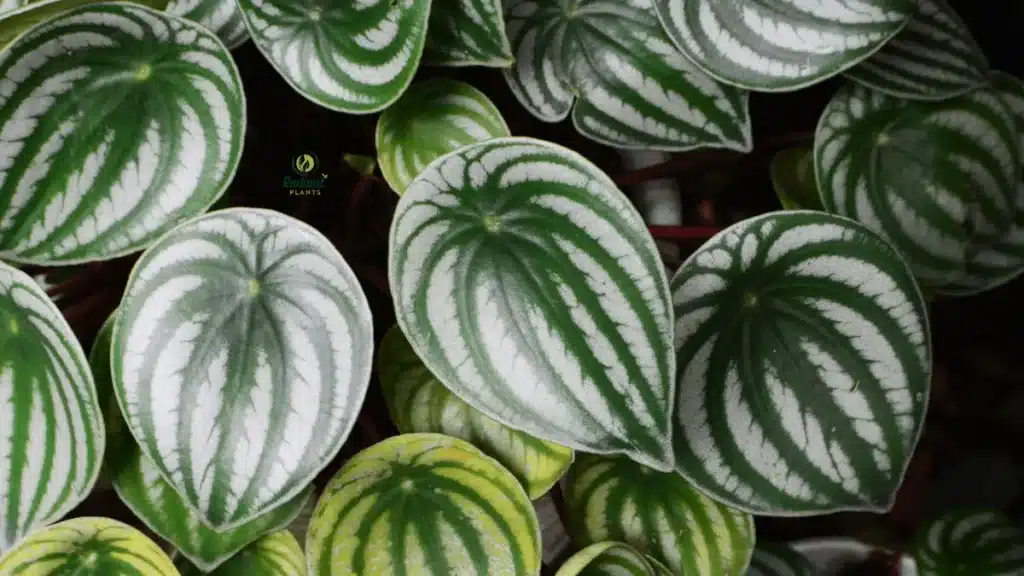
Pet safety: Multiple peperomia varieties are listed by ASPCA as non-toxic to cats and dogs, including blunt leaf peperomia and trailing peperomia.
Light: Medium to bright indirect light; some types tolerate lower light.
Difficulty: Easy to moderate
Why choose it:
Peperomia is ideal if you want a compact plant for shelves, desks, entry tables, or small apartments. It is also a strong option for people who want something pet safe without committing to a large floor plant.
What actually works:
This is one of the best “small but stylish” categories for beginners. It tends to suit people who prefer tidy, manageable plants over sprawling growers.
Common beginner mistake:
The biggest failure point is treating every peperomia the same. The genus is broad, and different varieties can vary in leaf thickness, growth habit, and watering rhythm.
Expert tip:
If your content cluster includes small indoor plants or desk plants, peperomia should link there naturally.
Areca Palm
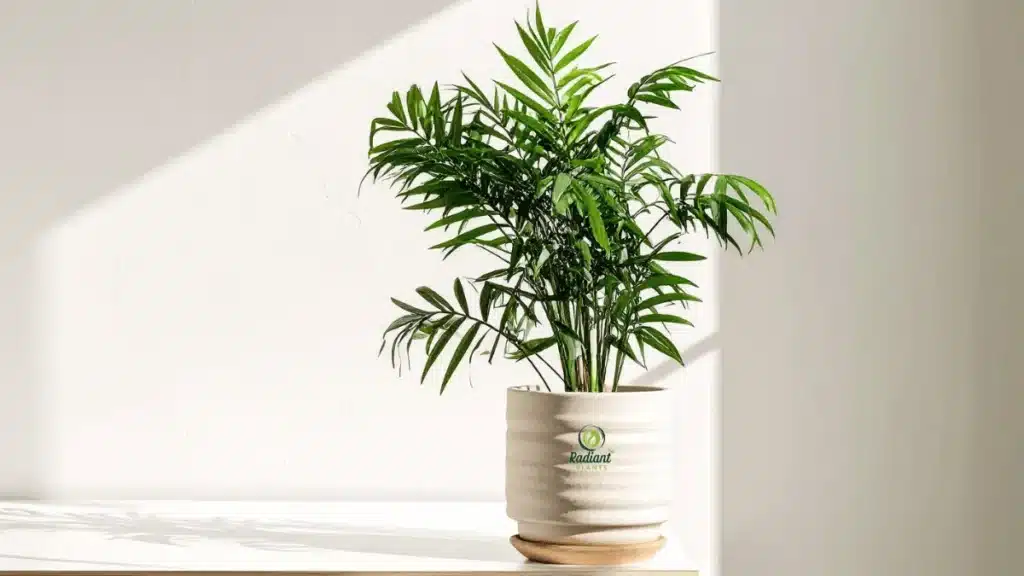
Pet safety: ASPCA lists the areca palm as non-toxic to cats and dogs.
Light: Bright indirect light.
Difficulty: Easy to moderate
Why choose it:
This is one of the best pet-friendly plants if you want a taller, softer-looking statement plant without the risk profile of many trendy but toxic options.
What actually works:
Areca palm fits bright living rooms, corners near filtered light, and homes where you want a “real plant presence” without going straight to riskier choices.
Common beginner mistake:
A lot of readers hear “palm” and assume all palms are equally safe. That is not a reliable shortcut. Always verify the exact plant identity, because common names can lead people into bad purchases.
Expert tip:
If your room is dim most of the day, skip this one and choose parlor palm instead. That single switch prevents a lot of frustration.
Parlor Palm
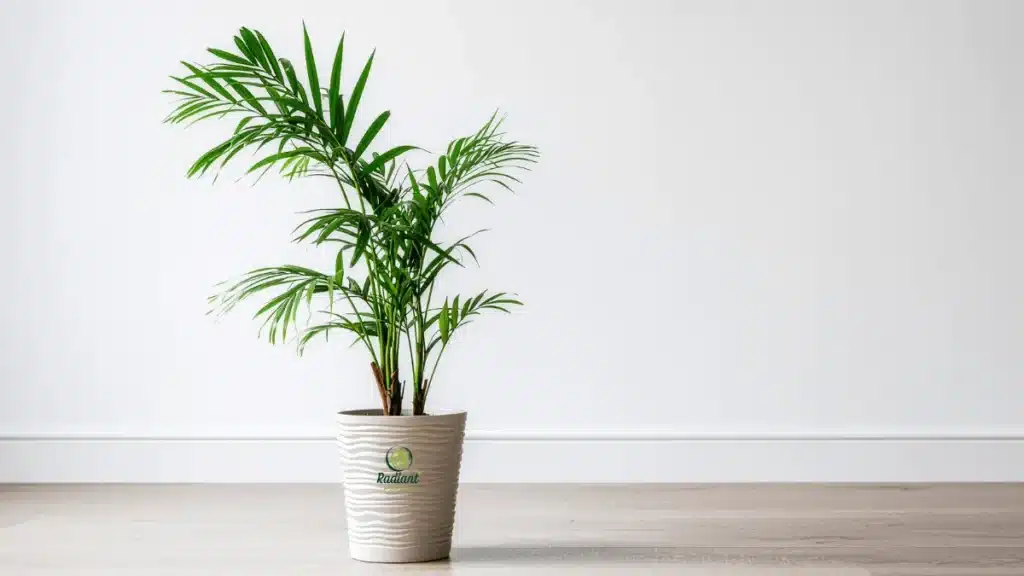
Pet safety: ASPCA lists parlor palm as non-toxic to cats and dogs. (ASPCA)
Light: Low to medium indirect light.
Difficulty: Easy
Why choose it:
Parlor palm is one of the best choices for lower-light homes and for beginners who want something upright, classic, and hard to mess up.
What actually works:
This is often a better practical choice than areca palm for renters, apartment dwellers, and anyone dealing with weaker winter light.
Seasonal note:
In winter, when indoor light drops and heating dries the air, parlor palm is usually a more realistic pick than fussier tropicals.
Expert tip:
If you only have one spot with decent but not strong light, start here before trying something more demanding.
Boston Fern
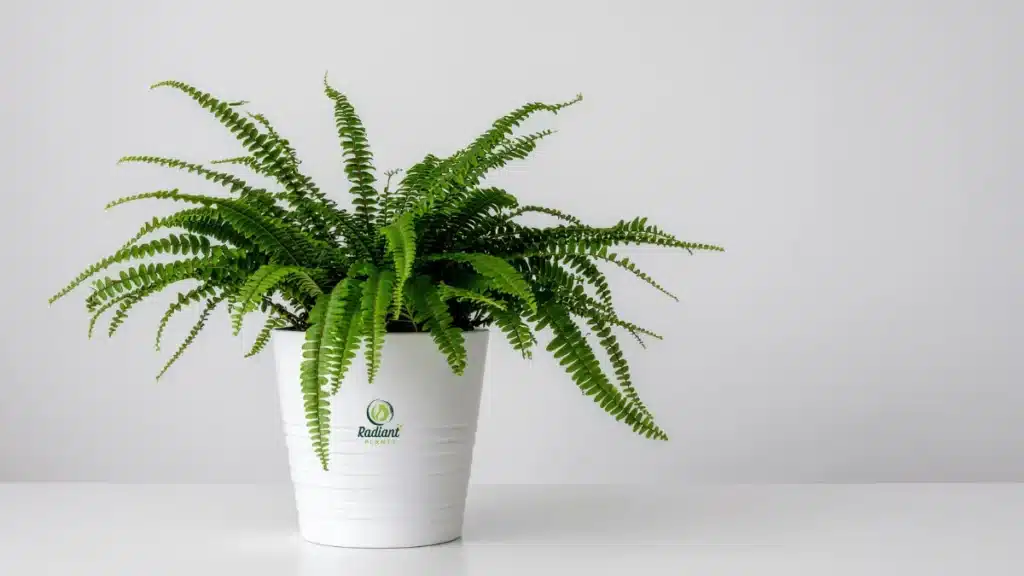
Pet safety: ASPCA lists Boston fern as non-toxic to cats and dogs. (ASPCA)
Light: Bright to medium indirect light.
Difficulty: Moderate
Why choose it:
Pick Boston fern if you want texture and fullness, especially in bathrooms, kitchens, or other higher-humidity spaces.
What actually works:
It looks fantastic in hanging baskets and adds volume fast, but it is not the best first plant for someone who forgets care routines for weeks at a time.
What often fails:
Boston fern usually struggles in dry, heated air, especially in winter. Brown tips are often a humidity issue, not just a watering issue. That distinction matters because many beginners respond by pouring in more water when the actual problem is dry air.
Expert tip:
If the room is dry and you do not want to manage humidity, choose a spider plant or parlor palm instead.
Prayer Plant
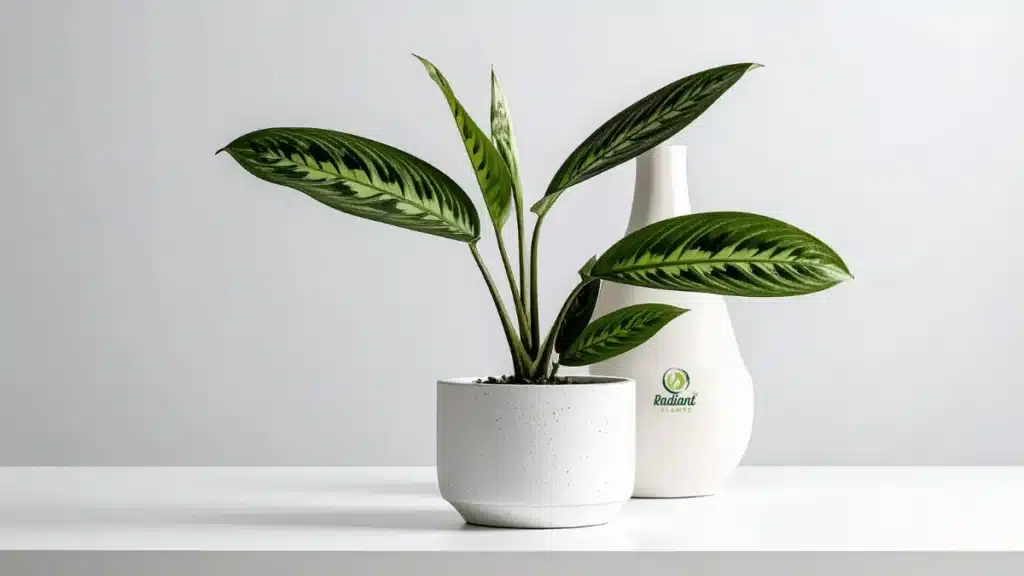
Pet safety: ASPCA lists the prayer plant as non-toxic to cats and dogs. (ASPCA)
Light: Low to medium indirect light.
Difficulty: Moderate
Why choose it:
Prayer plant is a strong choice if you want decorative foliage but do not have intense light. It works especially well in bedrooms, offices, and calmer low-light zones.
What actually works:
This is a better fit for readers who want something visually interesting but still pet safe. It can also help bridge the gap between “safe plant” and “plant that actually feels special.”
Common beginner mistake:
People often confuse calathea and prayer plant care because they are frequently grouped. The overlap is real, but you still need to observe the actual plant in your home rather than follow generic advice blindly.
Expert tip:
This is a natural internal link to a future guide on prayer plant care or pet-safe low-light plants.
Ponytail Palm
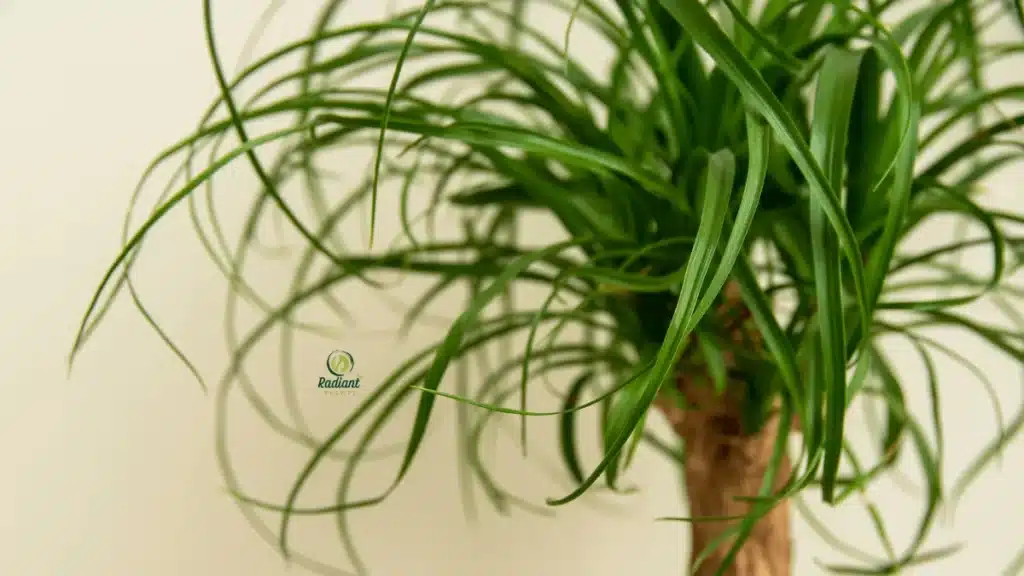
Pet safety: ASPCA lists ponytail palm as non-toxic to cats and dogs. (ASPCA)
Light: Bright light, ideally near a sunny window.
Difficulty: Easy
Why choose it:
This is one of the best pet-friendly plants for people who like a sculptural look and tend to underwater rather than overwater. Its swollen base helps it tolerate neglect better than many leafy houseplants.
What actually works:
Ponytail palm fits busy households, sunny rooms, and beginners who want something visually different from the usual fern or palm options.
What often fails:
The biggest issue is putting it in a dim room and expecting it to behave like a low-light plant. It is not. If growth stalls and the plant starts looking weak, check the light first.
Expert tip:
If you travel often or forget routine watering, this is usually a safer bet than a humidity-loving plant.
How to choose from this list without overthinking it
If you want the shortest path to success, match your plant to your real conditions:
- Best for beginners: spider plant, parlor palm, ponytail palm
- Best for low light: parlor palm, prayer plant, calathea
- Best for bright rooms: areca palm, ponytail palm
- Best for small spaces: peperomia
- Best for decorative impact: calathea, prayer plant, Boston fern
At Radiant Plants, we’ve found that readers usually make better choices when they stop asking, “Which plant is best overall?” and start asking, “Which pet-safe plant fits my light, my schedule, and my pet’s habits?” That is where a good plant list becomes useful instead of just pretty.
The next logical step is narrowing these choices by room conditions and pet behavior — especially if you need low-light pet-friendly plants, beginner houseplants, or safe hanging plants for a home with cats or dogs.
Best Pet-Friendly Plants by Situation (Decision Section)
The best pet-friendly plants depend less on a master ranking and more on your actual home setup: light, space, plant habits, and whether your cat or dog treats every leaf like a toy. If you want the easiest win, choose by situation first and appearance second — that is what usually keeps both the plant and your pet out of trouble.
At Radiant Plants, we’ve found that readers get overwhelmed when they see a long list of safe plants with no decision framework. What actually works is narrowing the choice fast: low light, beginner-friendly, compact, hard to reach, or big visual impact. That is how you pick a plant that survives real life instead of just looking good in a roundup.
Quick checklist before you choose
- Your room is dim most of the day: start with low-light options
- You forget to water: choose beginner-friendly or drought-tolerant plants
- You live in a small apartment: pick compact growers
- Your cat chews trailing leaves: prioritize hanging plants
- You want one big focal plant: go with a statement plant that still fits your light
A common beginner mistake is treating “pet safe” as the only decision point. Safety matters first, but after that, the wrong match usually fails because of light, not because the plant was a bad choice overall.
Best for low light
If your home gets weak natural light, the safest move is choosing plants that can stay presentable without bright exposure. “Low light” does mean no light — it means the plant can tolerate lower indoor light levels than most common houseplants.
Best picks:
- Parlor Palm
- Prayer Plant
- Calathea
- Cast Iron Plant
Why these fit this scenario:
- Parlor Palm: one of the most practical options for apartments, bedrooms, and corners that stay bright enough to read in but never get strong sun
- Prayer Plant: useful if you want something decorative in lower light without going too large
- Calathea: better if your goal is patterned foliage and visual interest, though it is usually less forgiving than parlor palm
- Cast Iron Plant: a strong option for people who want a tougher plant and do not care much about flashy foliage
Practical example:
If your living room has one north-facing window and most of the room stays evenly lit but never sunny, the parlor palm is usually the better choice than the areca palm. If you want more color and pattern for a desk or side table, prayer plant or calathea makes more sense.
How to tell if low light is actually the issue:
If leaves are small, growth is slow, and the plant looks stretched or washed out over time, that points more to insufficient light than to watering alone. Many people misread this as a watering problem and make things worse.
What often fails:
Putting a “low-light” plant in a dark hallway with no real daylight. Even tolerant plants still need usable ambient light.
Best for beginners
If you are new to houseplants, the best plant is the one that forgives missed waterings, average indoor air, and imperfect placement. Most beginners do better with plants that recover easily rather than plants that look spectacular for two weeks and then decline.
Best picks:
- Spider Plant
- Parlor Palm
- Peperomia
- Ponytail Palm
Why these fit this scenario:
- Spider Plant: flexible, forgiving, and easy to spot when it is actively growing
- Parlor Palm: dependable for average homes and less fussy than many tropical-looking plants
- Peperomia: excellent for small spaces and lower-maintenance routines, especially if you prefer smaller containers
- Ponytail Palm: a strong choice if you underwater more often than you overwater
Practical example:
If you have never kept a plant alive longer than a month, start with a spider plant or a parlor palm. If your place gets brighter light and you are often away from home, the ponytail palm is usually the safer beginner move.
Beginner mistake to avoid:
Do not pick calathea just because it is beautiful unless you are willing to pay attention to humidity, watering consistency, and leaf condition. It is pet safe, but it is not always the easiest first plant.
Expert tip:
If your schedule is inconsistent, choose a plant that shows stress gradually rather than one that crashes fast. That is one reason the spider plant and parlor palm are so useful.
Best for small apartments
Small homes need plants that stay manageable, fit shelves or narrow surfaces, and do not create clutter. In apartments, a compact plant that thrives where you actually have room beats a large plant that never fits properly.
Best picks:
- Peperomia
- Prayer Plant
- Orchid
- Calathea (smaller varieties)
Why these fit this scenario:
- Peperomia: compact and versatile for desks, side tables, bookshelves, and windowsills
- Prayer Plant: gives you visual texture without taking over the room
- Orchid: helpful if you want flowers and a small footprint rather than a leafy plant everywhere
- Smaller Calathea varieties: good when you want decorative foliage without a large floor pot
Practical example:
For a studio apartment with one bright corner and limited floor space, a peperomia on a shelf plus an orchid near filtered light often works better than trying to squeeze in a larger palm.
What often fails:
People choose a big “safe” plant thinking it will make the space feel lush, then realize they have nowhere logical to put it away from pets. In small homes, placement is part of plant selection.
Internal linking opportunity:
This section naturally connects to guides on small indoor plants, best desk plants, or apartment-friendly houseplants.
Best hanging plants (for cats that chew)
If your cat chews leaves or bats at anything within reach, hanging plants are often the smartest solution. This does not remove risk entirely, but it reduces easy access and helps keep tempting foliage off low furniture.
Best picks:
- Spider Plant
- Boston Fern
- Prayer Plant
- Trailing Peperomia
Why these fit this scenario:
- Spider Plant: one of the easiest and most practical hanging choices for pet homes
- Boston Fern: full and lush, especially good in more humid rooms
- Prayer Plant: useful if you want trailing or spreading visual softness in lower light
- Trailing Peperomia: compact and manageable for smaller hanging arrangements
Practical example:
If your cat jumps on shelves and chews the ends of leaves, a hanging spider plant near bright indirect light is usually a safer setup than any floor plant, even if both are technically non-toxic.
How to tell whether hanging is the right fix:
Choose this route if the problem is access rather than plant choice. If your pet only bothers plants at the nose or paw level, changing placement can solve the issue without changing the plant itself.
Common mistake:
Hanging a humidity-sensitive plant like a Boston fern in a dry room far from light. That solves the pet issue, but creates a plant health issue. In winter, especially, dry indoor air can be a bigger problem than watering frequency.
Warning to keep in mind:
Do not place hanging plants where leaves still trail down to a pet’s reach. A hanging basket only works if it is genuinely out of range.
Best statement plants
If you want one larger plant that makes a room feel finished, choose a pet-safe plant with presence but realistic indoor needs. Statement plants should match both your light and your available floor space, or they quickly become frustrating.
Best picks:
- Areca Palm
- Parlor Palm
- Large Calathea
- Cast Iron Plant
Why these fit this scenario:
- Areca Palm: best if you want height, softness, and a brighter tropical look
- Parlor Palm: a more forgiving option for homes with moderate or lower light
- Large Calathea: works when your priority is dramatic foliage rather than height
- Cast Iron Plant: good for a stronger architectural look in lower-light rooms
Practical example:
If you want a floor plant near a bright living room window, the areca palm is usually the better visual centerpiece. If the room is dimmer and you still want something upright and safe, the parlor palm is the more realistic choice.
What often fails:
Choosing a statement plant for the look of it and ignoring maintenance. Large plants are harder to move, harder to rotate, and more noticeable when they decline. A smaller plant that suits the space often looks better long-term than a struggling “showpiece.”
Expert tip:
If you are buying one main plant for a room, watch how the light falls across that exact spot for a few days before deciding. That simple step prevents a lot of expensive mistakes.
Fast decision guide: which one should you pick?
If you still want the shortest possible answer, use this:
- Choose the parlor palm if your home gets lower light and you want the safest all-around beginner option
- Choose a spider plant if you want an easy, versatile plant, and especially if you can hang it
- Choose peperomia if you have a small apartment or want something compact
- Choose ponytail palm if your room is bright and you tend to forget watering
- Choose the areca palm if you want a larger statement plant and have good indirect light
At Radiant Plants, we’ve found that the best results come from matching the plant to the room first, then to your aesthetic second. That sounds less exciting than picking based on looks, but it is exactly what keeps pet-friendly plant choices simple, successful, and worth keeping.
If Your Pet Chews Plants (Real-Life Safety Guide)
If your pet chews plants, do not assume the situation is harmless just because the plant is listed as one of the safer pet-friendly plants. The first step is to figure out what was chewed, how much was eaten, and whether the symptoms look like mild irritation or possible toxic exposure.
That diagnosis comes before advice. A cat nibbling one leaf from a non-toxic spider plant is very different from a dog tearing through an unidentified plant, swallowing potting mix, and then vomiting repeatedly. Treat those as separate situations, because the level of risk is not the same.
Why do pets chew plants in the first place?
Pets do not all chew plants for the same reason, and that matters because the fix depends on the cause.
Common reasons include:
- Curiosity or play
Kittens and puppies often mouth leaves the same way they test cords, shoes, or blankets. - Texture and movement
Long, arching leaves and hanging foliage are especially tempting to cats. - Boredom
Indoor pets with limited stimulation often interact with plants more than owners expect. - Teething or oral comfort
Puppies may chew anything soft and flexible, including leaves and stems - Access and habit
Sometimes the pet is not especially interested in plants in general. It just keeps chewing the one plant placed at nose level near a favorite resting spot.
At Radiant Plants, we’ve found that people often overestimate the “plant problem” and underestimate the “placement problem.” A pet that ignores every plant except the one on a low windowsill is usually telling you something useful: the issue is access, not necessarily all greenery in the home.
Safe vs. unsafe scenarios: how to tell the difference
This is where people need the clearest guidance.
Lower-risk scenario
This is more likely when:
- The plant is verified as non-toxic
- Your pet took a few bites, not a large amount
- Symptoms are mild or absent
- Your pet returns to normal quickly
Examples:
- A cat chews the tip of a spider plant leaf and acts normally afterward
- A dog mouths a peperomia leaf, drools briefly, then settles down
These cases can still cause mild stomach upset or vomiting, but they are very different from true poisoning.
Higher-risk scenario
This is more concerning when:
- The plant identity is unknown
- The plant is known to be toxic
- A large amount was eaten
- Your pet swallowed soil, fertilizer, moss, or decorative stones
- Symptoms are persistent, severe, or worsening
Examples:
- A puppy uproots a plant and eats leaves, plus potting mix
- A cat chews a plant label that says “palm,” but you do not know which palm it actually is
- Your dog vomits several times after chewing a houseplant
That last point matters a lot. Many plant incidents are not only about the leaf itself. Potting additives, fertilizer residue, or pesticide treatments may be the real issue.
What symptoms suggest mild irritation vs something more serious
Use symptoms as a sorting tool.
More consistent with mild irritation
- brief drooling
- lip smacking
- one episode of vomiting
- mild gagging
- short-lived soft stool
- temporary disinterest in food
This can happen even with non-toxic plants, especially if the pet ate fibrous leaves.
More consistent with a potentially serious issue
- repeated vomiting
- diarrhea that continues
- swelling around the mouth
- extreme lethargy
- tremors
- trouble breathing
- collapse
- sudden worsening over a short period
If the reaction is severe, rapidly worsening, or you cannot identify the plant confidently, do not treat it like a routine nibble.
⚠️ Warning box: do not rely on “pet friendly” labels alone
A plant labeled “pet-friendly” does not guarantee safety in these situations:
- The plant was mislabeled
- Your pet ate a large amount
- Fertilizer or chemical treatment was involved
- Your pet swallowed soil, bark, moss, or planter filler
- Symptoms are more than mild and do not improve quickly
If you cannot identify the exact plant, take a photo and verify it using a trusted source or a local expert before assuming it is safe.
What to do right away if your pet chews a plant
Keep the response practical and simple.
1. Remove access
Move the plant and any fallen leaves out of reach immediately.
2. Identify the exact plant
Do not stop at the common store label. Confirm the real name if possible. “Palm,” “fern,” and “ivy” are not specific enough for safety decisions.
3. Check what else was eaten
Look for:
- potting mix
- fertilizer spikes
- pebbles or decorative moss
- plant tags
- broken ceramic or planter material
4. Watch symptoms and timing
Mild irritation often shows up quickly and may pass. Persistent vomiting, worsening drooling, lethargy, or breathing changes are much more concerning.
5. Contact a veterinarian or poison resource when the situation is unclear, or symptoms are significant
Especially if:
- The plant is unidentified
- The plant may be toxic
- The pet is very small, elderly, or medically fragile
- Symptoms are ongoing or severe
Behavioral tips that actually help
The best prevention is not just “put plants higher.” That works sometimes, but not always.
Here is what tends to work in real homes:
- Use hanging planters for trailing plants
Best for cats that target dangling leaves. - Keep floor plants out of high-traffic pet zones
If a dog bumps, digs, or mouths plants near entryways or favorite nap areas, move them. - Rotate to less tempting plant shapes
Pets are often more attracted to grassy, arching, or dangling foliage than thicker upright leaves. - Give pets alternative stimulation
Bored pets are more likely to investigate plants. - Watch the first two weeks after bringing home a new plant
Newness alone often triggers chewing behavior.
At Radiant Plants, we’ve found that one of the most effective moves is choosing plants based on temptation level, not just toxicity. A safe plant with long dangling leaves may still be the wrong plant for a leaf-chewing cat.
Prevention checklist
Use this if your pet has a history of chewing:
- Choose verified non-toxic plants
- Avoid unidentified gift plants or grocery-store impulse buys
- Keep hanging foliage truly out of reach, not just slightly higher
- Do not use fertilizer spikes where pets can access the soil
- Clean up fallen leaves quickly
- Place the most tempting plants away from favorite pet zones
- Monitor behavior after introducing any new plant
- Skip floor-level planters if your dog digs
- Reassess placement during winter when indoor boredom can increase
Common mistakes that make the problem worse
- Mistake 1: Focusing only on plant toxicity
The potting setup may be the real issue. - Mistake 2: Assuming one mild incident means future incidents are fine
Repeated chewing increases the chance of stomach upset, even with safer plants. - Mistake 3: Using vague plant names
“Fern” or “palm” is not enough for a safety decision. - Mistake 4: Solving chewing with the wrong plant instead of a better placement
Sometimes, the better fix is a hanging spider plant, not giving up on plants completely.
This section naturally leads into related guides on best hanging pet-friendly plants, plants to avoid if you have pets, and how to choose the right plant for your light and space, because plant safety is rarely just about the species alone.
Common Toxic Plants to Avoid
If you have pets, some of the most common “easy houseplants” are exactly the ones to be careful with. Monstera, pothos, snake plant, aloe vera, and peace lily are all listed by the ASPCA as toxic to cats and dogs, which is why they do not belong on a beginner-safe shortlist of pet-friendly plants.
This is where a lot of owners get tripped up: these plants are popular, sold everywhere, and often recommended in general houseplant guides. But “popular” does not mean “pet safe,” and common names can make the risk even more confusing. The ASPCA’s plant database also notes that consuming plant material can cause vomiting and GI upset in pets, even beyond the main toxic effect.
Monstera
Why is it risky?
Monstera deliciosa, often sold as a Swiss cheese plant or split-leaf philodendron, is listed as toxic to both cats and dogs. The ASPCA identifies insoluble calcium oxalates as the toxic principle and lists oral irritation, burning of the mouth, drooling, vomiting, and difficulty swallowing among the clinical signs. (ASPCA)
Why people misjudge it:
It looks tropical, stylish, and “friendly,” so people assume it belongs in the same bucket as palms or calatheas. It does not.
Safer swap:
If you want a bold foliage plant with a softer risk profile, a large calathea or parlor palm is usually a better direction for a pet household.
Pothos
Why is it risky:
Golden pothos is listed by the ASPCA as toxic to cats and dogs, due to insoluble calcium oxalates. Typical signs include oral irritation, drooling, vomiting, and difficulty swallowing.
Why people misjudge it:
Pothos is one of the most recommended “easy plants” online, so beginners often assume it must be safe. Ease of care and pet safety are completely different filters.
What often fails:
People put pothos on a shelf, thinking it is out of reach, then the vines trail down into chewing range. For a leaf-chewing cat, that is a predictable problem.
Safer swap:
Try a spider plant or a trailing peperomia if you want a relaxed, shelf-friendly look without the same toxicity concern.
Snake Plant
Why is it risky:
Snake plant, also listed as mother-in-law’s tongue by the ASPCA, is toxic to cats and dogs. The ASPCA identifies saponins as the toxic principle and lists nausea, vomiting, and diarrhea as likely signs.
Why people misjudge it:
It is constantly recommended as a “can’t-kill-it” houseplant, so owners often think it is a safe beginner default. It is beginner-friendly for plant care, but not pet-friendly.
Practical insight:
This is one of the clearest examples of why a plant can be excellent for busy adults and still be the wrong fit for a home with pets.
Safer swap:
If you want a tough, architectural look, a cast-iron plant or ponytail palm is a better route for a pet-safe setup. The exact cast iron plant safety claim should still be verified against a trusted toxicity source if you publish it.
Aloe Vera
Why is it risky:
ASPCA lists aloe vera as toxic to cats and dogs, with saponins and anthraquinones named as toxic principles. Reported signs include vomiting, lethargy, and diarrhea. A related ASPCA entry for true aloe also lists vomiting and a change in urine color as clinical signs. (ASPCA)
Why people misjudge it:
Because aloe is widely associated with skin care and wellness for humans, many people assume it must be harmless to pets, too. That is a dangerous shortcut.
What actually works:
If you love the clean, succulent look, do not assume all succulents are equally safe or equally unsafe. Verify species one by one rather than buying by appearance.
Safer swap:
Look for truly non-toxic small plants instead of trying to force aloe into a pet’s home just because it is useful for people.
Peace Lily
Why is it risky:
Peace lily is listed by the ASPCA as toxic to cats and dogs. Like monstera and pothos, the toxic principle listed is insoluble calcium oxalates, and the expected signs include oral irritation, drooling, vomiting, and difficulty swallowing. (ASPCA)
Why people misjudge it:
The word “lily” creates confusion. Peace lily is not the same thing as the highly kidney-toxic true lilies in the Lilium group, but it is still toxic and still not safe for pets. The ASPCA has also specifically addressed confusion around different plants called “lily.”
Seasonal note:
This one becomes especially relevant around gift season and spring floral buying, when peace lilies and other lily-named plants show up more often in stores and bouquets. ASPCA seasonal guidance also warns that some lilies can be extremely dangerous, especially for cats.
Safer swap:
If you want a graceful, polished indoor plant, a parlor palm or orchid is usually a much safer direction for homes with pets. Orchid-specific safety should still be cross-checked before publication.
⚠️ Warning box: do not trust vibe-based plant safety
These plants are often chosen because they are:
- attractive
- beginner-friendly
- easy to find at big-box stores
- common in design blogs and decor videos
None of that tells you whether they are safe for cats and dogs. What matters is verified toxicity information from a reputable database or veterinary source. The ASPCA database is one of the most practical first filters for this.
Safe vs. toxic: the contrast that helps most
Here is the simplest comparison to keep in mind:
- Toxic but commonly recommended: monstera, pothos, snake plant, aloe vera, peace lily
- Safer pet-friendly alternatives: spider plant, calathea, parlor palm, areca palm, peperomia, Boston fern
That contrast matters because most readers are not asking, “What is toxic in theory?” They are really asking, “Which popular houseplants should I skip, and what can I buy instead?” That is also a natural place to internally link to sections like best pet-friendly plants by situation, if your pet chews plants, or low-light pet-safe houseplants.
At Radiant Plants, we’ve found that the biggest beginner mistake is buying a trendy plant first and checking safety second. Flipping that order is one of the easiest ways to make your home greener without creating avoidable risk.
How to Choose the Right Pet-Friendly Plant
The right pet-friendly plant is the one that fits your light, your routine, your space, and your pet’s habits—not just the one that looks nicest in a store. If you want the shortest answer, buy based on conditions first and appearance second, because most plant failures happen when the plant is safe for pets but wrong for the home.
That sounds obvious, but it is where most people go wrong. At Radiant Plants, we’ve found that readers usually do not need a bigger list—they need a faster decision system. The four things that matter most are: light, maintenance, pet behavior, and available space.
Quick diagnosis box: Which plant type fits you best?
Use this before you buy anything:
- My room gets weak natural light most of the day
→ Start with low-light pet-safe plants like parlor palm, prayer plant, or some calathea varieties - I forget to water or travel often
→ Choose forgiving options like ponytail palm, spider plant, or peperomia - My cat chews leaves, or my dog mouths anything at floor level
→ Prioritize hanging plants, thicker-leaved plants, or placements that reduce access - I live in a small apartment
→ Choose compact plants like peperomia, small prayer plants, or orchids - I want one large focal plant
→ Go with a pet-safe statement plant that actually matches your light, like an areca palm for brighter spaces or a parlor palm for dimmer ones
If two of those apply, follow the more limiting condition. For example, if you want a large statement plant but your room is dim, light matters more than style.
1. Start with light conditions first
Light is usually the biggest make-or-break factor. A plant can be non-toxic and still fail quickly if the room does not give it enough usable light.
Here is the easiest way to judge your space:
- Low light = the room is bright enough to move around comfortably during the day, but it never gets strong sun and may feel dim away from the window
- Medium indirect light = the room is clearly lit for much of the day, but the plant is not sitting in harsh direct sun
- Bright indirect light = strong daylight near a window, without long hours of intense direct exposure
- Direct sun = several hours of sun rays actually hitting the leaves or floor
A common beginner mistake is confusing low light with a dark corner. Those are not the same. Low-light plants tolerate less light than many houseplants, but they still need real daylight.
How to tell if light is the real problem instead of watering:
- New growth comes in smaller than older growth
- Stems stretch or lean hard toward the window
- Leaf color looks dull or faded over time
- Soil stays wet for too long because the plant is not actively growing
That last point matters. People often think a plant is “too wet” because they watered too much, when the deeper issue is weak light slowing everything down.
What actually works:
Before buying, stand in the exact plant spot at midday. If the area feels dim even to you, do not buy a bright-light plant just because it is trendy.
2. Match the plant to your maintenance style
Be honest here. The best plant for your lifestyle is not the one you admire online. It is the one you can care for without turning it into a chore.
Ask yourself:
- Do I tend to forget watering?
- Do I overcheck plants and fuss with them too much?
- Am I home consistently?
- Do I want low effort, or am I okay with a slightly more involved plant?
Better choices for lower-maintenance households:
- Spider plant
- Peperomia
- Ponytail palm
- Parlor palm
Better choices if you do not mind paying more attention:
- Calathea
- Prayer plant
- Boston fern
The difference is not just “easy” vs “hard.” It is more specific than that.
For example:
- Boston fern often struggles because people mistake dry-air stress for a watering issue. Brown tips in winter may point more to humidity than thirst.
- Calathea often disappoints beginners because it is bought for a low-light room, then placed in a dry, drafty corner, and expected to stay perfect.
At Radiant Plants, we’ve found that people do better when they stop asking, “Can I keep this alive?” and start asking, “Can I keep this alive in my actual routine?”
3. Factor in your pet’s behavior, not just pet safety labels
Not all pets create the same kind of plant risk.
A calm older dog that ignores plants is a different situation from:
- a puppy that digs in soil
- a cat that chews anything grassy
- a pet that knocks over pots while playing
- An indoor pet that gets bored and fixates on leaves
That means your plant choice should also match your pet’s behavior:
If your cat chews leaves
Choose:
- hanging spider plant
- Hanging a Boston fern if the humidity is good
- compact peperomia placed out of reach
Avoid easy-to-access trailing or arching foliage at face level, even if the plant is classified as safer.
If your dog digs in pots
Choose:
- heavier containers
- shelf or stand placement
- smaller pet-safe plants off the floor
The real issue may be the soil, not the foliage. Potting mix, fertilizer, moss, and decorative stones can all create extra risk.
If your pet knocks things over
Choose:
- stable pots
- compact plants
- fewer floor-level statement plants
A lot of “bad plant choices” are really bad placement choices.
4. Work within your space constraints
A plant may be safe and beautiful, but still wrong for your home because you do not have a logical place for it.
Think in these terms:
- Small apartment or studio
Best with compact plants, shelf plants, or narrow-footprint plants - Busy family room
Better with sturdier placement and plants that do not need constant repositioning - Bathroom or kitchen with humidity
Better for ferns and other plants that appreciate moisture in the air - Bright corner near a window
Good for statement plants like areca palm or ponytail palm - Dark bedroom or office
Better for lower-light-tolerant options like parlor palm or prayer plant
What often fails:
People buy one large plant because they want a finished, styled look, then realize it blocks traffic, gets bumped by the dog, or sits too far from the only useful light source.
That is why space should be treated as a real filter, not an afterthought.
Checklist: how to choose the right plant in under 2 minutes
Use this simple buying checklist:
- Is the plant verified as non-toxic to cats and dogs?
- Does the room have the light this plant actually needs?
- Does my care style fit this plant’s maintenance level?
- Will my pet be tempted to chew, dig, or knock it over?
- Do I have a safe and realistic place to put it?
- Does the plant still make sense in winter when light drops and indoor air gets drier?
- Am I choosing this because it fits my home, or just because it looks good in the store?
If you answer “no” to two or more of those, it is probably the wrong plant.
A few fast buying examples
Here is what good matching looks like in practice:
Scenario 1: Low-light apartment + beginner + cat
Best fit: Parlor palm
Why: safer profile, lower-light tolerance, easier than fussier decorative plants
Scenario 2: Bright room + forgetful owner + no heavy pet chewing
Best fit: Ponytail palm
Why: handles brighter conditions and lower-maintenance routines better than humidity-loving options
Scenario 3: Small apartment + wants decorative foliage + willing to pay some attention
Best fit: Prayer plant or calathea
Why: compact, visually interesting, better for shelves and side tables than large floor plants
Scenario 4: Cat chews everything leafy
Best fit: Hanging spider plant
Why: safe choice plus smarter placement
Internal linking opportunities
This section naturally supports internal links to:
- Best pet-friendly plants by situation
- If your pet chews plants
- Low-light pet-safe houseplants
- Beginner houseplants for indoor homes
- Best hanging plants safe for cats
The goal is not to find the “best” plant in the abstract. It is to find the safest, simplest plant that fits your real home well enough that you will still be happy with it three months from now.
Where to Place Pet-Friendly Plants at Home
The safest place for pet-friendly plants is wherever the plant gets the right light, and your pet cannot casually chew, dig, or knock it over. In real homes, placement usually matters almost as much as plant choice, because even non-toxic plants can still cause stomach upset if a pet eats enough of them.
That is why “pet safe” should never mean “put it anywhere.” The best setup balances four things at once: light, airflow, humidity, and pet access. At Radiant Plants, we’ve found that many plant problems that look like “my pet won’t leave it alone” are really placement mistakes—too low, too reachable, too tempting, or simply in the wrong room.
Hanging vs. floor placement
This is the first decision to make because it changes both safety and plant performance.
When hanging placement works best
Hanging plants are often the smartest option if:
- Your cat chews on trailing or grassy-looking leaves
- Your dog mouths anything at floor level
- You do not have stable shelf space
- The plant naturally suits a hanging form
Good candidates include:
- Spider plant
- Boston fern
- Trailing peperomia
What actually works:
Hanging works best when the leaves are truly out of reach. A basket that is technically “up high” but still lets foliage drape down to nose level does not solve much.
Common mistake:
People hang a plant in a dark corner just to get it away from pets. That often protects the plant from chewing, but creates a new problem: weak light. If the plant starts getting pale, stretched, or thin, the issue is often placement, not watering.
When floor placement works best
Floor placement makes more sense if:
- The plant is large and upright
- It needs stable, bright light near a window
- The pot is heavy enough not to tip easily
- Your pet tends to ignore plants rather than investigate them
Good candidates include:
- Areca palm
- Parlor palm
- Larger cast iron plant
What actually works:
Floor plants do better when placed slightly off traffic paths. If a dog brushes past the pot every day or the plant sits beside a favorite play zone, it becomes a target, whether the pet means to bother it or not.
How to tell if floor placement is the real issue:
If the plant keeps getting bumped, soil is scattered, or leaves are bent or torn near the base, the problem is usually access and traffic, not care.
Shelves: one of the best options, if you do them right
Shelves are often the easiest middle ground. They keep plants off the floor without forcing every plant into a hanging basket.
Shelves work especially well for:
- Peperomia
- Prayer plant
- Small calathea
- Orchid
Best use cases:
- small apartments
- homes with cats that do not jump onto every surface
- rooms where floor space is limited
- decorative plants that look better at eye level
Expert tip:
Use shelves near bright indirect light, not deep inside the room. The plant should still “see” the window. If a shelf looks stylish but stays dim all day, it is probably the wrong shelf.
What often fails:
Some cat owners assume any shelf equals safety. It does not. If your cat already jumps on bookshelves, media units, or window ledges, a shelf may simply turn the plant into a higher-value toy.
Practical example:
A peperomia on a narrow shelf beside an east-facing window is usually a better setup than the same plant on a coffee table in full reach of a puppy.
Bathrooms and humid rooms
Bathrooms, kitchens, and laundry rooms can be excellent plant spots—but only for plants that actually benefit from extra humidity and only if the room gets enough light.
Better choices for humid rooms include:
- Boston fern
- Prayer plant
- Calathea
These placements work because humidity can help reduce leaf crisping and dryness, especially in winter when indoor heating makes many homes drier.
How to tell if a bathroom is a good plant room:
Ask two questions:
- Does the room have real natural light?
- Does the plant actually like humidity?
If the answer to the first question is no, the humidity alone does not make it a good plant spot.
Common mistake:
People hear that ferns love humidity, then place a Boston fern in a bathroom with almost no daylight. Humidity helps, but it does not replace light.
Seasonal note:
This matters more in winter. Dry heated air can make ferns and calatheas struggle in living rooms and bedrooms, while a brighter bathroom may suddenly become the better location.
Avoiding pet reach without creating plant stress
A lot of owners focus on getting the plant away from the pet, but then accidentally put it somewhere the plant cannot thrive. The goal is not just “away from paws.” It is a safe and sustainable placement.
Here is the better way to think about it:
Good “out of reach” placement
- hanging basket near a bright window
- high shelf with usable light
- plant stand in a room the pet rarely enters
- bathroom ledge with humidity and daylight
- stable corner with enough space around the plant
Bad “out of reach” placement
- dark top shelf, far from any window
- heater-adjacent ledge
- An unstable stand that tips easily
- cramped corner with no airflow
- spot where leaves still brush down into the pet’s reach
At Radiant Plants, we’ve found that owners often solve for one problem and accidentally create two more. For example, moving a spider plant away from the cat but right above a heater vent may stop chewing while causing browning, dryness, and overall decline.
Best placement by pet behavior
This is where plant placement becomes much easier.
If your cat chews leaves
- Use hanging baskets
- avoid floor-level trailing plants
- keep grassy or arching foliage out of sight lines
- Do not place tempting plants beside favorite window perches
If your dog digs in soil
- Skip floor pots in active areas
- Use shelves or raised stands
- avoid decorative moss, loose pebbles, or exposed potting mix
If your pet knocks things over
- Choose heavier pots
- Place plants away from zoomie routes and corners
- avoid narrow, top-heavy planters
If your pet ignores plants most of the time
You still should not assume any placement is fine. New plants attract attention because they smell different and change the room visually.
Fast placement guide by plant type
Use this as a shortcut:
- Spider plant: hanging basket or bright shelf
- Peperomia: shelf, desk, or side table out of easy reach
- Parlor palm: floor near medium or lower indirect light, away from heavy traffic
- Areca palm: floor near bright indirect light, with room around the fronds
- Boston fern: hanging basket or humid, bright bathroom
- Calathea / Prayer plant: shelf or stand in medium light, away from harsh sun and dry vents
- Ponytail palm: bright window area, preferably where leaves do not dangle into chewing range
Expert tips that make placement easier
- Place the plant where you can still observe it. Plants hidden too well are often forgotten until there is a problem.
- Check the spot at the actual time of day the plant will live there. Morning and afternoon light can feel very different.
- Keep plants away from heater vents and strong AC drafts when possible.
- If you are torn between “best light” and “best safety,” pick a plant that fits the safer spot rather than forcing the wrong plant into it.
- For homes with persistent chewers, internal links to best hanging pet-friendly plants or what to do if your pet chews plants make perfect next reads.
The best placement is the one that your pet cannot casually turn into a game, and your plant can still realistically grow in. That usually leads to healthier plants, fewer messes, and far less second-guessing once the novelty wears off.
Care Tips for Pet-Friendly Plants (Beginner’s Guide)
If you want to keep pet-friendly plants alive, focus on four basics: give them the right light, water based on soil dryness instead of a rigid calendar, use well-draining soil, and avoid “loving” them to death. Most beginner problems come from misreading symptoms—especially confusing low light with overwatering, or dry air with thirst.
At Radiant Plants, we’ve found that new plant owners usually do not fail because they picked the wrong safe plant. They fail because they apply the same care routine to every plant in the house. A spider plant, parlor palm, and ponytail palm may all be pet safe, but they do not all want the same amount of water, light, or soil structure.
Start with watering basics, not watering schedules
The simplest rule is this: check the soil before you water. Do not water just because it has been “a week.”
A better beginner method:
- Stick your finger 1–2 inches into the soil
- If the top layer still feels damp, wait
- If it feels dry at that depth, the plant may be ready for water
- Water thoroughly until excess drains out the bottom, then empty the saucer if needed
That last part matters. Small sips of water every few days often create weak root zones because the top of the pot gets moisture while deeper roots stay inconsistently hydrated.
How to tell whether the plant needs water or something else
This is where beginners get stuck, so it helps to diagnose before adjusting care.
Signs the plant may actually need water
- The soil feels dry below the surface
- leaves feel thinner or less firm than usual
- The plant droops, but the soil is clearly dry
- The pot feels noticeably lighter than normal
Signs the problem may be overwatering instead
- Soil stays wet for days
- leaves yellow while the soil is still damp
- The stems feel soft near the base
- The pot smells stale or sour
- growth slows even though you keep watering
Signs the problem may be light, not water
- The plant looks stretched or leans toward the window
- New growth is smaller than older growth
- The color looks faded or weak
- The soil stays wet too long because the plant is not using water fast enough
That distinction saves a lot of plants. People often respond to yellow leaves by watering less immediately, but yellowing can come from too much water, too little light, or sometimes both at the same time. The clue is the soil condition. Yellow leaves + wet soil usually point in a different direction than yellow leaves + bone-dry soil.
Light basics: match the plant to the room
Light is the silent factor behind a lot of “watering problems.” A plant in the wrong light often starts declining, and the owner blames watering because that is the part they can control.
A simple way to think about light:
- Low light: brighter room but no strong sun; still enough daylight to comfortably see and read
- Medium indirect light: steady daylight without direct harsh sun
- Bright indirect light: close to a bright window, but not baking in intense sun for long stretches
- Direct sun: sun rays directly hit the plant or floor for part of the day
A few practical matches:
- Parlor palm and prayer plant usually handle lower light better than brighter-light plants
- Ponytail palm and areca palm usually need stronger light than many beginners assume
- Boston fern often wants decent light plus humidity, not a dark, damp corner
What often fails:
People hear “low light plant” and place it in a room with almost no useful daylight. The plant survives for a while, but survival is not the same as healthy growth.
Beginner tip:
Watch the plant spot at different times of day before deciding where the plant lives permanently. Morning light and afternoon light can feel very different.
Overwatering mistakes beginners make all the time
Overwatering is not just “too much water at once.” It is usually a pattern of keeping the soil wet for too long.
Common overwatering mistakes:
- watering on a fixed schedule without checking the soil
- using a pot with no drainage hole
- leaving the pot sitting in excess water
- using dense soil that holds too much moisture
- keeping a plant in low light and watering it as if it were in bright light
At Radiant Plants, we’ve found that many readers say, “But I only water once a week,” as if that automatically means they are safe. It does not. Once a week can still be too much if the plant is in a dim room, during winter, or planted in heavy soil.
How to tell overwatering apart from underwatering
This matters because the first visible symptom—drooping—can happen in both cases.
Underwatering usually looks like:
- dry soil
- limp, thin, or curled leaves
- faster recovery after watering
Overwatering usually looks like:
- damp soil
- yellowing leaves
- soft stems or mushy spots
- slower worsening over time, not a quick bounce-back
If the plant droops and the soil is wet, more water is rarely the answer.
Soil tips that make plant care easier
Good soil is not just about nutrition. It is about how fast water drains and how much air reaches the roots.
For most beginner-friendly houseplants, you want:
- a mix that drains well
- a pot with a drainage hole
- enough structure that the soil does not stay soggy for too long
That does not mean every safe plant wants the same mix.
Examples:
- Ponytail palm generally does better in a faster-draining setup than a humidity-loving fern
- Boston fern usually prefers moisture retention that is more even, but not waterlogging
- Peperomia often benefits from soil that does not stay dense and moist
What actually works:
Buy a quality indoor potting mix, then adjust from there if needed. Beginners usually do better with a decent all-purpose mix plus good drainage than with an overcomplicated custom soil recipe.
Common mistake:
Using a decorative cachepot without understanding that water may pool inside it. The plant may look stylish, but hidden standing water can quietly damage the roots.
Beginner care tips that make a real difference
These are simple, but they work:
- Check the soil before watering
- Use pots with drainage
- Match the plant to your light
- Do not move the plant constantly
- Remove dead or fallen leaves
- Keep plants away from heating vents and strong AC drafts
- Adjust care in winter when growth slows
Seasonally, winter is when many beginners lose momentum. Light drops, indoor air gets drier, and soil often stays wet longer. That means many plants need less frequent watering, not the same routine they handled in summer.
Common beginner mistakes to avoid
- Treating every plant the same
A fern and a ponytail palm should not be watered on the same rhythm. - Guessing based on leaf droop alone
Always check the soil first. - Ignoring drainage
A safe plant in a bad pot setup is still a struggling plant. - Putting the plant in the wrong light and trying to fix it with water
This is one of the biggest reasons beginners get frustrated. - Panicking after one yellow leaf
One older leaf aging out is different from widespread yellowing across the plant.
A simple beginner routine that works
If you want a low-stress system, do this:
- Put the plant in a spot that matches its light needs
- Check the soil every few days, not just the leaves
- Water deeply only when the soil tells you to
- Watch how fast the pot dries in that room
- Adjust slowly instead of changing everything at once
This section naturally connects well with guides on best pet-friendly plants by situation, where to place pet-friendly plants at home, and how to choose the right pet-friendly plant, because good care starts with good matching.
Mistakes to Avoid When Choosing Pet-Friendly Plants
The biggest mistake people make with pet-friendly plants is assuming “safe for pets” is the only filter that matters. In real life, the wrong plant usually fails because of a mix of bad assumptions: the plant was misidentified, the light was wrong, the buyer chose with their eyes instead of their conditions, or they ignored how their cat or dog actually behaves.
That is why a smart plant choice is never just about toxicity. At Radiant Plants, we’ve found that people are much more likely to succeed when they think in this order: safety first, then light, then maintenance, then pet behavior. If you flip that order, you often end up with a plant that is technically safe but still a poor fit for your home.
1. Assuming all “green plants” are safe
This is one of the fastest ways to make a bad purchase. Plenty of popular houseplants look soft, harmless, or “natural,” but are still considered toxic to cats or dogs.
A few reasons this mistake happens:
- Store tags are vague
- Common plant names are inconsistent
- Decor content often talks about looks, not pet safety
- People confuse “easy care” with “safe for pets.”
For example, a person may see a lush leafy plant and assume it belongs in the same category as a parlor palm or spider plant, when it may actually be closer to a pothos or peace lily in terms of pet risk.
What actually works:
Always verify the exact plant name before buying. If pet safety matters, do not rely on “tropical plant,” “palm,” “fern,” or “mixed foliage” as the only identifier.
How to tell this mistake is happening:
If you are buying based on the plant’s vibe instead of its exact name, you are already in risky territory.
2. Ignoring light needs
A plant can be pet safe and still be completely wrong for your room. Light mismatch is one of the most common reasons beginners think they are “bad at plants,” when the real problem is that the plant never had a fair chance.
Common version of this mistake:
- buying a bright-light plant for a dim apartment
- putting a humidity-loving plant in a dark bathroom
- assuming “low light” means almost no natural light
- choosing a plant for a shelf that looks good but gets very little daylight
This matters because light affects nearly everything else:
- growth speed
- How fast does the soil dry
- How often does the plant need water
- whether leaves stay strong and healthy
A lot of care mistakes are actually light mistakes in disguise. Yellowing, weak growth, stretched stems, and soil staying wet too long can all point to low light rather than simple watering issues.
What often fails:
People buy the plant first, then try to “make it work” in whatever spot is available.
What actually works:
Pick the spot first. Then choose a plant that fits that light.
3. Buying based on looks only
This is understandable, but it causes a lot of regret. A gorgeous plant is not a good plant for your home if it needs more humidity, more light, or more attention than you realistically want to give it.
Typical examples:
- choosing calathea for the pattern, then getting frustrated by leaf crisping
- choosing a large statement palm without having the floor space or light
- choosing a trailing plant because it looks great online, then discovering your cat treats it like a toy
At Radiant Plants, we’ve found that this is where readers often confuse “best-looking” with “best choice.” Those are not the same thing. The best choice is the one that still looks good after a few months in your actual home, not just on day one.
Quick reality check before buying:
- Does this plant fit my room’s light?
- Does it match my care style?
- Do I have a safe place to put it?
- Would I still choose it if I ignored how pretty it looks in the store?
If the honest answer is no, it is probably the wrong plant.
4. Not considering pet behavior
Two homes can buy the same safe plant and get very different results because the pets behave differently. A calm senior dog that ignores plants creates one level of risk. A teething puppy, a digging dog, or a leaf-chewing cat creates another.
This mistake shows up in a few ways:
Ignoring chewing habits
Some pets leave plants alone. Others target anything grassy, trailing, or soft-leaved.
Ignoring digging behavior
The plant itself may be non-toxic, but the pet may still dig in the pot, eat soil, or chew fertilizer-related material.
Ignoring movement and traffic
A plant in a high-traffic hallway or beside a zoomie route may get knocked over even if the pet is not interested in eating it.
Ignoring novelty
A pet that ignores your old plants may still obsess over a new one for the first week or two.
What actually works:
Choose the plant with your pet’s behavior in mind, not just the species name. For persistent chewers, a hanging spider plant is often a better solution than a floor plant, even if both are classified as safer.
⚠️ Warning box: “Pet friendly” does not mean “problem proof.”
Even a safer plant can still become a bad choice if:
- It is placed at nose level for a chewer
- The potting setup is easy to dig through
- The light is wrong
- The plant is mislabeled
- The owner assumes all non-toxic plants behave the same
That is why smart plant selection is really about matching, not just labeling.
The checklist: what to avoid before you buy
Use this as a final filter before bringing any plant home:
- Do not buy a plant without confirming its exact name
- Do not assume all leafy green plants are pet safe
- Do not choose based on appearance alone
- Do not ignore the light in the exact spot where the plant will live
- Do not put a tempting plant where a chewing pet can easily reach it
- Do not ignore your pet’s history with digging, chewing, or knocking over pots
- Do not assume “low light” means a dark room
- Do not buy a large statement plant without a realistic place for it
- Do not copy someone else’s plant recommendation without comparing your home conditions
- Do not forget that winter can reduce light and slow drying times indoors
A few practical examples of bad matches
These are the kinds of choices that sound fine at first but usually backfire:
- Beautiful patterned plant + dry dark corner
Safe plant, wrong environment - Safe trailing plant + known leaf-chewing cat
Safe species, bad placement strategy - Large floor palm + small apartment + active dog
Good plant, wrong space - Compact safe plant + owner who wants “set it and forget it” care
Fine in theory, frustrating in practice if the plant needs more attention than expected
The better way to think about it
Instead of asking, “Is this one safe?” ask:
- Is it safe?
- Does it fit my light?
- Does it fit my routine?
- Does it fit my pet?
- Does it fit my space?
That question set prevents more mistakes than any single “top 10 safe plants” list ever will. It also creates natural next steps into related sections, like how to choose the right pet-friendly plant, where to place pet-friendly plants at home, and if your pet chews plants, because those are the sections that turn a safe choice into a successful one.
FAQs – Pet Friendly Plants
What are the safest pet-friendly plants for cats and dogs?
Some of the most reliable options include spider plant, calathea, parlor palm, areca palm, peperomia, and Boston fern. The safest approach is to verify each plant in the ASPCA database before buying, since common names can be confusing and store labels are not always precise.
What happens if my pet eats a non-toxic plant?
A non-toxic plant usually does not cause true poisoning, but it can still lead to mild vomiting, drooling, or stomach upset if your pet chews enough of it. If symptoms are severe, repeated, or the plant identity is unclear, contact your vet rather than assuming it is harmless.
Are succulents safe for cats and dogs?
Some are, but many are not, so “succulent” is too broad to trust on its own. Aloe vera, for example, is toxic to cats and dogs according to ASPCA, which is why each plant should be checked by exact name before you bring it home.
Can I keep toxic plants in the house if I have pets?
Yes, but only if your pet truly cannot access them. That is harder than many owners expect, especially with cats that jump, chew, or investigate new objects. For most households, it is simpler and safer to choose verified pet-safe plants instead.
Which common houseplants should pet owners avoid?
Some of the most common ones to avoid include peace lily, pothos, aloe vera, snake plant, and monstera. These are popular in decor content, which is why they often end up in pet homes by mistake, even though they are not good safety picks.
Is a peace lily safe if my pet only takes one bite?
Peace lily is still considered toxic to cats and dogs, even if the exposure seems small. It commonly causes oral irritation, drooling, vomiting, and difficulty swallowing, so it is better treated as a plant to avoid entirely in pet-friendly homes.
Choosing the right pet-friendly plants comes down to a few simple decisions: verify the plant is non-toxic, match it to your light and space, and consider your pet’s behavior before placing it. If you start with safe options like spider plant, parlor palm, or peperomia and set them up correctly, success becomes much easier. Keep it simple, start with one or two plants, and adjust as you learn what works in your home. With the right approach, you can enjoy a green space that’s both beautiful and safe for your pets.