
Are spider plants poisonous to dogs? The short answer: No, spider plants are generally non-toxic to dogs. According to the ASPCA, these popular indoor plants are considered safe, though eating large amounts may cause mild stomach upset, drooling, or vomiting.
Spider plants (Chlorophytum comosum) are a favorite for pet-friendly homes because of their hardiness and low-maintenance care. However, curious pups often chew leaves, which can lead to minor digestive discomfort. Understanding the signs of ingestion and how to prevent chewing is key to keeping your dog safe while enjoying a green, vibrant home.
In this guide, you’ll learn what happens if your dog eats a spider plant, how to protect them, and tips for creating a safe indoor garden. All advice is backed by veterinary resources and trusted pet safety organizations to give you peace of mind.
Table of Contents
In This Article
Quick Answer: Are Spider Plants Poisonous to Dogs?
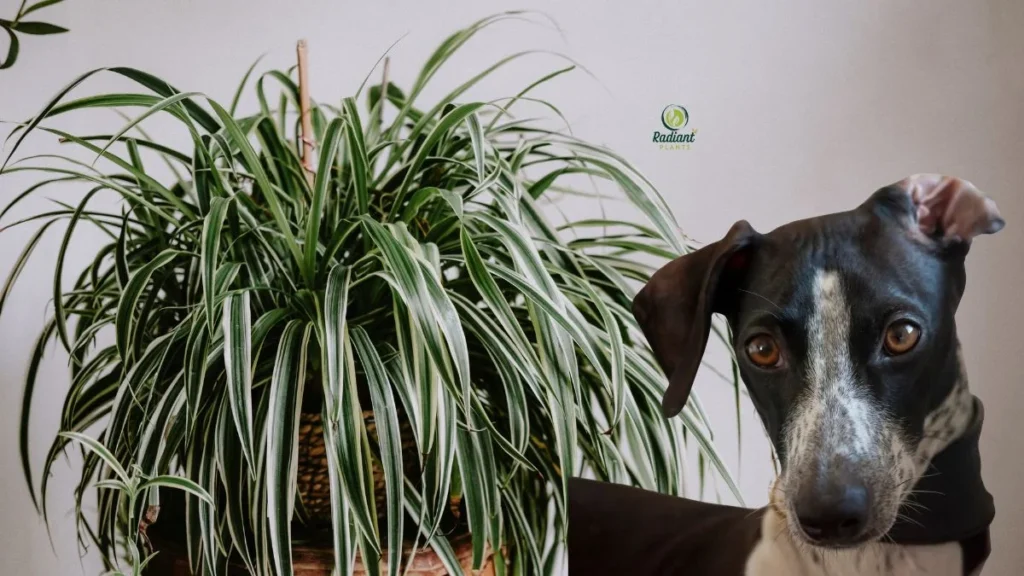
Can my dog safely chew on a spider plant?
Yes. The clear, veterinarian-backed answer is no—spider plants are not poisonous to dogs. According to the ASPCA and the Pet Poison Helpline (US & Canada), spider plants (Chlorophytum comosum) are considered non-toxic to dogs. If a dog chews or nibbles the leaves, the most common outcome is mild, short-lived digestive upset, not poisoning.
That said, “non-toxic” doesn’t mean “chew-proof.” Curious dogs may snack on dangling leaves, especially puppies or bored dogs, which can lead to temporary drooling or mild vomiting if larger amounts are eaten. Serious reactions are infrequent.
What “Non-Toxic” Really Means for Dogs
Spider plants don’t contain dangerous compounds like calcium oxalates (found in peace lilies) or aloin (found in aloe vera). Instead, they may contain trace saponins, which can irritate the stomach lining if consumed in excess—but they are not poisonous. Most dogs who sample a leaf show no symptoms at all.
Practical example:
A medium-sized dog chews a few spider plant leaves while home alone. You might notice brief drooling or one episode of vomiting. With access to water and rest, symptoms typically resolve within hours—no vet visit required unless symptoms persist.
Toxicity Overview – Spider Plant vs. Other Common Houseplants
Plant | Toxicity to Dogs | Risk Level | Common Symptoms |
|---|---|---|---|
Spider Plant | Non-toxic | Low | Mild vomiting or drooling if large amounts |
Aloe Vera | Toxic | High | Vomiting, lethargy, tremors |
Peace Lily | Toxic | High | Oral irritation, vomiting |
Philodendron | Toxic | High | Drooling, mouth pain, GI upset |
Boston Fern | Non-toxic | Low | Rare, mild digestive upset |
Tip: If you’re building a pet-friendly collection, prioritize plants labeled non-toxic to dogs by the ASPCA.
🔎 Snippet Highlight
Are spider plants poisonous to dogs? No. Spider plants are widely recognized as non-toxic and pet-safe. While chewing may cause mild drooling or stomach upset if a dog eats a lot, serious toxicity is extremely rare. Monitoring and simple prevention steps keep pets safe.
Why Dogs Chew Spider Plants
- Movement & texture: Long, arching leaves sway and invite play.
- Boredom or teething: Puppies often explore with their mouths.
- Accessibility: Low tables or floor pots make plants easy targets.
Care step: Place spider plants in hanging baskets or elevated shelves to reduce temptation without removing them from your décor.
Trusted Safety Signals
- ASPCA Animal Poison Control Center: Lists spider plants as non-toxic to dogs.
- Pet Poison Helpline (US & Canada): Confirms low-risk status with possible mild GI signs.
- University Extension guidance: Recommends spider plants for pet-friendly indoor gardening due to their safety profile.
Internal reading:
- RadiantPlants: 10 Stunning Cat-Safe Indoor Plants You’ll Love
- RadiantPlants: Essential Spider Plant Care Mistakes Everyone Makes (Easy Fixes)
🌿 Snippet Highlight
Spider plants are a smart choice for dog owners. Recognized as non-toxic by leading pet-safety organizations, they fit perfectly into pet-friendly homes. Elevate pots, discourage chewing, and enjoy a resilient, attractive houseplant without worrying about poisoning risks.
If you’re asking are spider plants are poisonous to dogs, the answer is reassuringly no—with simple placement and supervision, they’re one of the safest indoor plants you can grow around pets.
What Happens If a Dog Eats a Spider Plant?
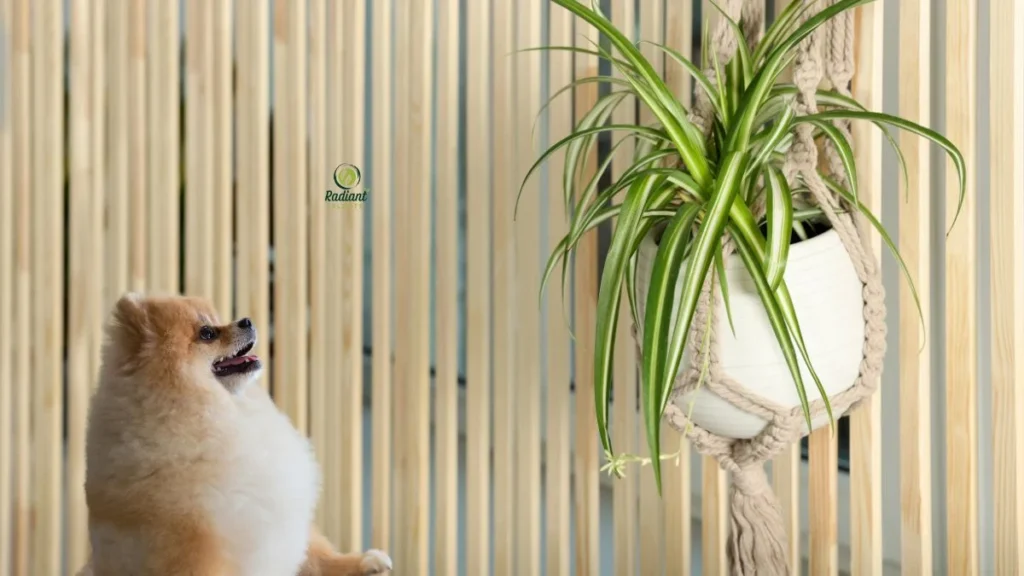
If you’re asking are spider plants poisonous to dogs after catching your pet chewing on one, the reassuring answer is still no. Spider plants (Chlorophytum comosum) are classified as non-toxic to dogs by the ASPCA and leading veterinary resources in both the U.S. and Canada.
That said, understanding what happens if a dog eats a spider plant helps you respond calmly and correctly. While spider plants are not dangerous, ingesting large amounts can lead to temporary digestive irritation, especially in smaller or sensitive dogs.
In short, are spider plants poisonous to dogs? No, but mild symptoms are possible if your dog eats more than a small nibble.
🔎 Snippet Highlight
Are spider plants poisonous to dogs? No. Spider plants are non-toxic, but if a dog eats a spider plant in large amounts, mild vomiting, drooling, or stomach upset may occur. These effects are temporary and rarely require veterinary treatment.
Common Symptoms to Watch
When a dog eats a spider plant, symptoms—if they appear at all—are usually mild and short-lived. Most dogs recover within 12–24 hours with no treatment.
Common dog plant ingestion symptoms include:
- Mild drooling or increased saliva
- Occasional vomiting
- Upset stomach or soft stool
- Temporary loss of appetite
- Mild mouth or gum irritation from chewing
These effects occur because spider plants contain trace saponins, which can irritate the digestive tract but do not cause poisoning. This is why veterinary experts consistently answer Are spider plants poisonous to dogs with a confident no.
Severity by Dog Size
Dog Size | Typical Reaction After Eating Spider Plant | Risk Level |
|---|---|---|
Small dogs | Mild vomiting or drooling | Low–Moderate |
Medium dogs | Mild stomach upset or no symptoms | Low |
Large dogs | Often no visible reaction | Very Low |
Practical example:
If a small dog eats several spider plant leaves, mild vomiting may occur. Offer water, remove access to the plant, and observe. Most cases resolve quickly without intervention.
🌿 Snippet Highlight
Dogs that eat spider plants usually show mild symptoms or none at all. Small dogs are more sensitive, but serious reactions are rare. Because spider plants are non-toxic, symptoms resolve naturally with rest and hydration in most cases.
When to Call the Vet
Even though are spider plants poisonous to dogs is almost always answered with veterinary advice is recommended if symptoms persist or worsen.
Contact your vet or a pet poison professional if you notice:
- Repeated vomiting (more than 2–3 times)
- Diarrhea lasting longer than 24 hours
- Lethargy or unusual behavior
- Signs of dehydration (dry gums, sunken eyes)
- A puppy or small dog eating a large quantity
Guidance aligned with the Canadian Veterinary Medical Association (CVMA) and U.S.-based veterinary toxicology sources emphasizes that persistent symptoms—regardless of toxicity status—should be evaluated by a professional.
Helpful info to share with your vet:
- The dog’s breed, size, and age
- Estimated amount eaten
- Time since ingestion
- Current symptoms
🩺 Snippet Highlight
Although spider plants are not poisonous to dogs, call your vet if vomiting continues, behavior changes, or a small dog eats a large amount. Professional guidance ensures mild digestive upset doesn’t lead to dehydration or discomfort.
Prevention Tip
To avoid repeat chewing, place spider plants in hanging baskets or elevated planters and provide safe chew toys to redirect curiosity.
Internal links (RadiantPlants):
- Essential Spider Plant Care Mistakes Everyone Makes (Easy Fixes)
- 10 Stunning Cat Safe Indoor Plants You’ll Love
Why Spider Plants Are Generally Safe
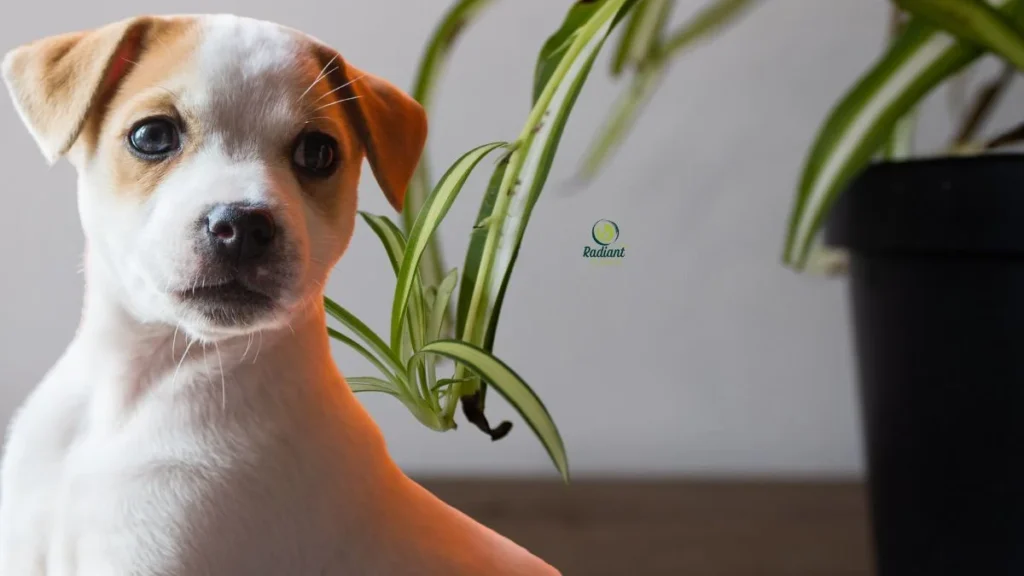
If you’ve been asking are spider plants poisonous to dogs, the reason experts consistently say no comes down to plant chemistry, structure, and decades of veterinary observation. Spider plants (Chlorophytum comosum) are widely recognized as non-toxic houseplants for dogs, making them a top choice for pet-friendly homes across the U.S. and Canada.
Organizations like the ASPCA Animal Poison Control Center and multiple university extension programs list spider plants as safe because they do not contain dangerous toxins commonly found in many ornamental houseplants. While no plant is meant to be eaten, spider plants are considered low-risk even if chewed.
🔎 Snippet Highlight
Are spider plants poisonous to dogs? No. Spider plants are considered non-toxic by the ASPCA and USDA-backed sources. They do not contain harmful compounds, and chewing usually results in no symptoms or only mild digestive irritation, making them one of the safest houseplants for dog owners.
The Role of Saponins: Mild Irritant, Not a Toxin
One reason pet owners worry about safety is the presence of saponins, naturally occurring compounds found in spider plants and many edible plants. Understanding these compounds explains why spider plants are generally safe.
What saponins do:
- Act as a natural deterrent to overconsumption
- May cause mild stomach irritation if eaten in large amounts
- Do not cause poisoning or organ damage in dogs
Veterinary toxicology sources emphasize that saponins are not toxic at the levels present in spider plants. This is why the answer to are spider plants poisonous to dogs remains no, even when a dog chews multiple leaves.
Practical example:
A dog chews spider plant leaves repeatedly over several days. The dog may experience occasional drooling but remains active, hydrated, and normal—an outcome consistent with non-toxic plant exposure.
🌿 Snippet Highlight
Spider plants contain saponins, but these compounds are mild irritants—not poisons. In dogs, they may cause brief drooling or stomach upset if large amounts are eaten. This explains why spider plants are considered non-toxic and safe for pet-friendly indoor spaces.
Plant Structure Matters: No Dangerous Crystals or Sap
Another key reason spider plants are safe is what they lack.
Unlike toxic houseplants such as philodendrons or peace lilies, spider plants do not contain:
- Calcium oxalate crystals (which cause severe mouth pain)
- Toxic latex sap
- Neurotoxic or cardiotoxic compounds
Because of this, veterinary professionals continue to reassure pet owners asking ask spider plants are not poisonous to dogs and that the risk of serious injury is extremely low.
USDA & Veterinary Safety Confirmation
According to USDA-recognized houseplant safety guidelines and university extension horticulture programs, spider plants are suitable for indoor environments where pets are present. These sources highlight spider plants as:
- Safe for homes with dogs and puppies
- Ideal for beginner gardeners
- Low-maintenance without chemical treatments that could harm pets
The ASPCA spider plant listing reinforces this position, noting only mild gastrointestinal signs in rare cases of heavy ingestion.
🧪 Snippet Highlight
Backed by ASPCA and USDA-referenced guidance, spider plants are widely considered safe for dogs. Their lack of toxic sap or crystals, combined with mild plant chemistry, explains why they’re recommended as non-toxic houseplants for pet-friendly homes.
Practical Care Tips to Keep Dogs Safe
Even though spider plants are safe, smart care reduces chewing:
- Trim damaged or dangling leaves
- Place plants in hanging baskets or elevated stands
- Offer dog-safe chew toys nearby
Internal links (RadiantPlants):
- Top 5 Reasons to Add a Stunning Curly Spider Plant to Your Home Decor
- 10 Stunning Cat Safe Indoor Plants You’ll Love
🌱 Final Snippet Highlight
Are spider plants poisonous to dogs? No. Their mild chemistry, lack of toxic crystals, and ASPCA-backed safety status make spider plants one of the safest indoor plants for dog owners. With simple placement and trimming, they’re ideal for pet-friendly homes.
Tips to Protect Your Dog Around Spider Plants
Even though the answer to are spider plants poisonous to dogs is reassuringly no, prevention still matters. Dogs explore with their mouths, and repeated chewing can cause mild stomach upset—or damage your plant. The good news is that a few smart strategies can keep both your dog and your spider plants safe, without sacrificing your indoor style.
🔎 Snippet Highlight
Are spider plants poisonous to dogs? No—but preventing chewing is still important. Simple steps like elevated placement, positive training, and dog-safe plant alternatives help protect your pet while keeping spider plants healthy and your home beautifully green.
Placement Strategies (Your First Line of Defense)
Smart placement is the easiest way to prevent dog–plant interactions. Since spider plants have long, arching leaves that attract attention, keeping them out of reach reduces temptation immediately.
Effective placement ideas:
- Hanging baskets: Ideal for spider plants; keeps leaves away from curious noses
- High shelves or wall-mounted planters: Best for medium and large dogs
- Plant stands with narrow bases: Reduce access and tipping risk
- Rooms with limited dog access: Offices or sunrooms work well
Practical example:
A spider plant placed on a low coffee table gets chewed daily. Move it to a hanging planter near a window, and the problem stops instantly—no training required.
Care tip:
Trim long or damaged leaves. Shorter foliage is less tempting and keeps the plant looking tidy.
Training & Behavioral Tips (Long-Term Protection)
If your dog regularly targets houseplants, training adds an extra layer of protection—even when plants are within reach.
Proven behavior strategies:
- Positive reinforcement: Reward your dog for ignoring plants
- Redirect chewing: Offer durable, dog-safe chew toys nearby
- Use “leave it” consistently: Calm, clear commands work best
- Supervised exposure: Let dogs learn boundaries gradually
- Boredom reduction: Daily walks and mental stimulation reduce plant chewing
Veterinary behavior experts note that most plant chewing is linked to boredom or curiosity, not hunger.
Practical example:
Each time your dog approaches the spider plant, redirect with a chew toy and praise. Within days, the dog associates the plant with “ignore” behavior.
🐾 Snippet Highlight
Training your dog to ignore plants is key for indoor pet safety. Positive reinforcement, redirection, and consistent commands reduce chewing behavior. Even though spider plants are non-toxic, training prevents digestive upset and protects your indoor greenery long-term.
Safe Alternatives (Dog-Friendly Houseplants)
If your dog loves chewing greenery, consider adding additional non-toxic houseplants to rotate visual interest while minimizing risk. According to ASPCA listings and USDA-supported extension guidance, the following plants are dog-safe:
Plant | Safety for Dogs | Why It Works |
|---|---|---|
Spider Plant | Non-toxic | Hardy, air-friendly, pet-safe |
Boston Fern | Non-toxic | Lush look, low risk |
Areca Palm | Non-toxic | Tall, decorative, safe |
Calathea (Prayer Plant) | Non-toxic | Colorful, dog-friendly |
Parlor Palm | Non-toxic | Compact, low-maintenance |
Amazon US/CA tip:
Look for hanging planters, wall hooks, and stable plant stands to combine safety with style.
🌿 Snippet Highlight
If you’re wondering are spider plants poisonous to dogs, the answer is no—but adding other non-toxic plants helps spread interest and reduce chewing. Rotating dog-safe houseplants like Boston ferns or palms creates a safer, more engaging indoor garden.
Expert Safety Signals
- ASPCA: Lists spider plants and alternatives as non-toxic
- USDA-backed university extensions: Recommend elevated placement for pet safety
- Veterinary guidance (US & Canada): Emphasizes prevention even with non-toxic plants
Helpful Internal Reads on RadiantPlants
- Pet-Safe Indoor Plants for Cat-Friendly Homes
- Top 5 Reasons to Add a Stunning Curly Spider Plant to Your Home Decor
🌱 Final Snippet Highlight
Are spider plants poisonous to dogs? No—but smart placement, training, and dog-safe plant choices are still essential. Elevating plants, redirecting chewing, and using non-toxic alternatives protect your dog while keeping your indoor garden healthy, stylish, and stress-free.
Summary & Takeaways
If you’ve been asking are spider plants are poisonous to dogs, the overall takeaway is reassuring: spider plants are generally considered non-toxic to dogs, making them one of the safer choices for pet-friendly homes. However, “non-toxic” does not mean completely risk-free. Mild digestive upset can still occur, especially if a dog chews on the leaves repeatedly or ingests a large amount.
🌿 Snippet Highlight
Are spider plants poisonous to dogs? No—according to trusted U.S. and Canadian pet-safety sources, spider plants are non-toxic. Still, dogs may experience mild stomach upset if they chew on the leaves, so smart placement and supervision remain important.
Key Safety Takeaways for Dog Owners
To summarize everything covered in this guide, here are the most important points every pet parent should remember:
- Spider plants (Chlorophytum comosum) are listed as non-toxic to dogs by the ASPCA
- Mild symptoms like drooling, soft stool, or vomiting may occur if a dog eats a large amount
- Symptoms are usually short-lived and not life-threatening
- Repeated chewing should be discouraged to protect both your dog and the plant
From an indoor gardening perspective, spider plants remain a top recommendation for homes with pets due to their resilience, air-purifying reputation, and low toxicity profile.
When to Trust Your Vet’s Advice
Even though the answer to are spider plants poisonous to dogs is reassuring, veterinary guidance should always come first if something feels off.
Contact your vet if your dog shows:
- Persistent vomiting or diarrhea (lasting more than 24 hours)
- Lethargy or loss of appetite
- Signs of pain, anxiety, or unusual behavior
- A known history of plant sensitivities or digestive disorders
Veterinary associations in both the U.S. and Canada emphasize that individual reactions can vary by dog size, breed, and health status. What’s mild for one dog may feel more intense for another—especially puppies and small breeds.
🐾 Snippet Highlight
While spider plants are considered safe, veterinarians recommend monitoring your dog after any plant ingestion. Mild symptoms usually resolve on their own, but unusual or persistent reactions should always be evaluated by a licensed vet.
Encouraging Safe Indoor Gardening With Pets
A pet-friendly home doesn’t mean giving up houseplants. It means designing your space intentionally.
Best practices include:
- Placing spider plants in hanging baskets or elevated stands
- Using positive reinforcement to redirect chewing behavior
- Offering dog-safe chew toys as alternatives
- Rotating plants occasionally to reduce fixation
Many experienced indoor gardeners choose spider plants precisely because they balance beauty with safety—especially compared to toxic houseplants like peace lilies or aloe vera.
Quick Reference: Spider Plant Safety Overview
Factor | What to Know |
|---|---|
Toxicity to dogs | Non-toxic |
Possible symptoms | Mild vomiting, drooling, stomach upset |
Risk level | Low |
Vet visit usually needed? | Only if symptoms persist or worsen |
Pet-friendly rating | High |
🌱 Snippet Highlight
For dog owners wondering are spider plants poisonous to dogs, the answer supports safe indoor gardening. With thoughtful placement and basic supervision, spider plants can thrive alongside pets without compromising safety.
Next Steps for Pet-Safe Plant Care
To continue building a dog-friendly indoor garden, explore related guides on RadiantPlants, including:
- Best Non-Toxic Houseplants for Cats
- Spider Plant Care Tips for Healthier Growth
- How to Design a Pet-Safe Indoor Plant Space
Final Takeaway
Spider plants remain one of the best starter plants for pet owners. Understanding the balance between non-toxicity and mild sensitivity helps you make informed choices—keeping both your dog and your indoor garden happy, healthy, and stress-free 🌿🐶
FAQs
Are spider plants poisonous to dogs if eaten?
No, spider plants are not poisonous to dogs. According to trusted pet-safety sources, they’re considered non-toxic. However, if a dog eats a large amount, mild symptoms like drooling, soft stool, or minor vomiting can occur due to stomach irritation rather than true toxicity.
What should I do if my dog chews on a spider plant?
If your dog chews on a spider plant, gently remove any plant material from their mouth and observe them for 12–24 hours. Most dogs show no reaction. Offer fresh water and avoid treats temporarily. Call your vet if symptoms persist or worsen.
Can spider plants make dogs sick over time?
Spider plants generally don’t make dogs sick long-term. Repeated chewing, however, may lead to recurring mild digestive upset. If your dog frequently targets houseplants, it’s best to move the spider plant out of reach and address the chewing behavior with training or enrichment.
Are spider plants safe for puppies and small dogs?
Yes, spider plants are considered safe for puppies and small dogs, but they may be more sensitive to stomach irritation due to their size. Even though spider plants are non-toxic, puppies should still be supervised, as repeated chewing can cause mild vomiting or diarrhea.
Why do dogs like chewing on spider plants?
Dogs are often attracted to spider plants because of their grassy texture and mild scent. Some dogs also chew plants out of boredom or curiosity. While spider plants aren’t toxic, regular chewing can upset your dog’s stomach and damage the plant over time.
What are safer alternatives if my dog won’t stop chewing plants?
If your dog won’t stop chewing houseplants, consider placing spider plants in hanging baskets or switching to tougher, pet-safe plants like Boston ferns or areca palms. Providing chew toys and mental stimulation can also reduce plant-chewing behavior indoors.
Conclusion: Keep Your Home Green and Dog-Safe
Spider plants are a smart choice for pet-friendly homes, as they’re widely considered safe and easy to care for. While chewing may cause mild digestive upset, serious reactions are rare, and simple placement and training strategies can prevent most issues. If you’ve been wondering are spider plants poisonous to dogs, the reassuring answer is no—just monitor curious chewers and contact your vet if symptoms seem unusual.
🌿 Internal CTA: Explore more pet-safe greenery in our guide to non-toxic indoor plants for cats on RadiantPlants.
📌 External CTA: Get weekly plant safety tips—subscribe to our newsletter or follow us on Pinterest for pet-friendly home inspiration.