In Brief
- Water when the topsoil is dry
- Use bright, indirect light
- Avoid overwatering
- Use well-draining soil
- Keep away from drafts
💡Dracaena plant indoor care is the practice of maintaining proper light, watering, soil, and environment to keep dracaena plants healthy indoors.
If your dracaena has yellow leaves, brown tips, or just won’t grow, the issue is usually a small mistake in light, watering, or soil. The challenge is knowing exactly what’s wrong—and how to fix it without making things worse. This guide breaks down dracaena plant indoor care into clear, practical steps, so you can diagnose problems quickly and keep your plant healthy without guesswork.
If you’re new to houseplants, start with this indoor plant care beginner guide to understand the basics before focusing on specific plants.
In This Article
Quick Diagnosis — What’s Wrong With Your Dracaena?
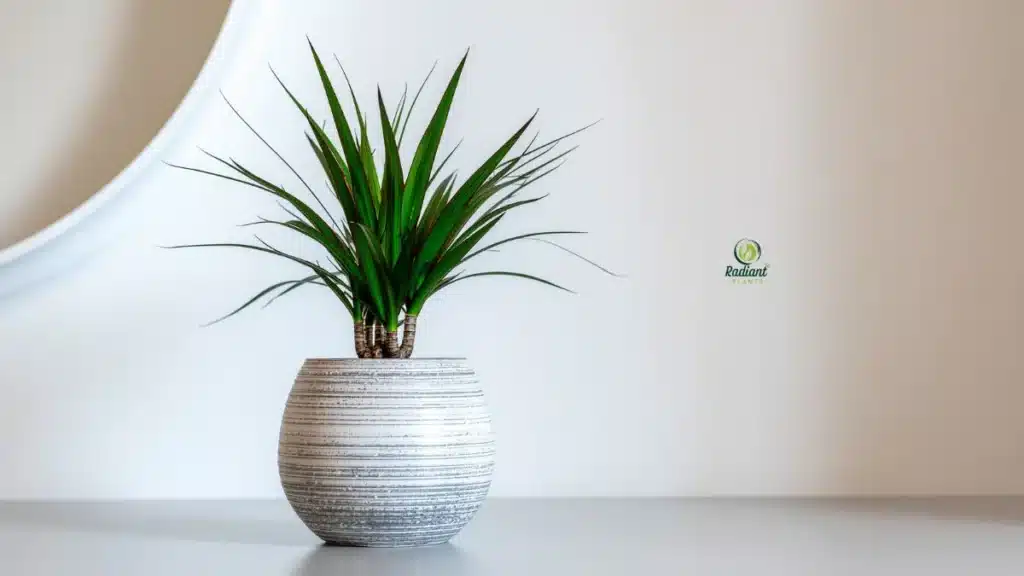
Dracaena plant indoor care problems usually come from watering mistakes, poor light, or tap water quality. To fix your plant fast, match the symptom to the real cause before changing your routine.
Different types of dracaena have slightly different needs—this overview of dracaena varieties for indoor growing helps you choose the right one.
🚨 Quick Diagnosis Table (Use This First)
Symptom | Likely Cause | What to Do Immediately |
|---|---|---|
Yellow leaves | Overwatering | Stop watering; let the soil dry out |
Brown tips | Fluoride / dry air | Use filtered water; increase humidity |
Drooping | Water stress | Check soil; adjust watering accordingly |
No growth | Low light | Move the plant closer to bright light |
🟡 Quick Diagnosis Box
Before doing anything, check these:
- Soil moisture → Wet, damp, or dry?
- Light exposure → Near a window or far away?
- Recent changes → Moved, repotted, or changed watering?
👉 In dracaena plant indoor care, these 3 checks solve most problems instantly.
🌿 How to Identify the Real Problem (Avoid Guessing)
Yellow Leaves → Usually Overwatering (But Confirm First)
- Wet soil + yellow leaves → Overwatering
- Dry soil + yellow leaves → Underwatering or inconsistency
👉 At Radiant Plants, we’ve found most people water too often “just in case”—this causes root stress quickly.
Brown Tips → Often NOT a Watering Issue
Most people assume watering is wrong, but:
- Dracaena reacts to fluoride and salts in tap water
What actually works:
- Switch to filtered or distilled water
- Improve humidity slightly
Real example:
You water correctly, but the tips still brown → water quality is the issue.
Drooping Leaves → Always Check Soil First
Drooping can mean opposite things:
- Wet soil → Overwatering
- Dry soil → Underwatering
👉 Never act without checking soil—this is the #1 mistake in dracaena plant indoor care.
No Growth → Light Is the Limiting Factor
Dracaena can survive in low light, but:
- Growth slows dramatically
- Leaves become weaker and smaller
What works:
- Move closer to a bright window
- Avoid deep room placement
👉 Common mistake: placing it in a “low-light corner” and expecting growth.
⚠️ Seasonal Insight
- Winter: less growth → reduce watering
- Summer: active growth → increase water and light exposure
👉 Keeping the same routine year-round leads to problems.
🧠 Key Insight
Dracaena plant indoor care becomes easy once you stop guessing and start diagnosing based on soil, light, and water quality.
Dracaena Care at a Glance (Beginner Summary)
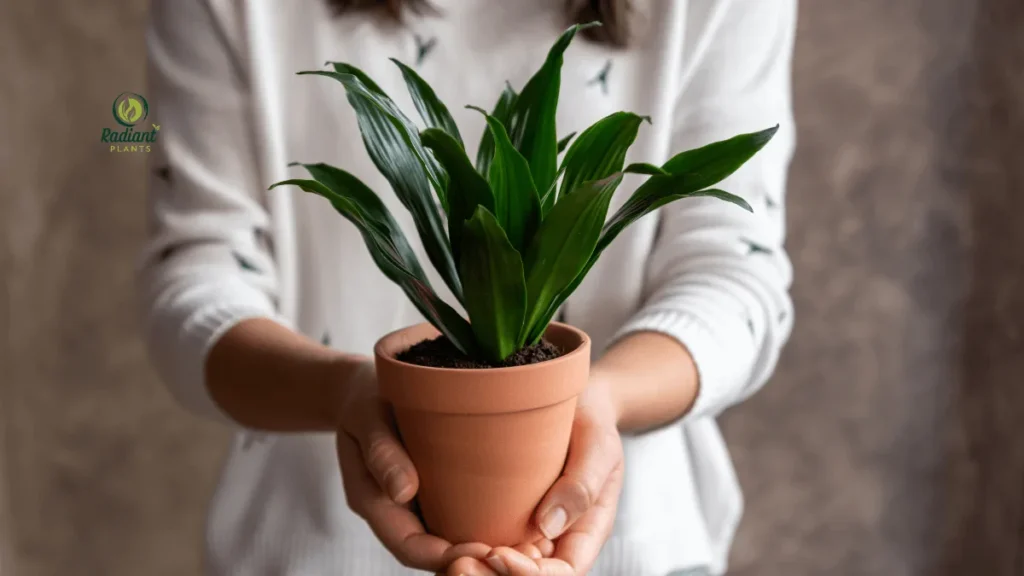
Dracaena plant indoor care is simple when you follow a few clear rules: give it bright indirect light, water only when the soil dries, and use well-draining soil. Most problems happen when one of these basics is ignored—especially watering.
🌿 Quick Care Table (Save This)
Care Factor | What Your Dracaena Needs | What to Watch For |
|---|---|---|
Light | Bright, indirect light | Too dark = slow growth |
Water | When the top 2–3 inches are dry | Wet soil = root problems |
Soil | Well-draining mix | Dense soil = overwatering risk |
Temperature | 65–80°F (18–27°C) | Cold drafts = stress |
Humidity | Moderate (normal home) | Dry air = brown tips |
✅ Simple Care Checklist (Beginner-Proof)
Use this quick checklist weekly:
- Check the soil with your finger before watering
- Keep the plant near a bright window (not direct sun)
- Make sure the pot has drainage holes
- Avoid placing near AC vents or heaters
- Watch for early signs (yellow leaves, brown tips)
👉 At Radiant Plants, we’ve found that people who follow this simple checklist avoid almost all major issues.
🌱 What Actually Works (Real-Life Insight)
- A dracaena placed 1–2 feet from a window grows well
- The same plant in a dark corner will survive—but barely grow
- Watering “once a week” fails because soil dries at different speeds
👉 What works is not a schedule—it’s checking the soil every time
⚠️ Common Beginner Mistakes
- Watering on a fixed schedule instead of checking the soil
- Using decorative pots without drainage
- Assuming “low light” means “no light.”
- Ignoring water quality (tap water issues)
🍂 Seasonal Adjustment (Small Change, Big Impact)
- Winter: soil stays wet longer → water less often
- Summer: faster drying → check soil more frequently
👉 Keeping the same routine year-round is one of the fastest ways to damage a dracaena.
🧠 Key Insight Most Guides Miss
Dracaena plant indoor care is not about doing more—it’s about avoiding excess.
Too much water, too little light, or poor soil causes most problems—not neglect.
Light Requirements — Where to Place Your Plant
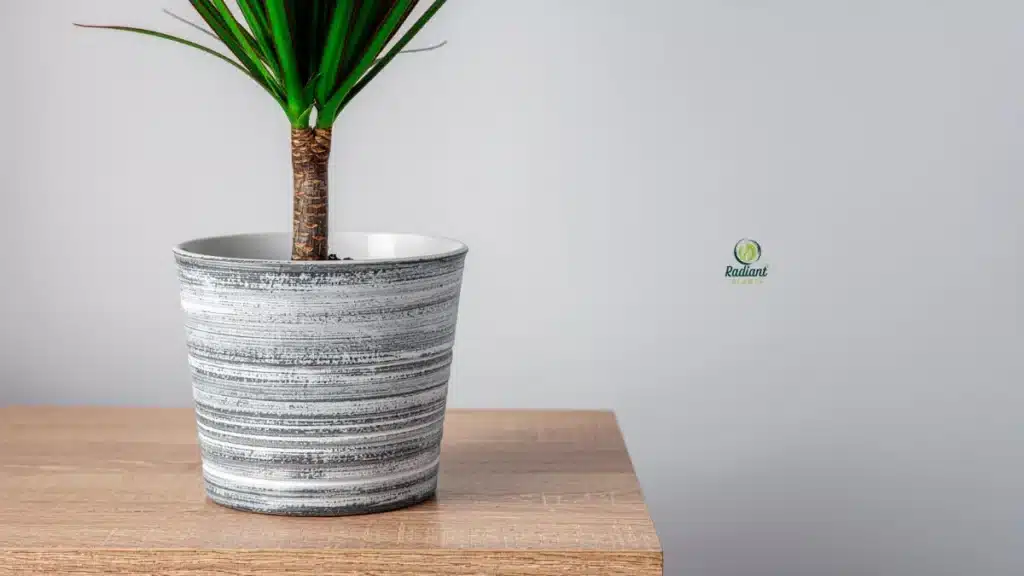
Dracaena plant indoor care works best when the plant is placed in bright, indirect light near a window. It can tolerate lower light, but growth slows, and problems become more likely. The exact placement in your home makes a bigger difference than most people expect.
If you’re unsure how different lighting conditions affect growth, this detailed guide on dracaena light requirements indoors explains low vs bright light in real scenarios.
🌤️ Ideal Light Conditions
Dracaena thrives in bright, indirect light, meaning:
- Close to a window, but not in direct sun
- Filtered light through curtains works perfectly
- Light that fills the room, not harsh rays on leaves
Best window directions:
- East-facing: Ideal (gentle morning light)
- North-facing: Good (consistent but softer light)
- West-facing: Okay if slightly filtered
- South-facing: Too strong unless diffused
👉 At Radiant Plants, we’ve found that east-facing windows consistently produce the healthiest, most balanced growth.
🌗 Low Light vs Bright Light (What Actually Changes)
Dracaena is often labeled “low-light tolerant,” but here’s the reality:
Light Level | What Happens |
|---|---|
Bright indirect | Faster growth, fuller leaves |
Medium light | Stable but slower growth |
Low light | Survival mode, little to no growth |
👉 Important distinction:
- Low light won’t kill it quickly
- But it will weaken the plant over time
Real example:
- A dracaena 1 meter from a window → steady growth
- The same plant 3–4 meters away → no growth for months
🔍 Signs of Too Much or Too Little Light
Knowing these signs prevents misdiagnosis:
Too Much Light (Direct Sun Exposure)
- Brown or scorched patches on leaves
- Faded or washed-out color
Fix:
- Move slightly away from the window
- Add a sheer curtain
Too Little Light
- Slow or no growth
- Pale or smaller leaves
- Leaning toward the light source
Fix:
- Move closer to the window
- Rotate the plant weekly
👉 Many people mistake slow growth for watering issues—it’s often just light.
🏡 Real Placement Scenarios (What Works in Homes)
- Living room with large window: Place 2–5 feet away → ideal
- Bedroom with small window: Place directly near the window → necessary
- Office with artificial light only: Not enough long-term → supplement or relocate
👉 What often fails:
Putting the plant in a decorative corner far from windows.
⚠️ Common Beginner Mistakes
- Assuming “low light” means no natural light
- Placing the plant too far inside the room
- Ignoring how light changes during the day
- Not rotating the plant → uneven growth
🍂 Seasonal Light Changes (Often Ignored)
- Winter: shorter days + weaker light → move plant closer to window
- Summer: stronger sun → pull back slightly if needed
👉 Keeping the same placement year-round can lead to a sudden decline.
🧠 Key Insight Most Guides Miss
Light isn’t just about survival—it controls how your dracaena grows, looks, and recovers from stress.
If your plant isn’t thriving, adjusting light is often the fastest fix.
Watering Dracaena the Right Way (No Guesswork)
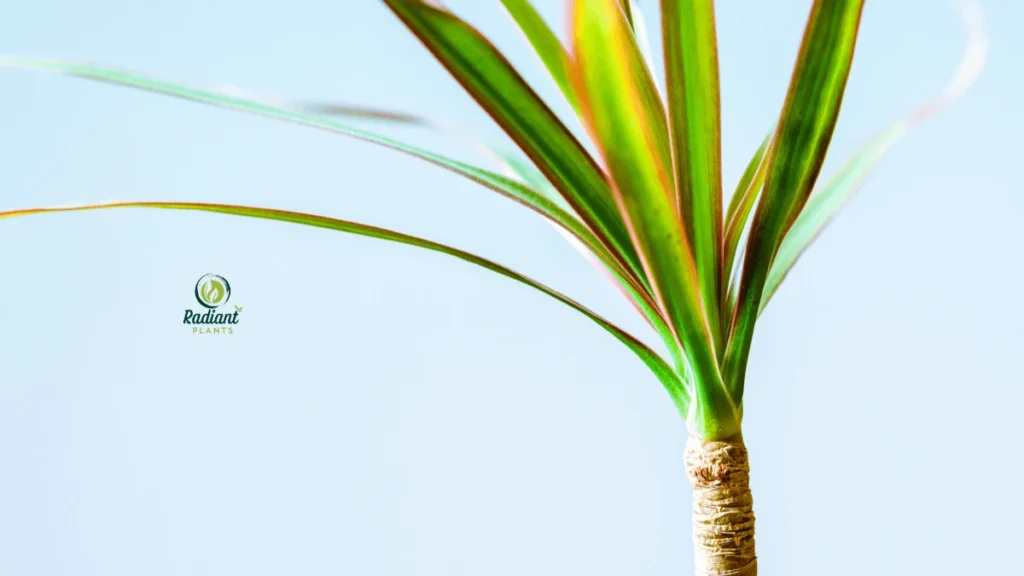
Dracaena plant indoor care becomes easy when you stop watering on a schedule and start watering based on soil dryness. The rule is simple: only water when the top 2–3 inches of soil are dry. Most problems—especially yellow leaves—come from watering too often, not too little.
💧 Exact Watering Rule (Core)
Use this every time:
- Stick your finger 2–3 inches into the soil
- If dry → water deeply
- If damp or wet → wait
Watering method:
- Water until it drains from the bottom
- Empty the saucer after 5–10 minutes
👉 At Radiant Plants, we’ve found this method works better than any schedule because soil dries at different speeds depending on light, pot size, and season.
🌱 Soil Moisture Cues (Beyond the Finger Test)
If you want more accuracy:
- Light pot = dry soil
- Heavy pot = wet soil
- Soil pulling away from edges = very dry
- Dark soil = moist, light-colored soil = dry
👉 These cues help when you’re unsure, especially in deeper pots.
⚠️ Overwatering vs Underwatering (Know the Difference)
Overwatering (Most Common Problem)
- Yellow leaves
- Soft stems
- Wet soil for days
Fix:
- Stop watering immediately
- Let the soil dry completely
- Check drainage holes
Underwatering
- Dry, compact soil
- Drooping leaves (with dry soil)
- Crispy edges
Fix:
- Water thoroughly
- Resume consistent soil checks
👉 Key difference:
- Overwatering = wet soil problem
- Underwatering = dry soil problem
⚠️ Warning: Root Rot Risk
Overwatering leads to root rot, which damages roots and prevents water absorption.
Signs of root rot:
- Persistent yellow leaves
- Mushy roots (if checked)
- Foul smell from the soil
👉 Once advanced, recovery becomes difficult—prevention is critical.
📋 Watering Checklist (Use Weekly)
- Check the soil before watering
- Ensure the pot has drainage holes
- Never let a plant sit in standing water
- Adjust watering based on the season
- Watch for early warning signs
🏡 Real-Life Example (Why Schedules Fail)
- Plant near a bright window → soil dries in 5–7 days
- Same plant in low light → soil stays wet for 10–14 days
👉 If you water both weekly, one will thrive, and the other will decline.
🍂 Seasonal Watering Changes
- Winter: slower growth + less evaporation → water less often
- Summer: faster growth → check soil more frequently
👉 Keeping the same watering routine year-round is one of the most common mistakes.
❌ Common Watering Mistakes
- Watering “once a week” without checking the soil
- Using pots without drainage
- Watering lightly instead of deeply
- Ignoring seasonal changes
🧠 Key Insight Most Guides Miss
In dracaena plant indoor care, watering is not about frequency—it’s about timing based on soil condition.
Once you master that, most plant problems disappear.
Soil, Pots, and Drainage (Why Most Plants Fail Here)
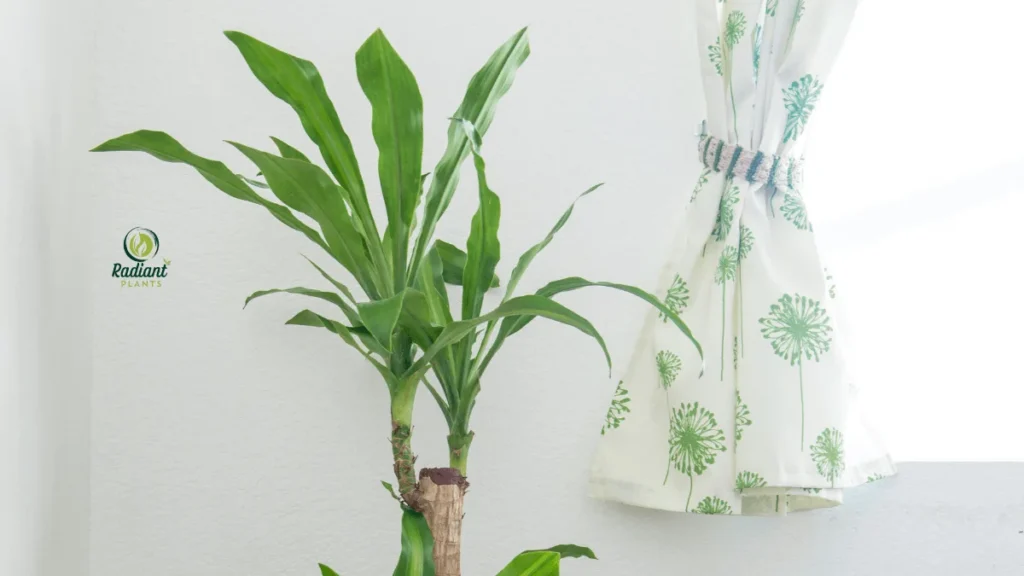
Dracaena plant indoor care depends heavily on what’s happening below the surface. Use a loose, well-draining soil mix and a pot with drainage holes—this prevents roots from sitting in water, which is the fastest way to cause problems. Many healthy-looking plants decline simply because the soil holds too much moisture.
For a deeper breakdown of soil mixes and drainage setups, see this guide on best soil for dracaena plants indoors.
🌿 Best Soil Mix (What Actually Works)
Dracaena roots need air + drainage, not dense, compact soil.
Use:
- Indoor potting mix (base)
- Perlite (for airflow and drainage)
- Optional: a bit of sand or bark for extra drainage
Simple mix:
- 70% potting soil
- 30% perlite
👉 At Radiant Plants, we’ve found adding perlite alone dramatically reduces overwatering issues—even if watering habits aren’t perfect.
Avoid:
- Heavy garden soil
- Soil that stays wet for days
- Compacted or old soil
🪴 Why Drainage Holes Are Non-Negotiable
A pot without drainage traps water at the bottom. Even if the top looks dry, roots can sit in excess moisture.
What happens:
- Roots suffocate
- Oxygen drops
- Root rot develops
👉 This is one of the most common hidden causes of yellow leaves.
Real scenario:
- Plant in a decorative pot (no holes) → soil stays wet → leaves turn yellow
- Same plant in a draining pot → recovers quickly
⚠️ Warning: Hidden Root Problems
Even if your watering is correct:
- Dense soil = water stays too long
- No drainage = water accumulates
- Large pots = soil dries too slowly
👉 These conditions mimic overwatering—even when you’re doing everything “right.”
📏 Pot Size Mistakes (Most People Overlook This)
Choosing the wrong pot size creates long-term issues:
Too Large Pot
- Holds too much water
- Soil dries slowly
- Increases root rot risk
Too Small Pot
- Roots become cramped
- Water drains too fast
- Growth slows
👉 Ideal rule:
- Choose a pot 1–2 inches larger than the root ball
📋 Soil & Pot Checklist
- Use a well-draining indoor potting mix
- Add perlite for airflow
- Always choose pots with drainage holes
- Avoid oversized pots
- Refresh soil every 1–2 years
🏡 Real-Life Example (Why This Matters)
- Two identical dracaena plants
- Same watering routine
Results:
- Plant A (dense soil, no drainage) → yellow leaves
- Plant B (well-draining mix) → healthy growth
👉 The difference isn’t watering—it’s the soil system.
💡 Expert Tips (Small Changes, Big Impact)
- If your pot has no holes, use it as a decorative cover (cachepot)
- Place the plant in a plastic nursery pot inside
- Remove it when watering, then return after draining
👉 This gives you the look you want without risking root problems.
🧠 Key Insight Most Guides Miss
In dracaena plant indoor care, soil and drainage control how long water stays around the roots.
If the soil stays wet too long, even perfect watering habits won’t save the plant.
Temperature and Humidity — Hidden Stress Factors
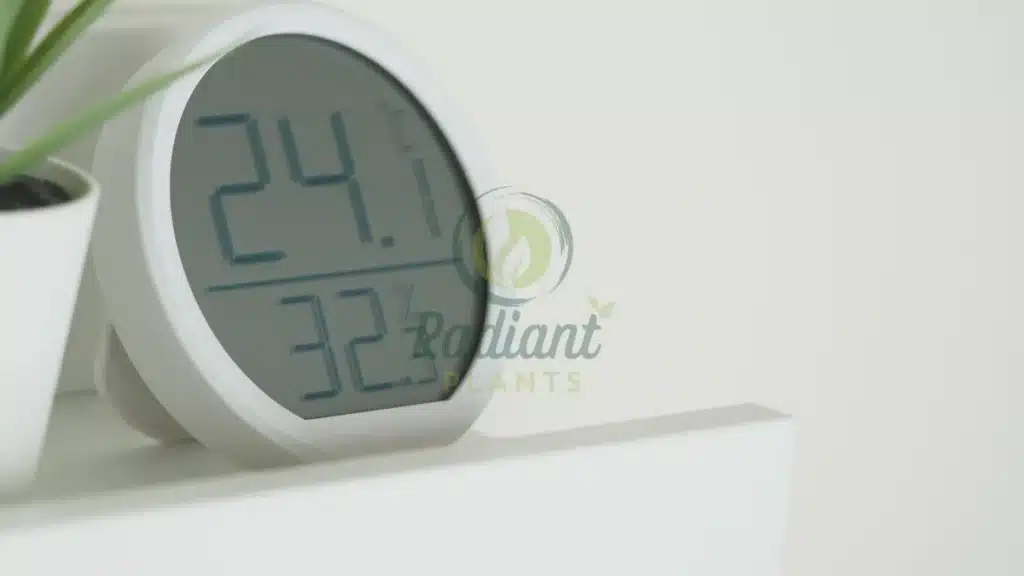
Dracaena plant indoor care works best in stable indoor conditions: moderate temperatures and average household humidity. Most problems here come from sudden changes—like cold drafts or dry air—not from the baseline environment itself. If your plant looks stressed but watering and light are correct, the issue is often temperature or humidity.
🌡️ Ideal Temperature Range (Keep It Stable)
Dracaena prefers:
- 65–80°F (18–27°C) during the day
- Avoid drops below 60°F
👉 Stability matters more than exact numbers.
What causes stress:
- Cold drafts from windows in winter
- Hot air from heaters
- Sudden temperature swings
👉 At Radiant Plants, we’ve found plants placed near doors or windows often decline—not because of light, but because of temperature fluctuations.
💨 Dry Air and Humidity Issues
Dracaena tolerates normal indoor humidity, but dry air can still cause problems over time.
Common signs of low humidity:
- Brown leaf tips
- Crispy edges
- Slight leaf curling
Low humidity becomes a bigger issue when combined with:
- Tap water (fluoride sensitivity)
- Heating systems in winter
What works:
- Keep the plant away from heaters
- Group plants together
- Use a humidity tray if needed
👉 Light misting helps temporarily but doesn’t fix long-term dryness.
❄️ AC and Heating Impact (Often Overlooked)
Air conditioning and heating systems create invisible stress:
AC (Summer)
- Blows dry, cool air
- Can cause gradual leaf damage
Heating (Winter)
- Dries air significantly
- Increases brown tip problems
Real scenario:
- The plant looks fine in the fall
- Suddenly develops brown tips in winter → heating system is the cause
👉 The plant didn’t change—your environment did.
🍂 Seasonal Changes (Critical Insight)
- Winter:
- Lower humidity
- Cooler drafts
- Slower growth
- Summer:
- Faster growth
- Higher water needs
- Possible AC exposure
👉 Keeping the same care routine without adjusting for seasons leads to stress.
⚠️ Common Beginner Mistakes
- Placing a plant near vents or heaters
- Ignoring cold drafts from windows
- Assuming indoor conditions are always stable
- Trying to fix humidity issues with overwatering
👉 Overwatering to “compensate” for dry air is a very common mistake.
🏡 Real-Life Placement Examples
- Near a radiator: dry air → brown tips
- Next to AC vent: cool airflow → leaf stress
- By a drafty window in winter: temperature shock → leaf drop
👉 Moving the plant just a few feet can solve these issues.
🧠 Key Insight Most Guides Miss
In dracaena plant indoor care, temperature and humidity problems are rarely obvious—they build slowly.
If your plant declines “for no reason,” check airflow, drafts, and seasonal changes before adjusting watering.
Fertilizing and Growth Expectations
Dracaena plant indoor care does not require frequent fertilizing—this is a slow-growing plant that needs only light feeding during active growth. If your plant has good light and proper watering, fertilizer becomes a small boost, not a necessity. Overfertilizing causes more harm than underfertilizing.
🌱 When to Fertilize (Timing Matters)
Fertilize only during the growing season:
- Spring to early fall: active growth → fertilize
- Late fall and winter: slow growth → stop fertilizing
👉 Plants naturally rest in winter, so feeding during this time can stress roots instead of helping.
💧 How Often to Fertilize
- Use a balanced liquid fertilizer
- Apply once every 4–6 weeks during the growing season
- Dilute to half strength for safety
👉 At Radiant Plants, we’ve found that diluted feeding works better long-term than full-strength doses—it reduces the risk of salt buildup.
🌿 Growth Speed (Set Real Expectations)
Dracaena is not a fast grower indoors:
- You may see only a few new leaves over several months
- Growth depends heavily on light conditions
- Low light = very slow or no visible growth
👉 Many beginners think something is wrong when the plant simply grows slowly.
Real example:
- Bright light → steady new leaves
- Low light → same plant looks “stuck” for months
⚠️ Common Fertilizing Mistakes
- Fertilizing in winter
- Using full-strength fertilizer too often
- Feeding a stressed or overwatered plant
- Expecting fertilizer to fix poor light conditions
👉 Fertilizer cannot compensate for bad lighting or watering.
💡 Expert Tips (What Actually Works)
- Always water the plant before fertilizing → prevents root burn
- If the soil hasn’t been refreshed in a long time, fertilizer salts can build up
- Flush the soil occasionally (run water through the pot) to remove excess salts
🏡 Real-Life Scenario
- Plant in low light + fertilized regularly → no growth, possible stress
- Same plant moved to better light → growth improves without extra fertilizer
👉 Light drives growth more than feeding.
🍂 Seasonal Insight
- Spring/Summer: light feeding supports growth
- Fall/Winter: pause feeding completely
👉 Keeping the same fertilizing schedule year-round is unnecessary and often harmful.
🧠 Key Insight Most Guides Miss
In dracaena plant indoor care, fertilizer is optional—but proper light and watering are essential.
If those are correct, even minimal feeding will support healthy growth.
Repotting and Long-Term Care
Dracaena plant indoor care doesn’t require frequent repotting—most plants only need it every 2–3 years. You should repot when the roots outgrow the container or when the soil stops draining properly. Repotting too often can stress the plant more than help it.
🌱 Signs Your Dracaena Needs Repotting
Look for these clear indicators:
- Roots growing out of drainage holes
- Water runs straight through without soaking in
- Soil dries out very quickly
- Growth has slowed despite good light and care
👉 At Radiant Plants, we’ve found the fast-draining soil issue is often the first sign people notice—not the roots.
🔍 Root-Bound Indicators (What to Check)
If you gently lift the plant from the pot:
- Roots are tightly wrapped around the soil
- Very little visible soil left
- Roots circling the bottom
👉 This means the plant has run out of space and nutrients.
⏱️ How Often to Repot
- Every 2–3 years for most indoor dracaena
- Sooner if clear signs appear
- Always repot during spring or early summer
👉 Repotting during active growth helps the plant recover faster .
🪴 How to Repot (Simple Approach)
- Choose a pot 1–2 inches larger than the current one
- Use fresh, well-draining soil
- Gently loosen roots if tightly bound
- Water lightly after repotting
👉 Avoid jumping to a much larger pot—it holds excess moisture and increases root rot risk.
📋 Repotting Checklist
- Check roots and soil condition
- Use a slightly larger pot (not oversized)
- Ensure drainage holes
- Refresh the soil mix
- Repot during the growing season
🏡 Real-Life Example
- The plant hasn’t been repotted for 3+ years
- Water drains instantly → soil no longer holds moisture
Fix:
- Repot with fresh soil → plant recovers and holds water properly again
👉 Many people think this is a watering issue—it’s actually a soil exhaustion problem.
⚠️ Common Repotting Mistakes
- Repotting too often “just in case.”
- Using a pot that’s too large
- Keeping old, compacted soil
- Repotting during winter dormancy
👉 These mistakes slow growth instead of improving it.
🧠 Key Insight Most Guides Miss
In dracaena plant indoor care, repotting isn’t about giving more space—it’s about restoring a healthy soil environment.
Fresh soil often matters more than pot size for long-term plant health.
Common Dracaena Problems (Detailed Fix Guide)
Most issues in dracaena plant indoor care come down to misdiagnosing watering, light, or environment. The fastest way to fix your plant is to identify the exact symptom, confirm the cause, and apply the right fix—not guess. Below is a clear problem → cause → fix system you can use immediately.
🌿 Yellow Leaves
Causes
- Overwatering (most common)
- Poor drainage or compacted soil
- Sudden environmental stress (temperature/light changes)
👉 Key check:
- Wet soil + yellow leaves = overwatering
- Dry soil + yellow leaves = underwatering or inconsistency
Fix
- Stop watering until the top 2–3 inches are dry
- Ensure the pot has drainage holes
- Improve soil drainage if needed
Prevention
- Always check the soil before watering
- Use well-draining soil
- Avoid fixed watering schedules
⚠️ Warning
If yellowing continues and the soil smells bad, roots may be rotting.
🍂 Brown Tips
Causes
- Fluoride and salts in tap water
- Low humidity (especially in winter)
- Fertilizer salt buildup
👉 Dracaena is sensitive to water quality.
Fix
- Switch to filtered or distilled water
- Trim brown tips (cosmetic only)
- Reduce fertilizer use
Prevention
- Let tap water sit for 24 hours (partial improvement)
- Avoid overfertilizing
- Keep away from dry heat sources
🏡 Real Example
You water correctly, but the tips still brown → it’s usually water quality, not watering frequency.
🌱 Drooping Leaves
Causes
- Water stress (both overwatering and underwatering)
How to Tell the Difference
- Wet soil + drooping → overwatering
- Dry soil + drooping → underwatering
Fix
- Adjust watering based on soil conditions
- Ensure proper drainage
Prevention
- Use the finger test consistently
- Avoid extreme dry/wet cycles
👉 At Radiant Plants, we’ve found drooping is often misdiagnosed—people water more when the plant actually needs less.
🐛 Pests (Spider Mites, Mealybugs)
Identification
Look for:
- Tiny webs (spider mites)
- White cotton-like spots (mealybugs)
- Sticky residue on leaves
👉 Pests often appear when plants are stressed or in dry air conditions.
Treatment
- Wipe leaves with a damp cloth
- Use neem oil or insecticidal soap
- Isolate the affected plant
Prevention
- Keep leaves clean
- Maintain a stable environment
- Check plants regularly
⚠️ Warning
Pests spread quickly to nearby plants—act early.
🧠 Key Insight Most Guides Miss
Most dracaena problems look similar—but the soil condition tells the real story.
If you check the soil first before reacting, you’ll fix issues faster and avoid making them worse.
Is Dracaena Safe for Pets?

Dracaena is not safe for cats or dogs. It contains compounds that can cause digestive upset if ingested, so it should be kept out of reach of pets. In dracaena plant indoor care, pet safety is an important consideration—especially for curious animals.
⚠️ Toxicity to Cats and Dogs
Dracaena contains saponins, which are mildly toxic to pets.
If a pet chews or eats the leaves, it can cause irritation and discomfort.
👉 Cats are especially at risk because they tend to nibble on plants more often.
🐾 Symptoms to Watch For
If your pet ingests dracaena, you may notice:
- Vomiting
- Drooling
- Loss of appetite
- Lethargy
👉 In cats, dilated pupils can also occur (less common but notable).
🏡 Real-Life Scenario
- A cat chews a leaf out of curiosity
- Within a few hours → mild vomiting or drooling
👉 Most cases are not severe, but they still require attention.
🛡️ Safety Tips (What Actually Works)
- Place dracaena on high shelves or plant stands
- Keep it in rooms pets can’t access
- Use hanging planters if needed
- Provide safe alternatives (pet grass)
👉 At Radiant Plants, we’ve found that simply moving the plant out of reach solves the issue without needing to remove it entirely.
⚠️ When to Take Action
- If symptoms are mild → monitor closely
- If symptoms persist or worsen → contact a vet immediately
👉 Always act quickly if your pet shows unusual behavior after contact with plants.
🧠 Key Insight Most Guides Miss
Dracaena toxicity is usually mild but preventable.
With proper placement, you can safely enjoy the plant without putting your pets at risk.
Dracaena Plant Indoor Care FAQs: Common Problems and Simple Fixes
How often should I water a dracaena plant indoors?
Water only when the top 2–3 inches of soil feel dry. This usually means every 7–14 days, but it depends on light, pot size, and season. Always check the soil first—watering on a fixed schedule is the most common mistake.
Why are the tips of my dracaena turning brown?
Brown tips are often caused by fluoride in tap water or dry indoor air. Switch to filtered or distilled water and keep the plant away from heaters or AC vents. Trimming the tips helps appearance, but fixing the cause prevents it from returning.
Can dracaena survive in low light?
Yes, dracaena can survive in low light, but it won’t grow much. You may notice slower growth, smaller leaves, or a stretched appearance. For healthier growth, place it closer to a window with bright, indirect light.
How do I know if I’m overwatering my dracaena?
Check the soil first. If it stays wet for several days and leaves start turning yellow, you’re likely overwatering. The plant may also feel soft or weak. Let the soil dry out before watering again and make sure the pot drains properly.
Should I cut off yellow or brown leaves?
Yes, you can remove damaged leaves, but only after fixing the underlying problem. Cutting them improves appearance but doesn’t solve the cause. Always address watering, light, or humidity issues first to prevent new damage.
Is dracaena a good plant for beginners?
Yes, dracaena is beginner-friendly because it tolerates a range of conditions. However, it’s sensitive to overwatering and poor drainage. If you follow simple rules—check soil before watering and provide decent light—it’s one of the easiest indoor plants to maintain.
Dracaena plant indoor care becomes simple when you focus on the basics: check the soil before watering, place the plant in bright indirect light, and use well-draining soil. Most problems come from small mistakes, especially overwatering or poor placement. Once you understand how to read your plant’s signals, keeping it healthy is straightforward. Stick to these simple rules, stay consistent, and your dracaena will grow steadily with minimal effort.