
Indoor plants are supposed to be relaxing—until you notice sticky leaves, tiny flies, or fine webbing and start wondering if every pot is infested. This guide is for houseplant owners who want a simple, practical approach to Plant Pest Identification so they can see a symptom and know what to check next. You’ll learn how to read what leaves, stems, and soil are telling you, how to run a two-minute inspection with basic tools, and why three pests (aphids, spider mites, and fungus gnats) cause most indoor problems. We’ll also cover gentle, indoor-safe treatments and how to decide whether to monitor, treat hard, or finally let a struggling plant go.
In This Article
What “Plant Pest Identification” Really Means for Houseplants
Plant Pest Identification for houseplants means looking at what you see on the plant (symptoms), plus what the bug looks like, and matching that to the most likely pest. You don’t have to know scientific names or read technical reports—recognize a few common patterns on leaves, stems, and soil, and use a clear plant pest identification guide to narrow it down.
In practical terms, Plant Pest Identification for indoor plants is all about three things:
- Houseplant pest symptoms
- Where on the plantdo they show up
- Basic appearance of the insect or mite
You’re not inspecting farm fields or doing official crop surveys; you’re checking your pothos on the bookshelf and your fiddle leaf fig by the window. So instead of lab tools, you use:
- Your eyes (and maybe a phone flashlight)
- Your fingers (to feel sticky residue or bumps)
- A few good pictures of plant pests to compare with what you see
Here’s how to think about it step by step:
- Start with symptoms, not names
- Ask: What looks wrong?
- Sticky leaves or tabletops?
- Fine webbing between leaves?
- Tiny black flies near the soil?
- Yellow speckles or silvery streaks on leaves?
- These are your first Plant Pest Identification clues.
- Ask: What looks wrong?
- Check where the problem is happening
- New leaves and tips → often sap-sucking pests (like aphids) that love tender growth.
- Leaf undersides and between stems → hiding spots for spider mites and mealybugs.
- Soil surface and drainage holes → where fungus gnats hang out.
- Identify plant bugs on leaves by simple visual traits
- Are they soft and clustered? Tiny and moving dots? Hard, shell-like bumps? Tiny flies?
- Match those basic traits to a short plant pest identification guide (like the rest of this article) rather than trying to memorize scientific names.
For example:
- You notice your pothos leaves feel sticky, and the bookshelf under the pot has a shiny film.
- On closer look, the new leaves are curled and a bit distorted.
- You flip a leaf over and see small, soft-bodied insects clustered near the stem.
Even without a single Latin name, you can say:
- Sticky residue + distorted new growth + clusters of soft bugs on new tips → very likely aphids.
- From there, you can look at photos of aphids in a plant pest identification guide to confirm what you’re seeing and decide on a simple treatment.
This is the core idea: start from what your eyes see, and your hands feel, then confirm using clear photos and plain-language descriptions: no microscope, no advanced training, just a repeatable habit of looking closely at your plants.
If you’re brand new to plant care and still figuring out watering and lighting, it can help to pair Plant Pest Identification with a solid beginner’s houseplant care guide, so you’re also reducing the stress factors that attract pests in the first place.
How to Inspect Plants for Pests in 2 Minutes
You can fold Plant Pest Identification into your normal watering routine by doing a quick, two-minute scan of each plant: look from the top down, flip a few leaves, check stems, scan the soil, and glance around the pot. With a sheet of white paper and your phone’s flashlight, you’ll catch most houseplant pest symptoms before they turn into serious pest damage on plant leaves.
Here’s how to inspect plants for pests step by step:
- Start at the top of the plant
- Look at the new growth and the very top leaves.
- You’re checking for:
- Curling or twisted new leaves
- Sticky or shiny surfaces
- Odd discoloration or speckling
- Many sap-sucking pests love tender new growth first.
- Flip a few leaves and check the undersides
- Gently turn over 3–5 leaves, especially near the top and edges of the plant.
- Look for:
- Tiny moving dots (mites, thrips)
- Fine webbing between veins
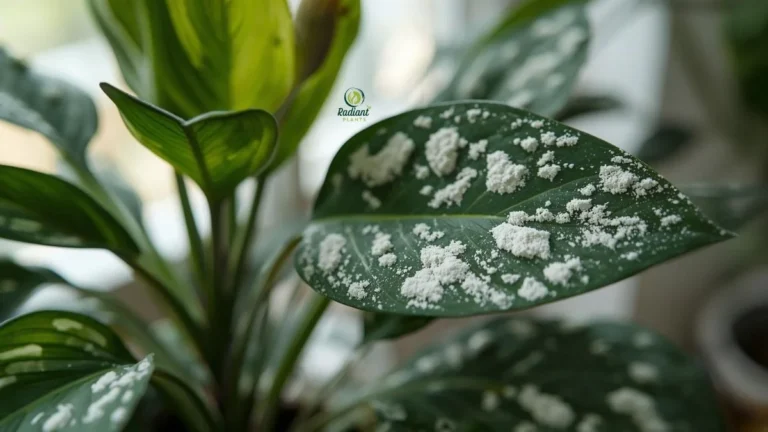
- White fuzz or bumps
- This is where you identify plant bugs on leaves before you even see big damage.
- Look closely at stems and leaf joints
- Follow the stems with your eyes and pay attention to where leaves meet stems.
- You’re looking for:
- Cottony clumps (mealybugs)
- Hard, stuck-on bumps (scale)
- Sticky residue without obvious bugs
- Check the soil surface and pot rim
- Disturb the soil slightly with your finger or tap the pot.
- Watch for:
- Tiny black flies that pop up (fungus gnats)
- Moldy, constantly soggy soil
- One random gnat is normal in a house; a small cloud of gnats every time you water is a red flag.
- Do the white paper tap test
- Hold a sheet of white paper under a suspect leaf.
- Gently tap or flick the leaf so anything on it falls onto the paper.
- If you see specks that start to move, you may have spider mites or thrips—classic houseplant pest symptoms, even if the bugs are hard to see on the plant.
- Use your phone flashlight and camera
- Turn on the flashlight to create contrast in dim corners.
- Snap a close-up photo or short video whenever you see something odd.
- Later, you can zoom in and compare it to pictures of plant pests in a plant pest identification guide.
- Scan the surrounding area
- Look at the saucer, shelf, or windowsill under and around the pot.
- Check for fallen insects, sticky spots, black sooty mold, or webbing attached to nearby objects.
2-Minute Pest Inspection Checklist
Use this as a mental (or actual) checklist every watering day:
- ☐ Look at the top leaves and new growth for curling, spots, stickiness
- ☐ Flip a few leaves and check undersides for dots, fuzz, webbing
- ☐ Run your eyes along stems and leaf joints for bumps or cottony bits
- ☐ Disturb the soil surface and watch for tiny flies or larvae
- ☐ Do a quick white paper tap test if you suspect mites or thrips
- ☐ Use your phone light and camera to zoom in on anything weird
- ☐ Glance at nearby surfaces for sticky patches, mold, or webbing
Normal vs Red Flags (Quick Gut Check)
- Normal:
- One or two old yellow leaves are low on the plant
- A single gnat that shows up once and disappears
- A bit of dust on the upper leaf surfaces
- Red flags:
- Many yellowing or speckled leaves appear at once
- Sticky residue on multiple leaves or furniture below the plant
- Fine webbing between leaves or stems
- A cloud of tiny flies every time you water
- White fuzz, cottony clumps, or hard bumps that don’t wipe off
A simple example:
- You bring home a new plant from a big-box store.
- At first watering, you do this 2-minute inspection.
- When you disturb the soil, several tiny black flies come up, not just one.
- A quick white paper tap test on a leaf doesn’t show moving specks, but the soil clearly swarms with gnats.
That’s enough Plant Pest Identification to say:
“This is likely a fungus gnat issue starting in the soil, not a leaf pest,”
…so you can focus on drying the soil out and using gentle indoor plant pest control instead of spraying the foliage.
You can repeat this same routine for plants that just came back indoors after summer, or those that sit near drafty windows where they’re more stressed and prone to pests. And if your inspections show plants staying consistently soggy, that’s a great moment to link over to your “how often to water houseplants” guide so readers can fix watering habits that make pests more likely in the first place.
Meet the 3 Bugs That Love Your Plants the Most
When you zoom out, most Plant Pest Identification problems in US homes come back to three repeat offenders: aphids, spider mites, and fungus gnats. These three common houseplant pests love the same things your indoor plants do—steady temperatures, cozy corners, and consistent moisture—so they show up again and again.
They’re not the only issues (mealybugs, scale insects, and whiteflies on houseplants are also big deals), but learning to spot this “big three” will solve a huge chunk of your pest puzzles.
Why These 3 Thrive Indoors
Indoors, you create almost perfect conditions for certain pests without realizing it:
- Steady temps:
- Your home doesn’t swing from hot to cold like outdoors, so pests can feed and reproduce year-round.
- Low airflow:
- Still air around crowded plants makes it easier for tiny insects and mites to settle in and stay hidden.
- Overwatering and damp soil:
- Constantly moist potting mix is like a welcome mat for fungus gnats in houseplants.
- Stressed plants:
- Low light, inconsistent watering, and cramped roots weaken plants, making them easier targets for sap-sucking pests like aphids on houseplants and spider mites on indoor plants.
Together, those conditions turn a normal living room into a very comfortable bug habitat.
The “Big Three” You’ll See the Most
1. Aphids on houseplants
- Love: tender new growth and soft stems.
- Why they thrive indoors:
- They hitchhike on new plants, cut flowers, or plants that spent the summer outside.
- Once inside, they enjoy constant warmth and can reproduce quickly.
- Where you’ll usually see them:
- On bright sunny windowsills, where plants push out lots of fresh new leaves.
- Gathered on the tips of vines, new shoots, and flower buds.
2. Spider mites on indoor plants
- Love: warm, dry air and sunny spots with low humidity.
- Why they thrive indoors:
- Heating and air conditioning often dry out the air, especially in winter.
- Low humidity plus bright light = perfect for spider mites to multiply fast.
- Where you’ll usually see them:
- On plants near south- or west-facing windows, especially big foliage plants like figs and rubber trees.
- On hanging plants near vents, where air is dry but unmoving.
3. Fungus gnats in houseplants
- Love: constantly damp soil and decaying organic matter.
- Why they thrive indoors:
- Many plant parents water on a schedule instead of checking the soil, which keeps pots wet.
- Decorative pots without drainage or saucers that trap water make it worse.
- Where you’ll usually see them:
- In overwatered corners—like a cluster of plants in a dim room that never fully dries.
- Hovering over the soil when you water, or walking on the inside of the pot.
Other Pests That Still Deserve a Spot on Your Radar
Even though we’re focusing heavily on the big three for Plant Pest Identification, you’ll also want to recognize:
- Mealybugs on indoor plants
- Show up as white, cottony clumps in leaf joints and along stems.
- Common on succulents, hoyas, and thick-stemmed plants.
- Scale insects on houseplants
- Look like tiny, hard bumps on stems or along leaf veins that don’t wipe off easily.
- Often found on woody houseplants and older stems.
- Whiteflies on houseplants
- Tiny white insects that flutter up like dust when you brush the leaves.
- Often found on herbs, small flowering plants, and soft foliage under bright light.
These are still common houseplant pests, just slightly less universal than aphids, spider mites, and fungus gnats. The good news: once you understand how the big three behave indoors, it’s much easier to compare symptoms and spot when mealybugs, scale, or whiteflies are doing something similar.
If you want a deeper dive into every pest type beyond this “favorite three,” this is a great place to point readers to a broader, complete common houseplant pests guide so they can explore longer lists and more photos when they need them.
Aphids on Houseplants: Sticky Leaves and Stunted Growth
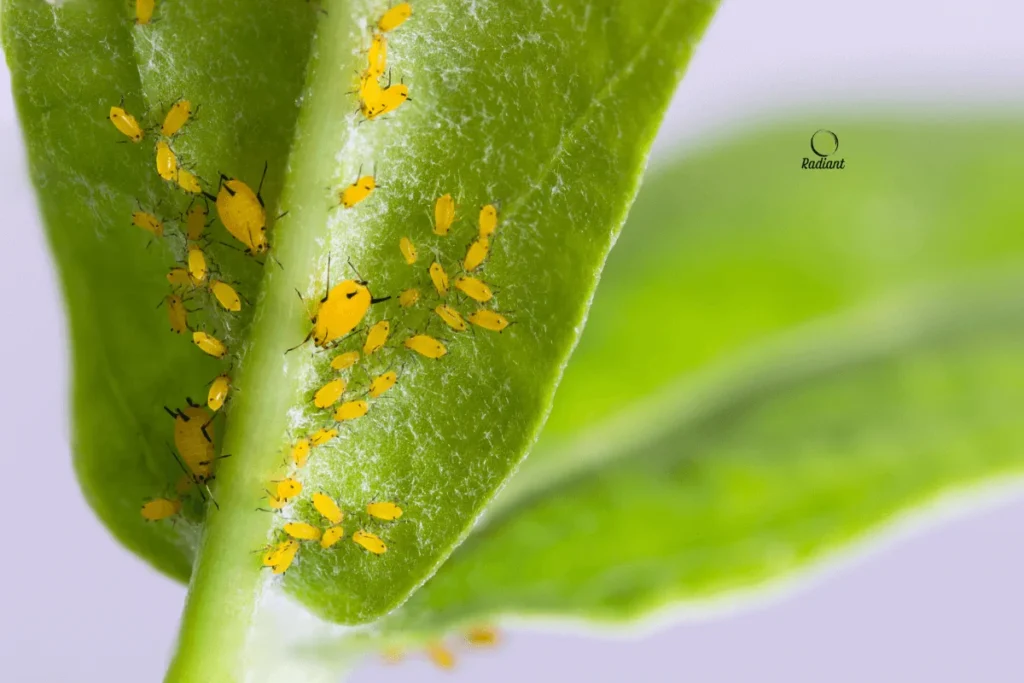
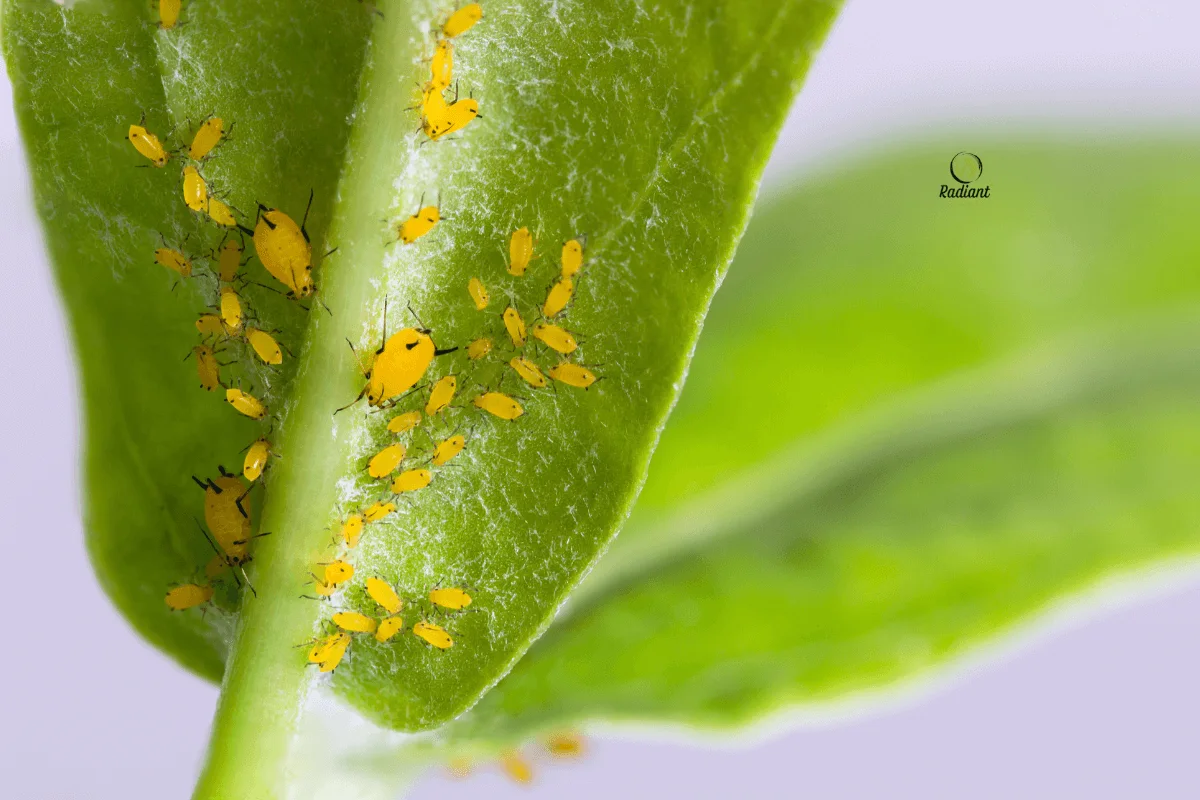
In Plant Pest Identification for houseplants, aphids are the classic “sticky leaf + curled new growth” bug. When you see shiny, tacky leaves, deformed new tips, and little soft-bodied insects clustering on stems, you’re very likely looking at aphids on houseplants, one of the most common houseplant pests indoors.
How to Spot Aphids by Symptoms
Think symptoms first. Aphids are sap-sucking insects, so they drink plant juices and leave a trail of clues behind them:
- Sticky leaves and furniture
- Leaves, pots, or shelves feel tacky or look shiny.
- That’s honeydew, a sugary liquid aphids excrete after feeding.
- Curled or distorted new leaves
- Fresh growth comes in twisted, crinkled, or undersized.
- Aphids prefer soft new tissue, so damage often shows up at the tips first.
- Clusters of tiny soft-bodied bugs on the tips
- You’ll often see groups of small green, black, yellow, or even red insects crowded together on stems, leaf undersides, or flower buds.
These houseplant pest symptoms together are a strong Plant Pest Identification signal for aphids rather than mites or scale.
What Aphids Actually Look Like (Plain-Language Visual Cues)
You don’t need a microscope to recognize aphids:
- Size: about the size of a pinhead or smaller.
- Shape: pear-shaped, with a rounded back end and a more pointed head.
- Colors: often light green, but can also be black, brown, yellow, or reddish, depending on species and plant.
- Where they hang out:
- On new shoot tips and tender stems
- Under young leaves
- On flower stems and buds
A quick Plant Pest Identification trick: if you see a crowd of soft, squishable bugs on new growth plus sticky residue, you’re almost always dealing with aphids, not scale (hard bumps) or mealybugs (cottony fluff).
How Aphids Damage Plant Leaves
Because they pierce plant tissue and suck sap, aphids cause several types of pest damage on plant leaves:
- Stunting:
- New leaves stop growing at normal size and look small or misshapen.
- Yellowing and general decline:
- Older leaves may yellow or drop as the plant loses energy.
- Sooty mold:
- The sticky honeydew can grow a black, sooty fungus on leaves and nearby surfaces, making the plant look dirty or dusty.
All of this adds up to a tired-looking plant that seems to “stall out” in growth, even if you’re watering and lighting correctly.
Real-Life Scenarios: Where You’ll See Aphids Indoors
Scenario 1: New flowering plant from the store
- You bring home a blooming kalanchoe or mini rose, set it in a bright window, and a week later, the buds look deformed, and some leaves feel sticky.
- On closer inspection, you spot clusters of soft green or black insects around the flower stems.
- For Plant Pest Identification, those sticky leaves + distorted buds + clusters of soft bugs are a textbook aphid combo.
Scenario 2: Herbs in a sunny kitchen window
- Your indoor basil or parsley suddenly has curled tips and a shiny feel.
- On the back of a leaf, you see tiny green insects lining the stem.
- Again, those signs fit aphids on houseplants, especially on herbs grown in warm, bright spots.
Common Mistakes People Make with Aphids
When doing Plant Pest Identification on aphids, these missteps are really common:
- Only wiping leaves once
- People wipe off visible aphids a single time and assume the problem is solved.
- In reality, aphids reproduce quickly; you’ll usually need several checks and follow-ups over days or weeks.
- Ignoring honeydew and sooty mold
- Some plant parents clean the sticky table but forget to look up at the plant.
- That residue is a major clue for Plant Pest Identification—if you clean the shelf without addressing the insects, they keep feeding.
- Jumping straight to strong chemicals
- It’s tempting to grab the harshest spray and soak the plant.
- But indoors, especially around kids and pets, it’s usually better to confirm they’re aphids first and then follow a targeted, safer approach (rinsing, insecticidal soap, etc.).
If readers want the full “what to do next” playbook, this is the perfect place to internally link to a detailed “how to get rid of aphids on houseplants” guide that walks through step-by-step treatment options once Plant Pest Identification confirms aphids are the culprit.
Spider Mites on Indoor Plants: Webbing and Speckled Leaves
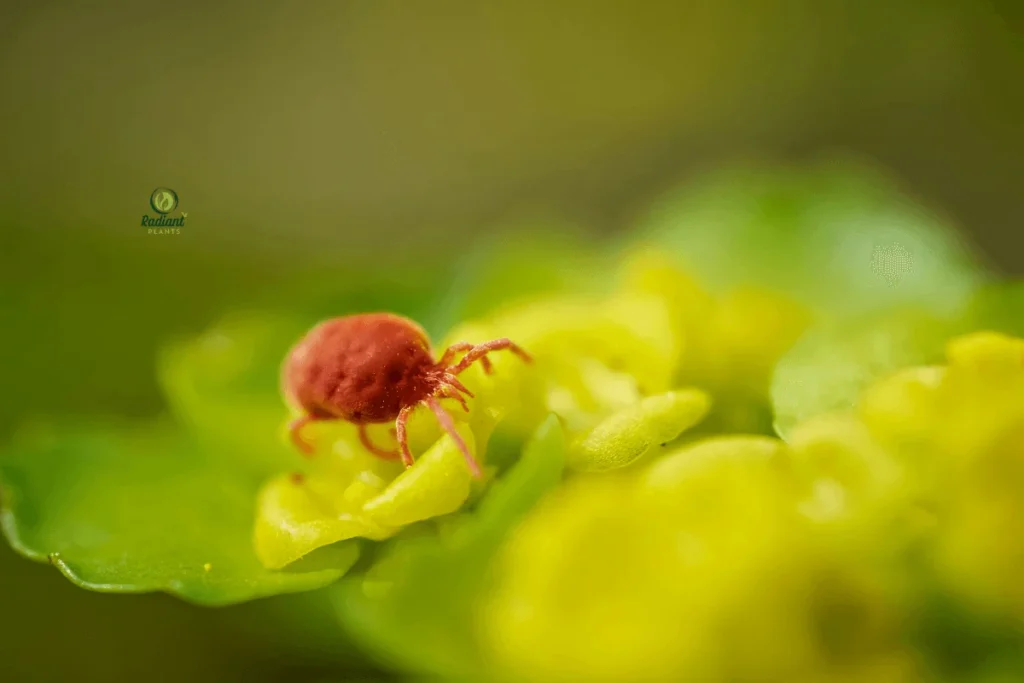
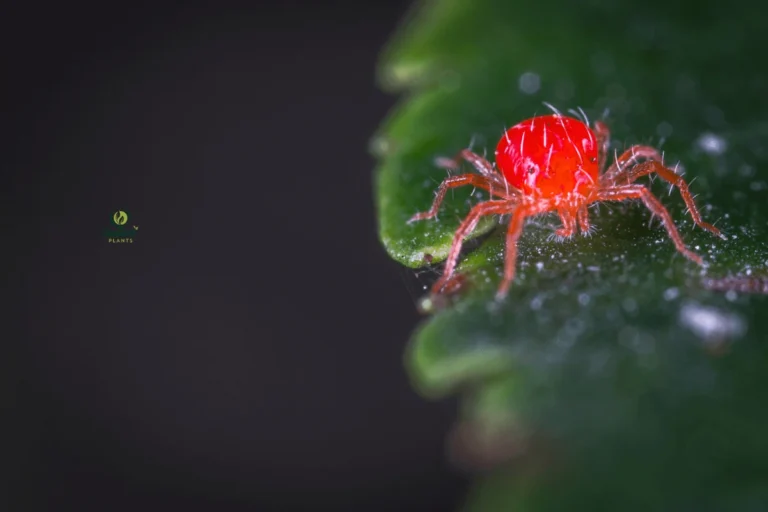
When Plant Pest Identification points to fine webbing on leaves plus tiny yellow speckles, you should immediately suspect spider mites on indoor plants. These mites are almost invisible, but the combo of webbing, “dusty” leaves, and tiny moving specks on a white paper test is a classic set of houseplant pest symptoms.
How to Recognize Spider Mite Symptoms
Spider mites are sap-sucking pests, so they damage the leaves from the inside out. Look for this pattern:
- Fine webbing between leaves and stems
- Looks like someone stretched very thin spider silk across leaf joints or between stems.
- Often, it’s easiest to see where leaves meet the main stem.
- Speckled or “dusty” yellow leaves
- Leaves develop many tiny pale dots (stippling) where mites have sucked out chlorophyll.
- Over time, the whole leaf can look dull, gray-green, or bronzed instead of deep green.
- Tiny moving dots on white paper
- Hold a white paper under a leaf and tap it firmly.
- If you see tiny dark or reddish specks that start crawling, that’s a strong Plant Pest Identification clue for spider mites rather than dust.
These signs together—webbing on leaves, stippling, and movement on the white paper test—are what a good plant pest identification guide will highlight for spider mites.
Why Spider Mites Love Indoor Conditions
Spider mites thrive in warm, dry, still air, which is exactly what many homes offer in fall and winter.
Typical indoor conditions that encourage spider mites:
- Dry heated air from furnaces, space heaters, and baseboard heat
- Low humidity, especially near sunny windows
- Crowded plants with little airflow make it easy for mites to move from one plant to another
In other words, if your plant lives in bright light, close to a heater or vent, and the air feels dry to you, it’s also attractive to spider mites.
What Spider Mites and Their Damage Look Like
You’ll rarely see a clear “bug shape” with spider mites—they look more like mobile grains of pepper or sand.
In simple terms:
- The mites:
- Very small, often red, brown, yellow, or greenish dots.
- Move slowly when you watch them on a white background.
- The damage:
- Upper leaf surfaces show many tiny pale spots.
- Over time, whole leaves look tired, faded, or bronzed.
- Webbing may collect dust, making leaves look dirty.
That mix of webbing on leaves + speckled or faded foliage is a core part of Plant Pest Identification for spider mites on indoor plants.
Common Mistakes When Spotting Spider Mites
Common mistakes that confuse Plant Pest Identification for spider mites:
- Confusing dust for mites
- Real dust sits still; mites move when you tap the leaf over white paper.
- If nothing crawls after a few seconds, it’s probably just dust.
- Thinking light misting is enough
- A quick mist can make leaves look fresh, but it doesn’t remove mites or webbing on leaves by itself.
- Misting may raise humidity for a moment, but mites often survive unless you physically wash or treat the plant.
- Ignoring early stippling
- Many plant parents wait until there’s heavy webbing before they take it seriously.
- By the time you see thick webbing, the population is already large; early speckled leaves are your best warning sign.
Real-Life Scenarios: Where Spider Mites Show Up Indoors
Scenario 1: Fiddle leaf fig near a heater
- Your fiddle leaf fig sits by a big sunny window, right next to a floor vent.
- Over a few weeks, its leaves start to look dusty and develop tiny pale specks.
- You notice faint webbing where the leaves meet the stem.
Using Plant Pest Identification, that combination—dry, heated air, bright light, stippling, and webbing—strongly suggests spider mites on indoor plants rather than a simple dust problem.
Scenario 2: Hanging pothos in a bright window
- A pothos hanging in a west-facing window starts to lose its deep green color; leaves look washed out.
- When you do the white paper tap test, tiny dark specks fall and begin to crawl.
- A closer look reveals fine webbing along some vines.
Again, those houseplant pest symptoms point to spider mites, not nutrient issues or just “old leaves.”
Once readers recognize these patterns through Plant Pest Identification, you can smoothly guide them to a more detailed “natural spider mite control for houseplants” article that covers specific treatment steps and gentle control options.
Fungus Gnats in Houseplants: Tiny Flies in the Soil
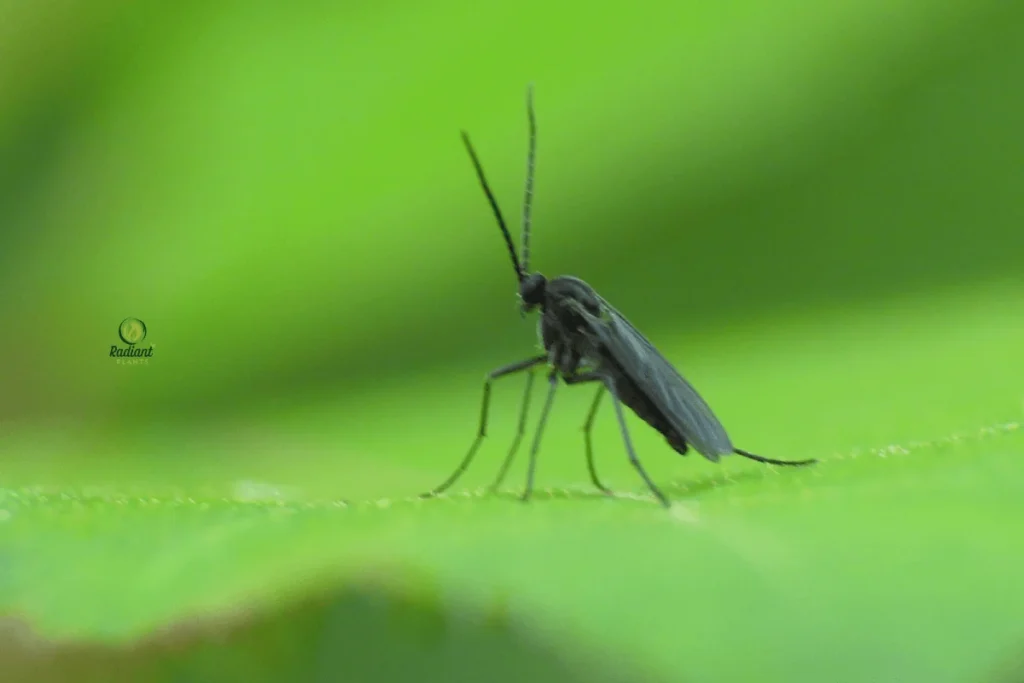
When Plant Pest Identification shows tiny black flies that pop up from the soil whenever you water, you’re almost certainly dealing with fungus gnats in houseplants. The adults are mostly annoying, but their larvae live in the top inch of wet soil and can damage delicate roots and seedlings if the infestation gets heavy.
Symptoms First: What Fungus Gnats Look Like
Focus on what you actually see around the pot:
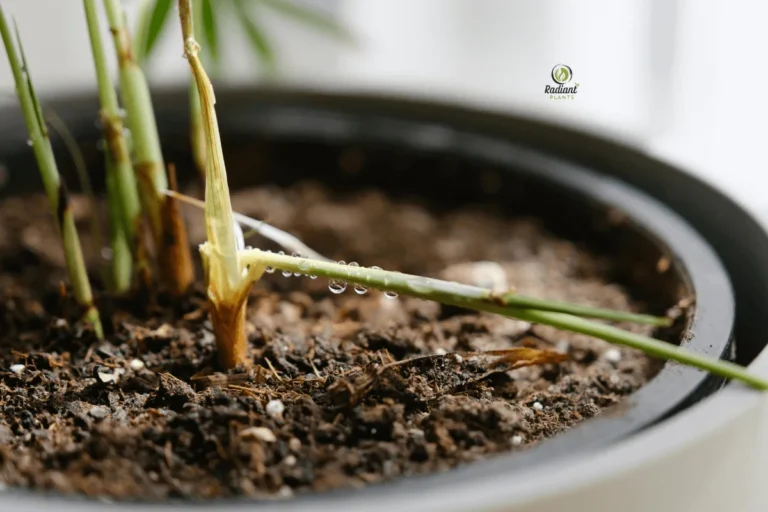
- Tiny black flies in the soil
- Small, mosquito-like flies hover over the pot or walk on the soil surface.
- They usually fly up when you water or move the pot.
- Larvae in the top inch of soil
- Slender, translucent worms with darker heads are found if you gently scrape back the top layer of very wet soil.
- Most visible in heavily infested, constantly damp pots.
- Plant response
- Adult gnats don’t chew leaves, so you won’t see obvious pest damage on plant leaves at first.
- In severe cases, larvae feeding on roots can cause wilting, weak growth, or sudden decline, especially in seedlings and very small or stressed plants.
Good Plant Pest Identification here is about connecting wet soil + hovering flies + possible root stress, rather than expecting chewed leaves or webbing.
Why Overwatering and Poor Drainage Attract Fungus Gnats
Fungus gnats love wet, poorly drained potting mix. For indoor plant pest control, this is one of the clearest “cause and effect” relationships:
- Overwatering
- Watering on a strict schedule (“every Sunday”) instead of checking soil moisture keeps the mix soggy.
- Constant moisture lets algae, fungi, and decaying organic matter build up—perfect gnat food.
- Poor drainage
- Pots without drainage holes, or plastic nursery pots sitting inside decorative covers that trap water, keep roots sitting in a swamp.
- Saucer water that never gets dumped = prime gnat nursery.
- Cool, low-light corners
- Plants in darker spots dry out slowly, so the soil stays damp even when the top feels dry.
As part of Plant Pest Identification for your whole collection, whenever you see tiny black flies in soil, the next question should always be: “How wet is this pot, really, and how fast is it drying out?”
How Harmful Are Fungus Gnats, Really?
It helps to separate annoyance from plant risk:
- Adults (flying gnats):
- Mostly a nuisance to you—they don’t bite, and they don’t chew leaves.
- Larvae (in soil):
- Feed on fungi and organic matter; in high numbers, they can chew on fine roots, root hairs, and stems of young seedlings.
- This can lead to stunted growth, wilting, or damping-off in very small or weak plants.
So for most mature houseplants, fungus gnats are more of a “yuck” factor than a death sentence—but in a good plant pest identification guide, they still matter because they often signal overwatering and poor soil health.
Quick Dry-Down and Repotting Steps (Checklist)
Use this fast checklist when Plant Pest Identification points to fungus gnats:
Quick Dry-Down Steps
- ☐ Check moisture with your finger or a moisture meter before watering again
- ☐ Let the top 1–2 inches of soil dry out before the next watering
- ☐ Move the plant to a brighter, warmer spot (if it can tolerate it) so the soil dries faster
- ☐ Empty any saucers or decorative pots so no water sits under the plant
- ☐ Consider a top-dressing (e.g., a thin layer of sand or small gravel) to make the top surface less inviting to egg-laying adults
When to Repot
- ☐ If the soil stays soggy for days, even with less water
- ☐ If the potting mix is compacted, smells sour, or looks very broken down
- ☐ Gently remove the plant, inspect roots, and repot into a fresh, well-draining mix with a pot that has real drainage holes
These steps aren’t just indoor plant pest control; they’re also a long-term fix for overwatering habits that lead to many other houseplant pest symptoms.
Common Mistakes with Fungus Gnats
When Plant Pest Identification points to fungus gnats, it’s easy to make these mistakes:
- Using more water to “flush” them out
- Pouring extra water through the pot in hopes of rinsing gnats away usually makes things worse by keeping the soil wet.
- Ignoring drainage holes
- Leaving plants in pots without drainage, or never emptying saucers, creates permanent wet spots where larvae thrive.
- Only relying on sticky traps
- Yellow sticky traps catch adult gnats, which helps you see how many you have, but they don’t touch the larvae in the soil.
- Without drying the mix or treating the root zone, new adults keep emerging.
A simple example:
- Your grouping of plants in a low-light corner sends up tiny black flies every time you water.
- Soil feels damp even a week later, and containers sit in deep decorative pots with no visible drainage.
- That pattern—gnats plus chronically wet soil and poor drainage—is exactly what Plant Pest Identification for fungus gnats should highlight.
From here, the next logical step for readers is a dedicated “best way to get rid of fungus gnats indoors” guide that covers more detailed treatment options, but this section gives them the core understanding they need: what they’re seeing, why it’s happening, and how to break the wet-soil cycle.
Are These Other Bugs on Your Plants? (Mealybugs, Scale, Whiteflies)
If Plant Pest Identification shows white fuzz, hard bumps, or tiny white bugs that fly up when you touch the plant, you’re probably not dealing with the “big three,” but with mealybugs, scale insects, or whiteflies on houseplants. These pests are still common and, like aphids, they suck sap and often leave behind sticky residue that can turn into black sooty mold.
Quick Visual IDs: Mealybugs, Scale, Whiteflies
When you’re scanning pictures of plant pests in a guide or in your own photos, here’s how to quickly tell these three apart:
Mealybugs on indoor plants
- Look:
- White, cottony or fuzzy blobs that look like bits of lint or cotton.
- Often lined up along stems or tucked into leaf joints.
- Top symptom:
- Sticky leaves and surfaces from honeydew, plus patches of white fluff in crevices.
- Where to check:
- Leaf axils (where leaf meets stem), along veins on leaf undersides, around pot rims, and nodes.
Scale insects on houseplants
- Look:
- Small, dome-shaped or oval bumps attached firmly to stems or leaf veins.
- Colors range from tan to brown or even dark gray.
- Top symptom:
- Sticky residue and sometimes black sooty mold beneath the plant, plus bumps that don’t rub off easily.
- Where to check:
- Woody stems, older growth, and along the midrib on the underside of leaves.
Whiteflies on houseplants
- Look:
- Tiny, white, moth-like insects that flutter up when you brush or move the plant.
- Top symptom:
- A “cloud” of small white insects flying when disturbed, along with sticky leaves and possible yellowing.
- Where to check:
- Undersides of leaves, especially near the top of the plant, and in bright light.
These three are all sap-sucking insects, which is why Plant Pest Identification groups them with aphids: they cause similar houseplant pest symptoms like sticky leaves, yellowing, and general decline.
Suggested sources for visual ID and honeydew/sooty mold details:
Sticky Residue and Sooty Mold: What They Tell You
Mealybugs, scale, and whiteflies all feed on plant sap and then excrete honeydew, the same sticky liquid you see with aphids. Over time, this honeydew can:
- Make leaves feel tacky or shiny
- Leave sticky spots on furniture under the plant
- Grow black, sooty mold on leaves and stems
For Plant Pest Identification, this matters because:
- Sticky leaves + white cottony clusters → more likely mealybugs on indoor plants.
- Sticky leaves + hard, unmoving bumps → more likely scale insects on houseplants.
- Sticky leaves + small white moth-like bugs flying when touched → more likely whiteflies on houseplants.
You’re using the same symptom (honeydew and sooty mold) but pairing it with different visual cues to pinpoint which pest you’re dealing with.
Real-World Examples: Where These Pests Show Up
Mealybugs on succulents and chunky plants
- A jade plant or other succulent starts getting white, cottony blobs in the crooks of its branches.
- Leaves feel sticky, and you may even see white fluff around the pot rim.
- In a Plant Pest Identification guide, that combination—succulent stems + cottony clusters + sticky residue—lines up with mealybugs on indoor plants.
Scale on woody stems
- A rubber plant, ficus, or schefflera has small, brownish bumps all along its stems.
- When you run a fingernail along the stem, some bumps flake off, others cling hard.
- The leaves underneath feel sticky, and you spot a bit of black sooty mold.
- Those are classic cues for scale insects on houseplants rather than harmless bark texture.
Whiteflies on herbs or indoor veggies
- Basil, mint, or a small tomato plant by a bright kitchen window drops older leaves and looks pale.
- When you brush the foliage, a little cloud of tiny white insects flies up, then settles back down.
- That “snowstorm” response is a strong Plant Pest Identification sign for whiteflies on houseplants instead of dust or pollen.
In each case, you’re pairing pictures of plant pests (in your guide or on your phone) with what you see on your own plant, which is exactly how Plant Pest Identification is meant to work for houseplants. For readers who want full “what now?” instructions, this section is a natural jumping-off point to:
- A “how to treat mealybugs on indoor plants” guide
- A “how to remove scale insects from houseplants” guide
- A “White Flies on Plants: Easy Ways to Stop Them Fast.”
Symptom Map: Match What You See to the Right Pest
The fastest way to use Plant Pest Identification on houseplants is to start with symptoms, then match them to the most likely pest, and a simple first step. Instead of memorizing every insect, you look at what’s happening on the leaves, stems, and soil, then let a symptom map do the heavy lifting.
Start With What You See, Not the Bug’s Name
When you identify plant bugs on leaves, stems, or in soil, begin by asking: “What looks wrong?” Then plug that into this basic Plant Pest Identification guide:
- Sticky, shiny leaves → often aphids, scale, or mealybugs
- Fine webbing + speckled leaves → usually spider mites
- Tiny black flies in soil → usually fungus gnats
- White fuzzy clumps → usually mealybugs
These patterns show up in many university extension resources and houseplant pest guides.
Symptom vs Pest vs First Step
Use this as a quick mental (or printable) map when you’re checking pest damage on plant leaves and around the pot:
Symptom you notice | Most likely pest(s) | First step to take |
|---|---|---|
Sticky, shiny leaves or furniture | Aphids, scale, mealybugs | Wipe leaves, check new growth, and stems for clusters |
Fine webbing + speckled or dusty leaves | Spider mites | Do a white paper tap test, rinse foliage thoroughly |
Tiny black flies appear from the soil when watering | Fungus gnats | Let the soil dry, check the drainage, and add a yellow sticky trap |
White fuzzy clumps in leaf joints | Mealybugs | Dab or wipe clusters, isolate the plant, and inspect closely |
Hard bumps on stems/leaf veins | Scale insects | Scratch gently with a fingernail, wipe, and inspect others |
Cloud of tiny white flying insects | Whiteflies | Shake the plant, check the leaf undersides, and isolate the plant |
You can turn this into a visual plant pest identification chart with simple icons and pictures of plant pests, so it’s easy to reference on your phone.
How to Use the Symptom Map in Real Life
- Spot a symptom
- Maybe you notice sticky leaves and a shiny spot on the shelf under your plant.
- Match it to the map
- Sticky/shiny → aphids, scale, or mealybugs are your top suspects.
- Zoom in for confirmation
- Look for:
- Soft clusters on new growth (aphids)
- Hard bumps on stems (scale)
- White cottony clumps (mealybugs)
- Look for:
- Check a Plant Pest Identification guide with photos
- Compare your plant to pictures of plant pests and damage:
- Aphids: soft, pear-shaped insects on tips
- Scale: shell-like bumps that don’t wipe off easily
- Mealybugs: white cotton in joints and along veins
- Compare your plant to pictures of plant pests and damage:
In just a minute or two, you’ve gone from “something’s wrong” to a short list of likely culprits and a clear first move. That’s exactly how symptom-based Plant Pest Identification should feel: simple and repeatable.
Common Symptom Map Mistakes to Avoid
Even with a good symptom map, these misunderstandings can throw off your Plant Pest Identification:
- Misreading underwatering as pests
- Droopy, crispy leaves can come from dry soil, not bugs.
- Always check soil moisture before assuming pest damage on plant leaves.
- Thinking one gnat = an infestation
- A single random gnat in your house isn’t enough to diagnose fungus gnats in houseplants.
- Look for multiple tiny black flies rising from the soil of the same pot when you water.
- Mixing up scale with natural leaf bumps
- Some plants naturally have textured or knobbly stems.
- Real scale insects often ooze or flake when gently scratched with a fingernail; natural bumps usually don’t.
The more you pair these symptom patterns with actual images in a plant pest identification guide, the faster your brain will connect the dots. If you create or download a visual plant pest identification chart, keep it saved on your phone so you can quickly match what you see on your plant to photos and pick the right first step.
Organic Pest Control for Plants: Gentle Fixes That Work
Once Plant Pest Identification tells you which bug you’re dealing with, you can usually start with organic pest control for plants instead of jumping straight to harsh chemicals. For most houseplant pests—aphids, spider mites, fungus gnats, mealybugs—simple, low-toxicity methods like rinsing, wiping, insecticidal soap, neem oil, and sticky traps are enough, especially if you catch the problem early.
Core Organic, Low-Toxicity Options
Think of indoor plant pest control as layers—start gentle and only step up if needed. Common non-toxic pest control tools include:
- Rinsing
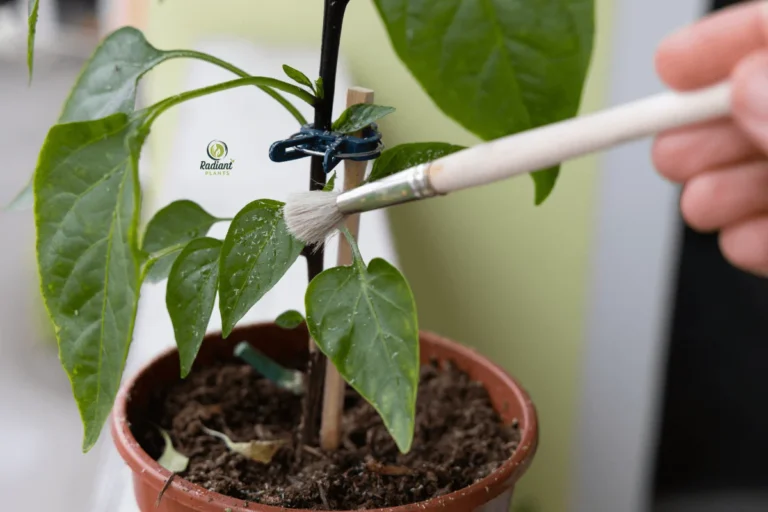
- Take the plant to the sink, shower, or tub.
- Use lukewarm water to gently wash leaves top and bottom, focusing on where pests cluster.
- Great first move for aphids and spider mites.
- Wiping
- Use a soft, damp cloth or cotton swab to wipe off visible pests and sticky residue.
- Helpful for mealybugs and scale insects on houseplants, where you can reach each spot.
- Pruning
- Cut off heavily infested or badly damaged leaves and stems.
- Toss them in the trash (not compost) to reduce pest numbers fast.
- Insecticidal soap
- Ready-to-use soaps labeled for houseplants can kill soft-bodied insects like aphids, mealybugs, and spider mites on contact.
- Always test on a small area first and follow the label exactly.
- Neem oil or horticultural oils
- These oils coat pests and can interfere with feeding and development.
- Often used for spider mites, scale, and some other sap-sucking insects on indoor plants.
- Again, follow label directions for dilution and avoid spraying in strong direct sun.
- Sticky traps (yellow sticky cards)
- These are especially useful for fungus gnats in houseplants and other flying pests.
- They help monitor how bad the problem is and reduce adult numbers, but you still need to fix the root cause (usually wet soil).
- BTI (Bacillus thuringiensis israelensis) for gnats
- A biological control used to target fungus gnat larvae in soil without harming the plant.
- Often sold as granules or “dunks” labeled for gnat or mosquito control; always check the label for indoor use and follow directions.
Indoor Safety: Pets, Kids, and Labels
For houseplant lovers with kids or pets, pet-safe bug control is just as important as saving the plant. A few simple rules make organic pest control safer indoors:
- Always read and follow the label.
- Even “natural” or “organic” products can irritate skin, eyes, or airways if misused.
- The label will tell you where you can use it, how often, and any ventilation or protective steps needed.
- Keep products and treated plants away from pets and kids until dry.
- Apply sprays in a bathroom, balcony, or laundry area with the door closed.
- Let leaves dry fully before returning plants to high-traffic spots.
- Avoid DIY chemical mixes if you’re not sure they’re safe.
- Some online recipes combine household chemicals in unsafe ways.
- Stick to products that clearly state they’re for indoor plant pest control and use them as directed.
When Organic Methods Are Enough vs. When to Go Stronger
Organic or low-toxicity methods are usually enough when:
- You’ve caught pests early with good Plant Pest Identification.
- Only a few leaves or a small part of the plant are affected.
- Pests are soft-bodied (aphids, mealybugs, spider mites, whiteflies).
- You’re willing to repeat treatments every 5–7 days for a few rounds.
You might need to consider stronger measures or even discarding the plant when:
- The infestation covers most of the plant and is spreading to others.
- Repeated rinsing, wiping, and soap/oil sprays haven’t slowed things down.
- The plant is very weak, with major pest damage and little healthy growth left.
Even then, many indoor gardeners prefer to remove the worst plants instead of bringing in harsher chemicals—especially in small apartments or homes with pets and kids. In that case, Plant Pest Identification still matters: knowing which pest you’re dealing with helps you protect the rest of your collection using gentler indoor plant pest control methods.
Everyday Scenarios: How This Looks in Real Life
Scenario 1: Pet owner in an apartment
- You notice sticky leaves and tiny soft bugs on a pothos, but you also have a cat that chews plants.
- With Plant Pest Identification confirming aphids, you:
- Rinse the pothos in the shower.
- Wipe leaves with a damp cloth.
- Use a labeled insecticidal soap, apply it in the bathroom, and keep the door closed until the plant dries.
- You skip systemic insecticides entirely and rely on repeated gentle treatments plus better light and air circulation.
Scenario 2: Family with kids and a gnat problem
- Several pots in the living room send up tiny black flies when watered.
- Plant Pest Identification points to fungus gnats in houseplants.
- The family:
- Water less often and let the top 1–2 inches of soil dry.
- Empties saucers and uses pots with drainage holes.
- Adds yellow sticky traps for monitoring.
- Uses a BTI product labeled for indoor use to target larvae in soil.
In both situations, organic pest control for plants gives you a way to respond quickly and safely once Plant Pest Identification tells you who the problem is. If readers want a deeper dive into product choices, application tips, and longer-term strategies, this section is a perfect lead-in to an “organic indoor plant pest control methods” article with more detail.
Common Mistakes That Make Pests Love Your Plants
Most of the time, Plant Pest Identification reveals that pests showed up because the plant was already stressed—not because you’re “bad with plants.” Chronic overwatering, poor light, no airflow, and crowded pots all invite common houseplant pests and make houseplant pest symptoms worse.
Why Stress = Pest Magnet (Simple Version)
Plants under stress can’t grow strong new leaves or roots as easily. When a plant is:
- Sitting in soggy soil
- Struggling in low light
- Stuck in stale, unmoving air
…it spends its energy just trying to survive. That makes it easier for insects and mites to feed, multiply, and cause visible pest damage on plant leaves. Healthy plants aren’t magically immune, but they’re much better at handling mild pressure from common houseplant pests.
Common Mistakes (and What to Do Instead)
Use this as a quick reality check alongside your Plant Pest Identification routine:
Mistake 1: “I water every Sunday no matter what.”
- Problem: Chronic overwatering keeps soil wet, which attracts fungus gnats and can weaken roots, so pests do more damage.
- Do this instead:
- Check the soil with your finger or a moisture meter.
- Only water when the top 1–2 inches are dry (or based on each plant’s needs).
- If you realize a pot is staying soggy, that’s a great moment to link to your “how to fix overwatered houseplants” guide.
Mistake 2: All plants on one crowded shelf
- Problem: Crowded plants have poor airflow and touching leaves, so once a pest shows up, it spreads fast.
- Do this instead:
- Space plants so leaves aren’t constantly touching.
- Leave a bit of room around each pot for air to move.
- If Plant Pest Identification confirms an issue, isolate that plant before treating.
Mistake 3: Plants under cabinets with almost no light
- Problem: Low light slows growth, so the plant can’t replace damaged leaves quickly and stays weak.
- Do this instead:
- Move light-hungry plants closer to windows or add a small grow light.
- Reserve low-light spots for truly low-light-tolerant plants.
Mistake 4: No airflow at all
- Problem: Stagnant air keeps leaves damp longer and makes it easier for pests and mold to hang around.
- Do this instead:
- Crack a window when the weather allows, or use a gentle fan on low and indirect.
- Avoid blasting plants with air, but aim for soft circulation in the room.
Mistake 5: Skipping inspections until leaves look terrible
- Problem: By the time you see heavy webbing or clouds of gnats, the infestation is already well established, and indoor plant pest control takes longer.
- Do this instead:
- Build a weekly 2-minute Plant Pest Identification habit: check top leaves, leaf undersides, stems, soil surface, and nearby surfaces every time you water.
Mistake 6: Ignoring the “little things.”
- Problem: A bit of sticky residue, a few speckles, or a single white fuzzy patch gets dismissed as dust or dirt, and pests get a head start.
- Do this instead:
- When something looks off, take a close photo and zoom in.
- Compare what you see to pictures of plant pests in a plant pest identification guide to catch problems early.
Each of these habits either stresses the plant or helps pests spread, so fixing them makes every other part of indoor plant pest control more effective. When your plants have decent light, better airflow, and properly drying soil, Plant Pest Identification becomes less about panic and more about quick check-ins and small corrections.
Build a Simple Plant Pest Identification Kit and Routine
The easiest way to stay ahead of pests is to make Plant Pest Identification part of a tiny weekly ritual instead of a big emergency project. A small plant pest identification kit plus a simple “water → inspect → note → treat → re-check” routine will catch most problems early and keep indoor plant pest control calm and predictable.
What to Keep in Your Plant Pest Identification Kit
You don’t need fancy tools—just a few cheap items stored together in a tote, basket, or drawer near your plants.
Plant Pest ID Kit Checklist
- ☐ Flashlight or phone light
- Helps you see webbing, shine on sticky leaves, and bugs hiding in shadows.
- ☐ White paper or index cards
- For the tap test: shake leaves over it to spot tiny moving mites or thrips.
- ☐ Magnifying glass or phone macro clip
- Lets you zoom in on small pests so you can compare them to photos later.
- ☐ Yellow sticky traps
- For monitoring flying pests like fungus gnats and whiteflies.
- ☐ Mild insecticidal soap or neem spray
- Labeled for indoor plant use; your first line of gentle treatment once you’ve done Plant Pest Identification.
- ☐ Soft cloths and cotton swabs
- To wipe off honeydew, mealybugs, and other visible pests.
- ☐ Notebook or notes app on your phone
- To record what you saw, what you did, and when you plan to re-check.
Having this plant pest identification kit ready means you’re never hunting for supplies when you spot something weird—you can act right away.
A Weekly Plant Pest Identification Routine
You can turn Plant Pest Identification into a quick indoor plant pest control routine that fits naturally into your week:
- Water
- Before you water, check the soil with your finger instead of watering on autopilot.
- This supports your pest checks and prevents overwatering.
- Inspect
- Use your flashlight and white paper to do a fast scan:
- Top leaves and new growth
- Leaf undersides
- Stems and leaf joints
- Soil surface and saucer
- This is exactly how to inspect plants for pests in under two minutes per plant.
- Use your flashlight and white paper to do a fast scan:
- Note
- If you spot potential issues (sticky leaves, webbing, tiny flies), jot a quick note:
- Plant name, date, symptoms, and suspected pest.
- This makes it easier to see patterns and know when you last treated.
- If you spot potential issues (sticky leaves, webbing, tiny flies), jot a quick note:
- Treat (if needed)
- If Plant Pest Identification points clearly to a pest, use your gentle tools:
- Rinse, wipe, prune, and/or use soap or neem as labeled.
- If Plant Pest Identification points clearly to a pest, use your gentle tools:
- Re-check in 5–7 days
- Add a reminder in your calendar or notes app to re-inspect that specific plant.
- Most pests need repeating treatments, so this step keeps you consistent.
How This Routine Reduces Infestations and Panic
By running this Plant Pest Identification kit + routine every week, you:
- Catch pests when they’re still on a few leaves instead of the whole plant.
- Break up the pest life cycle with repeated, gentle actions instead of one big “emergency spray.”
- Build confidence so your first reaction is, “Okay, let’s check my notes and treat,” not panic.
Everyday Examples of the Routine in Action
Sunday morning plant check ritual
- You grab your plant pest identification kit, make coffee, and walk through your plants.
- For each plant: check the soil, inspect with the flashlight, tap a couple of leaves over white paper, and add a quick note if anything looks off.
- Every Sunday, you repeat that loop, so small problems never have weeks to grow unnoticed.
Monthly deep clean and trim
- Once a month, you add a slightly longer session:
- Dust leaves, prune dead or yellowing foliage, clean saucers, and replace or reposition sticky traps.
- Compare current plant conditions to your previous notes to see which plants tend to attract issues.
If you offer a printable plant care checklist, this is a perfect place to link to it so readers can pair that checklist with their Plant Pest Identification kit. Together, the checklist and routine turn pest control from a mystery into a manageable, repeatable habit.
When to Treat, When to Wait, and When to Let a Plant Go
A big part of Plant Pest Identification is knowing how serious the problem is. Not every bug means you need to toss the plant, but ignoring a severe infestation can risk your whole collection. Think in three levels—light, moderate, and severe—and match your indoor plant pest control decisions to that level.
Step 1: Decide How Bad It Really Is
Use this quick scale as you look at a plant (and maybe compare it to your plant pest identification guide):
Light infestation
- Only a few pests are visible (for example, a small cluster of aphids on one stem).
- Most leaves look healthy; new growth still looks normal.
- Pest damage on plant leaves is limited to a couple of spots.
Moderate infestation
- Pests on several parts of the plant, or you’ve seen them for more than a week.
- Some yellowing, stippling, sticky residue, or minor webbing.
- The plant still has energy, but is clearly not at its best.
Severe infestation
- Large sections covered in pests (heavy webbing, tons of cottony clusters, clouds of gnats).
- Many leaves are yellowing, dropping, or heavily deformed.
- Pests have spread to multiple plants nearby.
- The plant looks weak and sparse overall.
Extension services and IPM guides often suggest treating early and being willing to remove heavily infested plants to protect the rest. Better Homes & Gardens
Step 2: When to Watch, Treat, or Let Go
When it’s okay to watch and monitor
- Infestation level: Light
- Example: A healthy pothos with a few aphids on one vine, or one sticky leaf but no visible pests elsewhere.
- What to do:
- Isolate the plant a bit if you can.
- Rinse or wipe the affected area.
- Note the date and re-check in 5–7 days.
- Why: You’ve used Plant Pest Identification to spot an issue early; a couple of gentle actions plus monitoring are usually enough.
When should you treat quickly?
- Infestation level: Moderate
- Example: One plant with aphids on multiple stems, or spider mites with visible stippling and light webbing; fungus gnats that pop up from the same pot every time you water.
- What to do:
- Move the plant away from others.
- Rinse, wipe, prune, and use a gentle spray like insecticidal soap or neem according to the label.
- Repeat treatment and inspections every 5–7 days until new growth is clean.
- Why: At this stage, indoor plant pest control decisions should favor action—you still have a strong chance to turn things around without losing the plant.
When it’s smarter to let a plant go
- Infestation level: Severe
- Example:
- Several plants are covered in heavy webbing from spider mites.
- A plant coated in scale or mealybugs with black sooty mold on many leaves.
- Soil is crawling with gnats and larvae while the plant is already struggling.
- What to do:
- Consider discarding the worst plant(s) to protect the rest.
- Thoroughly clean the area where they sat.
- Step up checks on nearby plants using your plant pest identification guide.
- Why: Severe infestations often mean the plant is too weak and pests are well established; keeping that plant can act as a pest factory for your entire collection.
Examples: Rescue vs “Cut Your Losses”
Example 1: One plant with a few aphids
- You find a small cluster of aphids on one stem of a healthy philodendron.
- Light infestation → you rinse, wipe, maybe use a gentle soap spray, and check again next week.
- This is a rescue situation—the plant has plenty of energy to bounce back.
Example 2: Multiple plants with heavy webbing
- You’ve been busy and suddenly notice webbing on several plants, with many leaves speckled, yellowing, or dropping.
- That’s a severe infestation of spider mites.
- A smart Plant Pest Identification move might be:
- Pick the best-looking plants to treat and isolate.
- Discard the worst, most-covered plants.
- Clean the area and increase inspections for a few weeks.
Common Decision-Making Mistakes
Mistake 1: Keeping heavily infested plants right next to others
- Problem: Pests spread quickly through touching leaves and shared air.
- Better: Move sick plants to a “plant hospital” spot—this is where your “how to quarantine a sick houseplant” guide comes in.
Mistake 2: Giving up too soon on mild infestations
- Problem: Seeing a few pests and assuming the plant is doomed can lead to tossing plants you could easily save.
- Better: Use a plant pest identification guide, confirm what you’re dealing with, and try 2–3 weeks of consistent gentle treatment before deciding.
Mistake 3: Treating every tiny issue like an emergency
- Problem: Over-spraying or using harsh chemicals for every single bug can stress plants (and you).
- Better: Let the light / moderate/severe scale guide your indoor plant pest control decisions so you react proportionally.
When you combine clear Plant Pest Identification with this simple severity scale, it becomes much easier to know when to wait, when to act, and when to let a plant go for the sake of your whole indoor jungle.
FAQ: Fast Answers to Common Plant Pest Questions
How do I quickly figure out what bug is on my plant?
Look at symptoms first, not the bug’s name. Check if leaves are sticky, speckled, webbed, or if tiny flies rise from the soil. Then compare what you see to a simple Plant Pest Identification chart or photo guide to match symptoms to the most likely pest.
What are the most common pests on indoor houseplants?
Most US houseplant issues come from aphids, spider mites, fungus gnats, mealybugs, scale, and whiteflies. Aphids and mealybugs cause sticky leaves, spider mites leave webbing and speckles, and fungus gnats fly from wet soil. Learning these six makes diagnosing most problems much easier.
Are fungus gnats actually harmful to my houseplants?
Adult fungus gnats are mostly annoying, but their larvae can damage fine roots and seedlings in very wet soil. For established plants, they’re usually a sign of overwatering rather than a death sentence. Let the top soil dry, improve drainage, and treat the root zone if they persist.
How often should I check my houseplants for pests?
A light check once a week is enough for most homes. Combine it with watering: scan new growth, flip a few leaves, inspect stems and soil, and look for sticky residue or webbing. High-risk plants near heaters or bright windows benefit from closer checks every few days.
What are the early signs of pests before the leaves look really bad?
Early signs include slightly sticky leaves, a few tiny yellow speckles, faint webbing, or one or two white fuzzy spots in leaf joints. You might also see a couple of tiny black flies when watering. Catching these small changes early makes treatment simpler and more effective.
How can I tell if yellow leaves are from pests or watering issues?
Check the pattern. If yellowing comes with sticky residue, webbing, speckles, or visible insects, pests are likely involved. If leaves yellow from the bottom up with no pests, and the soil is very wet or very dry, watering or light stress is more likely the problem.
What’s the safest way to treat plant pests if I have kids or pets?
Start with physical methods: rinse leaves, wipe pests off, prune badly damaged parts, and let the soil dry properly. If needed, use insecticidal soap or neem products labeled for indoor use, follow directions carefully, and keep plants away from kids and pets until the leaves are dry.
Do I need different sprays for each type of plant pest?
You don’t need a separate product for every insect, but you do need to match your treatment to the pest type. Insecticidal soaps and oils work on many soft-bodied pests, while fungus gnats need soil-focused fixes. Use Plant Pest Identification first, then choose the least-strong product that fits.
When is it better to throw out a plant instead of treating pests again?
Consider discarding a plant when most leaves are damaged, pests cover multiple stems, treatments haven’t helped after several weeks, and nearby plants are at risk. In that case, removing one severely infested plant can protect the rest of your collection and save you time and stress.
Most indoor pest problems look scary at first, but they’re usually just a handful of predictable bugs showing you very familiar patterns on leaves, stems, and soil. When you pair simple Plant Pest Identification habits with gentle treatments and better watering, light, and airflow, you turn emergencies into small maintenance tasks. From here, your best next step is to save a quick symptom chart or printable checklist and, if you can, dive into a detailed “how to treat” guide for your most common pest.

Reading your article helped me a lot and I agree with you. But I still have some doubts, can you clarify for me? I’ll keep an eye out for your answers.
Thank you so much for taking the time to read my article—I’m glad it was helpful and that you agree with the points I raised. I’d be happy to clarify any doubts you still have. Feel free to share your specific questions, and I’ll do my best to provide clear answers. I appreciate your interest and will make sure to follow up promptly.
Thanks for sharing. I read many of your blog posts, cool, your blog is very good.
Thank you so much! 😊 I’m really glad you’re enjoying the blog. Your support means a lot, and I’ll keep sharing more helpful plant tips and guides. If there’s any topic you’d love to see next, feel free to let me know! 🌿💚
What’s up to every , because I am really eager of reading this weblog’s post to be updated regularly.
It consists of pleasant information.
Hi, this weekend is good designed for me, because this time i am
reading this wonderful educational piece of writing here at my residence.