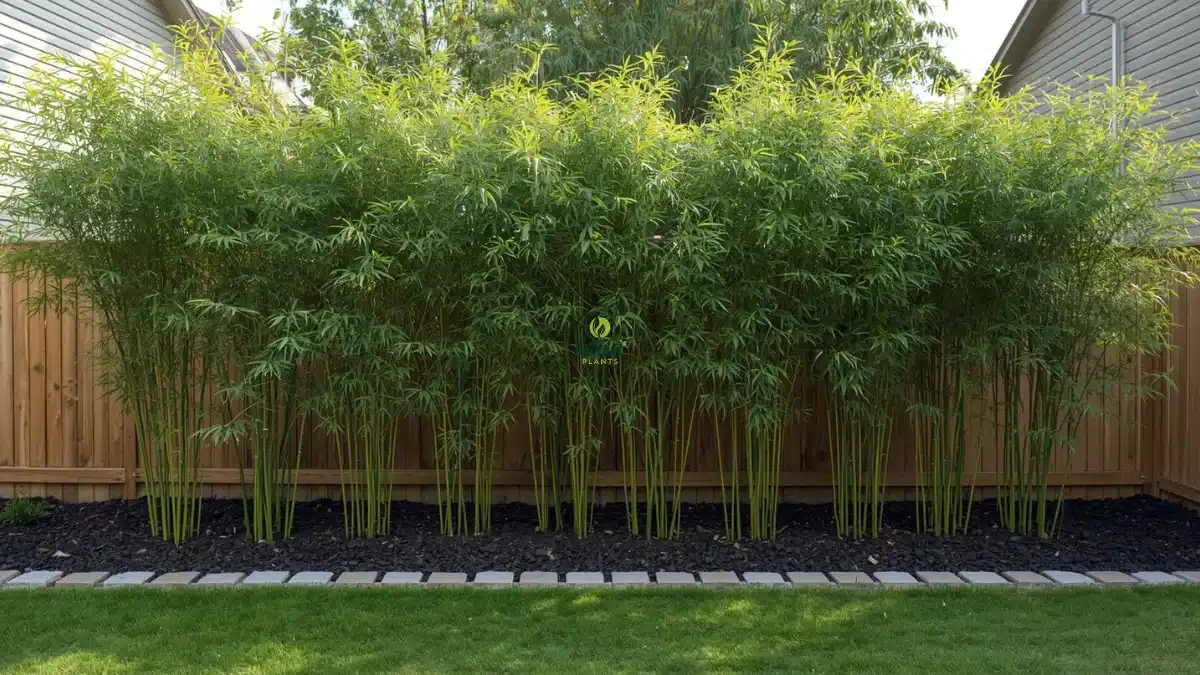
Choosing between different types of bamboo plants can get confusing fast—especially when some stay neatly contained while others can quietly take over your yard. Many homeowners plant bamboo for quick privacy, only to realize too late that they chose a fast-spreading type. This guide breaks down exactly which bamboo is safe, which isn’t, and how to choose the right one for your space without costly mistakes.
In This Article
Clumping vs Running Bamboo (Quick Answer + Comparison)
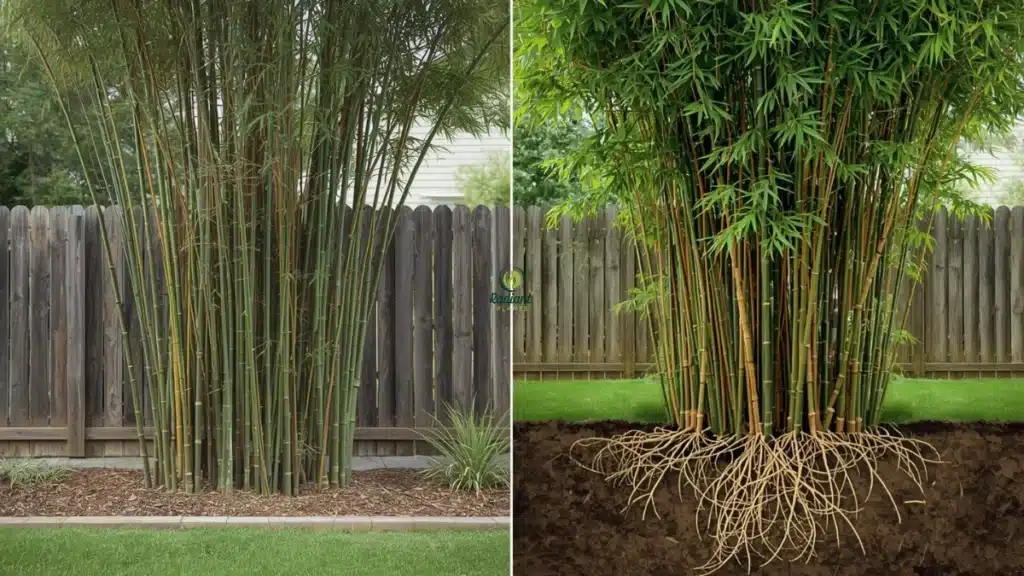
The two main types of bamboo plants are clumping bamboo and running bamboo. Clumping bamboo grows in a tight, slowly expanding clump, while running bamboo spreads outward through underground stems and can move well beyond where you planted it.
For most U.S. homeowners, the difference comes down to one practical question: Do you want a controlled plant or a plant you’ll need to actively contain? If you want something easier to live with, clumping bamboo is usually the safer choice. If you plant running bamboo without planning for spread, that’s where problems start.
What clumping bamboo means
Clumping bamboo grows from short rhizomes, which are underground stems that stay close to the parent plant. Instead of shooting far across the yard, new canes emerge near the original clump. That gives the plant a more predictable footprint and makes it much easier to place near patios, fences, and planting beds.
In real-world terms, clumping bamboo is what most beginners think all bamboo does: it gets fuller over time, but it does not usually race across the landscape.
What running bamboo means
Running bamboo grows from long, fast-spreading rhizomes. Those underground stems can travel outward before sending up new shoots, which means the plant can appear in places you did not expect. That’s why running bamboo gets labeled invasive so often in home-gardening content and extension guidance.
This is the part many first-time growers underestimate: the problem is not just the visible canes. The real issue is what is happening underground. A neat-looking stand this year can become a containment project later.
The difference in plain English
Here’s the simplest way to think about it:
- Clumping bamboo stays fairly close to where you planted it
- Running bamboo tries to claim more territory over time
- Clumping bamboo is usually better for small yards and beginner gardeners
- Running bamboo is better suited to large spaces or growers willing to install barriers and monitor spread
That “tight vs. spreading rhizomes” distinction is the core diagnosis. If you understand that, you understand the most important difference between types of bamboo plants.
Quick comparison table
Type | Spread | Maintenance | Best Use | Risk Level |
|---|---|---|---|---|
Clumping bamboo | Stays in a tight cluster; expands slowly | Lower | Small yards, privacy screens, containers, beginner-friendly landscaping | Low |
Running bamboo | Spreads outward through long underground rhizomes | High | Large properties, aggressive screening, fast coverage | High |
Quick diagnosis box
Choose clumping bamboo if:
- You want lower maintenance
- You have a smaller yard
- You’re planting near neighbors, fences, or hardscaping
- You want a privacy screen without constant containment work
- You’re a beginner and want the safer option
Choose running bamboo only if:
- You understand how rhizomes spread
- You have room to manage it
- You’re willing to install containment and keep checking it
- You specifically want aggressive, fast coverage
Warning box
Warning: Running bamboo can take over your yard.
If planted without a root barrier or active control plan, it may spread into nearby beds, lawns, and even neighboring property.
What actually works for most homeowners
At Radiant Plants, we’ve found that the best early filter is not “Which bamboo looks the prettiest?” but “How much control do I want to deal with two years from now?” That question usually points people in the right direction faster than any plant list.
What tends to work:
- Starting with clumping bamboo for privacy or ornamental use
- Matching bamboo choice to yard size
- Treating running bamboo as a high-management plant, not a casual addition
What often fails:
- Buying bamboo based on looks alone
- Assuming all bamboo behaves the same
- Planting fast-spreading varieties in a suburban yard with no barrier plan
One common beginner mistake is hearing “fast-growing privacy screen” and stopping there. Fast growth sounds great in the nursery or on a plant tag, but with bamboo, fast spread and easy maintenance are usually not the same thing.
How to tell what matters most before you buy
Before choosing a bamboo variety, ask these questions:
- Is my priority low maintenance or fast coverage?
Low maintenance points to clumping. Fast coverage often points to running. - How close is the planting area to a fence, sidewalk, or neighbor’s yard?
The tighter the space, the more important it is to avoid spread. - Am I planting in the ground or in a container?
Containers give you more control, though plant size still matters. This naturally leads to a fuller guide on growing bamboo in pots. - Do I want a screen, a focal point, or just a tropical look?
Different goals call for different bamboo habits, not just different species names.
Once you understand clumping vs. running, the next step is looking at which clumping varieties are actually worth planting for a typical home landscape.
Clumping Bamboo (Non-Invasive Types You Can Safely Grow)
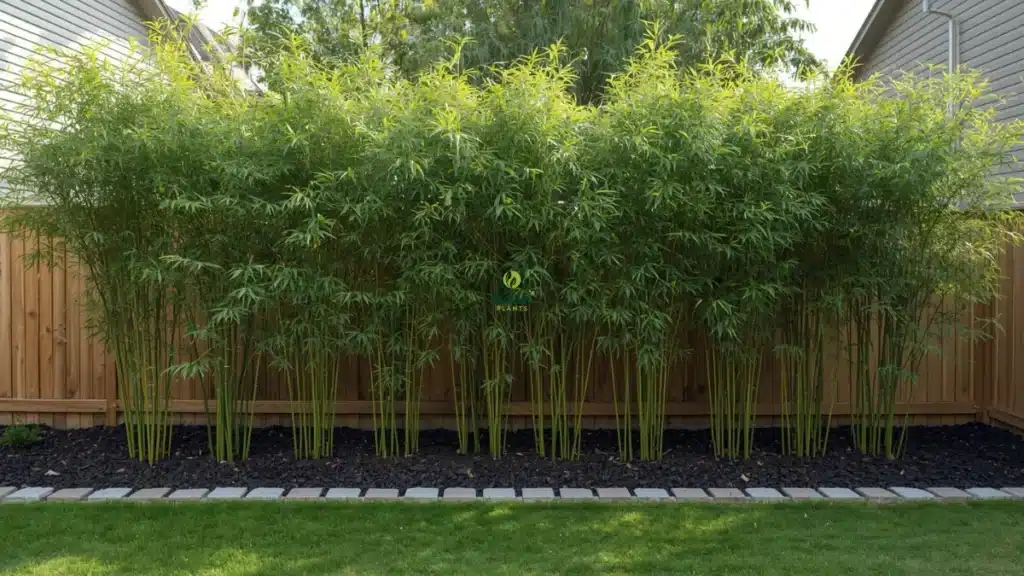
If you want bamboo that is easier to control, clumping bamboo is the safest place to start. Among the main types of bamboo plants, clumping varieties expand slowly from the base instead of sending long underground runners across the yard, which makes them a much better fit for privacy screens, containers, and smaller residential spaces.
At Radiant Plants, we’ve found that this is the category most homeowners actually want when they say they’re looking for “non-invasive bamboo.” In real gardens, clumping bamboo is usually the better choice because it gives you the upright screening look people love without the same level of rhizome spread you get from running bamboo. That does not mean it stays tiny forever—it still needs room to mature—but its growth behavior is far more predictable.
Clumping bamboo grows by forming wider clumps near the original crown. In practice, that means:
- It fills in steadily rather than racing outward
- It is easier to place near patios, fences, and side yards
- It works better in large containers
- It is usually the best option for beginners who want privacy without a containment project
This slower expansion is exactly why clumping bamboo is recommended for small yards, narrow privacy screens, courtyard gardens, poolside screening, and container gardening. It is also the better entry point for readers who are nervous about invasive species concerns or who share boundaries with neighbors.
Why Clumping Bamboo Is Recommended
The biggest reason clumping bamboo is recommended is control. A lot of disappointing bamboo projects start with the wrong plant in the wrong place—usually a fast-running species planted in a space that cannot support it long term. Clumping bamboo avoids much of that problem by keeping its new culms close to the mother plant.
That makes it especially useful for:
- Privacy hedges where width matters as much as height
- containers and planters on patios or decks
- small suburban yards where the spread needs to stay manageable
- Warm-climate landscapes that need an evergreen screening plant
- cooler gardens using clumping types like Fargesia
At Radiant Plants, we’ve found that clumping bamboo is what actually works for most homeowners who want the bamboo look without the stress. What often fails is choosing a plant based only on its mature height, while ignoring spread habit, climate fit, and how close it will be to walkways or structures.
Popular Clumping Bamboo Varieties
Golden Goddess
Golden Goddess is one of the friendliest clumping bamboo options for smaller spaces. It stays shorter than many privacy bamboos, so it is a strong choice when you want screening without creating a towering wall of foliage.
- Typical height: about 6 to 10 feet tall
- Best use case: low to mid-height privacy, patio screening, decorative borders, large containers
- Why beginners like it: manageable size, softer look, easier to place in compact yards
Practical insight: This is a good starter bamboo if you want to test whether bamboo works in your landscape before committing to a much taller screen.
Alphonse Karr
Alphonse Karr is a popular clumping bamboo known for its ornamental yellow canes with green striping. It is often grown for privacy, but it also earns its place as a design plant because the culms stay attractive year-round in warm climates.
- Typical height: around 20 to 30 feet tall in favorable conditions
- Best use case: tall privacy screens, decorative boundary planting, tropical-style landscapes
- Big advantage: combines screening value with strong ornamental appeal
What actually works: use this where you have room for a tall, warm-climate screen and want something more visually striking than a plain green hedge.
What often fails: planting it in a site that is too cold or too exposed to hard winter weather.
Fargesia (Cold-Hardy Clumping Bamboo)
If you garden in a colder climate, Fargesia is one of the most important clumping groups to know. Unlike many Bambusa types, Fargesia is better known for cold tolerance, which makes it one of the safer answers for gardeners who want clumping bamboo outside the warm South.
- Typical height: often 8 to 15 feet, depending on species and cultivar
- Best use case: cold-climate privacy, sheltered screens, part-shade gardens, controlled planting
- Big advantage: clumping habit plus better winter hardiness than many warm-climate bamboos
At Radiant Plants, we’ve found that Fargesia is often the best answer for readers who want a non-invasive look but live where tropical clumping bamboo would struggle. It is especially useful when the goal is a softer, more refined screen instead of a giant wall of canes.
Bambusa multiplex
Bambusa multiplex is one of the most practical clumping bamboo groups for homeowners in warm USDA zones. It grows densely, responds well to hedge-style use, and comes in multiple forms, which makes it flexible for privacy projects.
- Typical height: about 10 to 25 feet, depending on the cultivar
- Best use case: privacy hedges, small-to-medium yards, warm-climate screening, large containers
- Big advantage: dense foliage and a more controlled footprint than running bamboo
This is often one of the best choices for beginners in warm climates because it balances privacy, appearance, and manageability better than many larger bamboo species.
Expert Tips for Choosing and Planting Clumping Bamboo
Best for beginners:
If you are new to bamboo, start with a smaller clumping type or a cultivar of Bambusa multiplex that fits your space. In cooler climates, start with Fargesia. The best beginner bamboo is not the tallest one—it is the one that matches your yard without forcing you into constant pruning or relocation later.
Spacing tips:
A common beginner mistake is spacing clumping bamboo too tightly because the starter plants look small. In practice, that creates crowding faster than expected. Space plants according to their mature width, not the nursery pot size. For privacy screens, that usually means giving each plant enough room to broaden naturally while still allowing the clumps to knit together over time.
At Radiant Plants, we’ve found that slightly wider spacing usually works better than cramming plants shoulder to shoulder. You get healthier airflow, easier maintenance, and a screen that matures more naturally.
Light Seasonal Note
Clumping bamboo usually establishes best when planted during a mild season rather than during peak summer stress or the coldest part of winter. In many US regions, spring is the easiest planting window because roots have time to settle in before extreme heat arrives, while early fall can also work in warmer climates. What often fails is planting during a hot, dry stretch and then expecting fast top growth before the root system has settled.
Running Bamboo (Fast-Growing but Invasive Types)
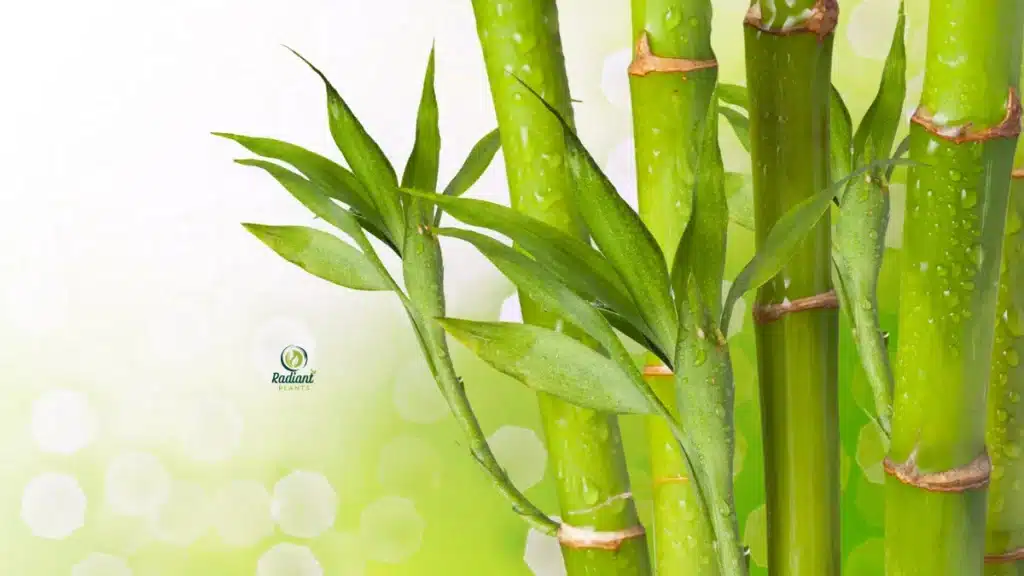
Running bamboo is the high-risk side of the main types of bamboo plants because it spreads through long underground rhizomes that can travel well beyond the original planting area. If you want a fast privacy screen, running bamboo can deliver—but it is also the bamboo most likely to become invasive in a home landscape if planted without containment.
At Radiant Plants, we’ve found that this is where homeowners get burned most often. The plant looks tidy at first, then a season or two later, new shoots start popping up in the lawn, under the fence line, or in places nobody planned for. What actually works with running bamboo is treating it like a contained system from day one. What often fails is planting it like a shrub and assuming the roots will stay put.
How Running Bamboo Spreads
Running bamboo spreads through rhizomes, which are underground stems—not ordinary roots. That distinction matters. Normal roots mainly anchor a plant and absorb water and nutrients. Rhizomes also travel, storing energy and producing new shoots away from the original plant.
With running bamboo, the rhizomes move horizontally through the soil and send up new culms wherever conditions are favorable. In a loose, irrigated bed, that can mean:
- shoots appearing several feet away from the parent planting
- expansion under mulch, lawn edges, or open beds
- spread toward watered areas where the soil stays softer and more inviting
This is why running bamboo is so different from clumping bamboo. Clumping types make short rhizomes and stay near the base. Running types keep looking for room.
Why It Becomes Invasive
Running bamboo becomes invasive because its growth habit is designed for expansion. Once established, the plant is not just growing upward—it is building an underground network that can colonize nearby soil quickly.
Several factors make the problem worse:
- No root barrier or containment trench
- Planting near lawns or irrigated beds
- Loose, easy-to-penetrate soil
- Delayed maintenance after the first signs of spread show up
- Choosing a vigorous Phyllostachys in a small suburban yard
At Radiant Plants, we’ve found that beginners often misread the early stage. Because the planting looks controlled in year one, they assume it will stay controlled in year three. That is usually the moment the trouble starts. Running bamboo often feels “fine” right up until it suddenly is not.
Real Consequences in a Home Landscape
This is not just a technical plant habit issue. In real yards, running bamboo can create expensive and stressful problems.
Common consequences include:
- yard takeover where shoots emerge far outside the intended screen
- neighbor disputes when culms cross property lines
- Damage risk near hardscape if the spread is ignored over time
- Constant shoot removal from lawns and beds
- is difficult once the rhizome network is established
A lot of gardeners assume invasive spread means the plant gets huge overnight. That is not usually how it happens. The more common pattern is a slower underground spread followed by a sudden wave of unwanted shoots. That delayed visibility is exactly why running bamboo catches people off guard.
Common Running Bamboo Types
The genus Phyllostachys contains some of the most commonly planted running bamboo species in the US. These are often chosen for fast growth, cold hardiness, and screening power—but they are also the types most associated with uncontrolled spread.
Golden Bamboo
Golden bamboo is widely planted because it grows quickly and creates a dense, tall privacy effect. It is also one of the running bamboos most often flagged for aggressive spread in suitable climates.
- Use case: fast privacy screens, tall screening, warm to mild climates
- Main risk: vigorous rhizome spread if planted in-ground without containment
- What to know: This is not a casual planting choice for a small yard
Black Bamboo
Black bamboo is grown as much for its dark culms as for privacy. It is attractive, but it is still a running bamboo, which means the ornamental value does not reduce the containment risk.
- Use case: decorative screens, focal privacy plantings, high-style landscapes
- Main risk: spread beyond the intended bed
- What to know: “beautiful” does not mean “safe without planning.”
Moso Bamboo
Moso bamboo is known for its size and timber value. It is often discussed because of its dramatic height potential, but that same vigor makes it a poor fit for many standard residential landscapes.
- Use case: very large properties, specialty growing, timber or specimen interest
- Main risk: scale, spread, and long-term control complexity
- What to know: This is usually too much bamboo for an average suburban yard
⚠️ Strong Warning Box
Do NOT plant running bamboo without a barrier.
If you are planting Phyllostachys or another running bamboo in the ground, assume containment is mandatory, not optional. A root barrier should be planned before planting, not added after the bamboo has already started to spread. Waiting until shoots appear outside the bed usually means the rhizomes are already established beyond the original footprint.
Common Mistakes That Lead to Problems
The biggest mistakes are predictable:
- Planting without containment
- Assuming mowing nearby shoots will solve the underground spread
- Putting running bamboo near fences or property lines
- Using it in a narrow suburban bed with no inspection access
- Choosing it for speed without understanding rhizomes
At Radiant Plants, we’ve found that the mistake is rarely “I did not know this was bamboo.” The mistake is “I knew it was bamboo, but I did not realize this kind behaves differently underground.”
Expert Tips: Root Barrier Basics
A root barrier helps redirect or stop rhizomes before they move into unwanted parts of the yard. The exact material specs and installation depth should come from a trusted local or technical source, but the practical basics are straightforward:
- Install the barrier before planting
- Use it around the intended grove or along the danger side of the planting
- Leave enough access to inspect edges regularly
- Do not treat the barrier as permanent “set and forget” protection
- Check for rhizomes, especially during the active growing season
What actually works is combining a barrier with yearly inspection. What often fails is installing a barrier and then never checking whether rhizomes have reached or jumped the edge.
Which Type of Bamboo Should You Choose?
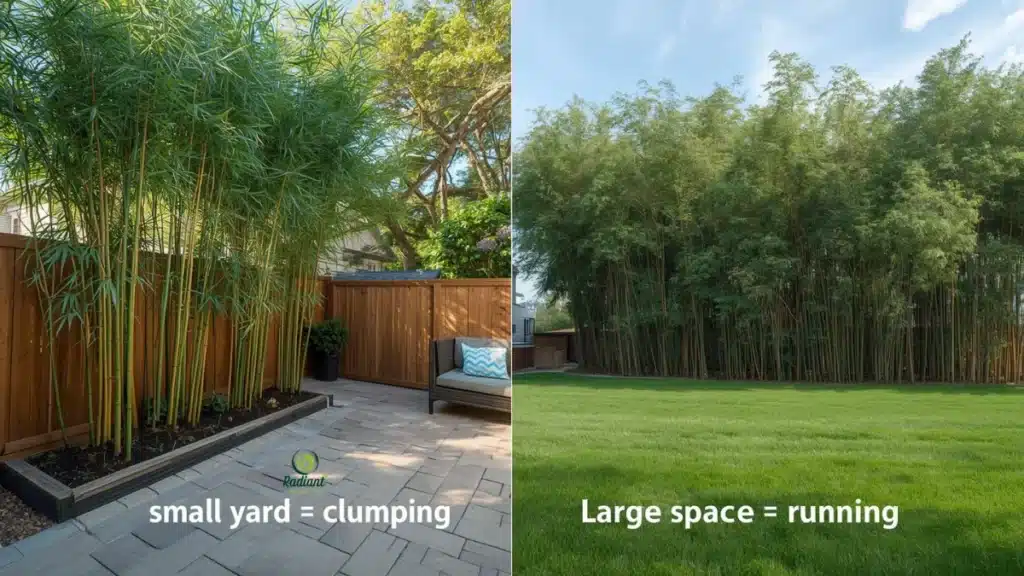
The best types of bamboo plants for you depend on your space, climate, and how much maintenance you’re willing to handle. In most residential situations, clumping bamboo is the safer, easier choice, while running bamboo only makes sense if you have space and a containment plan.
At Radiant Plants, we’ve found that choosing bamboo is less about picking a “popular variety” and more about matching the plant to real-life conditions. What works beautifully in a large rural property can fail fast in a tight suburban yard. The right choice comes down to a few key decision filters.
Start With These Decision Filters
1. Small yard vs large space
- Small or shared space → clumping bamboo
- Large, open property → running bamboo can work with proper control
2. Beginner vs experienced gardener
- Beginner → clumping bamboo (lower risk, easier maintenance)
- Experienced → running bamboo (if you understand rhizomes and barriers)
3. Indoor / container vs in-ground planting
- Containers or patios → clumping bamboo only
- In-ground → both types possible, but running bamboo requires planning
4. Privacy vs decoration
- Privacy screen → both can work, but clumping is easier to manage
- Decorative accent → clumping bamboo or smaller species usually fits better
At Radiant Plants, we’ve found that most “wrong bamboo” problems occur when people skip this step and go straight to choosing based on appearance or growth speed.
✅ Checklist: Choose Clumping or Running Bamboo
Choose clumping bamboo if:
- You have a small or medium yard
- You want a low-risk, non-invasive option
- You are planting near fences, patios, or neighbors
- You want bamboo in containers or planters
- You prefer predictable growth with less maintenance
- You are new to bamboo gardening
Choose running bamboo if:
- You have a large property with room to manage the spread
- You need fast coverage in a cold climate
- You are willing to install a root barrier and monitor rhizomes
- You want a tall, fast privacy screen and accept the trade-offs
- You understand how Phyllostachys species behave long-term
⚡ Quick Decision Box (Real-World Scenarios)
- Suburban backyard (tight fence line):
→ Choose clumping bamboo like Bambusa multiplex
→ Why: controlled width + easier maintenance - Large rural property (windbreak or long boundary):
→ Running bamboo can work (e.g., Phyllostachys)
→ Why: fast spread + large-scale screening - Patio or deck privacy (containers):
→ Clumping bamboo only
→ Why: container-friendly + controlled rhizome system - Cold northern garden needing privacy:
→ Running bamboo (cold-hardy types) or Fargesia
→ Why: better winter survival
Practical Examples That Actually Work
Example 1: Suburban Yard
You have a 6–10 ft planting strip along a fence and want privacy without crowding your space.
→ Best choice: upright clumping bamboo
→ What works: stays contained, fills in over time
→ What fails: planting running bamboo and dealing with the spread into neighbors’ yards
Example 2: Patio Container Setup
You want a natural screen on a deck or balcony.
→ Best choice: compact clumping bamboo in large containers
→ What works: controlled size + portable privacy
→ What fails: using a small pot or choosing a fast-growing, running type
Example 3: Large Property Screen
You need a tall, fast-growing barrier across a wide boundary.
→ Best choice: running bamboo with a barrier system
→ What works: rapid coverage at scale
→ What fails: skipping containment and trying to fix it later
What Most People Get Wrong
At Radiant Plants, we’ve found that the biggest mistake is choosing bamboo based solely on speed or appearance. The better approach is to match:
- space (width + height)
- climate (USDA zone)
- growth habit (clumping vs running)
- maintenance tolerance
If you get those four right, bamboo becomes one of the most effective privacy plants you can grow. If you ignore them, it becomes one of the hardest plants to control.
Best Bamboo Types by Use Case
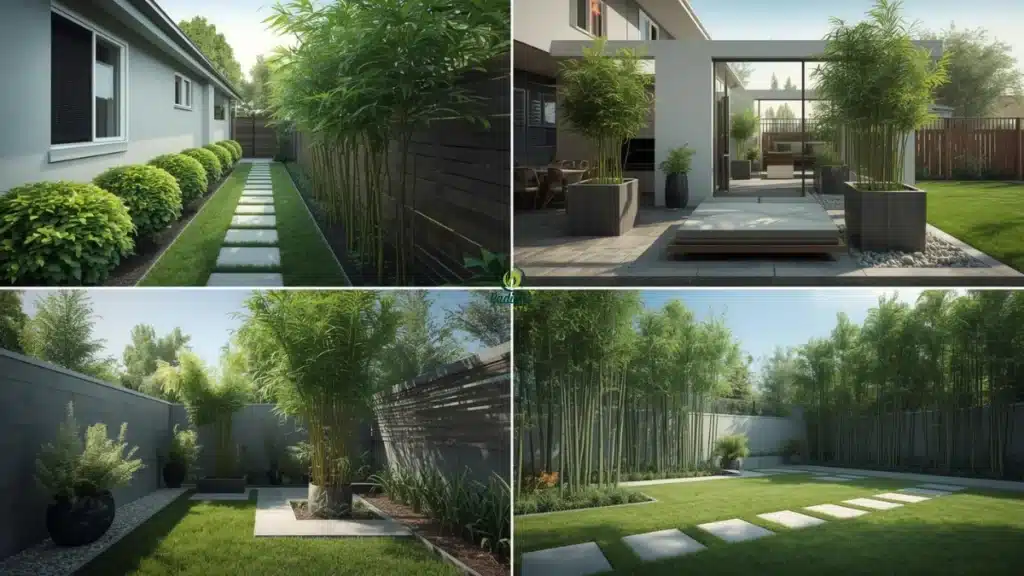
The best types of bamboo plants depend on what you need them to do. For most homeowners, the smartest approach is to choose bamboo by use case first—privacy, small-space growing, containers, cold tolerance, or fast growth—and only then compare specific varieties.
At Radiant Plants, we’ve found that this is where readers make the best decisions. What actually works is matching bamboo to the site and goal. What often fails is picking the tallest or fastest option first, then realizing later it is wrong for the yard, climate, or maintenance level.
Best for Privacy Screens
For privacy, you want bamboo that fills in well, stays attractive year-round, and does not create more control issues than the screen is worth. In most home landscapes, Golden Goddess and Alphonse Karr are two strong clumping options to consider.
Golden Goddess
- Best for: lower to mid-height privacy, softer screening, smaller residential spaces
- Typical height: around 6 to 10 feet
- Why it works: manageable size, clumping habit, easier to fit near patios and fence lines
Alphonse Karr
- Best for: taller privacy screens, decorative screening, warm-climate landscapes
- Typical height: often 20 to 30 feet in favorable conditions
- Why it works: strong vertical coverage plus striking yellow-green culms
Practical insight: if you want privacy in an average suburban yard, Golden Goddess is often easier to live with long-term. If you have more vertical room and want a more dramatic screen, Alphonse Karr gives you more height and ornamental value.
Expert tip:
For privacy planting, do not judge the bamboo by the nursery pot. Judge it by its mature width, mature height, and how close it will sit to fences or walkways. A narrower bamboo that reaches the right height usually performs better than a giant variety squeezed into a tight strip.
Best for Small Yards
For small yards, controlled growth matters more than maximum speed. This is where Fargesia and dwarf bamboo types stand out.
Fargesia species
- Best for: cooler climates, side-yard screening, controlled clumping growth
- Typical height: many types stay in the 8 to 15 foot range, depending on species and cultivar
- Why it works: clumping habit, better cold tolerance, refined appearance
Dwarf bamboo
- Best for: edging, low screening, decorative structure, very tight spaces
- Typical height: varies widely by species, often much shorter than privacy bamboo
- Why it works: easier scale for compact gardens
At Radiant Plants, we’ve found that small yards usually fail with bamboo when the gardener chooses a plant based on speed or tropical looks instead of mature footprint. In a tight space, a moderate-height clumper almost always works better than an aggressive fast grower.
Expert tip:
If your yard is small, leave extra room between the bamboo and hardscape. The issue is rarely just height—it is future access for pruning, cleanup, and airflow.
Best for Containers
For containers, you want a bamboo that handles root restriction better and stays attractive in a planter. Bambusa multiplex and Buddha Belly bamboo are two useful options here.
Bambusa multiplex
- Best for: patio privacy, decks, entry framing, larger planters
- Typical height: about 10 to 25 feet, depending on form and conditions
- Why it works: dense clumping habit, adaptable screening use, better control in containers than running types
Buddha Belly bamboo
- Best for: decorative containers, warm-climate patios, ornamental statement planting
- Typical height: often smaller in containers than in-ground
- Why it works: distinctive swollen internodes under the right growing conditions
What actually works in containers is choosing a large planter with drainage, steady watering, and a bamboo that does not immediately overwhelm the root zone. What often fails is underpotting a vigorous plant and expecting it to stay healthy through summer.
Natural internal link opportunity: this section pairs well with your Bonsai Bamboo Plant Care article for readers interested in small-space or container bamboo growing.
Best for Cold Climates
For cold climates, Fargesia species are some of the safest choices if you want clumping bamboo with less invasiveness risk. This is one of the biggest use cases where climate fit matters more than style.
Fargesia
- Best for: colder USDA zones, sheltered privacy screens, part-shade gardens
- Why it works: generally better cold tolerance than many warm-climate Bambusa types
- Best use case: homeowners who want a non-invasive bamboo look without relying on running species
At Radiant Plants, we’ve found that this is where many readers make the wrong call. They see a tall tropical clumping bamboo online, then try to grow it in a region with harsher winter lows. The result is usually winter damage, weak regrowth, or disappointment by year two.
Expert tip:
In colder regions, plant bamboo during a mild spring window when roots have time to establish before winter. That usually gives better first-year performance than rushing late-season planting into a stressful weather pattern.
Best for Fast Growth
If raw speed is your top priority, running bamboo usually wins. Species in the genus Phyllostachys are often chosen for fast screening, tall growth, and cold hardiness—but this is the category that needs the strongest caution.
Running bamboo
- Best for: large properties, fast privacy, big boundary screens
- Common examples: golden bamboo, black bamboo, other Phyllostachys types
- Why it works: fast rhizome-driven expansion and strong seasonal growth
⚠️ Warning for fast-growing invasive types:
Fast-growing running bamboo can become invasive if planted without containment. In a home landscape, the main risk is not just height—it is the underground rhizome spread that pushes new shoots beyond the intended bed. For most suburban yards, speed alone is not a good enough reason to choose running bamboo.
At Radiant Plants, we’ve found that gardeners usually love fast-growing bamboo for the first year and regret it later if they skipped the barrier plan. If you are tempted by speed, ask yourself whether you are also willing to manage containment every year.
Expert tip:
Choose fast-growing bamboo only when all three conditions are true:
- You have enough space
- You understand rhizome behavior
- You are ready to install containment before planting
That is the difference between a useful privacy screen and a future removal project.
Non-Invasive Bamboo (Safe Picks for Homeowners)
If you want bamboo that is unlikely to spread aggressively through your yard, look for clumping bamboo, not running bamboo. Among the main types of bamboo plants, clumping varieties are the safest choice for most homeowners because they expand slowly from the base instead of sending long underground rhizomes into lawns, beds, or neighboring properties.
At Radiant Plants, we’ve found that this is the category most readers are actually searching for when they type “non-invasive bamboo.” They want the bamboo look—privacy, movement, evergreen texture, and a softer alternative to a fence—without the fear of yard takeover. That is exactly why clumping bamboo is usually the best answer.
What “Non-Invasive Bamboo” Really Means
In practical gardening terms, “non-invasive bamboo” usually means bamboo that stays relatively contained and does not spread aggressively through long-running underground rhizomes. No bamboo is completely static forever, but clumping bamboo grows in a much more predictable way than running bamboo.
That is the key distinction:
- Clumping bamboo expands slowly and stays close to the original planting
- Running bamboo spreads outward and can travel well beyond the bed
So when homeowners ask what bamboo will not cause problems, the real answer is: choose a clumping species suited to your climate and space.
Why Clumping Bamboo Qualifies as the Safe Option
Clumping bamboo qualifies as the safer option because its growth habit is naturally more controlled. Instead of racing underground, it builds outward in a gradual clump. That makes it far easier to use in:
- suburban yards
- side-yard privacy screens
- patio planters
- small landscapes
- planting beds near fences or walkways
At Radiant Plants, we’ve found that what actually works for most homeowners is not chasing the tallest or fastest bamboo. It is choosing a bamboo that fits the space without needing constant containment. What often fails is buying bamboo based on the word “fast-growing” and only later realizing it was the wrong type.
Best Non-Invasive Bamboo Picks (Short Curated List)
Here are some of the safest and most practical bamboo choices for homeowners:
1. Fargesia
One of the best picks for gardeners who want cold-hardy clumping bamboo with a lower spread risk.
- Best for: colder climates, small yards, sheltered privacy screens
- Why it stands out: clumping habit + better cold tolerance than many warm-climate bamboos
- Good fit for: homeowners who want reassurance and control first
2. Golden Goddess
A compact clumping bamboo that is especially useful for smaller privacy projects and decorative screening.
- Best for: patios, low to mid-height privacy, warmer climates
- Why it stands out: manageable size and beginner-friendly habit
- Good fit for: homeowners who want a softer, easier bamboo entry point
3. Bambusa multiplex
A strong, warm-climate clumping group often used for privacy hedges and controlled evergreen screening.
- Best for: warm USDA zones, privacy planting, medium-size yards
- Why it stands out: dense foliage and a more predictable footprint than running bamboo
- Good fit for: homeowners who want privacy without the invasive risk of Phyllostachys
4. Alphonse Karr
A clumping bamboo with attractive striped culms and strong ornamental value.
- Best for: decorative privacy screens, tropical-style gardens, warm climates
- Why it stands out: combines beauty and screening function
- Good fit for: gardeners who want bamboo to act as both a screen and a design feature
5. Buddha Belly Bamboo
A more ornamental clumping choice often used in containers or protected warm-climate settings.
- Best for: decorative planters, patios, accent planting
- Why it stands out: distinctive swollen culms under the right growing conditions
- Good fit for: homeowners who want a conversation-piece bamboo rather than a full-height hedge
Quick Recommendation Box
If unsure → choose Fargesia or Golden Goddess.
- Choose Fargesia if you live in a colder climate or want the safest clumping option for a smaller yard.
- Choose Golden Goddess if you want an easier warm-climate bamboo for patios, low screening, or beginner-friendly growing.
At Radiant Plants, we’ve found that these are two of the easiest starting points for readers who want non-invasive bamboo without overcomplicating the decision.
Practical Buying Advice That Saves Trouble Later
Before buying any bamboo sold as “safe” or “non-invasive,” check three things:
- whether it is clearly labeled clumping
- whether the plant fits your USDA zone
- whether its mature width works in your space
A common beginner mistake is assuming “non-invasive” means “tiny” or “maintenance-free.” It does not. Even safe clumping bamboo still needs the right spacing, watering during establishment, and enough room to mature well.
Common Bamboo Mistakes (What to Avoid)
The biggest bamboo mistakes are usually not about care—they start with choosing the wrong plant for the wrong situation. Among the main types of bamboo plants, most long-term problems come from planting running bamboo without containment, underestimating how fast bamboo matures, or treating outdoor landscape bamboo like an indoor houseplant.
At Radiant Plants, we’ve found that bamboo succeeds when people think about it as a long-term landscape decision, not a quick privacy fix. What actually works is matching the bamboo’s growth habit, mature size, and climate to the space. What often fails is buying the prettiest or fastest-growing option first and asking questions later.
⚠️ Mistake 1: Planting Running Bamboo Without a Barrier
This is the classic bamboo mistake—and the one that causes the most regret. Running bamboo spreads through underground rhizomes, not just roots, so it can move outward and send up new shoots well beyond the original planting area.
What this looks like in real life:
- new shoots appearing in the lawn
- bamboo popping up on the other side of a fence
- canes emerging in nearby beds or along walkways
- a screen that starts in one place and expands into several
Real-world example:
A homeowner plants a fast-growing Phyllostachys along the back fence for privacy. The first year looks great. By the second or third growing season, shoots begin appearing outside the intended bed, and now the “privacy screen” has become a containment project.
Prevention tip:
If you plant running bamboo in the ground, install a barrier before planting, and plan on yearly inspections. Do not assume you can “deal with it later.” Later is when the rhizomes are already established.
⚠️ Mistake 2: Choosing the Wrong Bamboo for the Space
A lot of bamboo failures are really spacing failures. People focus on how tall the plant gets, but ignore mature width, spread habit, and future maintenance access.
Common version of this mistake:
- planting a large clumping bamboo in a narrow side yard
- using a tall screening bamboo too close to a patio
- picking a broad grower for a tight suburban boundary
- using a large landscape bamboo in a decorative bed with no room to thin or manage it
At Radiant Plants, we’ve found that the wrong type for the space is often more frustrating than invasiveness itself. Even a non-invasive clumping bamboo can become a poor fit if it matures wider than the site allows.
Real-world example:
A gardener chooses a beautiful, tall clumping bamboo for a 4-foot planting strip because it “looks narrow enough” in the nursery pot. Two years later, it crowds the walkway and blocks access for pruning.
Prevention tip:
Always choose bamboo by mature footprint, not starter pot size. For most small yards, upright clumping types or compact bamboos are safer than tall, broad species.
⚠️ Mistake 3: Underestimating Growth Speed
People either overestimate bamboo’s first-year performance or underestimate its long-term speed. Both mistakes lead to bad decisions.
Here is how to tell the difference:
- Overestimating year one:
You expect a nursery plant to become a full privacy wall almost immediately. It does not, because the plant is still building roots and rhizomes. - Underestimating long-term growth:
You assume a fast-growing bamboo will stay where it is because it looked tidy when planted. It does not, because established bamboo behaves very differently from a newly planted specimen.
Real-world example:
Someone plants bamboo for quick privacy, gets impatient after the first season, then overfertilizes or overcrowds the planting, trying to speed it up. Or the opposite happens: they give a vigorous bamboo too little room because it looked small at purchase.
At Radiant Plants, we’ve found that this misunderstanding causes more disappointment than almost anything else. Bamboo has an establishment phase, and after that, the growth rate can change dramatically depending on the species, soil, water, and heat.
Prevention tip:
Plan for bamboo as a multi-year screen, not an instant hedge. Give it proper spacing, realistic expectations, and enough room to mature.
⚠️ Mistake 4: Trying to Grow Outdoor Bamboo Indoors
Not every bamboo belongs inside. This is a common confusion point because many people use the word “bamboo” broadly, even when they are really talking about unrelated indoor plants sold under bamboo-like names.
Outdoor landscape bamboo usually needs:
- more light than most homes provide
- more root space than indoor containers allow
- seasonal airflow and environmental conditions that are hard to recreate inside
How to tell this mistake is happening:
- The plant drops leaves indoors after a short adjustment period
- new growth is weak, pale, or stretched
- The bamboo dries out fast in the heat from windows or HVAC
- The container becomes root-bound quickly
Real-world example:
A gardener buys a privacy bamboo meant for outdoor screening, puts it in a decorative living room pot, and expects it to behave like a houseplant. Within months, the plant declines because the light and root conditions are completely wrong.
Prevention tip:
If you want bamboo indoors, stick to species or bamboo-like plants suited to container culture and interior conditions. If your goal is actual outdoor screening bamboo, keep it outside or use it seasonally on patios and decks in large containers.
Warning Box: Fast Growth Is Not the Same as Easy Growth
Fast-growing bamboo is often the least forgiving choice.
The more vigorous the bamboo, the more important containment, spacing, watering, and long-term planning become. A bamboo chosen only for speed is often the one people regret most later.
Prevention Tips That Actually Work
Before buying bamboo, run through this short filter:
- Am I choosing clumping or running bamboo?
- Does the mature width fit my space?
- Can I manage this bamboo in 2–3 years, not just today?
- Is this species suited to my USDA zone?
- Am I planting it in the right setting—yard, patio, or container?
At Radiant Plants, we’ve found that bamboo works best when gardeners slow down before planting. The smartest bamboo decisions usually feel slightly conservative at first, but they age much better in real landscapes.
Indoor Bamboo vs Outdoor Bamboo (Quick Clarification)
Yes, some bamboo can be grown indoors—but most of the “bamboo” people see inside homes is not true bamboo. When people compare types of bamboo plants, the biggest confusion is usually between Lucky bamboo (which is actually a Dracaena) and real bamboo species that are grown outdoors or in large containers.
At Radiant Plants, we’ve found that this mix-up leads to a lot of frustration. Someone buys an outdoor bamboo for the living room and wonders why it declines, or they assume the Lucky bamboo can be used like a real privacy bamboo. These are two very different plants with very different needs.
⚠️ Clarification Box
Lucky bamboo is not true bamboo.
Lucky bamboo belongs to the Dracaena genus, not the bamboo subfamily of grasses. It is grown as a houseplant because it tolerates indoor conditions much better than most true bamboo species.
Lucky Bamboo vs True Bamboo
Here is the quick difference that matters most:
- Lucky bamboo
- actually a Dracaena
- grown mainly as an indoor decorative plant
- stays small and container-friendly
- does not behave like landscape bamboo
- True bamboo
- belongs to real bamboo groups such as Bambusa, Fargesia, or Phyllostachys
- Often grown outdoors for privacy, screening, or landscape structure
- may become too large or light-hungry for long-term indoor growing
- has growth habits like clumping or running, depending on the species
This distinction matters because indoor success depends on whether the plant is actually adapted to houseplant conditions.
Can Real Bamboo Grow Indoors?
Some real bamboo can grow indoors for a while, especially in bright rooms or large containers, but most true bamboo is better suited to outdoor growing. Indoor success is usually limited to:
- smaller or more compact bamboo species
- Young plants kept in large containers
- in bright, well-lit spaces with steady moisture and airflow
- Patio plants brought into protected spaces only temporarily in colder weather
At Radiant Plants, we’ve found that what actually works indoors is not trying to recreate a backyard privacy screen inside the house. It is choosing a bamboo that stays manageable in a container and giving it enough light to support healthy leaf growth.
What often fails is bringing in a landscape bamboo meant for full outdoor performance and expecting it to thrive in average indoor light.
Which Real Bamboo Is Most Practical Indoors?
If you want to try true bamboo indoors, focus on the most manageable category:
- compact clumping bamboo
- smaller Bambusa or Bambusa multiplex forms
- container-friendly bamboo grown more for foliage and structure than for huge height
These can work best in:
- sunrooms
- bright entryways
- large patio containers moved seasonally
- indoor-outdoor transition spaces
For cooler regions, some Fargesia types may also be considered in containers, though long-term indoor performance still depends on light, humidity, and space.
Light Requirements: This Is the Real Dealbreaker
Light is where most indoor bamboo attempts fail. True bamboo generally needs much brighter conditions than the average room provides. Even if the plant survives, low light often causes:
- weak, stretched growth
- leaf drop
- slower cane development
- thinning foliage
- a generally tired, sparse look
Here is the practical difference:
- Lucky bamboo tolerates lower indoor light better
- True bamboo usually wants bright indirect light, very bright filtered light, or significant sun, depending on species
At Radiant Plants, we’ve found that a bright window alone is not always enough for larger real bamboo over the long haul. If the room feels dim for most of the day, the plant will usually tell you by thinning out or staling.
Quick Comparison
Feature | Lucky Bamboo | True Bamboo |
|---|---|---|
What it is | Dracaena | Real bamboo grass |
Best setting | Indoors | Mostly outdoors or very bright container culture |
Main use | Decorative houseplant | Privacy, screening, landscape structure |
Size potential | Small and manageable | Often much larger |
Light needs | Lower to moderate indoor light | Usually brighter light |
Spread habit | None like real bamboo | Clumping or running, depending on species |
Expert Tips
Tip 1: Match the plant to the room, not the trend.
If you want a low-effort indoor plant, Lucky bamboo is much more realistic than true landscape bamboo.
Tip 2: Use real bamboo indoors only if the light is strong.
Bright sunrooms, enclosed porches, and large south- or east-facing windows give you a much better shot than a dim living room corner.
Tip 3: Think container first.
If you are growing real bamboo indoors or seasonally indoors, container size matters just as much as light. A root-cramped bamboo declines faster, especially in warm indoor air.
Tip 4: Watch seasonal transitions.
If you move a container bamboo between outdoors and indoors, do it during milder seasonal shifts when possible. Sudden changes in temperature, light, and humidity can shock the plant.
FAQs
What are the two main types of bamboo plants?
The two main types are clumping bamboo and running bamboo. Clumping bamboo expands slowly from the base and is usually safer for home landscapes. Running bamboo spreads through underground rhizomes and can travel well beyond the planting area if it is not contained.
Which bamboo is best for privacy screens?
For most homeowners, clumping bamboo is the better privacy choice because it creates screening without the same invasiveness risk as running bamboo. Good options depend on your climate, but Golden Goddess, Alphonse Karr, and Bambusa multiplex are often considered strong privacy picks in warm regions.
What bamboo won’t spread aggressively?
If you want bamboo that stays more controlled, look for clumping bamboo. It does still grow wider over time, but it does not usually send long runners through the yard the way running bamboo does. Fargesia and Golden Goddess are two of the safer starting points for homeowners.
Is bamboo invasive in the United States?
Some bamboo is invasive, but not all of it. The biggest risk usually comes from running bamboo, especially types in the Phyllostachys group, because they spread through underground rhizomes. Clumping bamboo is generally a much safer option for residential planting.
Can bamboo grow in pots and containers?
Yes, some bamboo grows well in containers, especially compact clumping bamboo. This is often one of the best ways to enjoy bamboo on patios, decks, and balconies because the pot limits the spread. Just make sure the container is large, drains well, and suits the plant’s mature size.
What is the best bamboo for small yards?
For small yards, a compact clumping bamboo is usually the smartest choice. It gives you the bamboo look without the same long-term spread issues. Fargesia, Golden Goddess, and smaller forms of Bambusa multiplex are often better fits than large or fast-running types.
Which bamboo grows the fastest?
In general, running bamboo grows and spreads faster than clumping bamboo once it is established. That speed is useful for large privacy screens, but it comes with more risk and maintenance. Fast growth should never be the only reason to choose a bamboo type.
Can real bamboo be grown indoors?
Some real bamboo can survive indoors in bright conditions, but most outdoor bamboo is not a great long-term houseplant. Many people confuse true bamboo with Lucky bamboo, which is actually a Dracaena, not real bamboo. For indoor growing, light and container size matter a lot.
Do I need a root barrier for bamboo?
You usually need a root barrier for running bamboo, not for clumping bamboo. If the bamboo spreads by rhizomes and is planted in-ground near lawns, fences, or neighbors, containment should be planned before planting. With clumping bamboo, spacing and mature width are usually the bigger concerns.
What is the best bamboo for cold climates?
For colder regions, Fargesia is one of the better clumping options, while some Phyllostachys species are often used when stronger cold hardiness is needed. The right choice depends on your USDA zone, available space, and whether you are willing to manage the spread.
Choosing between different types of bamboo plants comes down to one simple rule: match the plant to your space, not just your goal. If you want low-risk, go with clumping bamboo. If you need speed and have room to manage it, running bamboo can work—with proper containment. Focus on mature size, climate fit, and maintenance level before planting. When you get those right, bamboo becomes one of the most effective and attractive privacy solutions you can grow.