Philodendron Red Congo: Expert Care Guide
Philodendron Red Congo is prized for its bold, burgundy foliage—but keeping it healthy and vibrant requires the right care. Many plant owners struggle with fading color, yellow leaves, or slow growth because basic advice often lacks detail. In this expert guide, you’ll learn exactly how to care for Philodendron Red Congo, including light requirements, watering strategy, soil selection, fertilizing tips, troubleshooting, and safe placement. Whether you’re a beginner or refining your plant care routine, this guide will help you grow a strong, richly colored statement plant indoors.
Quick Facts About Caring for Philodendron Red Congo
- Thrives in bright, indirect light (avoid harsh direct sun)
- Water when the top 1–2 inches of soil are dry
- Use a well-draining aroid soil mix
- Prefers warm temps (65–85°F) and moderate humidity
- Toxic to pets (contains calcium oxalate)
In This Article
What Is Philodendron Red Congo?
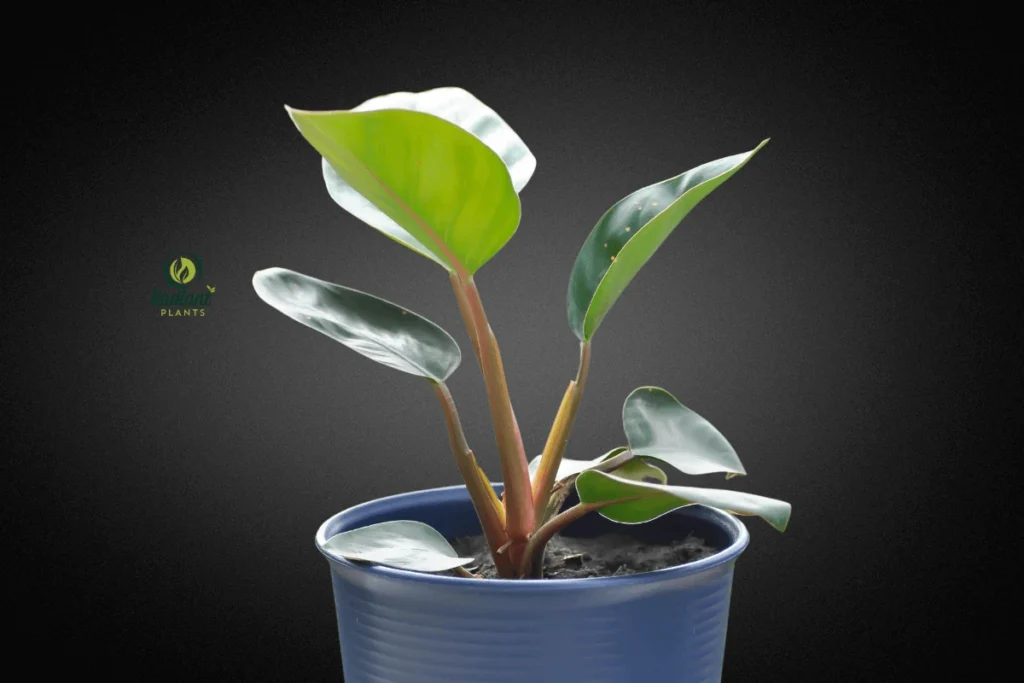
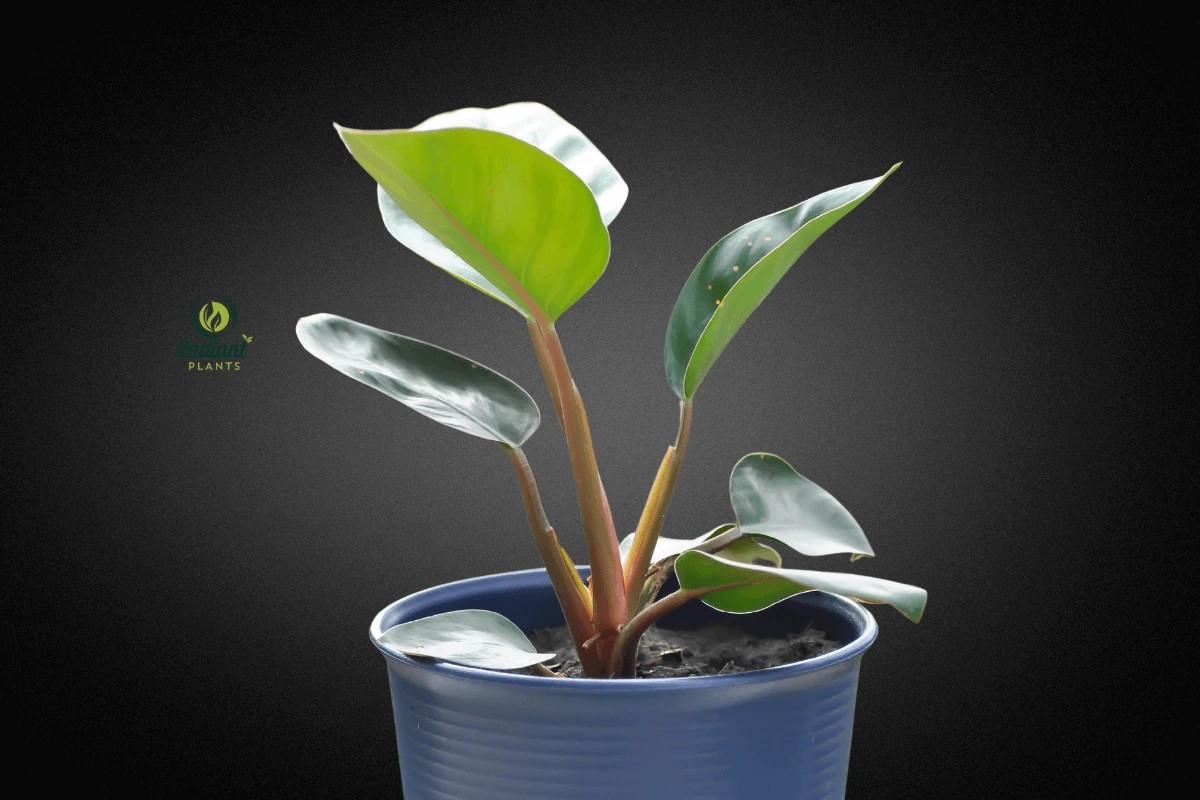
Philodendron Red Congo is a self-heading hybrid philodendron known for its large, glossy leaves that emerge deep red and mature into burgundy or dark green tones. Unlike climbing philodendrons, it grows upright in a compact, shrub-like form, making it ideal for indoor containers. It’s prized in U.S. homes for its bold color, low-maintenance nature, and modern statement appeal.
Botanical Classification & Lineage
Philodendron Red Congo is a cultivated hybrid within the Philodendron genus (family: Araceae). It’s often associated with Philodendron erubescens lineage, though exact hybrid parentage varies by nursery and is not always publicly documented.
As an aroid, it shares characteristics common to tropical understory plants:
- Broad, waxy leaves
- A preference for indirect light
- Sensitivity to cold temperatures
Data Point: Outdoors, Philodendron Red Congo can only survive year-round in USDA hardiness zones 10–11 (warm subtropical/tropical regions).
For most U.S. households, it’s strictly an indoor plant.
Growth Habit: Self-Heading vs Climbing
One defining trait of Philodendron Red Congo is its self-heading growth pattern.
Instead of producing long vines, it:
- Grows from a central base
- Develops thick, overlapping leaf stems
- Forms a dense, upright structure
- Does not require a moss pole
Expert Tip:
Climbing philodendrons (like Philodendron hederaceum) produce aerial roots along vines and seek vertical support.
Self-heading types like Red Congo grow upward from a central stem and remain structurally compact.
This makes Red Congo:
- Easier to maintain in living rooms and offices
- Less prone to legginess
- Ideal for decorative floor pots
If you’re comparing plant types for your space, this difference matters significantly for layout and maintenance.
Tropical Origins
While Red Congo itself is a cultivated hybrid, its genetic lineage traces back to tropical Central and South American rainforests, where philodendrons grow beneath the forest canopy.
That explains its preference for:
- Bright, indirect light
- Warm temperatures (65–85°F)
- Moderate indoor humidity
Understanding its rainforest origins helps explain why direct, harsh sunlight can scorch leaves and why cold drafts stress the plant.
Why It’s Popular in U.S. Homes
Philodendron Red Congo stands out for three reasons:
- Color Impact – New leaves emerge deep red, offering contrast against neutral interiors.
- Low Maintenance – It tolerates minor inconsistencies in watering better than many tropical plants.
- Architectural Shape – Its upright, sculptural growth works well in modern and minimalist décor.
Example:
Compared to a common green philodendron like Philodendron hederaceum (heartleaf philodendron):
- Red Congo has larger, thicker leaves
- Displays red-to-burgundy hues
- Grows upright instead of trailing
- Creates a stronger focal point
In design terms, heartleaf philodendron blends into a space.
Red Congo anchors it.
This foundational understanding sets the stage for optimizing light, watering, and soil conditions — which we’ll cover next in the care chart section.
Philodendron Red Congo Quick Care Chart
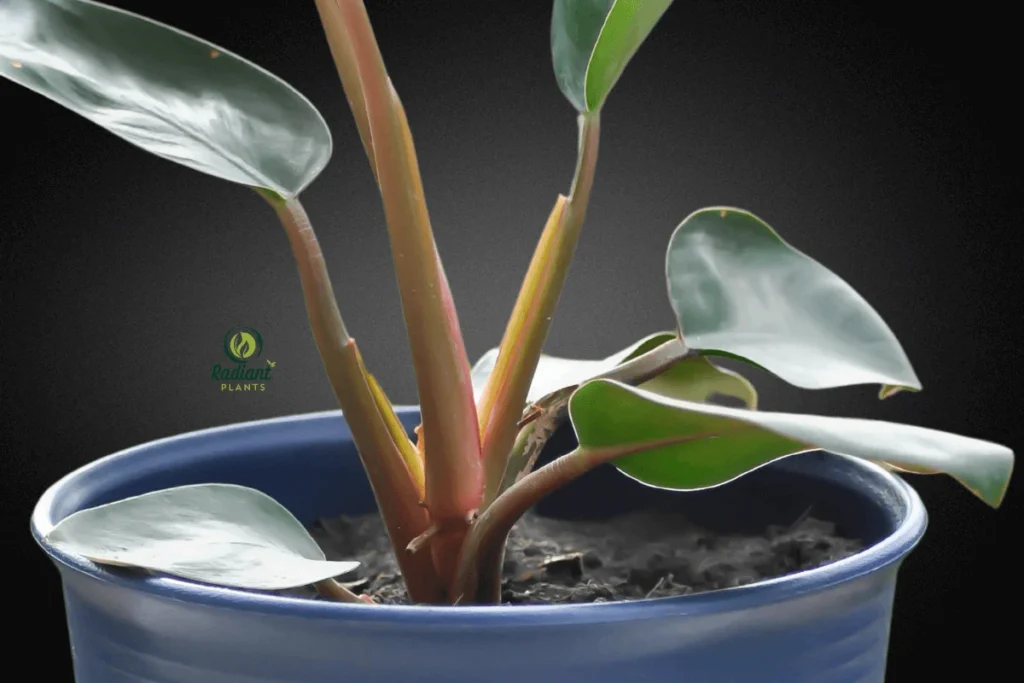
Philodendron Red Congo thrives in bright, indirect light, moderate watering, and well-draining soil. It prefers warm indoor temperatures and average household humidity, and it benefits from light feeding during the growing season. Like most philodendrons, it is toxic to pets if ingested.
Below is a quick-reference chart you can use to keep your plant healthy at a glance.
🌿 Quick Care Comparison Table
Care Factor | Ideal Condition | Warning Signs |
|---|---|---|
Light | Bright, indirect light (near east or west window) | Fading color (too little light), scorched leaves (too much direct sun) |
Water | Water when the top 1–2 inches of soil are dry | Yellow leaves (overwatering), drooping + dry soil (underwatering) |
Soil | Well-draining aroid mix (peat/coco coir + bark + perlite) | Soggy soil, root rot smell |
Temperature | 65–85°F indoors | Leaf damage below 55°F |
Humidity | 40–60% household humidity | Brown leaf edges in very dry air |
Fertilizer | Balanced liquid fertilizer monthly (spring–summer) | Salt buildup, leaf burn if overfed |
Toxicity | Toxic to pets (calcium oxalate crystals) | Oral irritation if ingested |
Light
Philodendron Red Congo prefers bright, indirect light. An east-facing window is ideal, while south or west windows may require sheer curtains to diffuse direct rays.
Expert Tip:
If leaves lose their red intensity and turn mostly green, the plant likely needs brighter indirect light.
Avoid placing it in a dark corner — while it may survive, color and growth will decline. In the next section, we’ll break down how light intensity directly impacts pigmentation.
Water
Water thoroughly when the top 1–2 inches of soil feel dry. Always allow excess water to drain fully.
Expert Tip:
Lift the pot after watering. If it still feels heavy several days later, your soil may be retaining too much moisture.
Overwatering is the most common issue in U.S. homes, especially during winter when growth slows.
Soil
Use a chunky, well-aerated aroid mix. A typical blend includes:
- Peat moss or coco coir
- Orchid bark
- Perlite or pumice
This prevents compaction and improves oxygen flow to roots.
Expert Tip:
Dense, moisture-retaining potting soil increases root rot risk — especially in decorative pots without drainage.
For a deeper breakdown of soil science and mix ratios, see the soil section later in this guide.
Temperature
Keep Philodendron Red Congo in rooms between 65–85°F. Avoid cold drafts, AC vents, and heaters.
Temperatures below 55°F may cause stress or leaf damage.
Expert Tip:
If you’re comfortable indoors, your Red Congo likely is too.
Humidity
Average U.S. indoor humidity (30–50%) is typically sufficient. However, extremely dry air may cause brown leaf edges.
Expert Tip:
Instead of misting, group plants together or use a humidifier for consistent results.
Fertilizer
Feed monthly during spring and summer using a balanced liquid fertilizer diluted to half strength.
Avoid fertilizing during fall and winter when growth slows.
Expert Tip:
Too much nitrogen can reduce red pigmentation and encourage greener growth.
We’ll explore nutrient impact on color in the fertilizing section.
Toxicity
Philodendron Red Congo contains calcium oxalate crystals, which can irritate if ingested by pets or children [ASPCA.org].
Symptoms may include:
- Drooling
- Oral discomfort
- Mild swelling
Keep out of reach of cats and dogs, especially if they chew foliage.
✔ Ideal Indoor Setup Checklist
Use this checklist to confirm your environment is optimized:
- ☐ Bright indirect light (not deep shade)
- ☐ Pot with drainage holes
- ☐ Well-draining aroid soil mix
- ☐ Indoor temps above 65°F
- ☐ Moderate humidity (40–60%)
- ☐ Monthly feeding in growing season
- ☐ Elevated placement if pets are present
This quick chart gives you a foundation. Next, we’ll go deeper into light requirements and how to keep your Philodendron Red Congo richly colored year-round.
Light Requirements (How to Keep It Red)
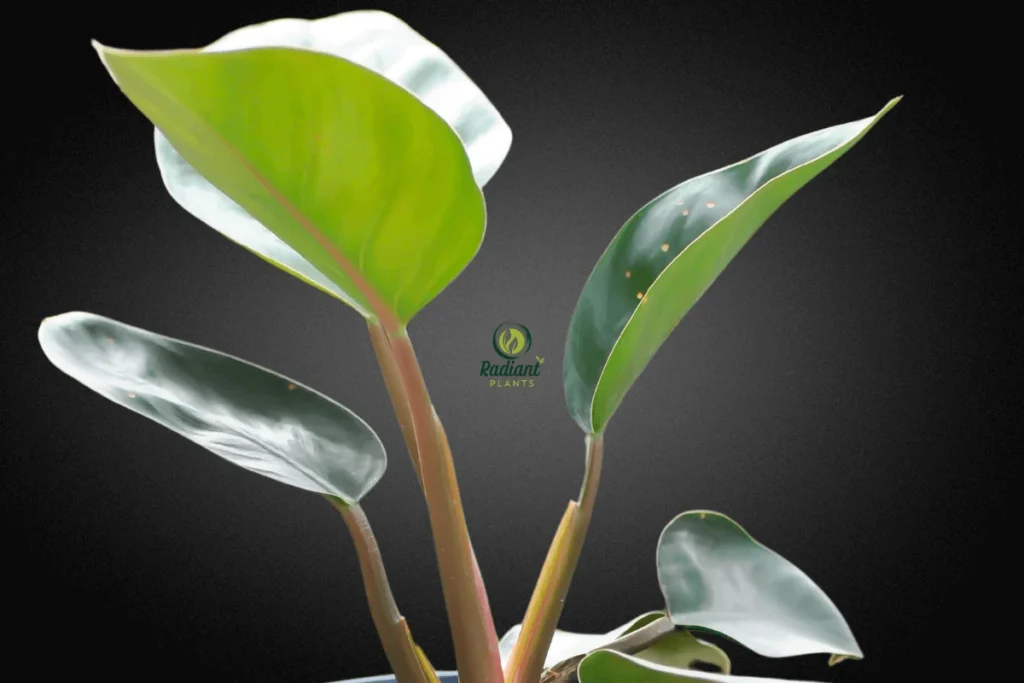
Philodendron Red Congo needs bright, indirect light to maintain strong growth and deep red coloration. While it can tolerate medium light, insufficient brightness often causes leaves to fade toward green. Direct, harsh sun, however, can scorch its foliage.
If your goal is bold burgundy tones—not dull olive leaves—light is the most important factor.
Ideal Light Exposure
In its tropical lineage, philodendrons grow beneath forest canopies, receiving filtered sunlight. Indoors, that translates to:
- Bright room with natural daylight
- No prolonged direct afternoon sun
- Position within a few feet of a window
Data Point:
For optimal indoor growth, aim for approximately 100–400 foot-candles (1,000–4,000 lux) of indirect light.
Below 100 foot-candles, growth slows, and red pigmentation weakens.
Above 500+ foot-candles of direct exposure, leaves may scorch.
Window Direction Guide (U.S. Homes)
Window orientation significantly affects light intensity:
- East-facing: Ideal. Gentle morning sun supports strong coloration.
- West-facing: Good, but may need sheer curtain in summer.
- South-facing: Brightest; place 3–6 feet away or filter light.
- North-facing: Often too dim unless the room is very bright overall.
If you’re unsure, a simple lux meter app can help estimate intensity.
Signs of Too Little vs Too Much Light
Too Little Light:
- Leaves are emerging more green than red
- Smaller leaf size
- Slower growth
- Leggy spacing between leaves
Too Much Direct Sun:
- Brown, crispy patches
- Bleached or pale areas
- Leaf curling
The key distinction:
Fading color = insufficient brightness.
Burn marks = excessive direct exposure.
Why Leaves Fade to Green
Red Congo leaves emerge deep red due to anthocyanin pigments. These pigments require adequate light to develop and remain vibrant.
When light is too low:
- Chlorophyll dominates
- Red tones diminish
- Leaves mature into solid green
Expert Quote:
“Pigmented foliage plants often need brighter indirect light than green varieties because anthocyanin production is light-dependent,” says a horticulture specialist at a U.S. land-grant university extension program.
This explains why Red Congo often disappoints in dim apartments.
Common Mistake: The “Low Light” Myth
Many plant retailers label philodendrons as “low-light plants.” While Philodendron Red Congo can survive in lower light, it will not thrive or maintain its red coloration.
Survival ≠ Optimal growth.
If you purchased this plant for its color, treat it as a bright-light plant (indirect only).
Real Example: Apartment vs House Lighting
Apartment Scenario:
A north-facing apartment with limited natural light. The plant sits 8 feet from a window. Result: slow growth, mostly green leaves.
Solution: Move the plant closer to the window or supplement with a grow light.
House Scenario:
A living room with large east-facing windows. The plant is placed 3 feet from the window. Result: consistent red-toned new growth and larger leaves.
Small placement adjustments often make dramatic differences.
If your Philodendron Red Congo isn’t displaying vibrant red growth, reassess light first before adjusting water or fertilizer. In the next section, we’ll cover how proper watering supports healthy roots without risking rot.
Watering Schedule & Drainage
Philodendron Red Congo prefers evenly moist—but never soggy—soil. Water thoroughly only when the top 1–2 inches of soil feel dry, then allow excess water to drain completely. Most problems with this plant come from overwatering, not underwatering.
Healthy roots are the foundation of strong growth and vibrant foliage.
Watering Frequency by Season
Water needs change depending on light exposure and temperature.
Spring & Summer (Active Growth):
- Water approximately every 7–10 days
- Check soil regularly, not just the calendar
Fall & Winter (Slower Growth):
- Water every 2–3 weeks on average
- Soil should dry slightly more between waterings
Because Philodendron Red Congo is sensitive to cold, the roots absorb less water during the winter months.
Expert Tip:
In winter, reduce watering frequency by 30–50% compared to summer.
The Finger Test Method (Simple & Reliable)
Before watering:
- Insert your finger 1–2 inches into the soil.
- If it feels dry at that depth, water thoroughly.
- If it feels damp, wait a few days and check again.
Avoid watering “just because it’s Sunday.” Moisture levels vary based on humidity, pot size, and light.
✔ Checklist: Before You Water
- ☐ Is the top 1–2 inches of soil dry?
- ☐ Does the pot feel lighter than usual?
- ☐ Is the plant actively growing?
- ☐ Are temperatures above 65°F?
- ☐ Does the pot have drainage holes?
If you answered “no” to multiple items, wait.
Why Drainage Is Non-Negotiable
Philodendron Red Congo roots require oxygen. Without drainage:
- Water accumulates
- Soil compacts
- Roots suffocate
- Fungal rot develops
Always use a container with drainage holes. Decorative pots should function as outer cachepots—not sealed containers.
For deeper soil composition guidance, refer to the soil section of this guide.
Overwatered vs Underwatered: Key Differences
Symptom | Overwatered | Underwatered |
|---|---|---|
Leaf Color | Yellowing lower leaves | Dull, drooping leaves |
Soil Condition | Wet for days | Bone dry |
Stem Base | Soft, mushy | Firm |
Root Smell | Musty or sour odor | Neutral |
Recovery | Slow; may require repotting | Quickly after watering |
Yellow leaves combined with consistently wet soil almost always indicate overwatering.
Case Study: Root Rot Recovery Example
A homeowner waters their Philodendron Red Congo every 5 days regardless of the season. After several weeks, the lower leaves turn yellow, and the stems soften.
Diagnosis: Overwatering + poor drainage.
Recovery Steps:
- Remove the plant from the pot.
- Trim black, mushy roots.
- Repot in fresh, well-draining aroid mix.
- Reduce watering frequency.
Recovery is possible if caught early. Severe rot may permanently damage the plant.
Common Watering Mistakes
- Using heavy, compact soil
- Watering on a fixed schedule
- Leaving water in saucers
- Increasing water in winter
The biggest misconception: more water equals more growth. In reality, consistent oxygen access to roots drives healthy development.
Proper watering protects your plant’s root system, which directly impacts leaf size, color, and overall structure. Next, we’ll examine soil composition and pot selection to further reduce moisture-related stress.
Best Soil & Pot Type
Philodendron Red Congo grows best in a chunky, well-draining aroid mix that allows airflow around the roots. Standard dense potting soil retains too much moisture and increases the risk of root rot. The right soil and pot combination directly impact watering frequency, growth rate, and overall plant health.
If you’ve struggled with overwatering issues, soil structure is often the hidden cause.
Aroid Soil Mix Breakdown
As a member of the Araceae family, Philodendron Red Congo prefers soil that mimics loose tropical forest floor conditions.
An ideal mix should:
- Drain quickly
- Retain moderate moisture
- Allow oxygen to reach roots
- Resist compaction
✔ Example Aroid Soil Recipe
You can create a reliable mix using:
- 40% peat moss or coco coir (moisture retention)
- 30% orchid bark (aeration + structure)
- 20% perlite or pumice (drainage)
- 10% compost or worm castings (nutrients)
This combination balances moisture retention and airflow.
Commercial “aroid mix” products are also widely available and typically contain similar components.
Why Drainage Matters
Roots require oxygen for cellular respiration.
When soil stays wet too long:
- Oxygen decreases
- Fungal pathogens increase
- Root tissue softens
This is why soil structure works together with proper watering practices covered in the previous section.
Dense soil + frequent watering = root stress.
Ideal Pot Materials: Terracotta vs Plastic
Both materials can work, but they behave differently.
Terracotta:
- Porous; allows moisture evaporation
- Reduces overwatering risk
- Dries faster
Plastic or Ceramic (Glazed):
- Retains moisture longer
- Requires more careful watering
- Lighter weight
If you tend to overwater, terracotta offers a margin of safety.
If your home is very dry, plastic may help retain moisture longer.
Regardless of material, always use a pot with drainage holes.
Repotting Frequency
Philodendron Red Congo typically needs repotting every 1–2 years, depending on growth rate.
Signs it’s time to repot:
- Roots circling the bottom of the pot
- Water runs straight through without absorption
- Slowed growth during the active season
- Soil compacting quickly after watering
Expert Tip:
Repot in early spring when new growth begins. This allows roots to establish before the peak growing season.
Common Mistakes
- Using standard heavy potting soil alone
- Skipping bark or aeration components
- Upsizing the pot too dramatically
- Repotting during winter dormancy
A pot that is too large holds excess moisture, which increases rot risk.
The right soil and container set the foundation for healthy root development, which supports stronger stems and richer foliage color. Next, we’ll examine temperature and humidity conditions that keep Philodendron Red Congo thriving indoors year-round.
Temperature & Humidity Needs
Philodendron Red Congo thrives in typical indoor temperatures between 65–85°F with moderate humidity. It tolerates average household conditions but may show stress in cold drafts or extremely dry air. Stable warmth and consistent moisture levels in the air help maintain strong growth and healthy foliage.
Because this plant descends from tropical rainforest species, environmental consistency matters.
Ideal Indoor Temperature Range
For optimal growth:
- Daytime: 70–85°F
- Nighttime: No lower than 60–65°F
- Avoid exposure below 55°F
Cold stress can cause:
- Leaf discoloration
- Slowed growth
- Drooping foliage
Extended exposure to low temperatures may damage plant tissue.
If your home is comfortable for you, it’s usually suitable for Philodendron Red Congo.
Humidity Tolerance
Philodendron Red Congo performs best in 40–60% humidity, which aligns with average indoor conditions in many U.S. homes.
Data Point:
Typical indoor humidity in U.S. homes ranges from 30–50%, depending on season and climate.
While the plant tolerates average levels, very dry air can cause:
- Brown leaf edges
- Slight leaf curling
- Slower leaf expansion
Unlike more delicate tropical plants, Red Congo does not require greenhouse-level humidity.
Effects of Dry Air
Dry indoor air is most common during winter heating months.
Symptoms include:
- Crispy leaf margins
- Minor browning at tips
- Reduced growth rate
Instead of misting (which provides only temporary moisture), consider:
- Grouping plants together
- Using a humidifier
- Placing the plant away from heating vents
Humidity affects leaf appearance more than survival. Severe dryness rarely kills this plant, but it can reduce visual quality.
✔ Winter Survival Checklist
- ☐ Keep the plant away from cold windows
- ☐ Avoid direct heater airflow
- ☐ Reduce watering frequency
- ☐ Maintain temps above 65°F
- ☐ Increase humidity if below 30%
Seasonal adjustments prevent stress during dormant months.
Real Example: AC & Heater Impact
Summer Scenario:
Plant placed directly under an air conditioning vent. Leaves begin to curl slightly despite adequate watering.
Cause: Cold, dry airflow stressing foliage.
Solution: Move the plant a few feet away from the vent.
Winter Scenario:
Plant positioned near a radiator. Soil dries rapidly; leaf tips brown.
Cause: Dry heated air reduces humidity.
Solution: Relocate the plant or add a humidifier.
Small environmental adjustments often solve stress symptoms before they escalate.
Maintaining steady temperature and moderate humidity creates a stable foundation for growth. Next, we’ll examine how fertilization impacts both leaf size and the rich red pigmentation that makes Philodendron Red Congo stand out.
Fertilizing for Growth & Color
Philodendron Red Congo benefits from light, consistent feeding during the growing season. A balanced fertilizer supports steady leaf production without overwhelming the roots. Overfeeding—especially with nitrogen-heavy formulas—can reduce red pigmentation and cause weak, overly green growth.
Fertilizer should enhance growth, not force it.
Best Fertilizer Type
Use a balanced liquid fertilizer (such as 10-10-10 or 20-20-20) diluted to half strength. Balanced formulas provide equal parts nitrogen (N), phosphorus (P), and potassium (K), supporting overall plant health.
Avoid high-nitrogen fertilizers designed for lush green foliage. Excess nitrogen encourages chlorophyll production, which can overpower red anthocyanin pigments.
If your goal is vibrant burgundy tones, moderation is key.
Fertilizing Frequency
Spring & Summer (Active Growth):
- Feed once per month
- Dilute to 50% strength
- Apply after watering (never to dry soil)
Fall & Winter (Dormant/Slower Growth):
- Stop fertilizing or reduce to once every 8–10 weeks
- Resume regular feeding in early spring
Growth rate slows when light levels decrease, reducing nutrient demand.
How Nutrients Impact Red Coloration
Philodendron Red Congo’s red tones come from anthocyanin pigments. Light exposure primarily drives pigmentation, but nutrient balance plays a supporting role.
- Excess nitrogen → greener foliage
- Balanced feeding → steady growth + better color retention
- Nutrient deficiencies → smaller leaves, pale growth
Fertilizer cannot compensate for poor lighting. Always optimize light first (see the light section above).
Expert Tip: Avoid Overfeeding
More fertilizer does not equal faster growth. Overfeeding can cause:
- Salt buildup in soil
- Leaf tip burn
- Root stress
Flush the soil with distilled or filtered water every few months to reduce salt accumulation.
Organic vs Synthetic Fertilizer
Both can work for Philodendron Red Congo.
Organic Fertilizers:
- Slow-release
- Lower risk of burn
- Improve soil structure over time
Synthetic Liquid Fertilizers:
- Fast nutrient availability
- Easier dosage control
- More predictable results
For indoor container plants, diluted liquid fertilizer often provides the most consistent results.
Common Mistakes
- Using lawn fertilizer (too nitrogen-heavy)
- Fertilizing during winter dormancy
- Applying full-strength fertilizer
- Feeding stressed or recently repotted plants
If leaves look dark green but lack red intensity, reassess both light exposure and nitrogen levels.
Balanced feeding supports healthy structure and coloration. Next, we’ll explore growth rate expectations and how large Philodendron Red Congo typically becomes indoors.
Growth Rate & Size Expectations
Philodendron Red Congo is a moderate grower indoors, producing several new leaves during the active growing season. With proper light, watering, and feeding, it can reach an impressive upright size within a few years. Unlike vining philodendrons, it grows in a compact, self-heading form rather than trailing or climbing.
Understanding its growth pattern helps you plan placement and repotting schedules.
How Fast Does It Grow Indoors
In optimal indoor conditions (bright indirect light, proper watering, balanced fertilizer), Philodendron Red Congo typically produces:
- 1 new leaf every 3–5 weeks during spring and summer
- Slower growth in the fall
- Minimal growth in winter
Data Point:
Under favorable indoor conditions, expect approximately 6–12 inches of vertical growth per year.
Growth rate depends heavily on light exposure. Plants in dim rooms grow significantly slower and produce smaller leaves.
Mature Height & Spread
Indoors, Philodendron Red Congo commonly reaches:
- 2–3 feet tall
- 2–3 feet wide
In larger containers and bright rooms, mature specimens may approach 4 feet in height over time.
Because it is self-heading, the plant expands outward as well as upward, creating a full, architectural silhouette. This makes it better suited for floor placement rather than narrow shelves.
Leaf Size Expectations
Individual leaves can grow:
- 12–18 inches long
- Broad and paddle-shaped
- Thick, glossy texture
Leaf size increases as the plant matures and the root system strengthens. Smaller juvenile plants produce more compact foliage.
If leaves remain small, reassess:
- Light intensity (see the light section)
- Root space (check for root binding)
- Nutrient balance (review fertilizing section)
Growth Pattern Explanation
Philodendron Red Congo grows from a central stem base. Each new leaf emerges tightly rolled before unfurling and deepening in color.
Unlike climbing philodendrons:
- It does not produce long vines
- It does not require a moss pole
- It maintains a dense, upright habit
This growth pattern contributes to its sculptural appearance in modern interiors.
Case Study: 1-Year Growth Example
A homeowner purchases a 10-inch-tall nursery plant in early spring.
Month 1–3:
New leaves emerge every 4 weeks.
Month 4–6:
Plant doubles in width; leaves reach 12 inches long.
Month 7–9:
Growth slows slightly as fall approaches.
Month 10–12:
Minimal winter growth; plant stabilizes at 20–24 inches tall.
With consistent care, the plant more than doubles in visible volume within one year.
Example: Small Apartment vs Large Room Growth
Small Apartment (Low Natural Light):
- Slower growth
- Smaller leaves
- Compact structure
Bright Living Room (Large Windows):
- Faster growth
- Larger leaves
- Fuller canopy
Light availability is the primary variable influencing size.
Philodendron Red Congo rewards patience with steady, structured growth. Next, we’ll examine common problems and how to troubleshoot symptoms before they become serious issues.
Common Problems & Troubleshooting Guide
Most issues with Philodendron Red Congo are caused by improper watering, insufficient light, or environmental stress. The good news: this plant is resilient, and most problems are reversible if caught early. Diagnosing symptoms correctly prevents unnecessary adjustments that can worsen the issue.
Before changing your routine, identify the root cause.
✔ Diagnostic Table
Symptom | Most Likely Cause | How to Fix |
|---|---|---|
Yellow lower leaves | Overwatering | Let soil dry; check drainage; inspect roots |
Brown crispy tips | Low humidity or inconsistent watering | Increase humidity; water evenly |
Drooping leaves | Underwatering or root stress | Check soil moisture before watering |
Leaves fading to green | Insufficient light | Move closer to bright indirect light |
Fine webbing on leaves | Spider mites | Rinse leaves; apply insecticidal soap |
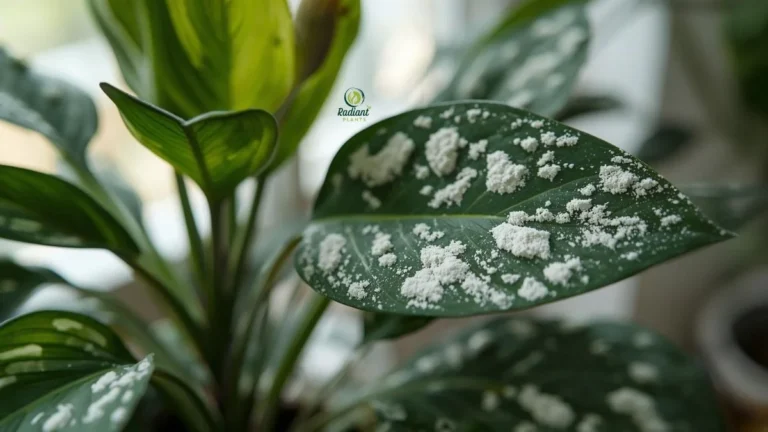
White cottony spots | Mealybugs | Remove manually; treat with alcohol or neem oil |
Correct diagnosis prevents overcorrection.
Yellow Leaves
Occasional yellowing of older bottom leaves is normal. However, multiple yellow leaves appearing quickly usually indicate overwatering.
Check:
- Is the soil wet several days after watering?
- Does the pot have drainage holes?
- Is the room cool?
Overwatering reduces oxygen to roots, causing stress.
Brown Leaf Tips
Brown tips are often caused by:
- Low humidity
- Salt buildup from fertilizer
- Inconsistent watering
Flush soil with distilled water if fertilizer buildup is suspected. Review humidity levels (see temperature & humidity section).
Drooping Leaves
Drooping can signal two opposite issues:
- Dry soil → Underwatering
- Soggy soil → Root stress
Always check soil moisture before adding water.
✔ Common Mistake:
Overwatering with water when leaves droop. Many plant owners assume drooping equals thirst, but excess moisture can cause similar symptoms.
Leaf Fading
If new leaves emerge red but mature quickly into green, the plant likely needs brighter indirect light.
Move it:
- Closer to an east-facing window
- Away from deep interior corners
Light drives pigmentation more than fertilizer does (see light section above).
Pests: Spider Mites & Mealybugs
Philodendron Red Congo can occasionally attract:
Spider Mites
- Fine webbing
- Speckled leaves
- More common in dry conditions
Mealybugs
- White cottony clusters
- Sticky residue (honeydew)
Treatment:
- Wipe leaves with a damp cloth
- Apply insecticidal soap
- Isolate the plant if infestation spreads
Spider mites are more common in low-humidity environments.
✔ Plant Inspection Checklist
- ☐ Check the underside of leaves weekly
- ☐ Inspect soil moisture before watering
- ☐ Look for soft or mushy stem bases
- ☐ Monitor new leaf color
- ☐ Check for salt crust on the soil surface
Routine inspection prevents major issues.
Expert Tip: When to Prune Damaged Leaves
Remove leaves that are:
- More than 50% yellow
- Severely scorched
- Pest-infested
Use clean, sterilized pruning shears. Avoid removing healthy leaves unless necessary—each leaf supports photosynthesis and recovery.
Philodendron Red Congo is forgiving when care adjustments are gradual and informed. Next, we’ll address safety concerns, including toxicity for pets and children.
Is Philodendron Red Congo Toxic?
Yes, Philodendron Red Congo is toxic to pets and humans if ingested. Like other philodendrons, it contains calcium oxalate crystals that can irritate the mouth and digestive tract. While it is rarely life-threatening, it can cause discomfort and should be kept out of reach of pets and small children.
Understanding the risks helps you place it safely in your home.
Why It’s Toxic: Calcium Oxalate Crystals
Philodendron Red Congo contains insoluble calcium oxalate crystals, which are microscopic needle-shaped compounds found in many plants in the Araceae family.
When chewed or ingested, these crystals can:
- Irritate the mouth and tongue
- Cause burning sensations
- Trigger mild swelling
This reaction is mechanical (physical irritation), not chemical poisoning.
Data Point: ASPCA Classification
The ASPCA lists philodendrons as toxic to cats and dogs due to insoluble calcium oxalates.
This classification applies to most philodendron species, including hybrid varieties like Red Congo.
Symptoms in Pets
If a cat or dog chews the plant, symptoms may include:
- Drooling
- Pawing at the mouth
- Vomiting (occasionally)
- Decreased appetite
Severe reactions are uncommon but possible in sensitive animals.
If symptoms persist or worsen, contact a veterinarian.
Symptoms in Children
Ingestion may cause:
- Oral irritation
- Swelling of the lips or tongue
- Mild stomach upset
Because symptoms are usually immediate and uncomfortable, children typically stop chewing quickly.
If ingestion occurs, consult Poison Control (1-800-222-1222 in the U.S.) or a medical professional.
Prevention Tips
- Keep the plant out of reach
- Avoid placing on low coffee tables
- Monitor pets known to chew plants
- Train pets using deterrent sprays if needed
Prevention is simpler than treatment.
Example: Pet-Safe Placement Ideas
If you have pets:
- Place the plant on a tall plant stand
- Use a wall-mounted shelf
- Position it in a room that pets cannot access
- Keep it inside a decorative cabinet with airflow
Because Philodendron Red Congo grows upright and does not trail, it’s easier to elevate safely compared to vining plants.
If pet safety is a primary concern, consider researching non-toxic alternatives through reputable sources such as ASPCA.org. Otherwise, safe placement allows you to enjoy the bold foliage of Philodendron Red Congo without unnecessary risk.
Next, we’ll compare Red Congo to similar varieties to help clarify common naming confusion.
Philodendron Red Congo vs Rojo Congo
Philodendron Red Congo and Rojo Congo are very similar self-heading hybrids, but they are not identical. The main differences appear in leaf tone, growth density, and how long red pigmentation lasts. Many buyers confuse them because nurseries sometimes use the names interchangeably.
If you’re choosing between the two, small visual details matter.
✔ Quick Comparison Table
Feature | Philodendron Red Congo | Philodendron Rojo Congo |
|---|---|---|
New Leaf Color | Deep red to burgundy | Red with more copper tones |
Mature Leaf Color | Dark green with reddish undertones | Green with subtle red stems |
Growth Habit | Upright, compact | Upright, slightly broader spread |
Leaf Thickness | Thick, glossy | Slightly thinner texture |
Color Retention | May fade faster in low light | Often holds red tones slightly longer |
Availability | Widely available in U.S. nurseries | Also common, sometimes mislabeled |
Visual Differences
Both plants produce red new growth that matures to green. However:
- Red Congo tends to have darker, deeper burgundy tones.
- Rojo Congo often shows slightly lighter, copper-red hues when new.
In lower light, both may appear mostly green.
Stem color can also vary slightly, with Rojo Congo sometimes displaying more noticeable red petioles (leaf stems).
Growth Differences
Both varieties are self-heading and do not climb. However:
- Red Congo often maintains a slightly tighter growth structure.
- Rojo Congo may spread outward a bit more as it matures.
These differences are subtle and may not be noticeable in young nursery plants.
Color Variation & Light Sensitivity
Light intensity strongly affects both varieties. If placed in medium light:
- Red Congo may lose red coloration faster.
- Rojo Congo may retain slight reddish tones longer.
However, this varies by individual plant genetics.
As discussed in the light requirements section, pigmentation depends heavily on brightness.
Availability in the U.S.
Both plants are widely available at:
- Garden centers
- Big-box retailers
- Online plant shops
Because they are commercial hybrids, exact lineage details are often proprietary.
Expert Tip: How Nurseries Mislabel Them
Retailers sometimes label both plants simply as:
- “Red Philodendron”
- “Red Congo”
- “Rojo Congo”
Tagging inconsistencies are common because the plants look similar when young. Always compare leaf color, stem tone, and overall structure rather than relying solely on labels.
Buying Guidance Insight
If you prioritize:
- Darker burgundy foliage → Choose Red Congo
- Slightly brighter copper-red new growth → Consider Rojo Congo
For most indoor environments, care requirements are identical. Your decision should be based on aesthetic preference rather than maintenance differences.
If you’re still unsure, select the plant with the healthiest root system and strongest structure rather than focusing exclusively on the cultivar name.
Next, we’ll explore how to style Philodendron Red Congo indoors to maximize its architectural impact.
Styling & Interior Design Ideas
Philodendron Red Congo works best as a floor-level statement plant in bright, open spaces. Its upright structure and deep red foliage add contrast against neutral walls and modern furniture. Because it doesn’t trail or climb, it’s ideal for anchoring a room visually.
Placement affects both aesthetics and plant health—especially light exposure (see the light section earlier).
Best Rooms for Placement
Philodendron Red Congo thrives in:
- Bright living rooms
- Home offices with natural light
- Entryways near windows
- Bedrooms with east- or west-facing windows
Avoid:
- Dark hallways
- Windowless bathrooms
- Deep interior corners
Expert Tip:
Avoid dark corners even if they “look empty.” This plant needs brightness to maintain its red tones.
The goal is to combine visual impact with proper indirect light.
Pot Color Pairing
Because of its burgundy-to-green foliage, the pot choice significantly influences the look.
Modern Neutral Pairings:
- Matte white
- Cream
- Light beige
- Concrete gray
Bold Contemporary Pairings:
- Black ceramic
- Brushed brass
- Deep charcoal
Warm Aesthetic Pairings:
- Terracotta
- Clay tones
- Natural woven baskets
Neutral pots emphasize foliage color. Dark pots create a dramatic, moody effect.
Minimalist vs Bold Décor Styles
Minimalist Spaces:
- Use a single Red Congo in a neutral planter
- Position against white or light gray walls
- Pair with clean-lined furniture
Bold Interiors:
- Combine with textured rugs
- Add warm lighting
- Use metallic or sculptural planters
Philodendron Red Congo works especially well in modern, Scandinavian, and mid-century-inspired spaces.
Statement Plant Positioning
To maximize visual impact:
- Place slightly off-center near a sofa
- Use a raised plant stand for added height
- Ensure leaves have space to spread outward
Because mature plants can reach 2–3 feet wide (see growth section), allow room around the pot.
Real Example: Modern Living Room Placement
In a modern living room with large east-facing windows:
- The plant is placed 3 feet from the window
- Matte white ceramic pot
- Positioned near a neutral sofa
Result:
- New red leaves contrast against the light wall
- The plant acts as a focal point without clutter
This setup balances design and proper exposure to light.
✔ Perfect Statement Plant Setup Checklist
- ☐ Positioned in bright, indirect light
- ☐ Elevated slightly for visibility
- ☐ Pot complements wall color
- ☐ Enough space for 2–3 feet of spread
- ☐ Not blocking walkways
- ☐ Away from cold drafts or vents
Philodendron Red Congo performs best when treated as a sculptural focal point rather than background filler. In the next section, we’ll explore whether this plant can be propagated and what to expect realistically.
Propagation (Can You Multiply It?)
Philodendron Red Congo is more difficult to propagate than vining philodendrons because it is a self-heading hybrid. It does not produce long stems with visible nodes, which makes traditional stem cuttings unreliable. The most practical propagation method is division if the plant has developed multiple growth crowns.
If your plant is young and growing from a single base, propagation may not be possible yet.
Why Propagation Is Difficult
Unlike climbing philodendrons (such as heartleaf varieties), Philodendron Red Congo grows from a central, compact stem structure.
It:
- Does not produce long vines
- Has tightly stacked leaf bases
- Often lacks accessible nodes for cuttings
Stem cuttings require a visible node (where roots can form). On self-heading hybrids, these nodes are compressed and not easily separated.
This is why most nursery propagation is done commercially through tissue culture rather than home cuttings.
Division Method (If Applicable)
Division works only if your plant has formed multiple crowns (separate growing points).
Steps for Division:
- Remove the plant from its pot.
- Gently shake off excess soil.
- Identify natural separation points in the root system.
- Use a clean, sterilized knife to divide sections with roots attached.
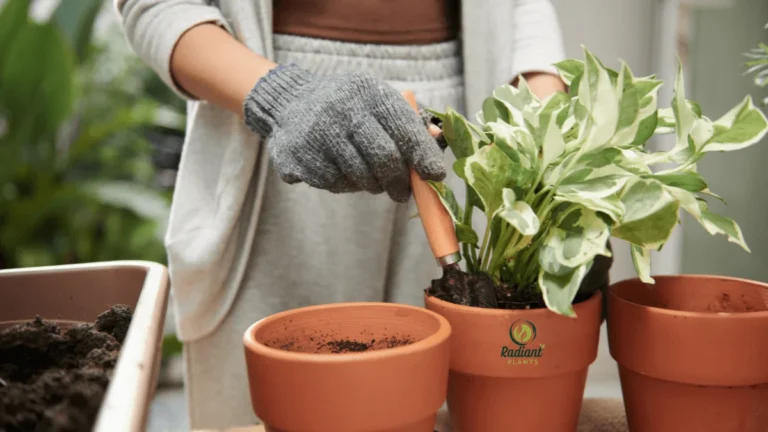
- Repot each section in fresh, well-draining aroid mix.
After dividing:
- Keep in bright indirect light
- Water lightly
- Avoid fertilizing for 4–6 weeks
Expert Tip:
Divide in early spring when active growth begins. This improves recovery speed.
Why Stem Cuttings Rarely Work
Because the plant does not produce elongated stems:
- There may be no visible nodes
- Cut sections may rot before rooting
- Growth points may be damaged
✔ Common Mistake:
Attempting vine-style cuttings as you would with pothos or climbing philodendrons. Without a viable node, rooting is unlikely.
If you cut too deeply into the central stem, you risk permanently damaging the plant.
When Propagation Is Realistic
Division becomes possible when:
- The plant is several years old
- Multiple growth centers are visible
- Roots are dense and well-established
If your Philodendron Red Congo is still compact and single-stemmed, focus on optimizing care rather than multiplying it.
Because this plant is structurally different from trailing philodendrons, patience is key. Mature specimens may eventually allow division, but aggressive cutting methods usually cause more harm than success.
FAQs
How often should I water Philodendron Red Congo?
Water when the top 1–2 inches of soil feel dry, which is usually every 7–10 days in spring and summer. In fall and winter, reduce watering to every 2–3 weeks. Always check soil moisture first—overwatering is more harmful than underwatering.
Why are my Red Congo leaves turning green?
Leaves fade to green when the plant isn’t receiving enough bright, indirect light. Anthocyanin pigments need adequate brightness to maintain red tones. Move the plant closer to an east- or west-facing window to improve color intensity.
Can Philodendron Red Congo grow in low light?
It can survive in medium to low light, but growth will slow, and red coloration will fade. For best results, provide bright, indirect light. Low light conditions reduce leaf size and vibrancy over time.
How big does Philodendron Red Congo get indoors?
Indoors, it typically reaches 2–3 feet tall and wide. With strong light and proper care, mature plants may grow slightly larger. Its upright, self-heading structure makes it ideal as a floor plant in living rooms or offices.
Is Philodendron Red Congo toxic to cats and dogs?
Yes. Like most philodendrons, it contains calcium oxalate crystals that can cause oral irritation if ingested. Keep it out of reach of pets and children, especially in homes with curious animals.
How fast does Philodendron Red Congo grow?
It’s a moderate grower, producing new leaves every 3–5 weeks during the active growing season. Growth slows significantly in winter. Light exposure is the biggest factor influencing speed and leaf size.
When should I repot my Red Congo plant?
Repot every 1–2 years or when roots begin circling the bottom of the pot. Spring is the best time to repot, as the plant enters active growth and can recover more quickly.
Does Philodendron Red Congo need a moss pole?
No. It is a self-heading philodendron, meaning it grows upright from a central base rather than climbing. It does not require support structures like moss poles.
Philodendron Red Congo is a bold, low-maintenance plant that thrives when given bright, indirect light, moderate watering, and well-draining soil. Its dramatic burgundy foliage and upright growth make it both a design statement and an easy-care houseplant.
By understanding light needs, watering balance, toxicity precautions, and common troubleshooting signs, you can keep your plant healthy and vibrant year-round. With the right placement and simple maintenance routine, your Red Congo will remain a striking focal point in any space.
If you’re ready to elevate your indoor jungle, start by optimizing its light and watering setup today.