In Brief section
- Night blooming jasmine is grown mainly for its strong evening fragrance, not for showy flowers.
- It thrives best in warm climates and often does better in containers in cooler parts of the US.
- The plant needs the right mix of sun, pruning, and warmth to bloom well.
- Safety matters: all parts of the plant should be treated as toxic around pets and children.
- In some regions, especially warm coastal areas, invasive risk should be addressed before planting.
Night Blooming Jasmine can be a dream plant or a frustrating mistake, depending on where you grow it and how you manage it. This guide helps you figure out whether it fits your climate, how to care for it properly, and what to watch for before planting near pets, kids, patios, or windows. You’ll learn the best zones, light and watering needs, container and indoor options, common problems, and safer alternatives—so you can enjoy the fragrance without ending up with a plant that struggles, spreads, or becomes more work than expected.
In This Article
What Is Night Blooming Jasmine?
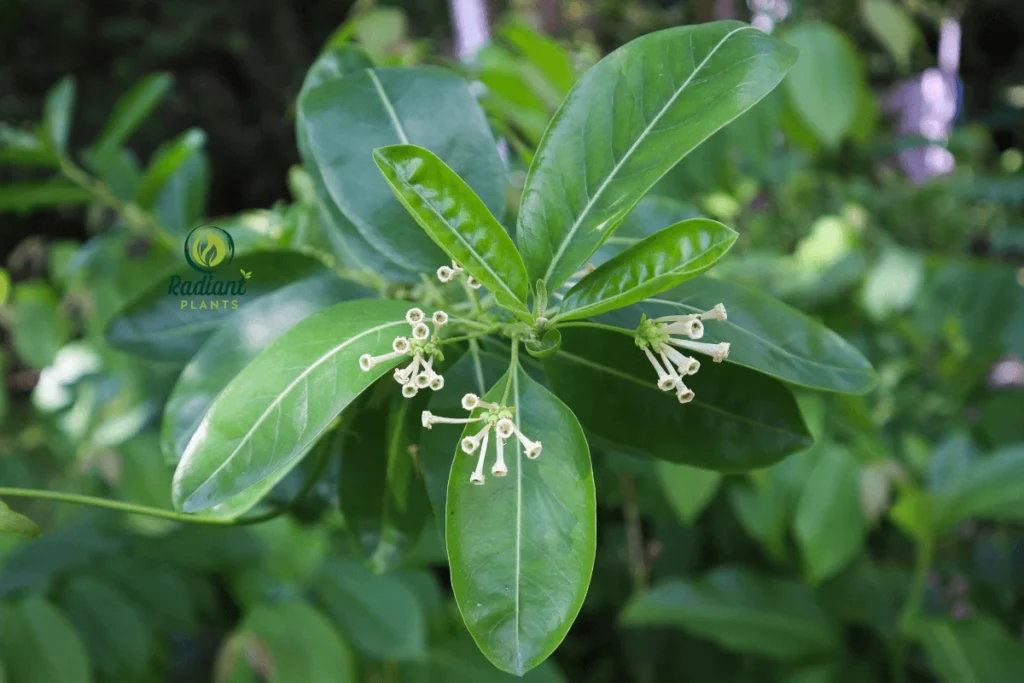
Night Blooming Jasmine is Cestrum nocturnum, an evergreen shrub grown mainly for its powerful evening fragrance, not for showy blooms. Despite the name, it is not a true jasmine; it belongs to the nightshade family (Solanaceae), while true jasmines belong to the Jasminum genus.
In practical terms, this is the plant people choose when they want a patio, entryway, or container plant that releases scent after dark. Mature plants are often described in the 3–13 foot range with a similar spread, and the flowers are typically small, tubular, and creamy white to pale green, opening at night rather than putting on a big daytime display.
Expert quote: “Although jessamine is another name for jasmine, the two plants are not closely related.” (Missouri Botanical Garden)
A quick way to identify it:
- Look for an arching, shrub-like habit, not a twining vine.
- Expect narrow tubular flowers instead of the broader, starry flowers many readers associate with true jasmine.
- Expect fragrance to be the main attraction; visually, the plant is usually less dramatic than many true jasmine types.
Common names you may see
US readers may run into labels such as night blooming jasmine, night-blooming jessamine, night jessamine, or lady of the night. That naming overlap is exactly why this plant gets confused with true jasmine and with orange jessamine in garden centers and online listings.
Night blooming jasmine vs true jasmine vs orange jessamine
Plant | Botanical name | What it is | Flower look | Growth habit | The main reason people grow it |
|---|---|---|---|---|---|
Night-blooming jasmine | Cestrum nocturnum | Not a true jasmine; in the nightshade family | Small, tubular, pale green to creamy white | Shrub with arching branches | Strong nighttime fragrance |
True jasmine | Jasminum officinale | True jasmine | White to pink-tinged, more open/starry flowers | Vining or semi-vining climber | Classic jasmine scent + ornamental flowers |
Orange jessamine | Murraya paniculata | Not a true jasmine; citrus-family shrub/small tree | Small white flowers with an orange-blossom scent | Dense shrub/small tree | Hedge, glossy foliage, fragrant flowers |
Table note: Night blooming jasmine profile details are summarized from NC State and Missouri Botanical Garden; common jasmine from NC State/Clemson; orange jessamine from UF/IFAS. (NC Extension Plant Toolbox)
Real-world naming confusion
Here are the labels readers commonly misread in nurseries or online shops:
- “Night Jasmine” → often means Cestrum nocturnum, not a true Jasminum.
- “Jessamine” → can refer to unrelated plants, so the botanical name matters.
- “Orange Jasmine” / “Orange Jessamine” → usually means Murraya paniculata, a different plant with a denser hedge-like form.
Common mistakes to avoid
- Assuming Night Blooming Jasmine will behave like star jasmine or common jasmine, it is typically more shrub-like and less ornamental by day.
- Buying it for the flowers alone, this plant is usually grown for scent first.
- Trusting only the common name on a plant tag instead of checking the botanical name.
Is Night Blooming Jasmine Right for Your Climate?
Yes—Night Blooming Jasmine can thrive in the US, but it is best treated as a warm-climate shrub first and a container plant second. The safest rule is this: grow it in-ground in USDA Zones 9–11, treat Zone 8 as borderline, and use containers in colder-winter areas so you can move it indoors before frost.
The reason climate fit matters so much is that USDA zones are based on a location’s average annual extreme minimum winter temperature. That tells you whether a perennial plant is likely to survive winter outdoors, but it does not guarantee perfect performance, especially with tender shrubs that dislike frost. (USDA Plant Hardiness Zone Map)
Night Blooming Jasmine performs best where summers are warm, the growing season is long, and winter cold is limited. NC State tags the plant as both heat-tolerant and humidity-tolerant, while the Missouri Botanical Garden notes that large temperature swings can reduce bloom fragrance. In other words, it tends to be happiest in warm Southern or subtropical conditions, not in climates with repeated freeze-thaw swings.
Best USDA Zones for Outdoor Growth
For most readers, the clearest guidance is: Zones 9–11 are the reliable outdoor range. NC State lists Cestrum nocturnum for USDA Zones 9a–11b, and the Missouri Botanical Garden lists it as hardy in Zones 9–11.
What success usually looks like in those zones:
- The plant can stay outdoors year-round in a protected site.
- Full sun to part shade works, but the best blooming happens in full sun.
- Warm nights and a long season support stronger growth and better flowering.
- Heat and humidity are generally not the problem; winter cold is.
For warm Southern states, this often means:
- Florida yard: In pure climate terms, the plant can grow vigorously outdoors, but Florida readers should also check invasive-risk guidance before planting. UF/IFAS classifies it as high invasion risk and not recommended in its assessment. (assessment.ifas.ufl.edu)
- Texas patio: In warm parts of Texas, it often makes more sense as a large patio shrub or container specimen, especially where occasional hard freezes still happen. A container gives you a faster backup plan when cold snaps are forecast. This container-first approach is consistent with how major care guides recommend handling frost-sensitive conditions.
Possible but risky usually means borderline climates, where the plant may survive some winters, die back in others, or lose top growth even if roots recover. That is why broad web results can feel inconsistent: some gardening sources stretch the range to Zone 8, but the more conservative extension/botanic-garden guidance centers on Zone 9 and warmer for dependable outdoor growth.
What Zone 8 Gardeners Should Expect
If you live in Zone 8, think of Night Blooming Jasmine as a managed risk, not a carefree landscape shrub. You may get good growth during the warm season, but winter can damage top growth, kill stems back to the ground, or wipe out the plant altogether in a colder-than-average year.
That matters because top damage and root survival are not the same thing. In a marginal climate, a plant may resprout after cold injury—or it may not. Arkansas Cooperative Extension offers a very practical, real-world example: a gardener reported that Night Blooming Jasmine was hardy in south Arkansas but had been lost in central Arkansas when left outdoors. The same advice thread recommended taking cuttings, mulching after freeze, and using a large container in full sun for a more reliable result.
That is why potted growing is usually the smarter Zone 8 strategy:
- You can leave it outside through the warm season for sun and fragrance.
- You can move it indoors before frost instead of gambling on winter survival. Missouri Botanical Garden specifically notes that container-grown plants can be overwintered indoors with a sunny, southern exposure.
- You avoid losing an established in-ground plant after one bad cold event.
Checklist: Can you grow it where you live?
Use this quick test before planting:
- Your zip code falls in USDA Zone 9, 10, or 11 → In-ground planting is usually reasonable. (USDA Plant Hardiness Zone Map)
- You are in Zone 8 → grow it in a container unless you are comfortable taking winter-loss risk. (Arkansas Extension Service)
- Your winters regularly bring hard frost or freezing nights → plan to move it indoors.
- You have a sunny, sheltered site with good drainage, → that improves your odds.
- You can protect a cold-sensitive plant near a southern exposure or nearby structure, → that can help moderate cold stress.
Real examples by region
- Florida yard: climate is favorable, but invasive-risk screening is essential before planting in-ground.
- Texas patio: good fit for a large decorative pot, especially in areas with occasional winter cold.
- Zone 8 container: probably the most practical setup for borderline climates.
- Indoor winter move: workable if you have bright light, ideally a sunny southern exposure, but expect the fragrance to feel stronger indoors than outdoors.
Expert tips for marginal climates
- Put the plant where it gets full sun or at least strong light; bloom quality drops in too much shade.
- Use a south-facing wall or sheltered area near the house for extra protection. Mississippi State Extension recommends placing cold-sensitive plants near the part of the house with southern exposure or near larger plants and structures to take advantage of microclimate protection.
- In borderline zones, keep it in a large movable pot rather than planting it straight into the ground.
- Do not wait for a hard freeze to make your move indoors; shift container plants before frost becomes a pattern.
Common mistakes
- Planting in-ground too early in a marginal climate and assuming one mild winter proves long-term hardiness.
- Ignoring the difference between “may survive” and “will thrive.”
- Relying only on a broad online zone range without checking your exact USDA zip-code zone. (USDA Plant Hardiness Zone Map)
- Leaving a container plant outside too long in the fall, then trying to rescue it after frost damage has already started.
Before You Plant: Pros and Cons
Night Blooming Jasmine is worth planting if you want a powerful evening fragrance and you live in a warm climate or can grow it in a container. It is not the best choice if you need a cold-hardy, low-risk, pet-friendly landscape shrub. Its biggest strengths are scent and fast growth, but its biggest drawbacks are toxicity, frost sensitivity, and invasive concerns in some regions.
The main reason people buy Night Blooming Jasmine is simple: few plants deliver this much nighttime fragrance. Missouri Botanical Garden describes the flowers as opening at night and being extremely fragrant, and both Missouri Botanical Garden and NC State note that the plant works well near patios, entryways, containers, hedges, and screens where people can enjoy the scent. NC State also classifies the growth rate as rapid, which helps explain its privacy appeal in warm areas.
That said, the tradeoffs are real. NC State flags all parts of the plant as toxic if ingested and notes specific risk for children, dogs, cats, and livestock, while the Missouri Botanical Garden says the fruits and leaves are poisonous. The plant is also only reliably hardy in Zones 9–11, which means winter cold can become a recurring problem outside warm regions. In Florida, UF/IFAS classifies Cestrum nocturnum as high invasion risk and not recommended. (NC Extension Plant Toolbox)
Pros vs. cons at a glance
Pros | Cons |
|---|---|
Strong nighttime fragrance | Toxic if ingested, especially a concern for pets and children |
Rapid growth | Not reliably cold-hardy outside Zones 9–11 |
Useful as a hedge, screen, or patio plant in warm climates | Fragrance can feel overpowering in enclosed spaces |
Works in containers for seasonal growing | Invasive risk in some warm regions, especially Florida |
Low maintenance once established in the right setting | Easy to buy under a misleading common name and expect the wrong plant habit |
The best buyer mindset is to treat this as a decision plant, not an impulse plant. Ask yourself three things before buying: Do I want fragrance more than showy flowers? Can I protect it from frost? Is my home and region a safe fit for it? That framing will save more mistakes than focusing on bloom photos alone.
When Night Blooming Jasmine is a great fit
Night Blooming Jasmine makes sense when:
- You live in a warm Southern climate where it can stay outside most or all year
- You want a fast-growing fragrant shrub for a patio edge, entry, or privacy screen
- Or you are happy to grow it in a container and move it indoors before frost. Missouri Botanical Garden specifically notes that container-grown plants can be overwintered indoors with a sunny southern exposure.
Examples:
- Patio use: a warm-climate patio or courtyard is one of the best places to enjoy the scent without trapping it indoors.
- Near-window planting: This can work outdoors, but it is only smart if the window is not near a bedroom or a room where a strong fragrance will become annoying. Missouri Botanical Garden notes that the blooms can be almost overwhelming indoors.
- Entryway container: a strong option for borderline climates because you get the fragrance and portability.
When you should probably skip it
This plant is a weak fit if:
- You have curious pets or small children who may chew leaves or berries
- You want something that can stay outdoors through real winter without special handling
- You are sensitive to strong floral scents, especially in enclosed spaces
- Or you live in a region where invasive planting is a concern. Florida is the clearest warning example. (UF/IFAS Assessment)
Expert tips before you buy
- Skip Night Blooming Jasmine if fragrance is not your top priority. The flowers are fragrant, but the visual display is less dramatic than many people expect from the word “jasmine.”
- Skip it if you need a truly pet-friendly shrub. NC State’s toxicity warning is strong enough that this should be a serious filter, not a footnote.
- Choose container culture first in marginal climates. If you are not solidly in Zones 9–11, buying it in a pot is usually the safer call than planting it straight into the ground.
- Check invasive guidance before planting in warm coastal regions. A plant can be beautiful in a yard and still be the wrong regional choice.
Common mistakes to avoid
The biggest mistake is planting Night Blooming Jasmine too close to bedrooms, seating areas, or high-traffic family spaces without thinking about scent strength. What smells amazing outdoors at dusk can feel heavy or irritating if it drifts through open windows all night. Missouri Botanical Garden’s note that the blooms can be almost overwhelming indoors is a useful warning sign.
Other common mistakes include:
- buying it for the name “jasmine” and expecting a true jasmine vine or flower style
- planting it in-ground in a frost-prone yard without a backup winter plan
- and ignoring toxicity or invasive-risk notes because the plant is sold ornamentally.
How to Plant Night Blooming Jasmine
Plant Night Blooming Jasmine in spring after the last frost in most of the US, then give it a sunny, well-drained spot and steady moisture while it settles in. For colder regions, container planting is usually the smarter setup because you can move the plant indoors before cold weather returns.
The planting goal is simple: match the plant’s warm-climate nature with a setup that avoids soggy roots and cold stress. Night Blooming Jasmine grows best in full sun to part shade in moist, well-drained, loamy soil, and container-grown plants can be overwintered indoors in a sunny exposure when winters are too cold.
Planting in the Ground
For an in-ground planting, start with the right time and the right hole. A major care guide recommends planting in spring after the last frost, which gives the shrub a full warm season to root in before any cold weather pressure.
Prepare the site first:
- Choose a location with full sun to partial shade and well-drained soil.
- Give the plant space. Night-blooming jasmine is commonly spaced at least 4 feet apart, and NC State lists a planting-space range of roughly 3 to 6 feet.
- Because it grows as a shrub, not a twining vine, it usually does not need a trellis or other support structure.
For hole prep, use standard shrub-planting practice:
- Dig a hole at least twice the diameter of the root ball but no deeper than the root ball height.
- Remove the plant from the nursery pot and gently loosen circling roots if the root ball is tight. Mississippi State Extension recommends teasing apart the circular root pattern and, if badly pot-bound, making vertical cuts through the root system.
- Set the plant so it sits at the proper depth rather than sinking below grade. Keeping the planting hole no deeper than the root ball helps avoid settling problems.
Then water it in thoroughly. University of Minnesota Extension recommends watering immediately after planting to reduce transplant stress and settle the soil around the roots, and Arizona Extension notes that the root ball should stay moist for the first few weeks while the plant establishes.
Planting in a Container
For many US gardeners, especially outside Zones 9–11, container planting is the more practical choice. Missouri Botanical Garden specifically notes that container-grown plants can be overwintered indoors, which makes pots the easiest insurance policy against frost.
A good container setup has three basics:
- a pot with drainage holes
- a quality potting mix rather than garden soil, because commercial potting media are lighter and drain better
- and enough room for the current root ball plus some growth, without creating a huge volume of wet soil around a small plant. RHS notes that “overpotting” can become a problem when a plant sits in too large a container and the mix stays too wet. (RHS)
Container planting steps:
- Pick a pot with drainage holes and enough width to hold the root ball comfortably.
- Fill with fresh potting mix, not dense garden soil. University of Maryland Extension notes that potting mixes are designed to drain well while still holding water and nutrients.
- Set the plant at the same level it was growing in the nursery container.
- Water thoroughly after planting so the mix settles around the roots.
A starter nursery plant is usually the easiest option because it is already established in a small container and can transition directly into the ground or a larger pot. A rooted cutting can work too, but it typically needs more careful moisture management early on because the root system is smaller and less forgiving. The plant is commonly propagated from stem cuttings, so both starting points are realistic for home growers.
What to do in the first 2–4 weeks
The first month is mostly about watering, watching, and not overdoing it. Newly planted shrubs need more frequent watering than established ones, and the root ball should not be allowed to dry out while the plant is trying to establish.
Use this early-care rhythm:
- Water deeply enough to settle the soil and moisten the root zone.
- Check the root ball regularly, especially for container plants, because pots dry faster than in-ground soil.
- Do not rush into hard pruning or aggressive fertilizing right after planting; focus first on establishment. Planting-season advice for perennials and shrubs commonly emphasizes watering in and letting roots settle before pushing growth.
Planting-day checklist
- Plant in spring after the last frost in most US climates.
- Choose a site with full sun to part shade and well-drained soil.
- Space plants about 4 feet apart or more, so they can spread.
- Dig the hole twice as wide as the root ball but no deeper than the root ball height.
- Use a container with drainage holes and potting mix if planting in a pot.
- Water immediately after planting and keep the root zone evenly moist while the plant establishes.
Expert tips
- Size up containers when roots begin circling heavily, or the pot dries out too fast. That usually signals the plant is ready for more room, but avoid jumping to an excessively oversized pot that stays wet too long.
- Use a movable container in borderline climates. That gives you the option to enjoy the plant outdoors in warm weather and shift it indoors before cold nights become routine.
- Keep the plant away from tight walls or cramped corners. The shrub needs space for airflow and spread, and crowding can also trap the fragrance too close to seating or windows.
Common mistakes
The biggest planting mistakes are overpotting, poor drainage, and crowding the shrub near walls or other plants. Overly large containers can stay wet too long, pots without drainage holes increase root-rot risk, and tight planting reduces airflow and ignores the shrub’s mature spread.
Another common mistake is planting too late in the season and expecting the shrub to handle cold before it is established. Spring planting after frost gives it a much better runway in most of the US.
Night Blooming Jasmine Care Basics
Night Blooming Jasmine does best with steady moisture, sharp drainage, and light feeding instead of heavy fertilizing. Water more often while the plant is establishing or growing in a container, then ease back in cooler months; feed during active growth, but don’t push too much nitrogen or you’ll get more leafy growth than flowers.
The practical goal is simple: keep the root zone evenly moist, not soggy, and adjust care by season. Missouri Botanical Garden recommends evenly moist, rich, well-draining soil and notes that container-grown plants can be overwintered indoors, while The Spruce says established plants need minimal watering in winter compared with the growing season.
Watering Schedule
For newly planted Night Blooming Jasmine, water more often than you would an established shrub. A solid baseline from University of Minnesota Extension for newly planted shrubs is: water immediately after planting, then water daily for 1–2 weeks, every 2–3 days for about 12 weeks, and then weekly until roots are established, adjusting for rainfall.
For established in-ground plants, shift from frequent watering to deep watering. UMN Extension recommends watering established shrubs deeply enough to moisten the top 6 to 9 inches of soil and avoiding light, shallow watering because it promotes shallow roots that are more vulnerable to summer heat and drought stress.
For container plants, expect to water more often than in-ground shrubs because pots dry out faster. That becomes especially true in summer or on sunny patios, while indoor overwintering usually calls for less frequent watering because growth slows and evaporation drops. Missouri Botanical Garden lists the plant’s water needs as “medium,” and The Spruce says dormant winter plants need minimal watering.
A good watering rhythm looks like this:
- Newly planted in-ground shrub: check moisture often and keep the root ball from drying out while it establishes.
- Established in-ground shrub: water deeply when the root zone dries, not on a rigid daily schedule.
- Container plant in summer: monitor more often because warm weather and full sun can dry the pot quickly. This follows from container culture plus the plant’s preference for evenly moist soil.
- Indoor plant in winter: reduce watering and avoid keeping the mix constantly wet.
Mulch helps with moisture balance, but only when used correctly. UMN Extension recommends about a 3-inch layer of organic mulch around newly planted shrubs and warns that deeper mulch can block water from reaching roots, reduce oxygen, and keep poorly drained soils too wet.
Fertilizing for Healthy Growth and Blooms
Night Blooming Jasmine is not a plant that benefits from aggressive feeding. The most practical source-backed approach is to start with fertile, well-drained soil, then fertilize lightly during active growth. The Spruce notes that the plant appreciates a monthly application of fertilizer while establishing, while mature plants can benefit from one early-spring feeding to support healthy blooms.
The reason to stay moderate is that too much nitrogen can backfire. UMN Extension notes that nitrogen promotes leafy growth, and its lilac guidance gives the flower-gardening version of the same rule: too much nitrogen causes the plant to put energy into leaves, not flowers. Missouri Extension also warns against high nitrogen rates on newly planted woody plants because they can stimulate excess top growth at the expense of root establishment.
Expert quote: “Too much nitrogen fertilizer is being applied, causing the plant to put energy into growing leaves, not flowers.” — University of Minnesota Extension (University of Minnesota Extension)
A smart feeding approach:
- Feed during the active growing season, not when the plant is semi-dormant in winter.
- Keep fertilizer light to moderate, especially for a newly planted shrub.
- Avoid repeatedly applying high-nitrogen lawn fertilizer near the base if your goal is bloom, not leafy growth.
Weekly care routine
Use this as a simple weekly check:
- Feel the soil before watering; don’t water just because it’s on the calendar. Established shrubs should be watered when the top 6 to 9 inches of soil are dry.
- Check whether the plant is in a pot or in the ground; container plants usually need more frequent attention.
- Keep mulch around the root zone, but not piled too deep or against stems.
- During active growth, look for steady new growth and bud formation before deciding whether feeding is needed. A monthly fertilizer schedule while establishing is already plenty for most plants.
- In cool weather or winter indoor care, reduce water and stop pushing fertilizer.
Real-world examples
Summer care in a hot climate: a patio-grown plant in full sun may need much more frequent watering than an established shrub planted in the ground, but the goal is still moist-not-soggy soil. Deep watering is better than constant splashing, and mulch helps hold moisture around the root zone.
Indoor overwintering: once Night Blooming Jasmine is moved indoors for winter, growth slows and water use drops. Missouri Botanical Garden says container plants can overwinter indoors in a sunny southern exposure, and The Spruce says established plants need minimal watering during the dormant winter season.
Expert tips for better blooms
- Prioritize sunlight and pruning timing before reaching for more fertilizer; best blooming is in full sun, so weak bloom is not always a feeding problem.
- Feed enough to support growth, but stop short of trying to “force” flowers with heavy nitrogen. Extension guidance on flowering shrubs consistently warns that excess nitrogen shifts energy toward foliage.
- Water deeply in summer rather than shallowly and often; shallow watering produces weaker, more heat-sensitive roots.
- Use mulch to stabilize moisture, but keep it to about 3 inches, not a thick mound.
Common mistakes
The two biggest mistakes are overwatering and overfeeding. Overwatering keeps the soil too wet and increases root-stress risk, especially if drainage is poor or mulch is too deep, while overfeeding—especially with too much nitrogen—pushes soft leafy growth at the expense of blooms.
Other common problems include:
- giving established shrubs frequent shallow drinks instead of deep watering
- treating a wintered-over indoor plant like a fast-growing summer plant
- and piling mulch too thickly, which can slow water movement and reduce oxygen around roots.
Pruning, Shaping, and Bloom Management
Prune Night Blooming Jasmine to control size, improve shape, and keep the shrub usable near patios, doors, and containers. The safest timing is after a bloom flush or after the main flowering period, because pruning flowering shrubs too early or at the wrong time can reduce future flowers.
Pruning matters because this plant is a fast-growing shrub that “takes well to pruning,” so regular shaping helps prevent it from getting too loose, oversized, or intrusive in high-use spaces. It is especially helpful when you are growing Night Blooming Jasmine as a patio shrub, entry plant, container specimen, or informal screen rather than letting it sprawl unchecked.
When to Prune
For most home gardeners, the best rule is: do your main pruning after flowering, not right before you expect a new wave of blooms. A major care guide for Night Blooming Jasmine specifically says annual pruning after flowering has finished encourages thicker, more compact growth, and general extension guidance says the safest time to prune flowering plants is shortly after they finish blooming.
That means:
- do light cleanup anytime you find dead, damaged, or weak growth, because removing unhealthy wood supports plant health and appearance
- do shape control after a bloom flush or after the main flowering period, especially if the shrub is starting to crowd paths, windows, or seating areas
- and avoid heavy pruning right before or during your main flowering window if blooms are the priority. General extension guidance warns that pruning flowering plants at the wrong time can remove future flowers.
How to Prune Without Losing Blooms
Use light shaping first and reserve hard cutbacks for plants that are badly overgrown. For routine care, remove dead or weak stems, shorten wayward shoots, and thin crowded interior growth so the shrub keeps a tidy form without losing all the growth that supports blooming.
A practical approach looks like this:
- Start by removing dead, damaged, or weak growth. That is standard shrub-pruning practice and improves both health and appearance.
- Next, shorten stems that are pushing too far into walkways, doors, or seating areas. Night Blooming Jasmine tolerates pruning well, so moderate reshaping is usually manageable.
- If the plant is crowded, thin some older or crossing stems rather than shearing everything evenly. Extension pruning guidance for flowering shrubs favors thinning and selective removal to reduce crowding and improve structure.
- Save severe rejuvenation pruning for plants that are truly overgrown, and do it gradually rather than all at once when possible. Penn State’s flowering-shrub guidance recommends avoiding excessive removal in one session.
Pruning checklist
- Wait until after flowering for your main shaping cut.
- Remove dead, damaged, weak, or crossing stems first.
- Trim back shoots that are crowding a patio, doorway, or window.
- Thin crowded interior growth instead of only clipping the outer shell.
- Keep the final shape compact enough for the space, especially in containers and near entrances.
Real examples
Patio shrub: prune after flowering to keep branches from leaning into chairs, paths, or doors, but avoid cutting so hard that you strip away most of the flowering growth at once.
Potted specimen: use lighter, more frequent shaping to keep the plant balanced and movable, especially before bringing it indoors for winter. Container-grown Night Blooming Jasmine is commonly overwintered indoors, so size control matters more than it does for a free-standing landscape shrub.
Loose hedge or screen: thin selectively after flowering to keep the plant dense enough for privacy without turning it into a hard sheared block. General extension guidance favors pruning that preserves natural shrub form while controlling spread.
Expert tips
- Think “shape after bloom,” not “constant clipping.” That is the easiest way to keep the plant attractive without cutting off too much flower-producing growth.
- Cut back only as much as the space demands. If you just need to clear a walkway or window, a light reduction is better than a hard reset.
- Use thinning cuts on crowded shrubs. Removing a few older or crossing stems often works better than repeatedly shearing the outer edges.
- Keep containers slightly tighter than in-ground plants. That makes them easier to move indoors and less likely to become top-heavy. This follows from container overwintering guidance and the plant’s fast, shrub-like growth.
Common mistakes
The biggest mistake is pruning at the wrong time and removing flower-producing growth before you get the blooms. Extension guidance is clear that pruning flowering shrubs too early can cost you flowers, which is why post-bloom pruning is the safest default.
Other common mistakes include:
- shearing the plant repeatedly just to keep it small, instead of doing one thoughtful shaping pass after bloom,
- ignoring dead, weak, or crossing stems inside the shrub, which leaves the structure messy even if the outside looks trimmed
- and letting a patio or entry plant get too large, then needing a drastic cutback that is harder on both shape and bloom performance.
A natural next link from here is Common Problems and How to Fix Them if the plant is leggy or bloom-poor, or How to Grow Night Blooming Jasmine in Pots or Indoors if you are pruning for winter moves.
How to Grow Night Blooming Jasmine in Pots or Indoors
For many US gardeners, growing Night Blooming Jasmine in a pot is the most practical option because it lets you enjoy the plant outdoors in warm weather and move it inside before frost. Indoor growing can work, but it is usually best treated as an overwintering strategy or a bright-room container setup, not the easiest path to maximum blooms.
The reason this matters is climate. Missouri Botanical Garden and NC State both place Cestrum nocturnum in the warm-climate range, and both note that container-grown plants can be overwintered indoors; Missouri Botanical Garden adds that indoor plants need a sunny southern exposure, while NC State notes the fragrance may feel overpowering indoors.
Best Container Setup
Use a sturdy container with drainage holes and a well-draining potting mix. Arkansas Extension says the material of the pot matters less than one critical feature—a drainage hole at the bottom—and University of Maryland Extension notes that potting mixes are designed for containers because they drain and aerate better than garden soil.
For pot size, the safest approach is to choose a container that fits the current root ball without leaving a huge volume of wet mix around it. RHS specifically warns that overpotting can keep compost too wet, which is exactly the problem you want to avoid with Night Blooming Jasmine.
Good repotting signs include:
- roots growing through the drainage holes
- dense circling roots around the root ball
- or a plant that dries out unusually fast because the root mass is taking over the pot. This is a reasonable inference from root-bound behavior and drainage-hole escape signs.
Indoor Care in Winter
Once the plant comes indoors, prioritize light first. Missouri Botanical Garden says container-grown plants need a sunny, southern exposure indoors, and Illinois Extension recommends placing indoor plants by the brightest, sunniest window, typically south- or west-facing, or using supplemental light if needed.
Watering should also change indoors. RHS says to water freely in summer and keep just moist in winter, while Illinois Extension says indoor plants generally grow more slowly inside and therefore need less water and fertilizer. That means winter care should feel restrained, not lush.
Placement matters more than many growers expect. Keep the plant away from heat vents, radiators, and drafts; Illinois Extension and UNH Extension both warn that dry indoor heat can stress houseplants, and Missouri Botanical Garden notes that Night Blooming Jasmine’s fragrance can feel almost overwhelming indoors.
On humidity: Night Blooming Jasmine is described as humidity-tolerant outdoors, but exact indoor humidity targets for overwintering are. Until then, the safest practical move is to avoid the driest indoor spots, especially near forced-air heat.
In-ground vs. container vs. indoor growing
Setup | Best for | Main advantages | Main tradeoffs |
|---|---|---|---|
In-ground | Zones 9–11 growers | Best long-season growth, easier size and root development | Not portable; frost can be a major problem outside warm zones |
Container outdoors | Borderline or colder zones | Easy to move before frost; flexible patio or balcony use | Dries out faster; needs repotting and closer watering checks |
Indoors / overwintering | Winter protection or bright-room growers | Protects the plant from cold; workable in sunny exposures | Lower light than outdoors, slower winter growth, fragrance can feel intense indoors |
This comparison reflects the climate guidance from NC State and Missouri Botanical Garden, plus general indoor plant care guidance from Illinois Extension.
Winter move-in checklist
Before the first real cold spell, use this routine:
- Move the plant before frost becomes a pattern, not after cold damage starts. Illinois Extension explicitly recommends bringing plants indoors before the first frost.
- Reduce outdoor light gradually for about a week so the plant starts adjusting to lower indoor light. Illinois Extension recommends moving plants to increasingly shadier outdoor areas over about a week before bringing them fully inside.
- Check that the pot has working drainage holes.
- Place it near your brightest sunny window, ideally south-facing if possible.
- Water less once the plant is indoors and growth slows.
- Keep it away from vents and radiators to avoid dry-air stress.
Real examples
A patio-to-sunroom setup is one of the most realistic US use cases: the plant lives outside during the warm season for stronger light and fragrance, then moves into a bright room with southern exposure for winter protection. That approach lines up directly with Missouri Botanical Garden’s overwintering guidance.
An apartment balcony plant can also work, but only if the grower is ready to bring it inside before frost and has a truly bright window afterward. Illinois Extension’s indoor-light advice is especially relevant here because many apartments simply do not have enough winter light for easy indoor performance.
Real example: bright indoor overwintering
A practical cold-climate pattern looks like this: keep Night Blooming Jasmine in a movable outdoor container through the warm season, shift it gradually toward shadier conditions as fall approaches, then bring it into a bright south-facing room before frost and keep the mix only just moist through winter. That sequence is pieced directly from Missouri Botanical Garden, Illinois Extension, and RHS guidance.
Expert tips
- Treat indoor culture as protection plus maintenance, not as the plant’s ideal high-bloom environment. This is an inference from the fact that best blooming is in full sun and indoor plants need the brightest possible window.
- When moving the plant indoors for winter, lower the light gradually first to reduce shock.
- When moving it back outdoors in spring, reverse the process and acclimate gradually rather than dropping it straight into strong sun. University of Minnesota Extension recommends gradual outdoor acclimation for houseplants.
- Repot only when the root system is clearly asking for more room; a slightly tight pot is safer than an oversized wet one.
Common mistakes
The most common indoor-growing mistakes are low light, overwatering indoors, and placing the plant too close to vents. All three work against what this plant needs in winter: bright light, reduced watering, and a stable environment without dry forced air blowing on it.
Another mistake is expecting the same performance indoors as outdoors on a warm patio. Because Night Blooming Jasmine blooms best in full sun and indoor light is usually weaker, indoor plants should be managed with more realistic expectations.
Safety Concerns for Pets, Kids, and Homes
Safety should be a major part of the buying decision with Night Blooming Jasmine. This plant is widely grown for fragrance, but authoritative plant references warn that its parts are poisonous if ingested, and its scent can be uncomfortably strong indoors or at close range for some people.
Is Night Blooming Jasmine Toxic?
Yes. NC State says all parts of Cestrum are toxic if ingested and specifically warns growers to keep the plant out of reach of children and pets. The same source flags it as a problem for cats, dogs, children, and horses, and notes that the berries are especially poisonous to humans and animals. Missouri Botanical Garden also states that the fruits and leaves are known to be poisonous.
Expert quote: “All parts of these plants are toxic if ingested. Keep this plant out of the reach of children and pets.”
That matters most for households with:
- curious dogs that chew leaves or fallen fruit,
- cats that investigate potted plants,
- toddlers who play near shrubs or containers,
- or outdoor family areas where dropped berries can go unnoticed.
NC State’s plant profile is especially useful here because it does not treat toxicity as a side note; it classifies Cestrum with high severity poison characteristics.
Data point: NC State labels the genus with high severity poison characteristics and marks it as a problem for cats, dogs, children, and horses.
For dog and cat owners, the practical takeaway is simple: this is not a good “safe enough” patio plant if your pets mouth leaves, chew stems, or investigate fallen fruit. If ingestion happens, Poison Control says expert help is available through 1-800-222-1222 in the US.
The fragrance deserves caution too. Missouri Botanical Garden says the blooms can be almost overwhelming indoors, and Queensland Poisons Information notes that close exposure to the flowers’ nocturnal fragrance has been associated with breathing irritation, sneezing, headache, nausea, and dizziness in some people.
Best Safe Placement Around the Home
The safest placement is away from play areas, pet traffic zones, and enclosed sleeping spaces. Missouri Botanical Garden recommends using Night Blooming Jasmine near patios or entries to enjoy the fragrance, but that only works well when the scent can drift through open air instead of collecting in a small, enclosed area.
Good placement choices:
- an outdoor spot where children and pets do not normally play unsupervised
- a container on a patio away from pet chewing range
- or a location near a walkway or entry where you catch the scent briefly instead of living inside it all night.
Poor placement choices:
- next to a bedroom window,
- beside outdoor seating where people sit for hours,
- along a path used by children every day,
- or anywhere fallen berries could be reached by pets.
Those are weak setups because both the ingestion risk and the scent-intensity issue become harder to manage.
Home safety review before planting
Use this quick checklist before you buy or plant Night Blooming Jasmine:
- Do pets chew plants? If yes, this is a poor fit.
- Will children have easy access to leaves or berries? If yes, choose a safer location or a different plant.
- Is the plant near a bedroom, nursery, or enclosed sitting area? If yes, rethink the placement because the scent can be overpowering indoors.
- Could fallen fruit drop into a patio, walkway, or pet area? If yes, that raises the risk. The berries are especially poisonous.
- Do you live with someone sensitive to strong fragrance, headaches, or airway irritation? If yes, avoid planting it close to windows and doors.
Real-life placement examples
Family backyard: Night Blooming Jasmine is usually a weak choice right beside a play area. The toxicity warning means it is safer at the edge of the yard, well away from where children gather.
Dog-friendly patio: A raised or inaccessible container is safer than an in-ground shrub beside the dog’s usual route, but it still requires supervision because leaves and fruit remain toxic.
Apartment balcony: This can reduce access for children and pets, but it introduces a new issue: fragrance can build up near open doors and windows, especially at night. Missouri Botanical Garden’s indoor warning matters even more in small living spaces.
Expert tips for safer use
- Treat Night Blooming Jasmine as a restricted-access ornamental, not a carefree family plant.
- Place it where the scent passes by rather than where it collects in a room, balcony corner, or sleeping area. This is an inference based on Missouri Botanical Garden’s “almost overwhelming indoors” note and Queensland’s fragrance-related symptom warning.
- Monitor for fallen berries during fruiting periods if pets use the area. NC State specifically notes that the berries are especially poisonous.
- If you want a fragrant plant near family living spaces, compare this section with Best Alternatives to Night Blooming Jasmine later in the article.
Common mistakes
The biggest mistake is planting Night Blooming Jasmine where pets can reach fallen berries or chew the plant directly. A close second is putting it near bedroom windows, enclosed porches, or other places where the scent becomes stronger than expected at night.
Other common errors include:
- assuming “jasmine” means pet-safe because true Jasminum species are different plants, (ASPCA)
- treating toxicity as only a livestock issue when NC State explicitly includes children, dogs, and cats
- and placing it for fragrance first without thinking through access, airflow, and overnight scent buildup.
Invasive Risk and Regional Warnings
Night Blooming Jasmine is not equally risky everywhere. The biggest concern is in warm, frost-light regions where the plant can escape gardens, spread on its own, and persist year-round. In practical terms, that means warm coastal, tropical, and subtropical areas should treat this plant more cautiously than colder parts of the US.
A fast-growing ornamental is not automatically invasive. “Fast-growing” only describes how quickly it fills space in a yard, while “ecologically risky” means it can move beyond the planting site, establish in natural areas, and compete with native vegetation. In Florida and Hawai‘i, that second issue is well documented for Cestrum nocturnum.
Regions Where Caution Matters Most
Florida is the clearest US warning sign. The UF/IFAS Assessment rates Cestrum nocturnum as “High Invasion Risk” and says it is “predicted to be invasive and not recommended by IFAS.” Florida Natural Areas Inventory also describes it as a common landscape species known to be invasive in tropical areas and notes documented occurrences in Monroe, Lee, and the Tampa Bay area.
Hawai‘i is another strong caution zone. A USGS page labels night-blooming jasmine “a highly invasive plant in Hawai‘i,” and the Big Island Invasive Species Committee says it is a highly invasive plant in the horticultural trade, hard to control once established, and capable of forming dense thickets in native forest areas.
That is why warm coastal and subtropical conditions deserve extra scrutiny. NC State notes that cestrums are heat- and humidity-tolerant and winter-hardy in Zones 9–11, which helps explain why the plant is more manageable in colder regions but more concerning where winters do not reliably check its growth.
What makes the risk higher?
The main issue is not just speed of growth. The risk goes up because the plant can spread by seed and vegetatively, and in Florida the seeds are noted as bird-dispersed. BIISC also reports that it forms dense thickets, while FNAI says it reproduces vegetatively as well. That is the difference between a vigorous shrub and a plant that can become a regional problem.
What to do if you live in a flagged risk area
If you garden in a place with warm winters, do not assume that because a nursery sells the plant, it is a good regional choice. The safer move is to check your state extension service, invasive plant council, or university assessment first, then decide whether in-ground planting makes sense at all. Florida gardeners, especially, should treat the UF/IFAS recommendation as a strong signal to skip landscape planting.
For readers in warmer climates who still love the scent, a container-only approach is usually less risky than planting it directly in the ground, because it gives you tighter control over spread and easier removal if needed. That is an inference from the documented spread behavior plus the plant’s container suitability in colder-region guidance.
Safer Alternatives If You Live in a Risk Area
If local guidance flags Night Blooming Jasmine, the best move is to choose a fragrance-first alternative that your region considers acceptable. In Hawai‘i, BIISC specifically lists gardenia species among its “grow these instead” options for people who want scent without planting this species.
For the full article, this is a natural point to link forward to Best Alternatives to Night Blooming Jasmine, where you can compare fragrance, climate fit, and safety before buying.
Real-world examples
- Florida landscape: in-ground planting is a poor fit because UF/IFAS classifies the species as high invasion risk and not recommended.
- Florida container-only approach: lower-risk than landscape planting because it limits uncontrolled spread and makes removal easier if needed. This is a practical inference based on the plant’s invasive behavior and container manageability.
- Warm coastal yard: extra caution is warranted because mild winters, heat, and humidity create conditions the plant tolerates well.
Data point
UF/IFAS assessment score: Cestrum nocturnum received a Predictive Tool Score of 16 and is classified as High Invasion Risk in Florida.
Expert tips to reduce spread risk
- Check local guidance before planting, especially in Florida, Hawai‘i, and similar warm-climate regions.
- Do not plant it in-ground just because it grows well in your climate. Good performance and ecological fit are not the same thing.
- Remove fruit if present to reduce seed spread potential.
- Choose containers over open-ground planting if you are in a warm region and still decide to keep the plant. This is a practical risk-reduction step, not a guarantee.
Common mistakes
The biggest mistake is planting Night Blooming Jasmine in a warm region without checking local extension or invasive-species guidance first. Other common mistakes include assuming “fast-growing” simply means “good privacy plant,” overlooking bird-dispersed fruit, and treating a nursery sale tag as proof that the plant is region-safe.
Case study / real example
A practical warm-climate decision looks like this: a gardener in coastal Florida wants the scent, checks UF/IFAS, sees that the plant is high invasion risk and not recommended, and chooses either a container-only setup or a different fragrant shrub instead of planting it in the landscape. That is exactly the kind of decision this section is meant to support.
Common Problems and How to Fix Them
Most Night Blooming Jasmine problems come down to five things: not enough light, too much water, wrong pruning timing, cold stress, or container root stress. Start by checking the plant’s environment before you fertilize, repot, or cut it back, because similar symptoms can come from different stressors.
Symptom / likely cause / fix
Symptom | Likely cause | Best first fix |
|---|---|---|
No blooms | Too little sun | Move to a brighter spot or give it more direct sun |
No blooms after pruning | Wrong pruning timing | Wait and prune after flowering next cycle |
Lots of leaves, few flowers | Too much nitrogen | Cut back fertilizer and avoid high-nitrogen feeding |
Yellow leaves + slow growth | Overwatering or poor drainage | Let soil dry appropriately and improve drainage |
Weak fragrance | Low bloom count, low light, or temperature swings | Improve light and stabilize conditions |
Leggy growth | Low light | Increase sun exposure or move to a brighter location |
Weak growth in a pot | Root stress or root-bound plant | Check roots and repot only if clearly crowded |
Dieback after cold | Frost or cold injury | Remove damaged growth after danger passes and protect from future cold |
This troubleshooting table is based on Night Blooming Jasmine care guidance from The Spruce, NC State, and Missouri Botanical Garden, plus extension guidance on flowering failure, yellowing leaves, and pot-bound stress.
Why Your Night Blooming Jasmine Isn’t Blooming
The most common reason is insufficient light. The Spruce says the shrub does best with at least six hours of direct sunlight a day, and both The Spruce and Missouri Botanical Garden say excessive shade reduces blooming.
The next common cause is improper pruning. University of Maryland Extension says flowering shrubs can fail to bloom when pruning removes flower buds, and Purdue Extension notes that pruning at the wrong time can eliminate that season’s floral display. For this plant, that is why pruning after flowering is the safer default.
Cold stress can also cut bloom performance. The Spruce notes that established plants are hardy to about 25°F, but new growth typically does not survive below 35°F, and University of Maryland Extension lists winter kill and environmental stress among the reasons shrubs fail to flower. A plant that was hit by cold may survive but still bloom poorly.
Another frequent issue is too much nitrogen. University of Maryland Extension says excess nitrogen promotes vegetative growth and fewer flowers, while UNH Extension advises avoiding high-nitrogen feeding late in the season because it can push tender new growth that is more vulnerable to frost.
Finally, the plant may simply be too immature. University of Maryland Extension notes that many flowering shrubs must reach physiological maturity before they can bloom well, especially if they were started from seed or juvenile material.
Yellow Leaves, Dropping Leaves, or Weak Growth
Start with watering and drainage. University of Maryland Extension says overwatering is the number one reason indoor plants fail and will cause leaf yellowing, and Missouri Botanical Garden explains that waterlogged soils deprive roots of oxygen, leading to root death, yellow leaves, slow growth, and eventually root rot.
Poor drainage makes the problem worse. Missouri Botanical Garden says heavy or poorly drained soils are prone to waterlogging, while Missouri Extension notes that yellowing leaves, leaf drop, and weak growth can come from poor drainage, tight soil, and poor root systems.
Low light is another common contributor. University of Maryland Extension lists low light as an abiotic stress that can cause yellowing and poor growth, and Missouri Extension says long internodes and weak growth are classic signs of not enough light.
For wintered-over plants, cold or indoor stress can also show up as leaf drop or weak growth. Missouri Extension notes that low-light, low-humidity transitions can cause lower leaves to yellow and drop, while The Spruce says dormant winter plants need much less water than they do in the growing season.
Fragrance Problems
If your Night Blooming Jasmine smells weak, the first thing to check is bloom count. Fewer flowers usually means less scent, and Missouri Botanical Garden says the plant blooms best in full sun. If it is growing in too much shade, you may get survival without strong fragrance.
Placement also matters. Missouri Botanical Garden notes that large temperature swings can reduce bloom fragrance, and it warns that the blooms can be almost overwhelming indoors. NC State makes the same point more directly, noting that overwintered indoor plants may have fragrance that feels overpowering.
So if the scent feels too weak outdoors, improve light and placement first. If it feels too strong indoors, the issue may not be the plant’s health at all, but the fact that fragrance concentrates in enclosed spaces.
Quick diagnostic steps
- Check how much direct sun the plant gets; less than about six hours can reduce blooms.
- Feel the soil before watering; yellow leaves plus wet soil point toward overwatering.
- Look at recent pruning; if you cut hard at the wrong time, you may have removed flower-producing growth.
- Think back to weather; a cold snap can damage new growth and reduce flowering.
- Review fertilizer use; lush leaves with few flowers often points to excess nitrogen.
- For container plants, check whether roots are circling densely around the root ball; Penn State notes that obvious circling roots and very dense root mass are signs it is time to repot.
Real-life troubleshooting examples
A patio plant with lots of leaves but no flowers usually points to too much shade, too much nitrogen, or pruning at the wrong time. Those are the first three things to fix before assuming the plant is “just difficult.”
A container plant with yellow leaves and weak growth usually points to root stress: overwatering, poor drainage, or a pot-bound root system. Missouri Extension says pot-bound plants may need watering too often and may grow poorly, while Missouri Botanical Garden ties waterlogged roots directly to yellowing and root rot.
An overwintered indoor plant that smells too strong but blooms poorly usually needs brighter light, lighter winter watering, and realistic expectations until it moves back outdoors. Missouri Botanical Garden says indoor plants need a sunny southern exposure and notes that fragrance can be overwhelming inside.
Expert tips
Fix the easiest variables first: light, watering, and drainage. Missouri Extension specifically warns not to use fertilizer to stimulate growth when the real issue is poor light or watering, because extra feeding can make the problem worse.
Do not repot automatically just because a plant looks stressed. First confirm root crowding or drainage trouble. Penn State’s repotting guidance points to circling roots and very dense root mass as better signals than guesswork.
If you need to prune, do it after flowering, not as a first reaction to every problem. That protects the next bloom cycle while still letting you remove dead or weak growth.
Common mistakes
The biggest mistake is changing too many variables at once. Because yellow leaves, weak growth, and bloom failure can all come from multiple abiotic stresses, changing light, water, fertilizer, and pot size at the same time makes the real cause harder to identify. That is an inference from extension guidance showing that similar symptoms can come from different environmental problems.
Other common mistakes include fertilizing a stressed plant before fixing light or watering, assuming every yellow leaf means hunger instead of root stress, and pruning too early when the problem is really shade or cold damage.
How to Propagate Night Blooming Jasmine
The easiest way to propagate Night Blooming Jasmine is by stem cuttings, not seed. For home gardeners, the best-documented timing is late summer, when the stems are firmer and more mature, because NC State lists stem cuttings as the recommended strategy and specifically says this plant is best propagated by stem cuttings in late summer.
That approach also makes practical sense: cuttings give you a clone of the parent plant, while seed-grown shrubs can take longer and may be less predictable. Illinois Extension notes that, for many shrub-like houseplants and ornamentals, seed is often not the most practical home method because it takes longer and the offspring may not match the parent closely.
Best timing and what kind of cutting to take
For Night Blooming Jasmine, late-summer semi-hardwood stem cuttings are the strongest source-backed choice. NC State says late summer is the best time for this plant, and University of Georgia Extension explains that semi-hardwood cuttings are typically taken in summer, once the season’s flush has firmed up and the leaves are mature.
Softwood vs. semi-hardwood example:
- Softwood cutting: very fresh, green, flexible new growth taken earlier in the growing season. UGA notes these root faster in many woody plants, but they also wilt more easily and need close moisture control.
- Semi-hardwood cutting: firmer current-season growth taken later in summer. For Night Blooming Jasmine, this is the better-supported option for home propagation.
How to root Night Blooming Jasmine from cuttings
Use healthy, non-flowering stem material if possible. General extension guidance for stem cuttings recommends taking a 2- to 6-inch tip cutting, cutting just below a node, and removing the lower leaves that would sit below the rooting medium.
Then set up the cutting like this:
- Fill a small pot or tray with a sterile, well-drained rooting medium. UNH Extension says a good rooting medium should drain well enough to provide oxygen while still holding enough moisture to prevent water stress.
- Insert the cutting so at least one node sits in the medium, with the lower leaves removed. Arizona Extension describes this as the standard stem-tip method for many ornamentals.
- Keep the medium evenly moist, not soggy while roots form. NC State and Missouri Extension both stress that cuttings need moisture, but excessive watering reduces aeration and can kill new roots.
- Place the pot in bright, indirect light, not harsh direct sun. Purdue, Virginia Tech, and UMaine all recommend bright indirect light during rooting.
Rooting setup and aftercare
High humidity and gentle warmth improve the odds. Missouri Extension says high humidity is necessary because cuttings do not yet have roots, and Iowa State says cuttings root faster in warm air and rooting media, with about 65°F to 75°F air temperature being a good range.
A simple home setup is:
- a small pot or tray,
- moist rooting mix,
- bright indirect light,
- and a loose plastic cover or humidity dome with some air circulation. Purdue notes that a plastic bag can help maintain humidity, as long as you add a few holes for airflow.
Once roots form, move the cutting into a quality potting mix and transition it gradually to brighter light. Purdue says rooted cuttings can be potted up once roots are about 1 inch long, then moved to a brighter growing location.
What success should you expect?
Propagation takes patience. The exact rooting time for Night Blooming Jasmine, but general extension guidance for woody cuttings makes it clear that rooting is not instant and depends on species, cutting stage, temperature, and humidity. Trusted places to verify the species-specific rooting window would be NC State Extension, Missouri Botanical Garden, or a university extension publication focused on Cestrum nocturnum.
What you can realistically expect is that:
- healthy, firm late-summer cuttings usually outperform weak or overly soft shoots
- warm, humid conditions improve success
- and cuttings are usually the more practical path than seed for home growers who want a plant like the parent.
Are seeds practical for home gardeners?
Seeds are possible, but they are usually not the most practical home method for this plant. Night Blooming Jasmine does produce seed, but for home propagation, cuttings are the better fit because they are the recommended strategy for the species and are more likely to give you a plant that matches the parent.
Cutting propagation checklist
- Take a healthy stem cutting from vigorous growth.
- For this plant, aim for late summer if possible.
- Remove lower leaves so they do not sit in the medium.
- Insert the cutting into a well-drained rooting mix.
- Keep the medium moist but not wet.
- Provide bright, indirect light and high humidity.
- Pot up once roots are established.
Expert tips
- Use firm, healthy late-summer growth instead of weak, floppy tips. That lines up best with the late-summer stem-cutting guidance for this species.
- Focus on humidity and warmth, not fertilizer. Missouri Extension and Iowa State both point to humidity and warm rooting conditions as the real rooting drivers.
- Keep the rooting medium light and airy. Good oxygen around the base matters just as much as moisture.
Common mistakes
The biggest mistakes are taking weak cuttings and keeping the rooting medium too wet. UGA notes that overly tender cuttings wilt easily, while Missouri Extension warns that excessive watering leads to poor aeration and root death.
Other common mistakes include rooting in deep shade, skipping humidity support, or expecting a cutting to root quickly in cool indoor conditions. Extension guidance consistently points to bright indirect light, high humidity, and warm rooting conditions as the better formula.
Best Alternatives to Night Blooming Jasmine
If Night Blooming Jasmine is too risky, too strong-smelling, or too climate-sensitive for your yard, there are better matches depending on your goal. The best substitutes are not identical, so the smart move is to choose by fragrance style, pet safety, growth habit, and USDA zone rather than by the word “jasmine” on the tag. (plants.ces.ncsu.edu )
A quick reality check: no substitute gives the exact same combo of nighttime scent, fast shrub growth, and tropical habit as Night Blooming Jasmine. What you can do is get closer on the feature you care about most—true jasmine fragrance, a tidier plant, a safer option for pets, or better cold tolerance.
Night Blooming Jasmine vs. alternatives
Plant | Best for | Habit | Fragrance style | USDA fit | Pet-safety note |
|---|---|---|---|---|---|
Night Blooming Jasmine (Cestrum nocturnum) | Strong nighttime scent, warm climates | Fast-growing shrub | Very strong, night-focused | Best in warm zones | Toxic if ingested |
Common jasmine (Jasminum officinale) | True jasmine fragrance, cooler climates than Cestrum | Vine | Classic jasmine scent | Hardy to about Zone 7 | ASPCA lists Jasminum spp. as non-toxic |
Star jasmine (Trachelospermum jasminoides) | Safer patios, reliable fragrance, tidy vine use | Evergreen vine | Strong jasmine-like scent | Best in warm to mild climates; containers in colder areas | ASPCA lists it as non-toxic |
Orange jessamine / orange jasmine (Murraya paniculata) | Dense hedge, warm-climate entry or screen | Compact shrub/small tree | Orange-blossom scent | Zones 9B–11 | [NEEDS SOURCE] for pet toxicity |
Moonflower (Ipomoea alba) | Night-bloom effect and evening scent | Seasonal vine | Sweet nighttime fragrance | Often grown as an annual in cooler areas | Not a safety upgrade; NC State flags low-severity poison characteristics |
‘Kleim’s Hardy’ gardenia | Fragrant shrub for smaller spaces, zone-flexible option | Compact shrub | Rich gardenia fragrance | Zones 7–11 | ASPCA lists gardenia as toxic |
This table combines NC State, UF/IFAS, and ASPCA plant references.
Best Alternatives for Fragrance
If your main goal is true jasmine fragrance, the best replacement is common jasmine (Jasminum officinale). NC State describes it as a fragrant vine with pink-to-white blooms and says it can be grown outdoors to about Zone 7, which makes it more flexible in cooler climates than Night Blooming Jasmine. ASPCA also lists Jasminum species as non-toxic to dogs, cats, and horses, making it a much stronger option for pet households.
If you want a reliable, jasmine-like scent with a safer profile, star jasmine is one of the best swaps. NC State describes it as a very fragrant evergreen vine that works on a trellis, fence, as a ground cover, or even as a houseplant, and ASPCA lists it as non-toxic. It is not a true Jasminum, but for many readers it is the easiest “smells like jasmine” substitute.
If you want a more controlled shrub with a citrus-floral scent, orange jessamine is a strong warm-climate substitute. UF/IFAS describes it as a compact, dense shrub with orange-blossom-scented white flowers, glossy foliage, and good hedge or screen use in Zones 9B–11. This is a better pick than Night Blooming Jasmine if your priority is a tidier formal shrub rather than the strongest night fragrance.
If you mainly want the night-blooming effect, moonflower is the closest mood match. NC State says its white flowers open at night and are fragrant, and it is often grown as an annual in cooler climates. It is a vine, not a shrub, and it is not the best safer-garden replacement because NC State flags low severity poison characteristics and notes problems for dogs, cats, and horses.
Best Alternatives for Cooler Climates or Safer Gardens
For a safer garden with pets, the clearest alternatives are common jasmine and star jasmine. Both give you fragrance without the Night Blooming Jasmine toxicity problem, and ASPCA lists both as non-toxic. Choose common jasmine if you want a true jasmine; choose star jasmine if you want a tougher-looking evergreen vine with fewer major pest or disease issues.
For colder-climate gardeners, common jasmine is again one of the best fragrance-first substitutes because NC State says it is hardy beyond Night Blooming Jasmine’s range, down to about Zone 7, and can also be container-grown and overwintered.
If you want a fragrant shrub rather than a vine and you garden around Zone 7, a hardy gardenia such as ‘Kleim’s Hardy’ can be a better structural substitute. NC State says it can be grown outdoors in Zones 7–11, has highly fragrant white flowers, and suits containers, patios, and walkways. The tradeoff is that it is more particular about soil and ASPCA lists gardenia as toxic to pets, so it is a climate alternative, not a pet-safe one.
Best substitute by goal
- Want the safest pet-friendly option? Go with star jasmine or common jasmine. (ASPCA)
- Want a true jasmine fragrance? Choose common jasmine.
- Want a tidy, hedge-like warm-climate shrub? Choose orange jessamine.
- Want nighttime flowers and evening drama? Choose moonflower, but not for pet-safe spaces.
- Want a fragrant shrub for Zone 7 gardens? Consider ‘Kleim’s Hardy’ gardenia if pet safety is not the main concern.
Expert tips for choosing the right replacement
- Match the habit first. Night Blooming Jasmine is a shrub; common jasmine, star jasmine, and moonflower are vines. If you need a hedge or screen, orange jessamine is a closer structural match.
- Match the risk level second. For pet households, common jasmine and star jasmine are much better bets than Night Blooming Jasmine.
- Match the zone third. If you garden near Zone 7, common jasmine or hardy gardenia options are more realistic than Night Blooming Jasmine.
- Do not assume every “jasmine” is related or safe. “Jasmine,” “jessamine,” and “orange jasmine” are used across different plant genera with different care needs and risk profiles.
Common mistakes
The biggest mistake is buying a substitute with a completely different growth habit. A vine like common jasmine or star jasmine will not behave like a screening shrub, and moonflower is a seasonal climber, not a permanent hedge plant.
Other common mistakes include:
- assuming “fragrant” means night-fragrant when many alternatives perform differently
- choosing by flower photo without checking USDA zone, (Environmental Horticulture)
- and assuming all alternatives are safer for pets when moonflower and gardenia are not.
Best placements for special elements
The strongest placements are the ones that solve the reader’s next question exactly where trust or friction is highest. For this article, that means using expert quotes where readers need reassurance, case studies where they need a real-world model, and data points where they need proof before making a planting decision.
Best place for an Expert Quote
Use expert quotes where readers may hesitate or doubt what they are reading.
Under “What Is Night Blooming Jasmine?”
This is the best place for a short quote clarifying that Night Blooming Jasmine is Cestrum nocturnum, not a true jasmine. That quote builds trust early and helps prevent confusion before the article moves into care, safety, and climate fit.
Under “Night Blooming Jasmine Care Basics”
Add a short quote here about watering, feeding, or bloom performance. This works well because readers are shifting from plant identity to action, and expert validation can reinforce practical care advice without slowing the section down.
Under “Safety Concerns for Pets, Kids, and Homes”
This is the best place for the strongest cautionary quote. A short line from an extension or plant-toxicity source gives the warning more weight and helps the safety guidance feel authoritative rather than alarmist.
Best practice:
- Keep each quote short, ideally one sentence
- Use it near the top of the section, not buried at the end
- Follow it with a plain-English takeaway
Best place for a Case Study or Real Example
Use real examples where the reader is asking, “What does this actually look like in practice?”
Under “Is Night Blooming Jasmine Right for Your Climate?”
A Zone 8 container example works best here because climate fit is one of the biggest decision points in the article. This helps readers in borderline areas picture a realistic setup instead of guessing from USDA zones alone.
Under “How to Grow Night Blooming Jasmine in Pots or Indoors”
An overwintering example belongs here because this section is already practical and seasonal. A short scenario about moving a patio plant into a bright indoor space makes the advice feel more usable.
Under “Invasive Risk and Regional Warnings”
A warm-climate decision example works well here because it turns an abstract warning into a real choice. For example, a Florida gardener deciding between in-ground planting, container culture, or a safer substitute gives readers a clearer path forward.
Best practice:
- Keep the example short and realistic
- Tie it to a specific climate, home type, or gardening goal
- End with the takeaway decision the reader should make
Best place for a Data Point or Statistic
Use data points where readers need proof, clarity, or a reason to trust the recommendation.
Under “What Is Night Blooming Jasmine?”
Add a data point here for mature size or typical bloom season. This helps set expectations early and keeps readers from assuming the plant is smaller, showier, or more ornamental than it really is.
Under “Is Night Blooming Jasmine Right for Your Climate?”
This is the best place for a USDA zone reference because the section is built around climate fit. A clear zone data point strengthens the article’s decision-making value.
Under “Safety Concerns”
Use a toxicity classification or severity note here. This gives the warning a firmer foundation and helps readers understand that safety is not just a minor footnote.
Under “Invasive Risk and Regional Warnings”
This is the best place for a regional advisory, invasion-risk classification, or assessment score. Readers are more likely to trust the warning when they see a specific data-backed signal rather than a vague caution.
Best practice:
- Use only one strong data point per section
- Place it near the top or just before the section’s main recommendation
- Translate the number into plain English right away
FAQs About night blooming jasmine
Is night blooming jasmine a real jasmine?
No. Night blooming jasmine is Cestrum nocturnum, an evergreen shrub in the nightshade family, not a true Jasminum. It’s grown mainly for its strong evening fragrance and tubular pale flowers, so shoppers expecting a classic jasmine vine or star-shaped blooms often end up surprised.
Is night blooming jasmine toxic to dogs or cats?
Yes. Authoritative plant references warn that all parts can be toxic if ingested, and NC State specifically flags it as a problem for dogs, cats, children, and horses. For pet households, this is a real placement or skip-it decision, not a minor footnote.
What USDA zones can grow night blooming jasmine outdoors?
For most US gardeners, think of it as a dependable outdoor plant in Zones 9–11. In colder or borderline areas, it’s usually smarter to grow it in a container and move it indoors before frost, especially because new growth is more vulnerable to cold damage.
Can night blooming jasmine grow indoors?
Yes, but it usually performs best as a bright-window or overwintering plant, not as a low-light houseplant. It needs a sunny southern exposure, and its fragrance can feel much stronger indoors than outdoors, especially in smaller rooms or near bedrooms.
Why isn’t my night blooming jasmine blooming?
The most common causes are too little sun, pruning at the wrong time, cold stress, or too much nitrogen. Start by checking light first: this shrub does best with about six hours of direct sun, and heavy shade can sharply reduce flower production.
How often should I water night blooming jasmine?
Water more often while the plant is establishing or growing in a container, then reduce watering in winter. The key is steady moisture with good drainage: keep the soil evenly moist, but do not let it stay soggy, because waterlogged conditions can lead to root rot.
Is night blooming jasmine invasive in Florida?
Yes, Florida gardeners should be especially careful. The UF/IFAS Assessment rates Cestrum nocturnum as High Invasion Risk and says it is predicted to be invasive and not recommended by IFAS. In Florida, it should never be treated like a harmless default landscape shrub.
When should I prune night blooming jasmine?
Prune it after flowering, not right before a bloom cycle. That timing helps keep the shrub compact without cutting off much of the growth that supports flowering. It is a fast grower and takes pruning well, so post-bloom shaping usually works better than random trimming.
Night Blooming Jasmine can be a rewarding plant if you choose it for the right reasons and grow it in the right conditions. The biggest factors are climate, light, safety, and placement. In warm zones, it can thrive outdoors; in colder areas, containers usually make more sense. Before planting, weigh its strong fragrance, toxicity concerns, and regional invasive risk against your space and goals. If it fits your yard and lifestyle, it can be a memorable addition. If not, a better alternative may give you fewer headaches with the same appeal.