Quick Care Snapshot
- Thrives in bright, indirect light (avoid harsh direct sun)
- Water only when the top 1–2 inches of soil are dry
- Use a well-draining, chunky soil mix
- Non-toxic to pets (verify with ASPCA)
Struggling to keep your plant healthy without overwatering or burning its leaves? This complete guide to Watermelon Peperomia will show you exactly how to grow a vibrant, compact plant that thrives indoors. You’ll learn the right light conditions, watering routine, soil mix, fertilizing schedule, repotting timing, and how to fix common problems fast. Whether you’re a beginner or refining your plant care routine, this guide gives you clear, practical steps to help your plant stay healthy, balanced, and beautifully striped year-round.
In This Article
What Is a Watermelon Peperomia?
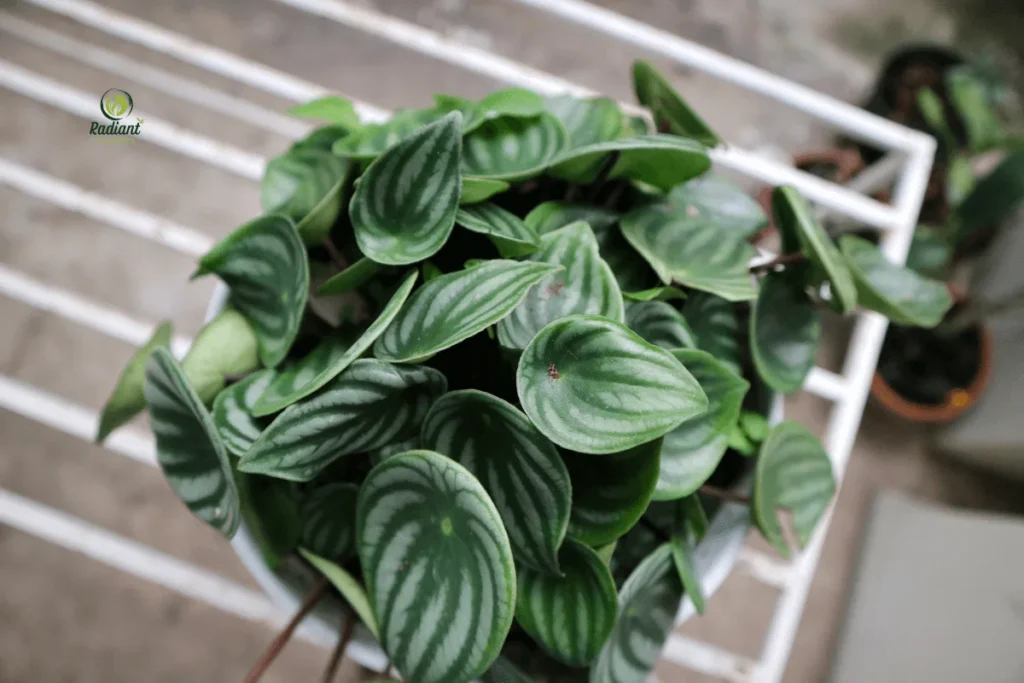
Watermelon Peperomia is a compact tropical houseplant grown for its round, silver-striped leaves that resemble a watermelon rind. Its botanical name is Peperomia argyreia, and it’s prized for being small, decorative, and relatively easy to care for indoors. Unlike vining plants, it stays tidy and upright, making it ideal for desks, shelves, and small apartments.
Botanical Background
Peperomia argyreia belongs to the Piperaceae family, the same family as black pepper. It is native to tropical regions of South America, especially Brazil, where it grows on the forest floor under tree canopies.
Because of its rainforest origins, it naturally prefers:
- Bright, filtered light
- Warm indoor temperatures
- Moderate humidity
- Well-draining soil
Understanding its native habitat is key to proper care — which we’ll break down in the upcoming sections on light, watering, and soil.
Why Is It Called “Watermelon” Peperomia?
The nickname comes from its foliage.
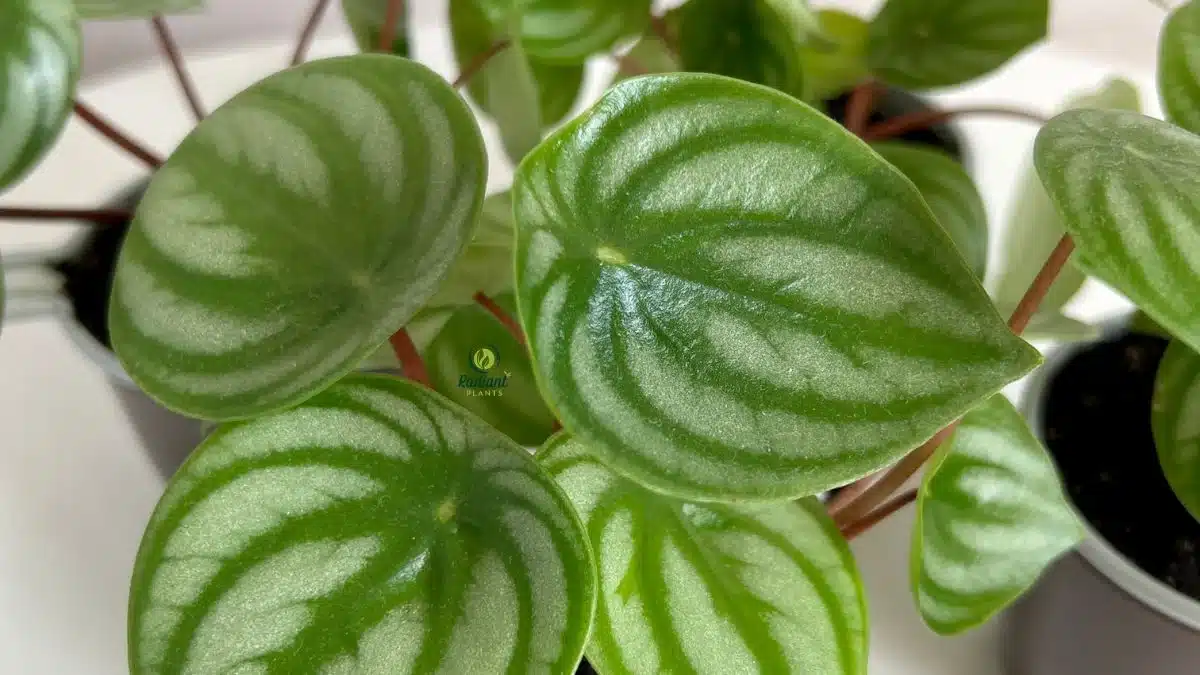
Each leaf is:
- Rounded and slightly thick
- Marked with alternating silver and deep green stripes
- Patterned almost identically to a watermelon rind
The stems are often reddish, which adds visual contrast and makes the plant stand out in modern interiors.
Example Visual Description
Imagine:
- A cluster of glossy, coin-shaped leaves
- Metallic silver striping
- Compact growth rising from the center
This bold pattern is why it’s often used as a statement accent plant, even though it stays small.
Native Habitat & Tropical Origins
In the wild, Watermelon Peperomia grows:
- Beneath tall trees
- In humid rainforest conditions
- In loose, organic-rich soil
- With protection from harsh direct sunlight
This explains why direct sun can scorch its leaves indoors and why overwatering (which suffocates roots) is such a common mistake.
Unlike desert succulents, it does not tolerate prolonged drought — but it also hates soggy soil. It evolved in airy forest conditions, not swampy ground.
Growth Habit: Compact & Slow Growing
One of the biggest reasons people love Watermelon Peperomia is its manageable size.
It grows:
- In a tight, upright clump
- From a central crown
- Without trailing or climbing
It is considered a slow to moderate grower, especially indoors.
You won’t wake up to explosive growth like with pothos. Instead, it produces new leaves gradually from the center. Mature plants look fuller and denser rather than taller.
This makes it ideal for:
- Office desks
- Coffee tables
- Floating shelves
- Small-space apartments
If you’re looking for a plant that won’t outgrow its spot quickly, this is a strong choice.
Average Indoor Size (Data Point)
Indoors, Watermelon Peperomia typically reaches:
- 6–12 inches tall
- 6–12 inches wide
Most mature specimens stay under one foot in height, making it a true compact foliage plant.
Because it remains small, it’s frequently grouped with other petite peperomia varieties in decorative arrangements.
Quick Fact Box
- Botanical Name: Peperomia argyreia
- Common Name: Watermelon Peperomia
- Plant Type: Tropical foliage houseplant
- Mature Size: 6–12 inches tall and wide
- Growth Rate: Slow to moderate
- Pet Safety: Listed as non-toxic by ASPCA
- Light Preference: Bright, indirect light
How It Compares to Other Peperomia Types
The peperomia genus includes over 1,000 species, but not all look alike.
Here’s how Watermelon Peperomia differs:
Feature | Watermelon Peperomia | Other Peperomia Types |
|---|---|---|
Leaf Shape | Round, striped | Oval, pointed, or textured |
Visual Pattern | Silver watermelon stripes | Solid green or variegated |
Growth Style | Compact clumping | Some trailing or upright |
Decor Appeal | Bold statement foliage | Subtle, minimalist foliage |
For example:
- Peperomia obtusifolia has thicker, solid green leaves and a more rubbery texture.
- Peperomia caperata features deeply wrinkled leaves instead of smooth striped ones.
Watermelon Peperomia stands out specifically for its graphic leaf pattern, which is why it often trends in modern and minimalist decor.
Why This Matters for Care
Understanding what Watermelon Peperomia is helps you avoid common beginner mistakes.
Because it is:
- A tropical understory plant
- Compact and slow-growing
- Sensitive to soggy roots
It requires different care than fast-growing vines or desert succulents.
In the next section, we’ll look at whether it’s truly beginner-friendly — and what makes people accidentally kill it.
Is Watermelon Peperomia Easy to Care For?
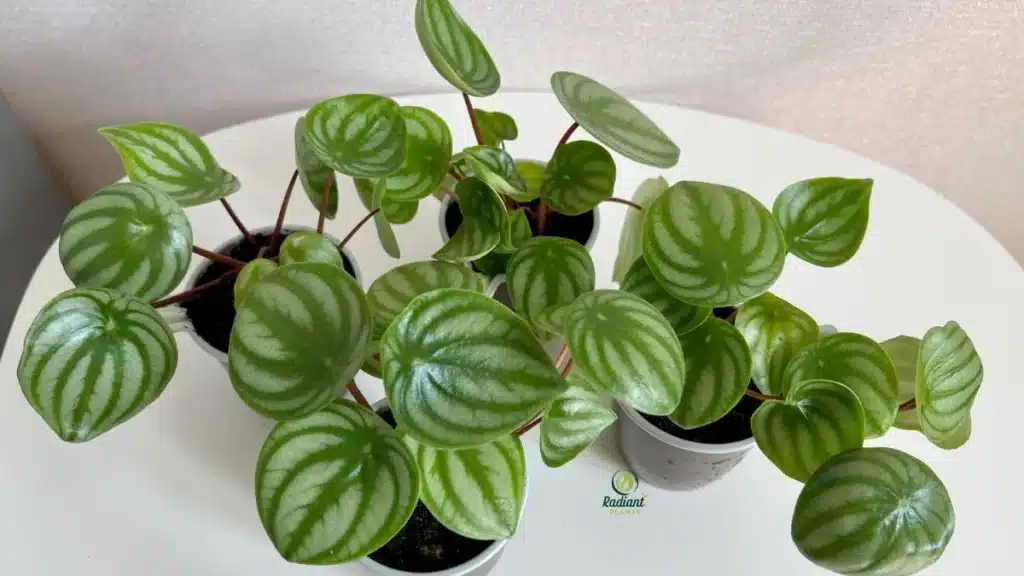
Yes, Watermelon Peperomia is considered beginner-friendly — but only if you avoid overwatering. It’s compact, slow-growing, and adaptable to typical indoor conditions. Most failures happen not because it’s difficult, but because new owners treat it like a thirsty tropical plant instead of a semi-succulent foliage plant.
Let’s break that down clearly.
Beginner-Friendly Level
Watermelon Peperomia sits in the “easy with basic awareness” category.
It’s easier than:
- Fiddle leaf figs
- Calatheas
- High-humidity tropical plants
But slightly less forgiving than:
- Snake plants
- ZZ plants
Why?
Because it stores some moisture in its thick leaves, which means it prefers drying out between waterings. That semi-succulent trait is what confuses beginners.
If you can:
- Check the soil before watering
- Provide bright, indirect light
- Avoid soggy soil
You can grow it successfully.
We’ll go deeper into exact watering techniques in the upcoming section on watering schedules.
Ideal for Apartments & Small Spaces
One reason Watermelon Peperomia is so popular in the U.S. is its size.
Indoors, it typically stays between 6–12 inches tall and wide, making it perfect for:
- Studio apartments
- Office desks
- Bookshelves
- Coffee tables
- Dorm rooms
It does not vine, climb, or sprawl aggressively. That means:
- No constant pruning
- No messy growth
- No surprise size explosions
For renters or apartment dwellers with limited light, it performs well near east- or north-facing windows (we’ll detail window placement later).
Pet Safety Confirmation
Watermelon Peperomia is listed as non-toxic to cats and dogs by ASPCA.
That makes it a safer choice compared to many popular houseplants.
However:
- “Non-toxic” doesn’t mean edible.
- Large amounts can still cause mild stomach upset if chewed.
If you’re specifically looking for pet-safe indoor plants, this is one of the better decorative options.
Why People Accidentally Kill It
Most Watermelon Peperomia deaths happen for one reason:
Overwatering.
Because it looks tropical, beginners assume:
“Tropical plant = needs frequent watering.”
But its thick leaves store moisture. The roots are sensitive and can rot if left sitting in soggy soil.
Other common causes include:
- Heavy, compacted potting soil
- Pots without drainage holes
- Very low light combined with frequent watering
- Cold drafts in winter
We’ll cover recovery and diagnosis in the troubleshooting section later in this guide.
Real Example: New Plant Owner Scenario
A first-time plant owner buys a beautiful Watermelon Peperomia from a local nursery.
They:
- Place it in a dim corner
- Water it every Sunday “on schedule.”
- Leave it in the original dense nursery soil
After three weeks:
- Leaves droop
- One turns yellow
- Stems feel soft
The owner waters more, thinking it’s thirsty.
Within a month, the roots begin rotting.
The plant didn’t fail because it’s hard — it failed because watering wasn’t based on soil dryness.
This scenario is extremely common in U.S. homes.
Expert Tip: Why Watering Errors Happen
Watering mistakes usually happen because people water on a calendar instead of checking the soil.
Indoor conditions vary based on:
- Season (dry winter air vs humid summer)
- Pot size
- Soil type
- Light exposure
- HVAC systems
There is no universal “once a week” rule.
Instead, use a soil check method (we’ll explain three reliable ones in the watering section).
If you master watering, Watermelon Peperomia becomes a low-maintenance plant.
Checklist: Is This Plant Right for You?
✔ You prefer compact plants
✔ You have bright, indirect light
✔ You don’t want a fast-growing vine
✔ You’re willing to check the soil before watering
✔ You live in an apartment or small space
✔ You want a pet-safe plant (per ASPCA)
It may not be ideal if:
✘ You tend to overwater
✘ Your space is very dark
✘ You want a fast-growing statement plant
Common Beginner Mistakes
- Watering on a schedule instead of by soil dryness
- Using heavy garden soil without drainage
- Placing it in direct afternoon sun
- Leaving it in a decorative pot with no drainage
- Fertilizing too frequently
Avoid these, and Watermelon Peperomia becomes a simple, rewarding plant.
In the next section, we’ll cover the single most important factor for long-term success: light requirements.
Light Requirements (The #1 Success Factor)
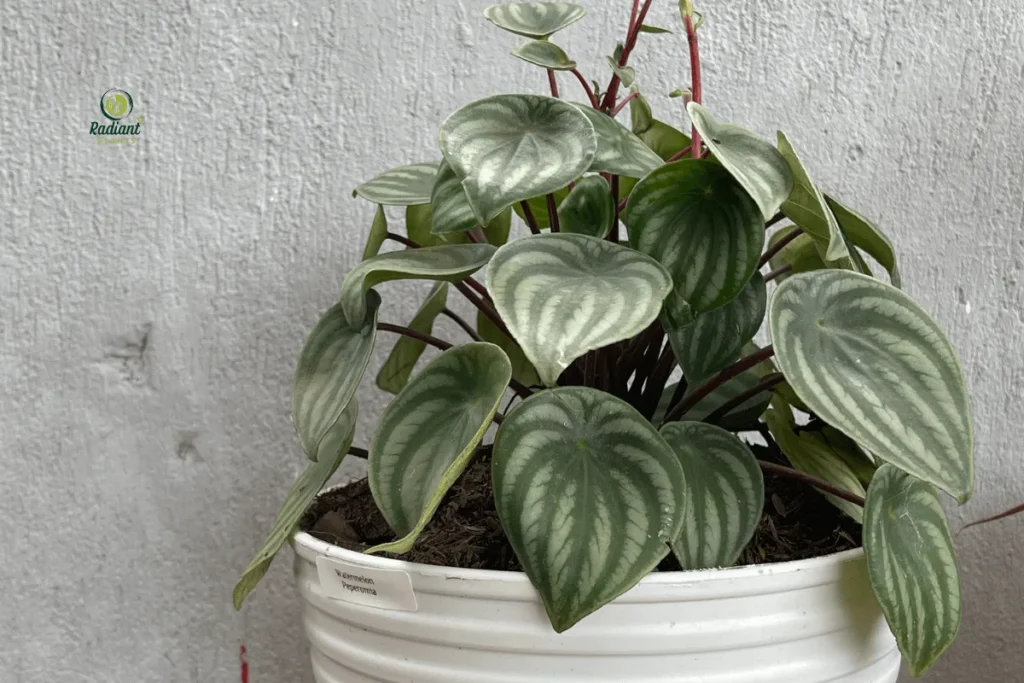
Watermelon Peperomia thrives in bright, indirect light. It does best near a well-lit window where it receives filtered sunlight but no harsh direct rays. If lighting is wrong, you’ll quickly notice faded color, leggy growth, or shrinking leaves.
Light is the single biggest factor in whether your plant stays compact and vibrant — or slowly declines.
Ideal Indoor Light Conditions
Because Peperomia argyreia naturally grows under rainforest canopies, it prefers diffused, indirect light.
Bright indirect light means:
- The room is well-lit.
- The plant can “see” the sky.
- Sunlight does not hit the leaves directly for long periods.
If you can comfortably read a book without turning on a lamp, the light level is usually sufficient.
Window Direction Breakdown (U.S. Context)
Light intensity varies by window orientation in the United States:
North-facing window
- Soft, consistent light
- Safe placement directly on the sill
- May be slightly dim in winter
East-facing window
- Gentle morning sun
- Ideal for most Watermelon Peperomia plants
- Low risk of leaf burn
South-facing window
- Strong light
- Place 3–6 feet away or use sheer curtains
- Too much direct exposure can fade stripes
West-facing window
- Intense afternoon sun
- Keep several feet back
- High burn risk in summer
Season matters. In winter, light intensity drops across most of the U.S. due to shorter daylight hours (confirmed by daylight data from the National Oceanic and Atmospheric Administration). You may need to move the plant slightly closer to a window during colder months.
Example Placement Ideas
- On a bookshelf 2–4 feet from an east-facing window
- On a desk near a bright north-facing window
- In a living room with sheer curtains filtering the south exposure
- On a plant stand beside (not directly in) a west-facing window
Avoid placing it:
- In dark corners
- In direct afternoon sun
- Behind thick blackout curtains
Signs of Too Much Light
Watermelon Peperomia will tell you quickly if light is excessive.
Symptoms:
- Faded or washed-out silver stripes
- Yellowing patches on upper leaves
- Brown, crispy burn spots
- Leaves curling downward from stress
Direct sun can damage leaf tissue, especially in summer when UV intensity is strongest.
If you see burn marks:
- Move the plant further from the window.
- Trim severely damaged leaves.
- Monitor new growth — it should appear healthy.
Signs of Too Little Light
Insufficient light leads to slow decline rather than immediate damage.
Symptoms:
- Leggy growth (long, stretched stems)
- Smaller new leaves
- Fewer leaves are emerging from the center
- Dull coloring
Low light also increases overwatering risk because soil dries more slowly — a common issue we’ll address in the watering section.
Comparison Table: Light Conditions Breakdown
Condition | What You’ll See | Long-Term Effect |
|---|---|---|
Correct Light | Bold stripes, compact growth, steady new leaves | Healthy, dense plant |
Too Much Light | Faded leaves, brown burn spots | Leaf damage, stress |
Too Little Light | Leggy stems, small leaves | Weak growth, rot risk |
Expert Tip: Light + Water Work Together
Light intensity directly affects watering frequency.
More light = faster drying soil
Less light = slower drying soil
Many plant owners overwater in low-light conditions because the soil stays damp longer. Always adjust watering based on light exposure.
If your plant is struggling despite “correct” watering, reassess its light first.
Common Light Mistakes
- Placing it in direct afternoon sun
- Keeping it in a dark hallway
- Assuming the artificial ceiling light is enough
- Not adjusting placement seasonally
- Forgetting that window distance matters
Light sets the foundation for everything else — watering, growth rate, and leaf size. In the next section, we’ll cover exactly how to water Watermelon Peperomia correctly without causing root rot.
Watering Watermelon Peperomia Correctly
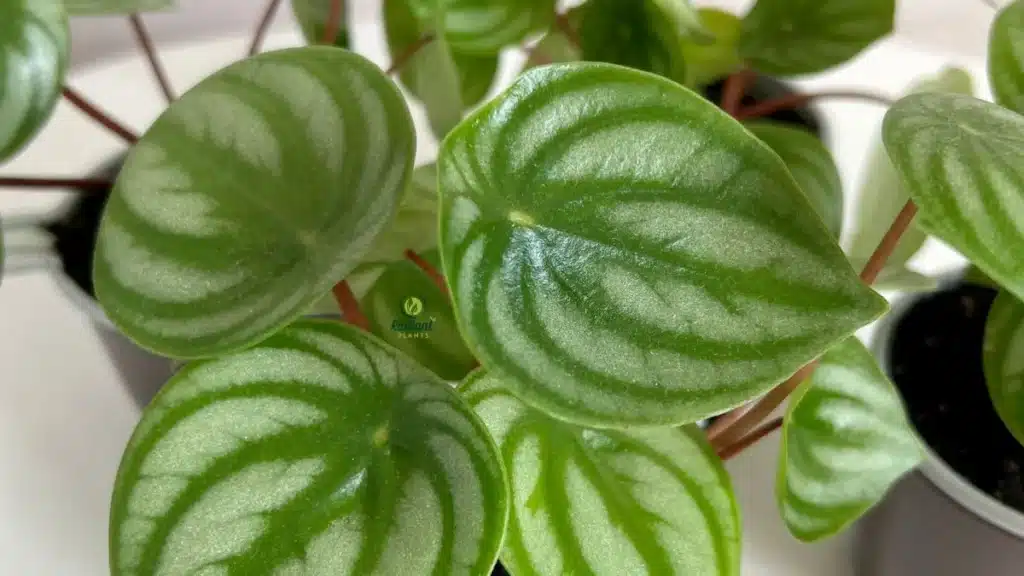
Proper watering is the single most common factor in keeping a Watermelon Peperomia healthy. Overwatering is far more dangerous than letting it dry slightly between waterings. By checking soil moisture and adjusting for seasonal changes, you can prevent root rot and promote steady growth.
Watering correctly is directly tied to the light conditions we discussed in the previous section — brighter light dries the soil faster, while low-light spots retain moisture longer.
How Often to Water (Seasonal Guide)
Watering frequency varies based on the season and indoor climate, especially in U.S. homes with dry winter heating systems.
Summer schedule (highlight, warmer temps):
- Check the soil every 4–7 days.
- Water thoroughly only when the top 1–2 inches of soil are dry.
- Ensure water drains completely to avoid soggy roots.
Winter adjustments (low light, dry, heated homes):
- Soil dries more slowly due to lower light, but indoor heating can also dry leaves.
- Check the soil every 7–10 days.
- Use room-temperature water to avoid shocking roots.
Pro Tip: Always adjust watering based on soil moisture, not a strict calendar. Even “weekly” routines can be too much or too little depending on your home.
How to Check Soil Properly
Finger Test
- Insert your finger 1–2 inches into the soil.
- If it feels dry, water. If it feels moist, wait a few days.
Moisture Meter Use
- Digital meters can give accurate readings.
- Target reading: soil slightly damp, not wet.
Pot Weight Method
- Lift the pot to feel the weight difference between dry and wet soil.
- Over time, you’ll know by feel when it’s ready for water.
Using a combination of these methods increases accuracy, especially in varying indoor light or seasonal changes.
Overwatering vs Underwatering Symptoms
Watermelon Peperomia stores moisture in its thick leaves, so symptoms often appear in leaves first.
Overwatering Signs:
- Yellow, soft leaves
- Mushy stems
- Root rot (smell or black roots)
Underwatering Signs:
- Wrinkled or curling leaves
- Brown leaf tips
- Leaf drop
Data Point: Studies of houseplant care (University of Florida IFAS Extension) show overwatering is the most common cause of Watermelon Peperomia death.
Comparison Table: Overwater vs Underwater
Symptom | Overwatering | Underwatering |
|---|---|---|
Leaves | Yellow, soft, mushy | Wrinkled, curling |
Stems | Soft or collapsing | Dry, brittle |
Soil | Wet, slow to dry | Dry, pulls from the pot |
Leaf Drop | Suddenly, the lower leaves | Gradual, scattered |
Recovery | Requires root inspection & repot | Water and humidity adjustment |
Checklist: Watering Decision Tree
- Check the top 1–2 inches of soil
- Is the soil dry? → Yes → Water thoroughly
- Is the soil moist? → Wait 2–3 days
- Is the plant in low light? → Reduce watering frequency
- Is the plant showing yellow leaves? → Inspect roots for overwatering
This quick guide helps prevent both over- and underwatering errors.
Case Study: Recovery from Root Rot
A U.S. plant parent noticed yellowing leaves and a soft stem base three weeks after moving their Watermelon Peperomia into a bright south-facing window.
Recovery steps taken:
- Removed the plant from the pot
- Trimmed black, mushy roots
- Repotted in a fresh, well-draining soil mix
- Placed it in bright, indirect light
- Watered only when the top 2 inches were dry
Within six weeks, new leaves emerged healthy and firm, demonstrating that careful diagnosis and soil management can save nearly lost plants.
Common Mistakes
- Watering on a strict calendar instead of checking the soil
- Using pots without drainage holes
- Leaving the plant in standing water
- Not adjusting for seasonal changes in light or temperature
- Overcompensating after seeing droopy leaves (can worsen root rot)
Watering correctly is essential before moving to fertilizing or repotting, which we’ll cover in the next sections. Proper water management supports leaf health, vibrant stripes, and overall longevity.
Best Soil & Potting Mix
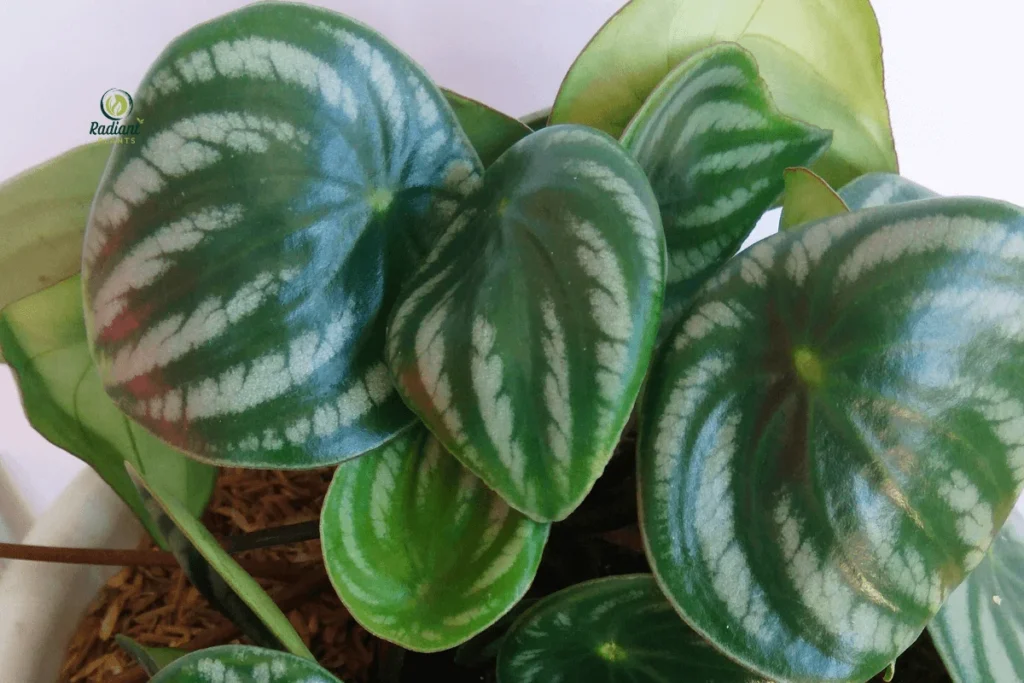
Watermelon Peperomia thrives in a well-draining, airy soil mix. Good drainage is critical because its roots are sensitive to excess moisture and can rot quickly in soggy soil. Using the right soil mix ensures healthy growth, vibrant leaves, and a longer lifespan.
Soil choice ties directly to watering practices discussed in the previous section — even perfect watering won’t save a plant in compact, water-retentive soil.
Why Drainage Matters
Because Watermelon Peperomia stores water in its leaves, its roots do not tolerate standing moisture. Poor drainage can lead to:
- Root rot
- Yellowing, soft leaves
- Stunted growth
Always ensure your pot has drainage holes, and avoid dense garden soil that holds too much water. Even a short period of soggy roots can kill the plant.
Ideal Soil Composition
For optimal growth, create a soil mix that is:
- Light and airy
- Fast-draining
- Rich in organic matter
Recommended blend:
- 2 parts peat moss or coco coir (retains moisture but light)
- 1 part perlite (improves aeration and drainage)
- 1 part orchid bark or coarse horticultural bark (adds structure, prevents compaction)
This combination mimics the plant’s natural rainforest floor substrate, allowing roots to breathe while retaining enough moisture.
Store-Bought Mix Recommendations
If you prefer convenience, look for:
- “Succulent & cactus mix” (amended with extra peat or bark)
- Aroid or tropical houseplant mixes with added perlite or orchid bark
- Avoid heavy, clay-based potting soil, which retains too much water
Tip: You can always amend store-bought soil with extra perlite or bark for better drainage.
Soil Recipe Example (DIY Mix)
- 40% peat moss or coco coir
- 30% perlite
- 30% orchid bark
- Optional: 5–10% activated charcoal for odor and root health
Mix thoroughly, and lightly moisten before potting. This prevents compaction and promotes fast root establishment.
Comparison Table: Regular Potting Soil vs Amended Mix
Feature | Regular Potting Soil | Amended Watermelon Peperomia Mix |
|---|---|---|
Drainage | Slow, may hold water | Fast, airy, drains well |
Root Health | Risk of rot | Promotes healthy root growth |
Airflow | Low | High |
Leaf Color | Dull or yellow if overwatered | Vibrant, healthy stripes |
Maintenance | Frequent root checks are needed | Low-maintenance with correct watering |
Importance of Drainage Holes
Drainage holes prevent water from pooling at the bottom, a primary cause of root rot. If your decorative pot doesn’t have holes:
- Use it as a cachepot, placing the plant in a drainage-enabled inner pot
- Avoid bottom watering without monitoring soil moisture
Even short periods in standing water can be fatal.
Expert Tip
Combine proper soil with watering techniques. Even a perfect mix can fail if watering is too frequent or too deep. Always let the top 1–2 inches dry between watering, and match your soil choice to your pot size — larger pots dry slower and need more porous mixes.
Common Mistakes
- Using standard garden or houseplant soil without amendments
- Skipping perlite or bark additions
- Planting in pots without drainage
- Overfilling pots with dense soil that compacts
- Ignoring seasonal changes in moisture retention
Choosing the right soil sets the foundation for watering success, leaf vibrancy, and root health, which we’ll build on in the next section covering temperature and humidity needs.
Temperature & Humidity Needs
Watermelon Peperomia thrives in average U.S. indoor temperatures and moderate humidity. It prefers a stable environment between 65–80°F (18–27°C) and can tolerate typical household conditions, but extremes in heat or cold can stress the plant. Maintaining proper humidity helps prevent leaf curling, brown tips, and slow growth.
Temperature and humidity are closely tied to watering success and overall plant health, as discussed in previous sections.
Ideal Temperature Range (U.S. Indoor Norms)
- Optimal: 65–80°F (18–27°C)
- Minimum: 55°F (13°C) — below this, growth slows, and cold damage can occur
- Maximum: 85°F (29°C) — prolonged heat can dry out leaves
Most homes in the U.S. naturally fall within this range, especially in living rooms, kitchens, and bedrooms, making Watermelon Peperomia a reliable indoor choice.
Humidity Tolerance
Watermelon Peperomia evolved in rainforest understories, so it prefers moderate to high humidity, but it is more forgiving than tropical plants like Calathea or Alocasia.
- Typical indoor humidity in winter: 25–35% (U.S. Environmental Protection Agency)
- Symptoms of low humidity: curling leaves, brown edges, slower growth
- Symptoms of high humidity with poor airflow: mold or fungal issues on the soil
Winter Heating Issues
Central heating and space heaters often reduce indoor humidity, especially in U.S. homes during winter.
Common winter problems:
- Dry air is causing leaf tip browning
- Soil dries more slowly under low light, increasing the risk of overwatering if not monitored
- Cooler drafts near windows or doors can shock the plant
Real Example:
- Apartment: Often drier due to forced air heating; consider a small humidity tray or grouping plants together
- House: Slightly higher baseline humidity; less frequent misting needed
When to Use a Humidity Tray
A humidity tray is a simple solution to increase localized moisture around the plant without overwatering the soil:
- Fill a shallow tray with water and pebbles
- Place the plant pot on top (not submerged)
- Evaporation raises humidity around leaves
Use this method during dry winter months or in rooms with strong heating.
Expert Tip
Balance humidity and airflow. High humidity without circulation can lead to fungal issues, while low humidity can stunt growth. Monitor leaf tips and soil moisture together — these are better indicators than guessing by thermostat alone.
Common Mistakes
- Placing the plant too close to drafty windows or vents
- Ignoring low winter humidity and overwatering to compensate
- Using a closed terrarium in already high-humidity rooms (risk of mold)
- Assuming average home humidity is always sufficient — check with a hygrometer
Maintaining the right temperature and humidity supports strong leaves and compact growth, which will make the plant easier to water, fertilize, and propagate as covered in the upcoming sections.
Fertilizing Schedule (Do You Even Need It?)
Watermelon Peperomia is a light feeder, meaning it doesn’t require frequent fertilization. Occasional feeding during its active growing season can boost leaf growth and vibrancy, but over-fertilizing can damage roots or cause leaf burn. Understanding when and how to fertilize ensures healthy growth without unnecessary risk.
Fertilization works best when paired with proper watering, soil mix, and light conditions discussed earlier.
Light Feeder Explanation
Unlike fast-growing houseplants, Watermelon Peperomia:
- Grows slowly
- Stores nutrients efficiently in its leaves
- Doesn’t require heavy feeding
A diluted, balanced liquid fertilizer is sufficient to maintain healthy growth and vibrant stripes on leaves.
When to Fertilize
- Spring and Summer: During active growth
- Frequency: Every 4–6 weeks
- Type: Balanced, water-soluble fertilizer (10-10-10 or 20-20-20) at half strength
This supports new leaf production and enhances foliage patterns without stressing the plant.
When NOT to Fertilize
- Fall and Winter: Growth slows; fertilizer can accumulate in the soil
- Recently repotted plants: Wait 4–6 weeks for roots to establish
- Stressed or unhealthy plants: Focus on recovery before feeding
Over-fertilizing is one of the most common mistakes among beginner plant owners, often resulting in yellow leaf tips or burned roots.
Dilution Recommendations
- Use 50% of the label-recommended strength for indoor Watermelon Peperomia
- Apply to moist soil, not dry, to prevent root shock
- Avoid fertilizing immediately after repotting or during light-stressed periods
Checklist: Safe Fertilizing Steps
- Confirm the plant is actively growing
- Choose a balanced, water-soluble fertilizer
- Dilute to half strength
- Water the soil before fertilizing
- Apply every 4–6 weeks
- Skip fertilization during dormancy or stress
Expert Tip
Less is more. Watermelon Peperomia benefits more from correct light, soil, and watering than from fertilizer. Fertilizer should supplement care, not replace it. Overfeeding is far more damaging than skipping a few applications.
Common Mistakes
- Fertilizing year-round without considering the growth cycle
- Using full-strength fertilizer for indoor plants
- Fertilizing immediately after repotting
- Ignoring light conditions — low light + fertilizer can cause nutrient buildup
- Applying to dry soil
When fertilized correctly, Watermelon Peperomia develops denser, brighter leaves and responds well to propagation. The next section will cover repotting and root health, another key step for long-term care.
Repotting & Root Health
Watermelon Peperomia prefers to be slightly root-bound and only needs repotting every 2–3 years. Repotting too often can stress the plant, while waiting too long may slow growth or cause roots to become overcrowded. Proper repotting techniques and root care ensure a healthy, vibrant plant without shocking its delicate system.
Repotting also ties directly to soil choice, watering practices, and fertilization, all covered in previous sections.
When to Repot
Signs your Watermelon Peperomia needs repotting include:
- Roots emerging from drainage holes or circling the surface
- Slowed growth, fewer new leaves despite proper care
- Soil is compacted or no longer drains well
Pro tip: Since this plant grows slowly, repotting every 2–3 years is typically sufficient unless you notice these signs.
How to Repot Safely
Follow these steps to minimize shock:
- Choose a pot 1–2 inches larger in diameter than the current one, with drainage holes
- Prepare fresh, well-draining soil (peat + perlite + orchid bark blend)
- Remove the plant carefully from the old pot
- Inspect roots for any rot; trim soft or blackened roots with sterilized scissors
- Place the plant in a new pot, and add soil gently around the roots without compacting
- Water lightly, just enough to settle the soil
- Keep in bright, indirect light for 1–2 weeks to recover
Does It Like Being Root-Bound?
Watermelon Peperomia tolerates slight root-binding and sometimes prefers it. Overly spacious pots can lead to overwatering and slower establishment. Only move to a bigger pot when growth is visibly restricted, or roots are overcrowded.
Key takeaway: Don’t overpot. Choose a snug container and repot sparingly.
Step Checklist: Repotting Success
✔ Choose a slightly larger pot with drainage
✔ Prepare fresh, airy soil mix
✔ Remove plant carefully, inspect roots
✔ Trim any damaged roots
✔ Place in new soil without compacting
✔ Water lightly
✔ Keep in bright, indirect light post-repot
Case Study: Repot Shock Recovery
A U.S. plant parent repotted their Watermelon Peperomia into a larger decorative pot without checking drainage. After 5 days:
- Leaves drooped
- Bottom leaves yellowed
- Growth slowed
Recovery steps:
- Removed plant and trimmed soggy roots
- Repotted in a proper drainage pot with amended soil
- Watered lightly and moved to filtered east-facing light
- After 3 weeks, new leaves emerged healthy and firm
This demonstrates the importance of pot size, drainage, and gentle handling.
Common Mistakes
- Repotting too frequently
- Using oversized pots
- Compacting soil too tightly
- Neglecting to trim damaged roots
- Watering heavily immediately after repotting
Expert Tip
Let the plant tell you when it’s ready. Growth slowdown, crowded roots, or soil degradation are better signals than an arbitrary 12-month schedule. Coupled with proper soil mix and watering, careful repotting keeps your Watermelon Peperomia thriving for years.
Repotting correctly ensures strong roots and prepares the plant for propagation, fertilization, and long-term leaf health, which we’ll cover in upcoming sections.
Common Problems & How to Fix Them
Watermelon Peperomia is generally resilient, but certain issues like yellowing, curling, or dropping leaves can signal care problems. Most issues are linked to light, watering, humidity, or soil rather than pests. Correct diagnosis and timely intervention can restore the plant’s health quickly.
This section builds on light, watering, soil, and temperature guidelines discussed in previous sections.
Yellow Leaves
Likely Causes:
- Overwatering or waterlogged soil
- Poor drainage
- Nutrient imbalance
Diagnosis Steps:
- Check soil moisture and drainage
- Inspect roots for rot (black, mushy roots indicate overwatering)
- Review recent fertilization
Immediate Fix:
- Remove yellow leaves
- Adjust watering frequency
- Repot if roots are rotting
Prevention:
- Use well-draining soil
- Water only when the top 1–2 inches of soil are dry
- Avoid excessive fertilization
Real Example: A new plant owner noticed the bottom leaves yellowing within two weeks of moving their Watermelon Peperomia into a deeper pot without drainage. After repotting and adjusting watering, new leaves grew vibrant and healthy.
Curling Leaves
Likely Causes:
- Low humidity
- Underwatering
- Temperature stress (too hot or too cold)
Diagnosis Steps:
- Measure indoor humidity
- Inspect soil moisture
- Check placement near vents or windows
Immediate Fix:
- Increase humidity with a tray or misting
- Adjust watering schedule
- Move away from drafts
Prevention:
- Maintain indoor humidity 40–60%
- Avoid sudden temperature swings
- Ensure consistent watering
Drooping Stems
Likely Causes:
- Overwatering
- Underwatering
- Low light
Diagnosis Steps:
- Check soil moisture
- Observe stem firmness
- Compare the growth location to the light chart from the previous section
Immediate Fix:
- Correct watering
- Move to brighter indirect light if needed
- Stake or support weak stems temporarily
Prevention:
- Match watering to soil moisture
- Provide adequate indirect light
- Avoid frequent moving
Leaves Falling Off
Likely Causes:
- Shock from repotting or relocation
- Sudden light change
- Overwatering
Diagnosis Steps:
- Review recent care changes
- Check soil and root health
- Observe new leaf emergence
Immediate Fix:
- Remove dead leaves
- Stabilize environment
- Adjust watering if needed
Prevention:
- Avoid sudden environmental changes
- Handle the plant gently during care or relocation
- Maintain consistent watering
Brown Edges
Likely Causes:
- Low humidity
- Overfertilization
- Salt buildup in soil
Diagnosis Steps:
- Check indoor humidity
- Review fertilizer usage
- Examine the soil for salts or residue
Immediate Fix:
- Trim brown edges
- Flush soil with water to remove salt buildup
- Adjust fertilization and humidity
Prevention:
- Fertilize at half strength only during the growth season
- Use humidity trays in dry environments
- Repot with fresh soil when salts accumulate
Diagnostic Comparison Chart
Symptom | Common Cause | Quick Fix | Prevention |
|---|---|---|---|
Yellow leaves | Overwatering / nutrient issue | Adjust watering, repot | Well-draining soil, proper watering |
Curling leaves | Low humidity/stress | Increase humidity, adjust temp | Maintain consistent humidity |
Drooping stems | Over/underwatering / low light | Correct watering, move the light | Match watering to soil, good light |
Leaves falling off | Shock/overwatering/relocation | Stabilize the environment, remove dead leaves | Avoid sudden changes and careful handling |
Brown edges | Low humidity/fertilizer salts | Trim, flush soil, adjust care | Use humidity trays, dilute fertilizer |
Expert Tip
Observe patterns, not single leaves. One droopy or yellow leaf is normal; multiple affected leaves indicate systemic issues. Track watering, light, and humidity together to pinpoint problems.
Emergency Recovery Checklist
- Inspect roots and soil immediately
- Adjust watering schedule
- Relocate to bright, indirect light
- Increase humidity if needed
- Remove dead or damaged leaves
- Repot if the soil is compacted or root-bound
- Monitor new growth over the next 2–4 weeks
By addressing these common issues promptly, your Watermelon Peperomia will maintain its compact shape, vibrant stripes, and healthy foliage, preparing it for long-term growth, propagation, and display.
How to Propagate Watermelon Peperomia
Watermelon Peperomia is easy to propagate using leaf or stem cuttings, either in water or directly in soil. The plant roots relatively quickly in warm, bright (indirect) light conditions, and new baby plants typically appear within a few weeks. Success depends on clean cuts, proper moisture, and stable humidity.
Propagation works best when your plant is healthy, actively growing (spring or summer), and receiving proper light and watering as explained in earlier sections.
Leaf Cutting Method (Most Popular)
This method uses a single healthy leaf to grow a new plant.
How It Works
Watermelon Peperomia can regenerate from a leaf blade with part of its petiole (leaf stem). New roots form at the cut edge, followed by tiny plantlets.
Steps
- Select a mature, healthy leaf (no yellowing or damage).
- Cut the leaf with 1–2 inches of petiole attached using sterilized scissors.
- Optional: Cut the leaf in half horizontally (both halves can root).
- Insert the cut edge into moist, well-draining soil (peat + perlite mix).
- Keep in bright, indirect light.
- Maintain slightly moist soil (not wet).
Roots usually form in 2–4 weeks, with baby leaves emerging around week 4–6.
Stem Cutting Method (Faster Results)
This method uses a section of stem with at least one node (where leaves attach).
Steps
- Cut a 2–3 inch stem section with at least one node.
- Remove lower leaves if necessary.
- Place the node in water or moist soil.
- Keep warm (65–80°F) and in indirect light.
Stem cuttings often root slightly faster than leaf cuttings because the node already contains growth tissue.
Water vs Soil Propagation
Both methods work well. Your choice depends on preference and monitoring style.
Method | Advantages | Disadvantages | Best For |
|---|---|---|---|
Water | Easy to monitor roots | Roots must adapt when transferred to soil | Beginners |
Soil | No transplant shock | Roots not visible | Faster long-term establishment |
Key insight: Soil propagation reduces transplant shock because roots form directly in their final growing medium.
Rooting Timeline (Example)
Week 1: Cutting remains stable, no visible changes
Week 2–3: Root formation begins
Week 4: Small root system visible (water method)
Week 4–6: Tiny baby leaves emerge
Week 6–8: New plant begins steady growth
Warm temperatures and moderate humidity speed up rooting. Cold or dry indoor air slows development.
Step-by-Step Propagation Checklist
✔ Choose a healthy parent plant
✔ Use sterilized scissors
✔ Take a leaf or stem cutting
✔ Use airy, well-draining mix
✔ Provide bright, indirect light
✔ Keep medium lightly moist
✔ Maintain moderate humidity
✔ Be patient (4–8 weeks total)
Common Mistakes
- Using damaged or unhealthy leaves
- Overwatering soil cuttings (causes rot)
- Placing cuttings in direct sun
- Letting water become stagnant (change weekly)
- Attempting propagation in winter dormancy
If your Watermelon Peperomia has strong roots, proper soil, and balanced watering—as covered earlier—propagation success rates are high. With patience and stable conditions, you can multiply your plant and create fuller displays or share with friends.
Styling & Decor Ideas (High Engagement Section)
Watermelon Peperomia is ideal for modern interiors because of its compact size, bold striped leaves, and tidy growth habit. It works beautifully on desks, shelves, and small apartment spaces where statement foliage is needed without visual clutter. With the right pot and placement, it becomes both a décor piece and a healthy houseplant.
This section builds on proper light placement, humidity balance, and pot drainage covered earlier.
Desk Styling (Home Office Upgrade)
Because it stays compact (typically 6–12 inches tall), Watermelon Peperomia fits perfectly on:
- Work desks
- Side tables
- Floating wall desks
- Entry consoles
Placement Tip: Position it near an east- or north-facing window where it receives bright, indirect light. Avoid direct sun on desks near south-facing windows.
Example Scenario:
In a small home office, placing the plant beside a neutral lamp and a stack of books instantly softens the workspace and adds contrast to minimalist décor.
Shelf Placement (Vertical Interest)
Watermelon Peperomia adds texture to open shelving without trailing or sprawling.
Best spots:
- Floating wooden shelves
- Bookshelves near windows
- Bathroom shelves with moderate humidity
Keep it toward the front edge of shelves, so leaves receive adequate indirect light and airflow.
Pairing With Other Pet-Safe Plants
Watermelon Peperomia is considered non-toxic to pets according to the ASPCA (American Society for the Prevention of Cruelty to Animals), making it a safe choice for homes with cats and dogs.
Beautiful pairings include:
- Spider Plant
- Calathea varieties
- Prayer Plant
- Baby Rubber Plant
Combining different leaf textures (round + striped + trailing) creates depth without overcrowding.
Best Pots for Airflow
Proper pot choice impacts both aesthetics and root health.
Pot Type | Airflow | Moisture Control | Best For |
|---|---|---|---|
Terracotta | Excellent | Dries faster | Overwatering prevention |
Ceramic (with drainage) | Moderate | Balanced | Decorative styling |
Plastic nursery pot | Low | Retains moisture | Inside decorative cover pots |
Self-watering pot | Controlled | Risk of overwatering | Experienced growers only |
Key Insight: Always prioritize pots with drainage holes, even if using decorative outer containers.
Small Apartment Decor Use
Watermelon Peperomia is perfect for:
- Studio apartments
- Narrow window sills
- Coffee tables
- Kitchen counters
Because it grows upright and compact, it doesn’t crowd small spaces like trailing plants might.
Real Example: Minimalist Space Styling
In a minimalist apartment with white walls, oak furniture, and black accents:
- A single Watermelon Peperomia in a matte white ceramic pot
- Placed on a wooden side table
- Paired with one neutral-toned book and a small candle
The bold striped leaves become the focal point without overwhelming the space.
Expert Tip
Match the pot color to the leaf contrast. Light pots (white, beige, concrete) emphasize the dark green stripes, while darker pots create a moody, dramatic effect. Always balance aesthetics with airflow and drainage for long-term plant health.
When styled thoughtfully and placed in proper light, Watermelon Peperomia becomes more than a plant—it becomes a design element that enhances compact spaces while staying easy to maintain.
How Long Does Watermelon Peperomia Live?
Watermelon Peperomia can live 5–10 years indoors with proper care, and often longer when regularly propagated. It is a slow-growing, semi-succulent plant that maintains a compact shape over time. With stable light, correct watering, and occasional repotting, it can remain healthy for many years.
Expected Lifespan Indoors
Under typical U.S. indoor conditions (stable temperatures 65–80°F, moderate humidity, indirect light), most Watermelon Peperomia plants live at least 5 years, with many thriving beyond 8–10 years when well maintained.
Because it is a relatively slow grower, it does not “age out” quickly like fast-growing tropicals. Instead, decline is usually caused by environmental stress rather than natural lifespan limits.
Growth Rate
Watermelon Peperomia is considered a slow to moderate grower.
- Produces more growth in spring and summer
- Minimal growth in fall and winter
- Typically reaches 8–12 inches tall and wide
Growth speed depends heavily on:
- Light intensity (bright indirect light = better growth)
- Soil aeration
- Proper watering balance
- Mild seasonal fertilization
When growth slows unexpectedly during active months, revisit the light and watering sections of this guide.
How to Extend Its Lifespan
Longevity depends more on consistency than intensity of care.
Best practices:
- Keep in bright, indirect light
- Avoid overwatering (the most common killer)
- Use well-draining soil with airflow
- Repot every 2–3 years
- Fertilize lightly during active growth
- Propagate every few years to refresh the plant
Propagation is especially useful. Even if the mother plant becomes woody or less compact over time, leaf or stem cuttings can produce new, vigorous plants.
When Decline Is Natural
Some changes are normal and not a sign of failure:
- Older bottom leaves are yellowing occasionally
- Slight legginess in lower-light conditions
- Slower growth during winter
Aging plants may lose some compact symmetry after several years. At that stage, propagation is often the best refresh strategy.
Data Point: Average Lifespan
While exact lifespan varies by environment, most indoor peperomia varieties—including Watermelon Peperomia—are reported to live 5–10 years or more under proper indoor care conditions, especially when grown in stable temperatures and well-draining soil.
Common Mistakes That Shorten Lifespan
- Chronic overwatering leading to root rot
- Using oversized pots that retain too much moisture
- Keeping in low light for extended periods
- Fertilizing too heavily
- Ignoring declining soil structure over time
Most early plant deaths are due to root issues rather than age.
Expert Tip
Think long-term stability, not frequent intervention. Watermelon Peperomia thrives when conditions remain consistent. Avoid moving it frequently, drastically changing watering habits, or overcorrecting small issues.
With steady care and occasional propagation, your Watermelon Peperomia can remain a vibrant, compact foliage plant for many years—making it one of the most rewarding low-maintenance houseplants for long-term indoor styling.
Watermelon Peperomia vs Other Peperomia Varieties
Watermelon Peperomia stands out for its round, striped leaves and compact, upright growth. Compared to other peperomia varieties, it is slightly more sensitive to overwatering but remains beginner-friendly overall. The main differences come down to leaf shape, growth habit, and moisture tolerance.
If you already understand the light, soil, and watering needs covered earlier in this guide, choosing the right variety becomes much easier.
Leaf Size Comparison
- Watermelon Peperomia: Round, silver-striped leaves resembling watermelon rind; typically 2–4 inches wide.
- Baby Rubber Plant (Peperomia obtusifolia): Thicker, oval, glossy green leaves; larger and more succulent-like.
- Peperomia caperata (Ripple Peperomia): Smaller, deeply textured or rippled leaves; compact and decorative.
- Peperomia prostrata (String of Turtles): Tiny, patterned leaves on trailing stems.
Watermelon Peperomia has more dramatic, bold foliage compared to smaller or more textured varieties.
Growth Habit Comparison
- Watermelon Peperomia: Compact, clumping, upright rosette form.
- Peperomia obtusifolia: Upright and slightly bushier with thicker stems.
- Peperomia caperata: Low-growing and mound-forming.
- Peperomia prostrata: Trailing growth, ideal for hanging planters.
If you want a desk or shelf statement plant, Watermelon Peperomia fits well. If you prefer trailing décor, other varieties may be better suited.
Care Difficulty Comparison
All peperomias prefer:
- Bright, indirect light
- Well-draining soil
- Moderate watering
However, leaf thickness affects tolerance:
- Thicker-leaved varieties (like obtusifolia) tolerate missed waterings better.
- Thinner-leaved types (like caperata and Watermelon Peperomia) are slightly more sensitive to overwatering.
Watermelon Peperomia requires careful watering but is not high-maintenance when grown in proper soil and drainage.
Comparison Table
Feature | Watermelon Peperomia | Peperomia obtusifolia | Peperomia caperata | Peperomia prostrata |
|---|---|---|---|---|
Leaf Size | Medium (2–4 in) | Medium–Large | Small–Medium | Very small |
Leaf Texture | Smooth, striped | Thick, glossy | Rippled, textured | Patterned, delicate |
Growth Habit | Compact upright | Upright bushy | Low mound | Trailing |
Water Tolerance | Moderate | High | Moderate | Moderate |
Best For | Desks & shelves | Beginners | Decorative texture | Hanging planters |
Example: Who Should Choose Which?
- Choose Watermelon Peperomia if: You want a compact statement plant with bold foliage for desks, shelves, or minimalist spaces.
- Choose Peperomia obtusifolia if: You prefer a thicker, more drought-tolerant plant that’s slightly more forgiving.
- Choose Peperomia caperata if: You love textured, decorative leaves in small arrangements.
- Choose Peperomia prostrata if: You want a trailing plant for hanging baskets or high shelves.
Expert Tip
Don’t choose based on appearance alone—match the plant to your watering habits and space. If you tend to overwater, select thicker-leaved varieties. If you want a compact decorative focal point and can manage moderate watering, Watermelon Peperomia is an excellent choice.
Ultimately, Watermelon Peperomia remains one of the most visually striking yet manageable peperomia varieties, especially for small indoor spaces where compact growth and bold foliage are priorities.
Quick Care Checklist (Printable Style Section)
Watermelon Peperomia thrives with bright indirect light, moderate watering, and well-draining soil. It prefers stable indoor temperatures, moderate humidity, and only light fertilization during the growing season. When these basics are consistent, the plant remains compact, vibrant, and long-lived.
Use this simplified checklist as a printable reference for daily and seasonal care.
🌿 Watermelon Peperomia Care Checklist
✔ Light
- Bright, indirect light
- Avoid direct afternoon sun
- Rotate the plant every 2–3 weeks for even growth
✔ Water
- Water when the top 1–2 inches of soil are dry
- Never let soil stay soggy
- Reduce watering in fall and winter
✔ Soil
- Use airy, well-draining mix (peat + perlite + orchid bark)
- Avoid heavy, compact potting soil
- Ensure the pot has drainage holes
✔ Humidity
- Ideal range: 40–60%
- Protect from cold drafts and heating vents
- Use a humidity tray if the indoor air is dry
✔ Fertilizer
- Feed every 4–6 weeks in spring/summer
- Use balanced liquid fertilizer at half strength
- Do not fertilize in winter
✔ Repotting
- Repot every 2–3 years
- Move up only 1–2 inches in pot size
- Trim unhealthy roots during repotting
Beginner Summary
If you remember only three things:
- Do not overwater.
- Give bright, indirect light.
- Use well-draining soil with proper drainage.
Most Watermelon Peperomia problems—yellow leaves, drooping stems, root rot—are caused by excess moisture rather than neglect.
Common Mistakes Recap
- Overwatering or using oversized pots
- Keeping a plant in low light long-term
- Fertilizing too frequently
- Ignoring drainage holes
- Repotting too often
When these care fundamentals are followed consistently, Watermelon Peperomia remains one of the easiest compact foliage plants for desks, shelves, and small apartments. This checklist can serve as your quick-reference guide to keep the plant healthy year-round.
FAQs About Watermelon Peperomia
How often should I water Watermelon Peperomia?
Water Watermelon Peperomia when the top 1–2 inches of soil feel dry. In most U.S. homes, that’s every 7–10 days in spring and summer, and every 2–3 weeks in winter. Always adjust based on light, pot size, and humidity. Avoid keeping the soil constantly wet.
Does Watermelon Peperomia need direct sunlight?
No. Watermelon Peperomia prefers bright, indirect light. Direct afternoon sun can scorch its leaves and fade the striped pattern. An east-facing window or a few feet away from a south- or west-facing window works best in most U.S. homes.
Why are the leaves on my Watermelon Peperomia turning yellow?
Yellow leaves are usually caused by overwatering or poor drainage. Check if the soil stays soggy or if the pot lacks drainage holes. Remove affected leaves, allow the soil to dry properly, and switch to a well-draining mix if needed.
Is Watermelon Peperomia safe for cats and dogs?
Yes. Watermelon Peperomia is considered non-toxic to cats and dogs according to the ASPCA. While it’s pet-safe, it’s still best to discourage chewing to prevent mild stomach upset or leaf damage.
How fast does Watermelon Peperomia grow?
Watermelon Peperomia is a slow to moderate grower. You’ll see the most growth in spring and summer, with little to no growth in winter. Under proper light and watering conditions, it typically reaches 8–12 inches tall indoors.
Can I grow Watermelon Peperomia in low light?
It can survive in low light but will grow more slowly and may lose compact shape. For best results, provide bright, indirect light. Consistent low light increases the risk of overwatering problems because the soil dries more slowly.
Watermelon Peperomia thrives when you focus on the basics: bright indirect light, well-draining soil, moderate watering, and light seasonal feeding. Most problems come from overwatering or inconsistent conditions, not neglect. Keep the environment stable, repot only when needed, and monitor leaf changes early. With steady care, this compact plant can stay vibrant for years. If you’re ready to expand your indoor collection, use this guide as your reference and apply the same balanced approach to your next houseplant.